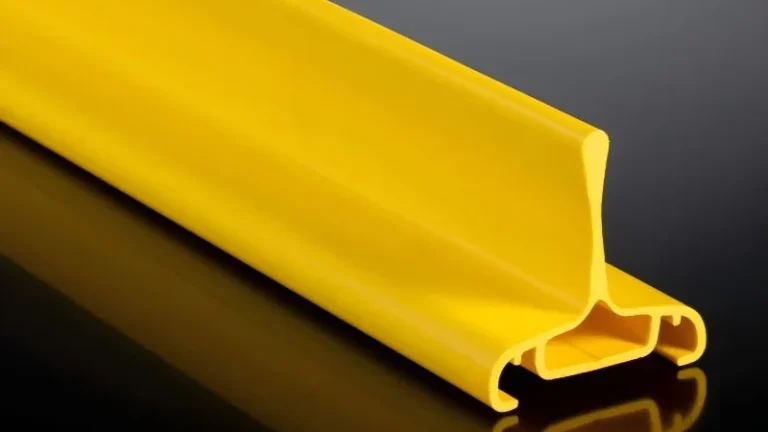
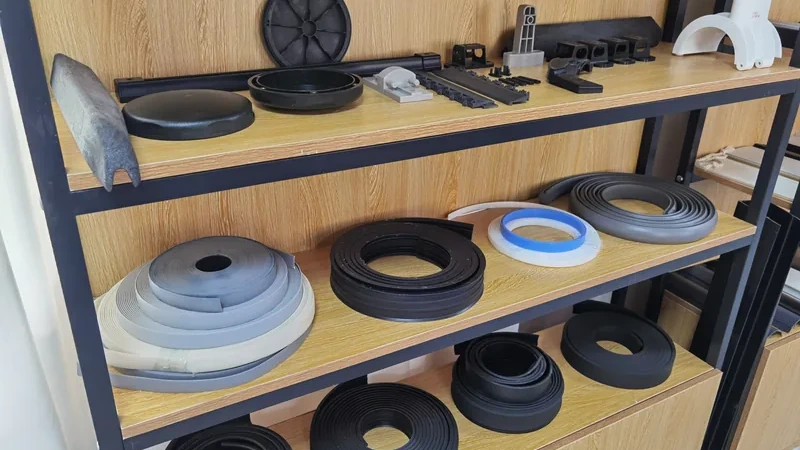
An RFQ for custom plastic extrusion is where a project either gains engineering control or quietly loses it. A well-written request tells the extruder what the profile must do, which dimensions actually matter, how the part will be inspected, and where the design is still open to manufacturability feedback. A vague one invites assumptions, and in profile extrusion assumptions get machined into the extrusion die.
This guide gives procurement engineers, product designers, and factory technical leads a practical structure for writing an RFQ that produces comparable quotes, fewer surprise costs, and tooling that matches the real application. The same structure works for a new development and for re-sourcing an existing extruded profile.
- Lead with a 2D cross-section drawing; send a 3D model only as assembly context, never as a replacement.
- Separate critical, important, and reference dimensions so tolerance control lands where fit and function need it.
- Ask suppliers to quote tooling, sampling, production, secondary operations, packaging, and inspection documents as separate line items.
- State measurable requirements with standards and test methods instead of words like strong, flexible, or outdoor grade.
- Define volume range, sampling plan, and inspection method up front, because they change tooling strategy and unit cost.
- Keep drawing revisions controlled after the first trial; unrecorded changes are a common cause of drifting production.
What Should an RFQ for Custom Plastic Extrusion Include?
A complete RFQ should include the part drawing with a 2D cross-section, the material or performance target, critical dimensions with tolerances, application environment, expected volume range, packaging requirements, and inspection expectations. It should also ask how the supplier will design, sample, and maintain the extrusion die over the project life.
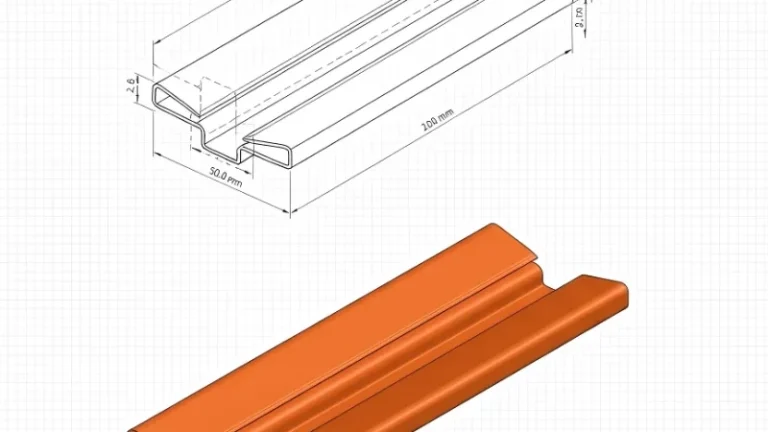
Start with the drawing package. In profile extrusion the cross-section is the control document, because the die head, calibrator, cooling bath, and haul-off all act on that single shape continuously. A usable 2D drawing shows overall dimensions, wall thicknesses, radii, slots, sealing lips, hollow chambers, datums1, cut length, and any post-extrusion features such as punched holes or embossing.
If a 3D model exists, send it with the 2D drawing rather than instead of it. The model helps the supplier understand assembly and end use; the drawing defines what gets measured. On complex sections, mark which surfaces seal, slide, snap, guide, or carry load, because those callouts drive how the extrusion supplier balances melt flow and cooling.
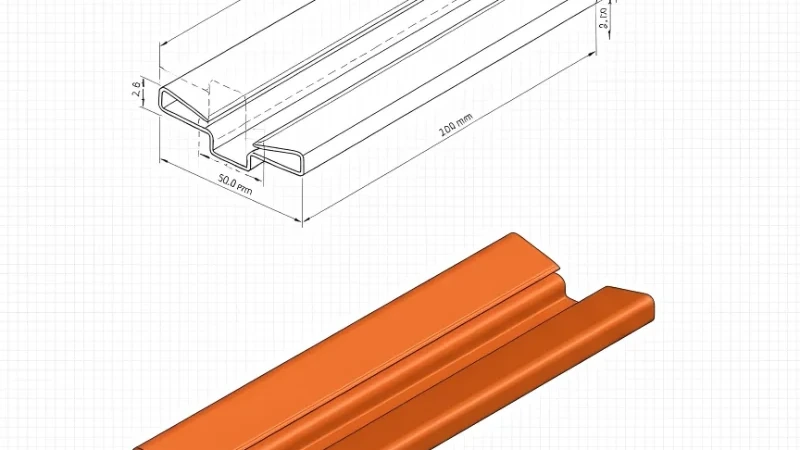
RFQ information checklist: contact details, project name, drawing revision, target material or performance, color and finish, cut length, annual demand range, first-order quantity, and whether prototyping, small batch, or large batch production is needed. If the part replaces an existing profile, state the current defect or cost problem, since it often changes the die design conversation.
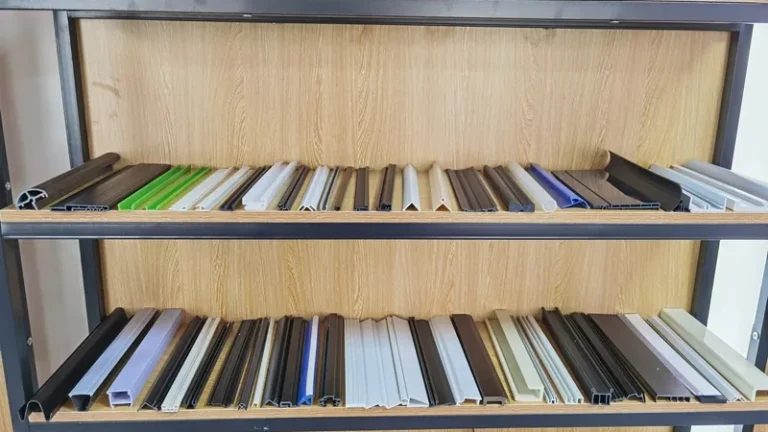
Application context matters as much as geometry. Describe the operating environment in engineering terms: indoor or outdoor, near heat, around moisture, sliding wear, cable protection, guide rail service, building seal, or automotive rail system. That lets the supplier shortlist realistic resins, from PVC, ABS, HDPE, and PP to PC, PMMA, PA6, POM, TPE, TPU, TPV, ASA, PC/ABS, and PP/GF, instead of guessing from a part number.
"A finished 3D model is enough to quote an extruded profile accurately."False
A 3D model shows geometry but does not define which dimensions are critical, how the part will be inspected, or what tolerance expectations apply. Suppliers fill those gaps with assumptions, and the lowest quote may quietly exclude tooling revisions or inspection work.
"A 2D cross-section with function callouts is the control document for quoting."True
The cross-section defines what the die head, calibrator, and downstream equipment must produce continuously. Function callouts let the extrusion supplier judge flow balance and cooling risk before quoting, which makes quotations comparable across suppliers.
Use standards where a requirement is measurable. ASTM D638 specifies the tensile testing method for plastics and is the default citation when an extruded profile needs tensile strength, elongation, or modulus data. ASTM D790 defines the flexural test used to compare the stiffness of profile sections, which matters whenever the part spans a gap or carries load in service. For cable-related profiles, UL 1581 is the reference standard for electrical wires, cables and flexible cords, so cite it when the part protects or insulates wiring.
How Should You Define Material and Tolerance Requirements?
Define material by resin family plus measurable performance, and define tolerance by function rather than by tightening every number on the drawing. A good RFQ tells the extruder which dimensions control fit, sealing, or sliding, and what variation the assembly can actually accept.
Name the resin when the design is validated; describe the job when it is not. PVC suits window and door profiles, decorative trims, pipes, and sealing strips. ABS serves automotive and industrial profiles. HDPE fits pipes, edge trims, guide rails, and wear strips. Writing the function, such as low-friction guide, flexible sealing lip, transparent cover, or outdoor trim, invites a better recommendation, and the supplier should state its assumptions in writing.
Tolerance strategy follows the same logic. The minimum achievable dimensional tolerance on a profile cross-section can reach ±0.05 mm, but that figure depends on material and section geometry. Thin lips, asymmetric walls, hollow chambers, and soft compounds each shift what is realistically holdable. Apply one tight number across the whole drawing and the supplier either prices in scrap or fails silently at the calibrator.
Use a critical-to-quality approach2 to label dimensions as critical, important, or reference. Critical dimensions include snap-fit gaps, sealing lip geometry, sliding rail surfaces, pipe outside diameter, and mating slot widths. Reference dimensions guide appearance only. Send the critical list with the RFQ and ask the supplier to confirm capability on those features specifically.
| RFQ item | Weak wording | Stronger wording | Why it matters |
|---|---|---|---|
| Material | Plastic profile | PVC profile for cable protection, transparent, indoor use | Narrows resin, function, and appearance |
| Tolerance | Tight tolerance | Name the critical fit dimension and request a confirmed capability range | Focuses control where fit matters |
| Surface | Smooth finish | Visible face free of drag marks that affect assembly | Connects appearance to function |
| Testing | Good strength | Tensile data per ASTM D638 on the critical wall | Makes performance measurable |
| Volume | Many parts | Prototype quantity, first-order quantity, annual range | Changes tooling and line planning |
ZetarVac extrudes profile widths from 5 to 600 mm using single-layer and multi-layer co-extrusion dies, and the minimum achievable cross-section tolerance is ±0.05 mm, subject to material and section geometry. In an RFQ, that translates into two explicit statements: total profile width, and whether the section needs one material or several functional layers.
Performance and environment. State what the profile must resist: bending, impact, abrasion, UV exposure, heat, flame, or chemical contact. ISO 4892 specifies methods for exposing plastics to laboratory light sources and governs how outdoor weathering claims are generated, so cite it when UV stability drives material selection. UL 94 classifies the flammability of plastic materials for parts in devices and appliances, and it is the citation to use when a flame rating is required.
"Specifying the tightest tolerance on every dimension protects the buyer."False
Over-tolerancing does not add function; it moves cost into trial time, scrap, and gauging. It also hides the features that genuinely matter, so capability is spent on surfaces the assembly never notices.
"Tolerance budgeting by function produces cheaper and more repeatable profiles."True
Assigning tight limits only to critical-to-function dimensions lets the extrusion line run at natural capability everywhere else. The result is a quotation the supplier can stand behind and a production profile that stays in control.
Which Drawing Details Help the Supplier Quote the Die?
The supplier needs to see wall transitions, hollow chambers, lips, undercuts, and soft-to-rigid interfaces clearly, together with cut length and any in-line operations. These details determine die complexity, calibration strategy, cooling behavior, and haul-off handling, which are the real drivers of tooling cost and sampling risk.
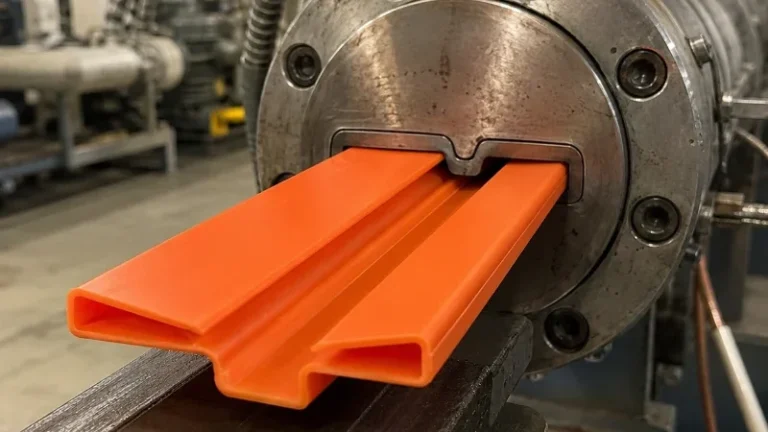
An extrusion die is not a hole in a plate. It must compensate for melt flow imbalance, die swell3, post-extrusion shrinkage, and puller tension, while the calibrator holds shape as the profile cools. If the RFQ hides a sharp thick-to-thin transition, an unsupported lip, or an asymmetric hollow section, the quotation will miss trial rounds and later corrections, and those costs resurface as change requests.
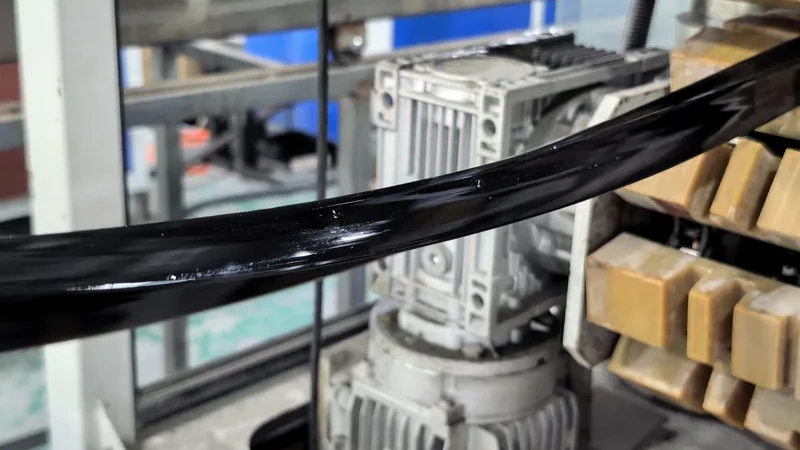
Co-extrusion zones. If the part combines rigid and flexible functions, mark on the drawing which region carries which material. ZetarVac runs co-extrusion combinations including PP+TPV, PP+TPE, PVC+TPU, ABS+TPU, and TPV+CPVC, with up to three layers in a single pass. Dimension the interface location and the width of each zone, because the die head builds the material split geometrically; “soft outside” is not a specification.
Secondary operations. State whether the profile needs in-line punching, embossing, or printing. These operations run on the extrusion line and affect registration, tolerance stack-up, and quote structure. A punched hole pattern is routine on a rigid PVC channel, but on a soft TPU strip that stretches under haul-off tension the same pattern may need a fixture or a downstream step.
Tooling scope and ownership. Ask whether the quotation covers die design, fabrication, trials, modification rounds, storage, maintenance, and eventual replacement. For long-running profile extrusion the die head and calibrators are project assets, so the RFQ should establish revision control and define who approves tooling changes after the first trial.
How Do Volume, Sampling, and Inspection Change the Quote?
Volume determines tooling strategy, line selection, and inspection frequency, while the sampling plan defines how the first acceptable profile is approved and how later batches stay consistent. State both in the RFQ, because a quotation built for prototypes and one built for mass production are different documents.
Separate development volumes from production volumes. A supplier may support prototyping, small batch, and large batch production, but the cost structures differ: a short validation run focuses on geometry and material behavior, while repeat production adds packaging density, line efficiency, and measurement control. Stating monthly demand, seasonal peaks, and launch timing lets the supplier plan capacity honestly.
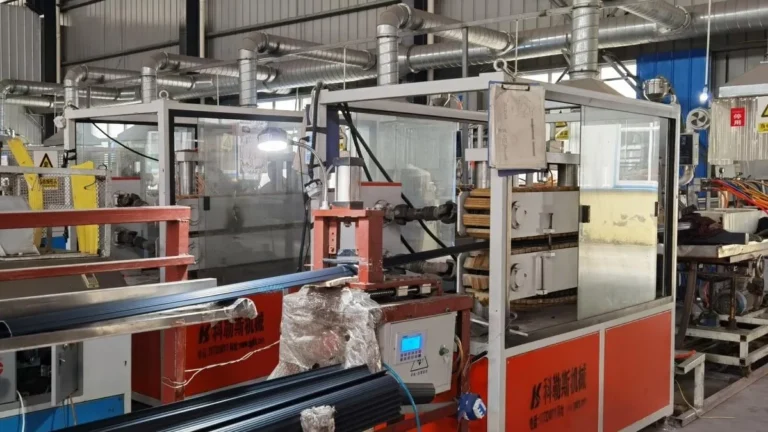
ZetarVac operates 7+ automated extrusion lines with a maximum profile width of 600 mm, within a plant running 45+ production lines in total, and reference monthly capacity across the extrusion lines is roughly 300 to 500 tonnes. For a buyer, that means the volume statements in the RFQ directly determine line allocation and production planning.
Sampling plan. Ask for first article samples4 with a dimensional report covering the critical list, not a general statement of good quality. If the part mates with another component, send the mating part or its drawing so the supplier can verify assembly rather than caliper numbers alone. Also ask how many sample review rounds are included before the die counts as accepted.
Inspection method. Define how each critical dimension will be measured, whether by caliper, pin gauge, fixture, optical comparator, or coordinate measurement, because a flexible lip reads differently under contact force than a rigid wall. If process capability matters to your assembly, ask whether the supplier can report sample size, measured values, and a capability index5 for the critical dimensions.
Packaging and logistics. Specify profile length, bundle size, carton limits, scratch protection, and labeling. Long extruded profiles can deform when packed under load or stored warm, so packaging is an engineering requirement rather than an afterthought.
"If the first article passes, mass production will stay stable automatically."False
A first article proves the die can make an acceptable profile under one set of conditions. Production stability depends on material lot consistency, cooling balance, haul-off speed, and inspection frequency, none of which a single sample verifies.
"Sample approval plus a documented control plan keeps production in control."True
The RFQ should ask how critical dimensions are checked during the run and how process changes are recorded. That converts a good sample into a repeatable extruded profile instead of a slowly drifting one.
Which Supplier Questions Should You Ask Before Comparing Prices?
Ask questions that reveal process understanding: die strategy, material recommendation logic, tolerance risk, sampling rounds, inspection method, and how drawing revisions are handled after trial. Suppliers that answer these precisely are easier to compare than suppliers that answer only with a unit price.

Questions worth writing into the RFQ: Which material do you recommend, and why? Does this cross-section raise flow-balance or cooling concerns? Which dimensions may be difficult to hold, and what design changes would improve manufacturability? Can in-line punching, embossing, or printing run during extrusion? Who owns the die, and how are modifications approved?
Structure the quotation for comparison. Request separate line items for the extrusion die, sampling, unit price at stated volumes, secondary operations, packaging, and inspection documents. If the supplier proposes a material substitution, ask for the reason and the tradeoff in stiffness, flexibility, color, weathering, or thermal behavior, so engineering can judge it rather than procurement alone.
Watch the silent assumptions. A fast quote that never asks about critical dimensions usually assumes a simple open profile. That is risky for sections with hollow chambers, soft-rigid co-extrusion, tight cut-length control, or snap features. Compare assumptions first and prices second; that is what makes supplier selection an engineering decision. Before issuing the package, run your geometry through the DFM checklist for extruded plastic profiles and extrusion dies, and if cost drivers are still unclear, the custom plastic profile extrusion cost breakdown explains what moves tooling and unit prices.
Case-style examples. A transparent PVC electronic tube profile RFQ should state the cable protection and guiding function, transparency expectation, wall thickness, cut length, and the relevant UL 1581 context. A PVC drainage channel RFQ should define channel geometry, continuous length, and installation environment. For a PP+TPV automotive seat slide rail strip, mark the rigid support and the flexible sealing lip as separate functional zones; for an ABS+TPU robot vacuum squeegee strip, show where ABS carries load and where TPU wipes and resists wear. Each example rewards the same habit: describe function, not just shape.
FAQ: Common Questions About Writing a Custom Plastic Extrusion RFQ
Can I request a quote without a finished CAD drawing?
Yes, but label it as an early engineering review rather than a production quotation. Send a sketch, target dimensions, function, material idea, and expected volume, and the supplier can comment on profile extrusion feasibility before tooling is quoted.
Should I name the resin grade or let the supplier recommend one?
Name the grade if the design is validated or regulated. If function matters more than the exact compound, state the performance target and ask the supplier to recommend among PVC, ABS, HDPE, PP, PC, PMMA, PA, POM, TPE, TPU, TPV, ASA, PC/ABS, or PP/GF, with assumptions in writing.
How many dimensions should be marked critical on an extruded profile?
Usually a short list: only the dimensions that control assembly, sealing, sliding, or load path. Ask the supplier to confirm capability on those features, and leave the rest to standard commercial tolerance, subject to material and section geometry.
What documents should accompany first samples?
A dimensional report against the drawing revision, material confirmation, measurement methods, sample quantity, and notes on any tooling or process adjustment. Add a mating-part trial when the profile has critical fit.
Where should my team start before issuing the RFQ?
Walk through the plastic extrusion molding overview to understand process scope and how extrusion projects are structured, or explore how a China plastic extrusion manufacturer documents capabilities and quality control. Reviewing these pages before you write the RFQ sharpens your questions and makes supplier comparison an engineering exercise rather than a price list.
-
GD&T: GD&T refers to geometric dimensioning and tolerancing, a standardized system for defining engineering tolerances on drawings. ↩
-
CTQ: CTQ stands for critical to quality, a designation for the characteristics that must be controlled for the part to function as intended. ↩
-
Die swell: Die swell is the expansion of extruded melt as it leaves the die, caused by elastic recovery of the polymer. ↩
-
FAI: FAI means first article inspection, the documented verification that initial samples meet all drawing requirements. ↩
-
Cpk: Cpk is a process capability index that compares process variation with specification limits for a controlled dimension. ↩