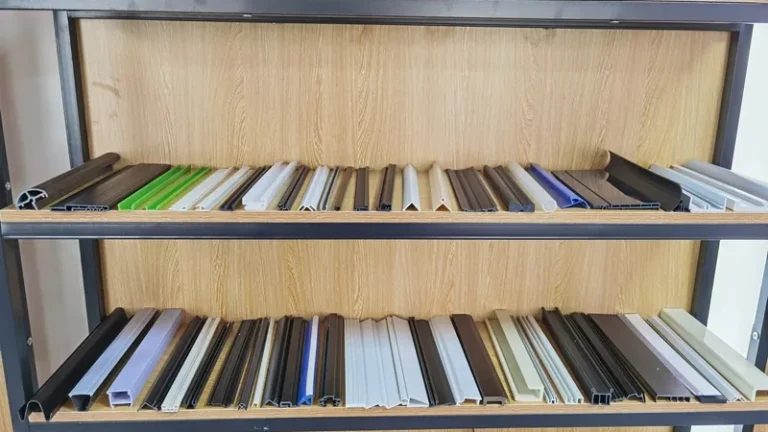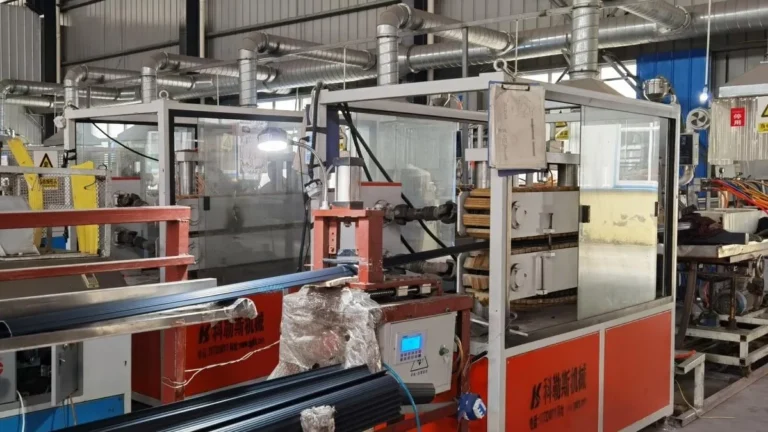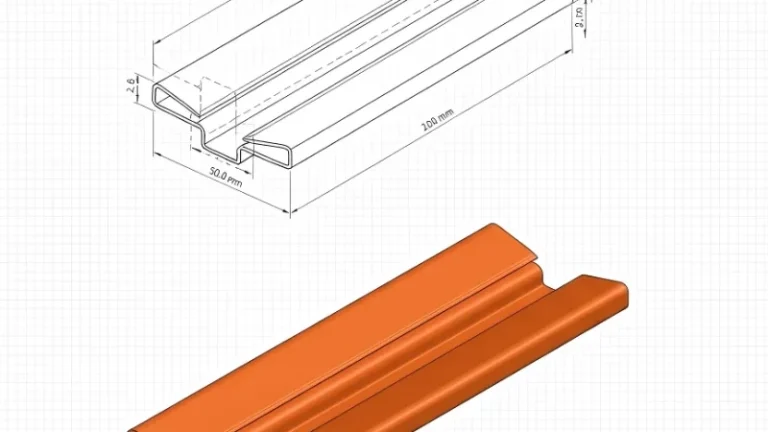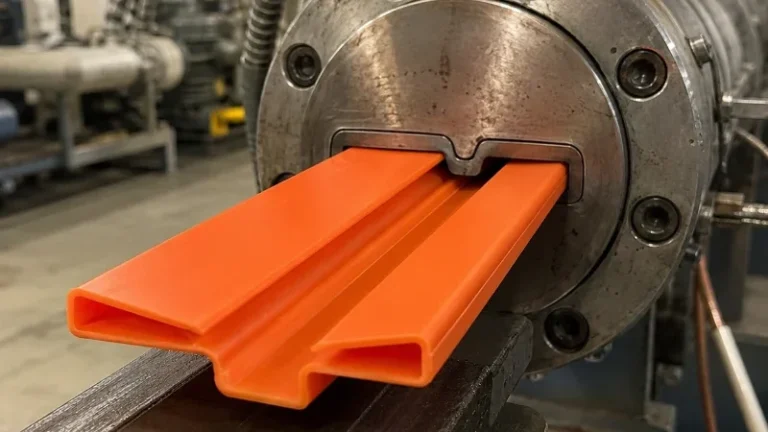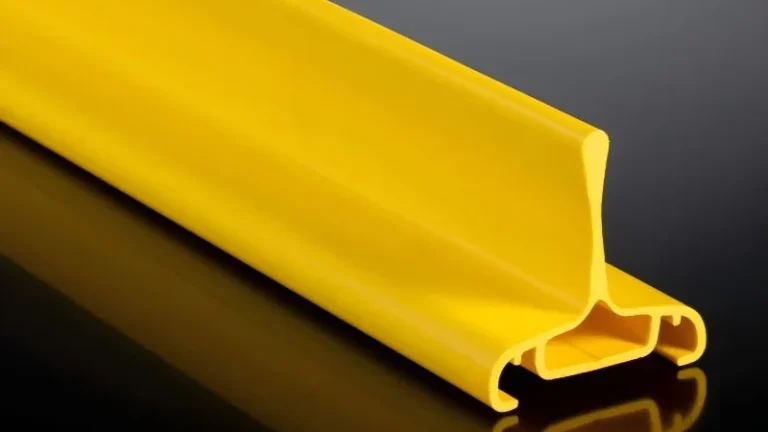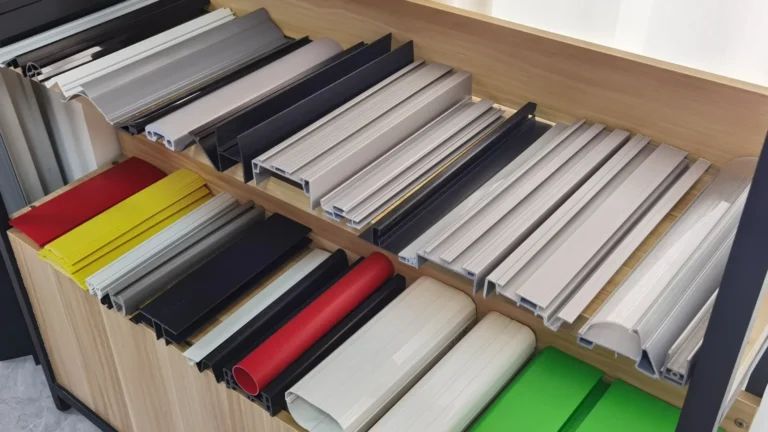
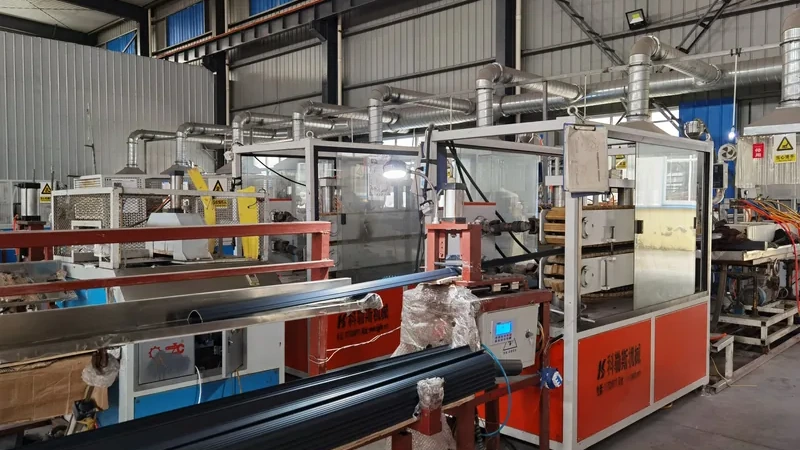
Ask three suppliers to quote the same custom plastic profile and you may see prices spread by a factor of two, often without any of them being wrong. Profile extrusion pricing is a stack of small, defensible decisions: resin selection, extrusion die design, line speed, tolerance class, secondary operations and order size. This guide breaks down each layer of a custom profile quotation, explains where the money actually goes in each component, and shows how to compare quotations from different extruders on equal scope.
- Material is usually the largest single cost item, commonly 40–70% of unit cost, and its share depends on wall thickness and section area.
- Tooling cost covers more than the extrusion die: sizing sleeves, calibrators and downstream fixtures all belong in the package.
- Unit price falls sharply with run length because startup scrap and changeover time are amortized over more meters.
- Tighter tolerance classes raise scrap rates and inspection time, so specify only the tolerances the application actually needs.
- Quotations often differ on what is included; ask for an itemized breakdown covering material, tooling, secondary operations, testing and freight terms.
What Actually Drives the Cost of a Custom Extruded Profile?
Five components make up almost every custom profile quotation: raw material, machine and line time, tooling amortization, secondary operations and quality assurance. Material usually dominates at 40–70% of unit cost while tooling dominates at low volumes, and changeover time plus startup scrap explain why the first meters of any order are the most expensive.
Wall thickness and section area matter more than length. A profile drawn with 2 mm walls consumes roughly twice the resin of the same geometry at 1 mm, and resin cost flows straight into the price. Section complexity works differently: it drives the extrusion die and calibrator cost up front, but once the line is stable it barely changes running cost. Simple sections can therefore be cheap to run yet expensive to develop, while complex sections reverse that relationship at volume.
Wall uniformity also matters beyond resin mass. A section with widely varying wall thickness cools unevenly in the calibration stage, which forces slower line speeds, higher startup scrap and looser practical tolerances. Cost per meter is therefore decided on the drawing page, long before any extrusion line is scheduled.
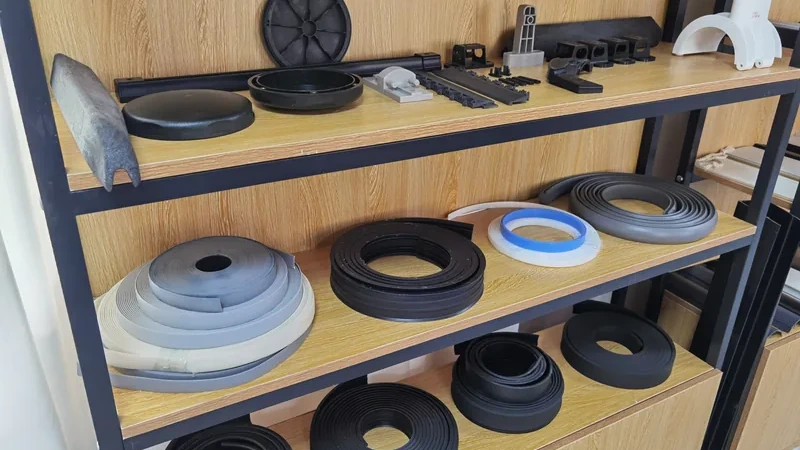
The practical move for procurement is to classify every quotation into those five buckets, then interrogate the two largest ones for your volume. At prototype quantities, tooling and setup dominate and the unit price is almost meaningless. At production volumes, resin price and line efficiency decide who wins. For the process fundamentals behind these numbers, see this overview of plastic extrusion molding.
How Much Should the Extrusion Die and Downstream Tooling Cost?
There is no honest single number, because tooling cost scales with section complexity and material, not with profile length. A straightforward open section may need only a simple die head and one sizing sleeve, while a multi-hollow section needs flow-balanced tooling, vacuum calibration and several revision rounds.
A complete tooling package for profile extrusion includes the die head, one or more sizing sleeves1 that set final dimensions as the melt solidifies, and fixtures for the cooling, haul-off and cutting units. Two engineering details move the price most. The first is flow balancing: an unbalanced die produces uneven wall thickness, and the fix is die steel and rework, not process tuning. The second is shrinkage allowance, since the calibrator must be cut oversize to compensate for thermal contraction, which differs sharply between a rigid PC section and a soft TPE gasket.
"A lower die quote automatically means lower total tooling cost."False
A cheap die head can shift cost into calibrators, extra revision rounds and a slow ramp-up. If the tooling scope omits sizing sleeves or caps corrections, the buyer pays again during commissioning, and the final tooling bill often exceeds the higher, complete quote.
"Total tooling cost should be quoted as die, calibrators, downstream fixtures and revision rounds together."True
A complete tooling scope makes quotations comparable and prevents change-order disputes. Ask each supplier to state how many die correction rounds are included and what a replacement sizing sleeve costs before you award the tooling.
One more clause worth negotiating is the revision policy itself. First samples from a new profile extrusion die rarely meet drawing at the first trial, and one or two correction rounds are normal engineering rather than supplier failure. A quotation that assumes zero revisions is either optimistic or planning to invoice them later.
Why Material Selection Changes the Price per Kilogram?
Resin family sets the base price, but additives, color and regrind policy set the final one. Two profiles in the same polymer can differ by 20% or more in material cost depending on UV stabilizers, impact modifiers, flame-retardant packages and whether regrind is permitted, so insist that the quotation names the compound, not just the polymer.
Material cost also buys documentation. If the part carries a structural or safety function, tensile results are normally generated per ASTM D638, the default tensile test cited for extruded profiles, which fixes specimen geometry and test speed so data from different suppliers can be compared.2 For heat-exposed parts, ISO 306 defines the Vicat softening temperature, a practical indicator of when a thermoplastic begins to creep under load.3
Weathering and compound designation belong in the same conversation. Outdoor profiles in ASA or weatherable PVC should be stabilized against UV, and long-term weathering behavior is characterized under ISO 4892 laboratory light exposure. When the material is unplasticized PVC, ISO 1163 governs the designation and specification of PVC-U extrusion materials, which ensures both parties quote the same compound rather than the same polymer name.4
| Resin family | Relative cost band | Where it earns its price | Watch-outs |
|---|---|---|---|
| Rigid PVC | Low | Window, door and trim profiles, drainage channels | Heat sensitivity limits reprocessing |
| HDPE / LDPE | Low | Pipes, edge trims, guide rails, wear strips | Lower stiffness, higher shrinkage |
| PP | Low to mid | Functional parts, seat rail components, chemical resistance | Needs stabilization against oxidation |
| ABS / PC/ABS | Mid | Automotive and industrial profiles | UV stability requires caps or additives |
| PC / PMMA | Mid to high | Transparent profiles and light covers | Notch sensitivity; scratch visibility |
| PA6 / PA66 / POM | Mid to high | Precision and wear parts | Moisture uptake and drying before running |
| TPE / TPV / TPU | Mid | Sealing lips and soft co-extruded layers | Hardness specification drives price |
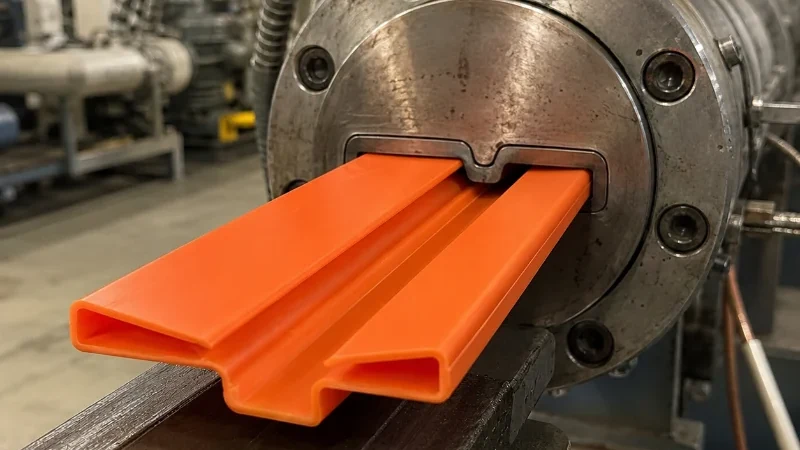
Co-extrusion changes the equation in a different direction. A hard-soft combination adds a second extruder and a multi-layer die head, so the per-meter price rises. What it removes can be worth more: a separately purchased gasket, an adhesive or bonding step, and an extra assembly operation. When a buyer compares a co-extruded profile5 against a rigid profile plus a glued-on seal, the co-extruded route frequently wins on total installed cost even at a higher unit price.
ZetarVac runs co-extrusion combinations including PP+TPV, PP+TPE, PVC+TPU, ABS+TPU and TPV+CPVC, in single, double and triple layer configurations with up to three layers per pass. For a buyer, that means a hard-soft profile can be quoted and supplied as one part number instead of a rigid core plus a separate sealing component.
Why Run Length and Changeover Decide the Unit Price?
Startup scrap and changeover time are fixed costs per run, and run length divides them. A changeover that consumes two hours of line time and yields tens of meters of off-spec material adds the same absolute cost whether the order is a short trial or a full production campaign.
Color and material changes dominate changeover time. Purging a dark pigment out of a natural resin can take longer than the mechanical change itself, and switching between polymers with different processing windows may require screw changes rather than a simple purge. Well-organized suppliers schedule orders to minimize changeovers, and their quotations quietly reflect that discipline. When you receive a minimum-order figure, you are usually looking at the run length at which startup scrap and setup stop dominating the price, not an arbitrary sales threshold.
"Once the first article is approved, the quoted unit price is locked for all future volumes."False
First-article approval proves the tooling and process window at one condition set. Resin prices move with feedstock markets, and a price that works at production volumes may be unworkable at prototype quantities because startup scrap is spread over far fewer meters.
"Unit price should be quoted against a stated order quantity with a validity period and resin terms."True
A quantity-linked quotation makes later price changes traceable. Ask for pricing at two or three volume steps, and note whether the resin portion is fixed or indexed to the resin market.
This is also where capacity matters to a buyer, not just to the supplier. Lines that run the same profile family continuously hold dimension and color better, and a plant with multiple lines can protect your delivery slot from someone else’s color change.
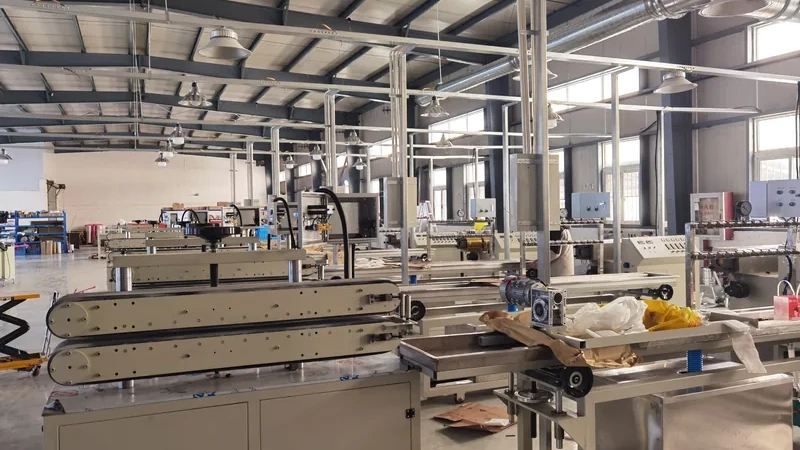
ZetarVac operates 7+ automated extrusion lines with a reference monthly capacity of about 300–500 tonnes, within a plant of 45+ production lines, and supports prototyping, small batch and large batch production. For buyers, tooling proven on a prototype run does not need to migrate to a different line class when volumes grow.
Beyond material and line time, quotations routinely carry tolerancing, secondary operations, packaging, testing and freight terms. Each is legitimate on its own; the risk is only that they are unnamed. An itemized quotation shows which supplier is genuinely competitive on the extrusion line itself and which is recovering margin in finishing or logistics.
Tolerance class is the most expensive hidden line. Holding ±0.05 mm on a profile cross-section, achievable on modern lines subject to material and section geometry, demands slower line speeds, tighter calibration and near-full inspection. A loose, function-appropriate tolerance on a non-critical cover profile does not. Specifying tighter tolerance than the function requires can raise unit cost substantially, mostly through scrap, and no negotiation recovers that cost once the drawing is released.
In-line secondary operations are the second lever. Punching, embossing and printing performed on the extrusion line avoid a separate handling pass, but they still consume line speed and setup time, so they belong on their own quotation line. Packaging and cut-length patterns matter as well: short cut lengths increase cutting cycles, and non-standard packaging adds labor that a per-meter price hides.
"The quoted price per meter includes punching, printing and any certification testing."False
A base price usually covers the profile at a stated tolerance, cut and packed as delivered from the line. Punching, embossing, printing and laboratory testing change line speed and yield, so suppliers either quote them separately or hide them inside a higher blended price.
"An itemized quotation should list secondary operations, testing and packaging as separate line items."True
Itemization makes two suppliers comparable and reveals where consolidation saves money. If one supplier punches in-line while another outsources it, the second quotation must be adjusted before any price comparison is fair.
Ask specifically how each quoted secondary operation is performed: on the extrusion line itself, or offline on a separate machine. The answer changes both the price and the repeatability of hole patterns along the length.
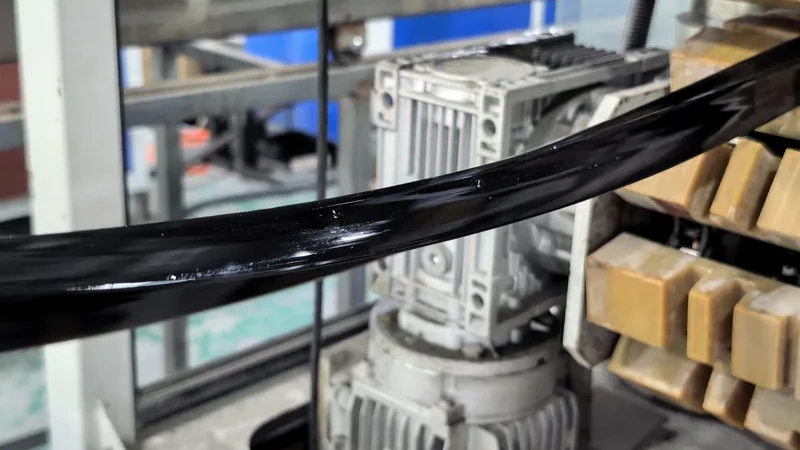
ZetarVac performs punching, embossing and printing in-line on its extrusion lines, and develops non-standard sections directly to customer drawings. For buyers, in-line finishing means hole patterns and surface marking are produced under the same line-speed economics as the profile itself, rather than priced as an outsourced secondary process.
How Do You Compare Quotations Between Extrusion Suppliers Fairly?
Normalize the scope before comparing numbers: identical material designation, identical tolerance class, identical secondary operations, identical delivery terms. Then compare tooling scope, revision policy and volume-step pricing, and only after that does the per-meter figure mean anything.
A disciplined request for quotation prevents most comparison errors. State the polymer or compound designation, the cross-section drawing with tolerances assigned by function, annual and per-order volumes, color and finish, and the standards data you require. Our guide on how to write an RFQ for custom plastic extrusion covers that document line by line.
Before the RFQ goes out, running the drawing through a DFM checklist for extruded profiles and extrusion dies removes cost drivers at the source: non-uniform walls, sharp internal corners and tolerance zones placed where the function does not need them. A drawing that survives that review also attracts the most competitive quotations, because suppliers are no longer pricing in engineering risk they cannot see.
FAQ
How much does a custom extrusion die cost?
Die cost scales with section complexity and material, not with profile length. Simple open sections sit at the low end of the range, while multi-hollow sections with tight tolerances cost several times more because of flow balancing and multi-stage calibration. What matters commercially is the complete package: die head, sizing sleeves, downstream fixtures and included revision rounds.
Why is a co-extruded profile more expensive than a single-layer profile?
A second extruder, a multi-layer die head and a narrower process window add line time and startup scrap, so the per-meter price rises. Co-extrusion pays back by eliminating a separately purchased gasket, an adhesive or an assembly step, so compare total installed cost rather than unit price alone.
What order quantity makes custom profile extrusion economical?
Economics improve sharply once the run is long enough that startup scrap and changeover time fall below a few percent of unit cost. Prototyping and small batches remain viable where tooling amortization is agreed separately; many extruders support all three modes on the same equipment.
How long does tooling take before first samples?
Simple open sections typically sample within a few weeks of drawing freeze, while complex multi-hollow sections need more die fabrication and calibration iterations. The honest schedule includes one or two correction rounds, so ask suppliers to quote tooling lead time including revisions, not just first trials.
What drawings and data do I need for an accurate quotation?
Provide a dimensioned cross-section drawing with tolerances assigned by function, the polymer or compound designation, target annual and per-order volumes, color and finish requirements, any secondary operations, and the standards data you require, such as tensile or weathering results. The more complete the package, the fewer assumptions a supplier must price defensively.
To go deeper before you compare suppliers, explore our plastic extrusion molding overview, or see how a China plastic extrusion manufacturer organizes quoting, tooling and production for custom profiles.
-
Sizing sleeve: A calibrated, cooled sleeve downstream of the die head that sets the final external dimensions of an extruded profile while the melt solidifies. ↩
-
ASTM D638: The standard test method for tensile properties of plastics, defining specimen geometry and test conditions so results are comparable across suppliers. ↩
-
ISO 306: The standard for determining the Vicat softening temperature of thermoplastics, an indicator of heat and creep resistance. ↩
-
ISO 1163: The standard specifying the designation and requirements for unplasticized PVC (PVC-U) moulding and extrusion materials. ↩
-
Co-extrusion: An extrusion process in which two or more polymers are extruded simultaneously through one die to form a multi-layer profile. ↩