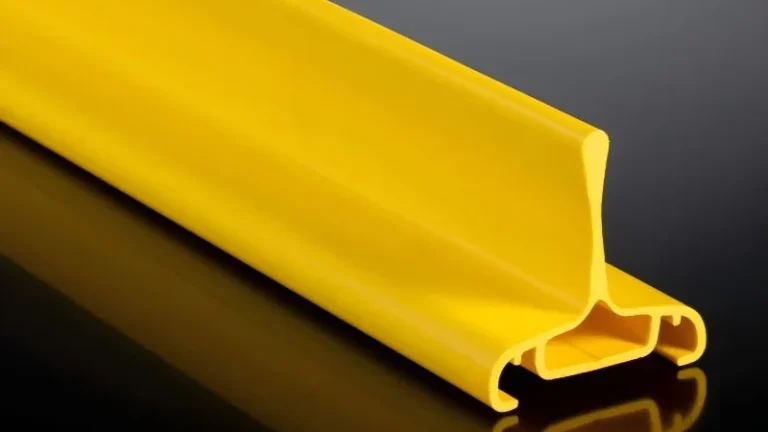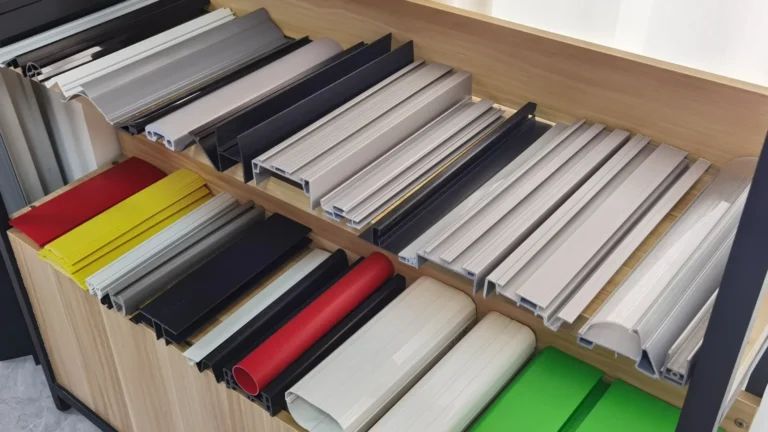
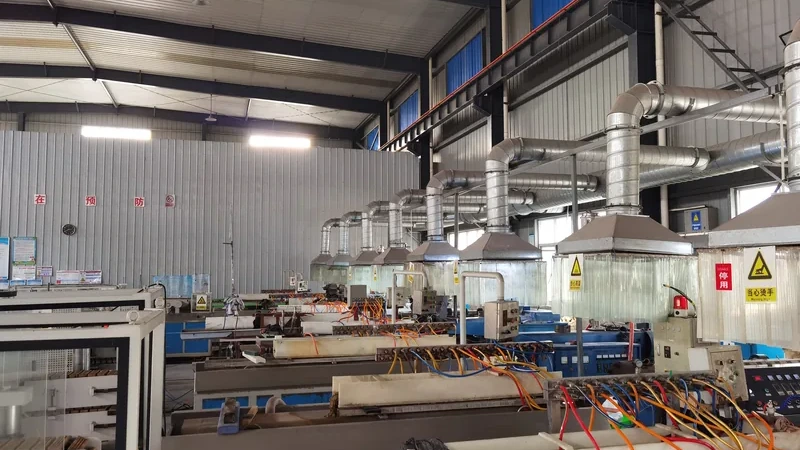
Choosing a profile extrusion partner in China is a procurement decision with long engineering consequences. The supplier you select determines whether your cross-section holds tolerance across every production shift, whether the material meets the specification you wrote, and whether a die correction takes days or months. This guide sets out the vetting process a purchasing engineer or technical buyer should run before committing to a supplier: what the extrusion die reveals about a factory, which standards belong in your specification, how to verify tolerance claims on real parts, and how to separate a stable process from a lucky first article.
- Judge a supplier by its die engineering and line control, not by its brochure or unit price.
- Match standards to material and duty: EN 12608 for PVC-U window and door profiles, ASTM D1784 for rigid PVC compounds, ASTM D638 for tensile data.
- Verify tolerance capability on freshly extruded samples measured across the full cross-section.
- Co-extrusion capability is proven by the material pairs a supplier runs in production, not by claims.
- A passing first article is evidence of capability; stability must be shown across a continuous run.
- Make material certification, lot traceability and tooling ownership written conditions of the order.
What Does Vetting a China Plastic Extrusion Supplier Need to Prove?
Before you commit, vetting has to prove three things: the supplier can hold your profile geometry in tolerance, the material system meets your application requirements, and the process stays stable across the whole production run rather than just the first sample. Price and lead time only matter once those three are established.
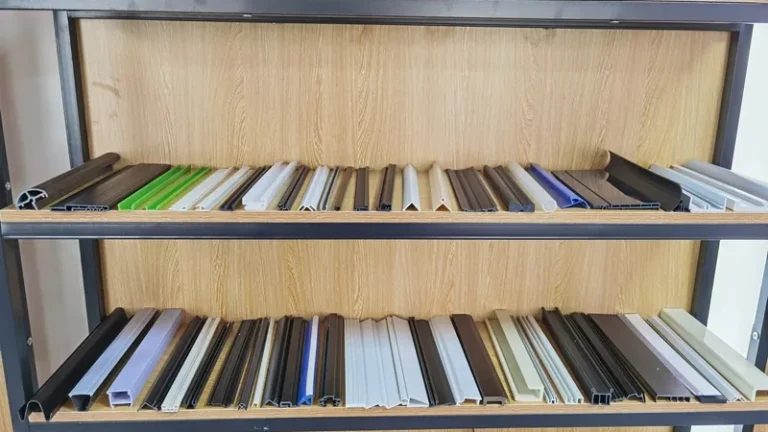
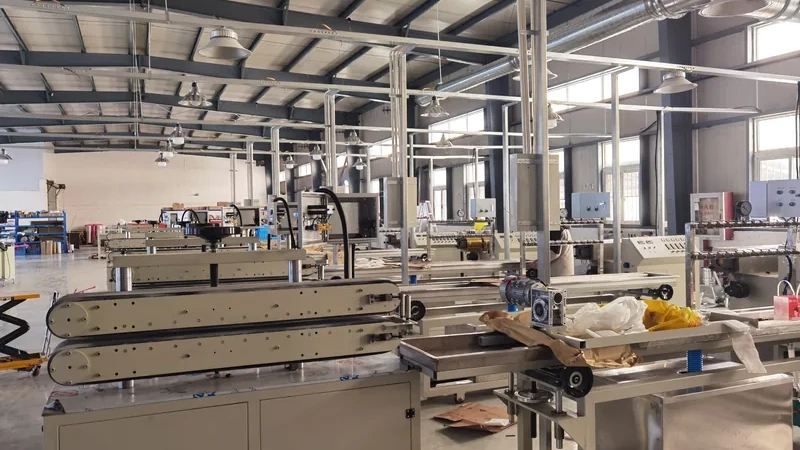
Most sourcing failures trace back to vetting the wrong signals. Product photos, a polished sample kit and a low unit price are easy to produce and say little about process control. A trading company with no floor access can present the same portfolio as a plant that runs its own lines. Your first screening questions should therefore be structural: does this supplier run its own extrusion lines, engineer its own dies, and control its material intake? Ask how many lines are running, the maximum profile width they run routinely, and whether secondary operations such as punching, embossing or printing are done in-line instead of outsourced. Specific answers justify a deeper technical review; marketing pages do not.
"A supplier that lists a wide profile width range can hold tight tolerances across that whole range."False
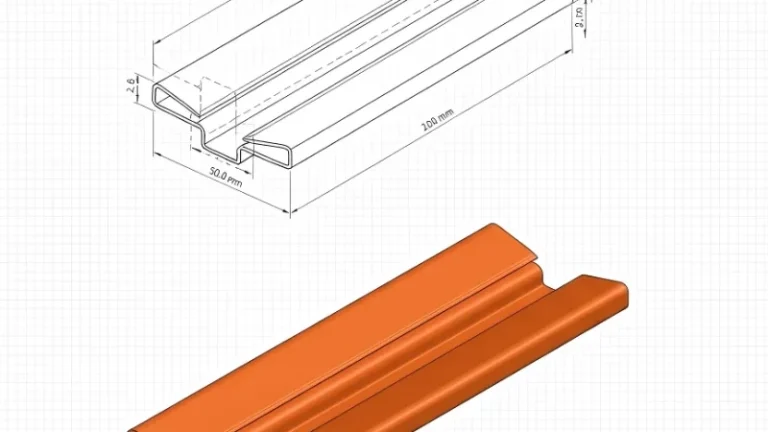
Capability range and tolerance capability are separate claims. Holding ±0.05 mm on a small rigid section says nothing about a 600 mm wide profile, where die swell, cooling gradients and haul-off stability amplify error; assume nothing and demand measured data at your actual section width and material.
"Tolerance capability must be verified at your section’s actual width, material and wall thickness."True
A supplier that volunteers measured capability data for your geometry is demonstrating process control. ZetarVac, for instance, states profile widths from 5 to 600 mm with a minimum dimensional tolerance of ±0.05 mm on the cross-section, explicitly subject to material and section geometry — the honest way to make the claim.
For grounding before you evaluate suppliers, the overview of plastic extrusion molding explains how melt, die and downstream interact, and our China plastic extrusion manufacturer page lists line count, width range and co-extrusion capability in the format these questions deserve.
Why the Extrusion Die Deserves the Most Scrutiny
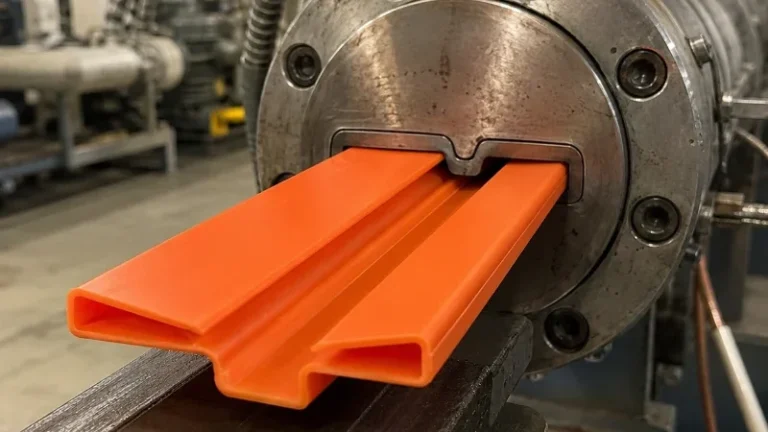
The die head is where your profile is won or lost. Melt leaving the extruder swells as it exits the die land, and the die designer must compensate for that swelling, for flow imbalance across the section, and for the draw-down and calibration that follow. A capable supplier talks about these effects in specifics: how flow balance is corrected, what steel the die uses, how many sampling iterations are included, and who pays for corrections after approval.
Ask directly who manufactures the die. In-house toolmaking shortens the correction loop from weeks to days because the die can go back to the bench the same day a measurement problem appears. A supplier that outsources tooling cannot commit to that loop, and your sampling schedule inherits the risk. Work through a DFM checklist for extruded plastic profiles and extrusion dies before you release drawings, so the section can actually be corrected once steel is cut.
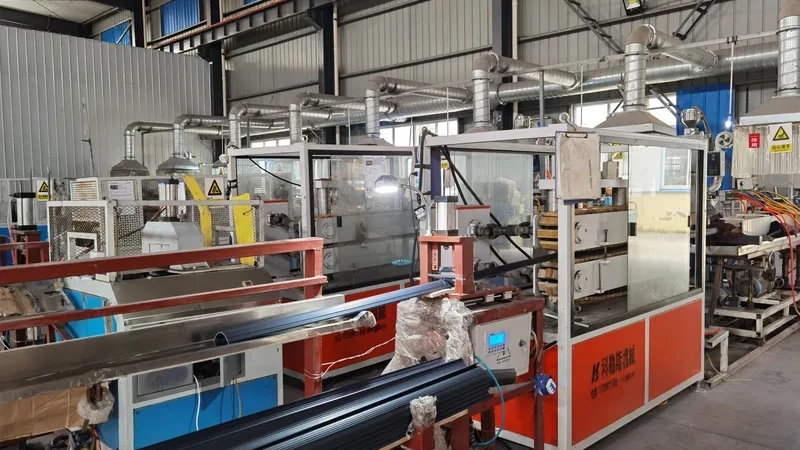
Co-extrusion raises the bar further. A multi-layer die head1 must deliver two or three materials into one cross-section with bonded interfaces and matched shrinkage, and capability here is proven by combinations that actually run in production, not by claims. Commercial pairs to ask about include PP+TPV for a rigid core with a flexible sealing lip, ABS+TPU for support with a wear layer, and PVC+TPU for similar rigid-flexible duty.
"A lower quoted tooling price means you save money on the die."False
Cheap tooling often means fewer steel corrections and sampling iterations were budgeted. An under-engineered die needs more correction loops to reach dimensional conformity, and every extra sampling round costs weeks of calendar time; judge the total cost of reaching a stable profile, not the tooling line item.
"Compare tooling quotes by included sampling iterations and steel specification, not price alone."True
A credible quote states how many sampling rounds are included, what steel the die uses, and how post-approval corrections are charged. Suppliers that engineer the extrusion die in-house can quote that scope honestly; suppliers that buy tooling outside will struggle to commit to it.
The same logic applies to lead-time promises: a supplier that controls die making, profile extrusion and in-line finishing on one floor can sequence your corrections internally, while a supplier that depends on outside shops is quoting a schedule it does not own.
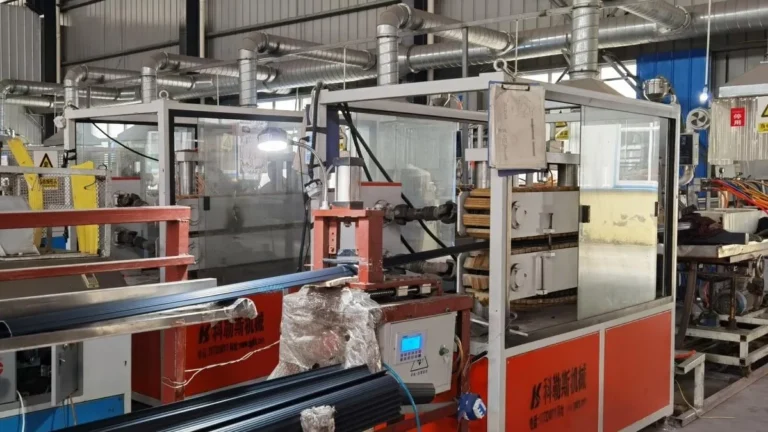
In-house tooling plus line capacity shortens the sampling loop: a plant running more than 7 automated extrusion lines with in-house die development can take a die back to the bench the same day a dimensional issue appears, instead of waiting on an external toolmaker.
Which Standards Should Your Profile Extrusion Supplier Work To?
Ask for standards matched to your material and duty, not a wall of certificates. For PVC-U window and door profiles, EN 12608 is the governing standard for profile geometry, impact resistance and heat reversion2; for rigid PVC compounds, ASTM D1784 defines the cell-class3 designation; and tensile figures quoted in datasheets should be reported to ASTM D638.
Match the standard to the product family. Buyers of PVC pipe should reference ASTM D2241 for SDR-PR pressure-rated dimensions, while polyethylene pipe for water supply falls under ISO 4427 and gas supply under EN 1555. For PVC-U as a material rather than a product, ISO 1163 covers designation and specification. Heat resistance questions are best answered with a Vicat softening point to ISO 3064, and any outdoor profile — ASA cladding trim, building seals, signage sections — should carry weathering data from ISO 4892 exposure testing.
Electrical and electronic applications bring their own regime. A transparent PVC tube used for cable protection and insulation should be discussed against UL 1581, the reference standard for wire, cable and flexible cord insulation and jackets, and against UL 94 where flammability of parts in devices matters. Independent industry resources such as Plastics Technology publish process and material coverage that helps you sanity-check supplier claims before you take them to a test lab.
How Do You Verify Tolerance Claims on Real Extruded Profiles?
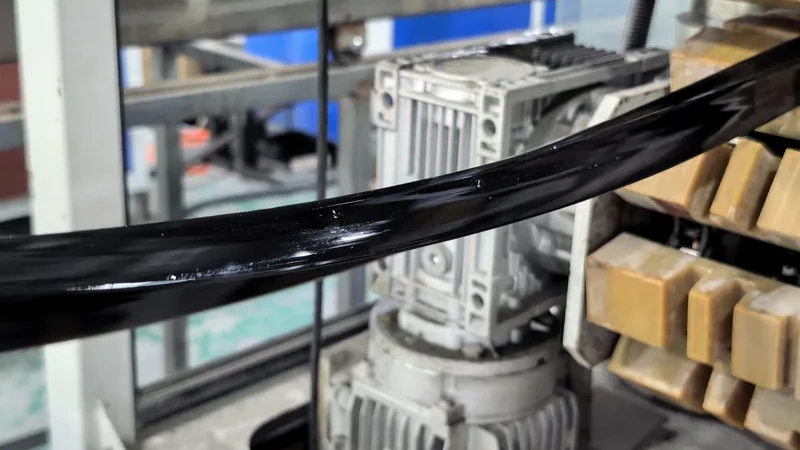
Verify tolerance on freshly extruded samples measured across the full cross-section, dimension by dimension against your drawing. A supplier confident in its process will report measured values with the measurement conditions, and re-measure after hours of running; a supplier that only repeats a catalog tolerance is asking you to take it on faith.
Specify the measurement method in advance: optical profile projection or CMM for rigid sections, with a fixed datum scheme taken from your drawing. Sample at thermal equilibrium rather than straight off the line, because dimensions continue to move as the part cools and can drift for many hours afterward on thick-walled sections, with the settling time depending on material and wall thickness.
Then look at the sampling plan, not just the numbers — three samples from the start of a run prove less than samples drawn at fixed intervals across several hours. Tolerance claims are also material- and geometry-dependent: a ±0.05 mm class result on a small rigid profile is a meaningful statement, while the same number on a wide, thin, flexible strip would be extraordinary and deserves extra skepticism.
"A first article that passes inspection proves the process is ready for mass production."False
A first article is one snapshot taken under the best conditions the supplier can arrange. Extrusion dimensions drift with melt temperature shifts, die build-up and screw wear, so a profile in tolerance at sample stage can drift out within a production shift; stability is a separate deliverable from capability.
"Stability must be demonstrated with samples drawn across a continuous run, not one article."True
Ask for a capability run of several hours with samples pulled at fixed intervals and measured against every drawing dimension. If the spread across those samples stays inside your tolerance band, you have evidence of process control; a single passing sample is evidence of nothing except a good morning.
What Should You Check in Material Sourcing and Traceability?
Check that the supplier can name the resin grade behind every quotation and attach a certificate of analysis to each lot. Traceability turns a quality claim into a contract obligation; without lot-level records, a field failure cannot be isolated to material, process or handling.
Material discipline shows up in small questions. Hygroscopic materials such as PA6, PA66, PC and ABS must be dried to specification before extrusion, because moisture produces splay, bubbles and brittle weld-line zones. Outdoor profiles need a stated UV package rather than a generic colorant. Recycled content policy should be explicit: which layers may carry regrind, and which must stay virgin. Ask whether retention samples are kept per lot, and for how long.
A broad in-house material library keeps the vetting conversation inside one plant: ZetarVac runs PVC, ABS, HDPE, LDPE, PP, PC, PMMA, PA6/PA66, POM, TPE, TPU, TPV, PC/ABS, ASA and PP/GF, so most commercial profile applications can be matched to a grade without outsourcing the extrusion itself.
| Vetting check | What to request | Red flag | What a pass looks like |
|---|---|---|---|
| Material identity | Named resin grade and per-lot certificate of analysis | “Equivalent material” with no grade | Grade matching your spec, CoA per lot |
| Tolerance capability | Measured cross-section data at your geometry | A blanket catalog tolerance | ±0.05 mm class data, stated as material- and geometry-dependent |
| Die ownership | Written tooling ownership and retrieval terms | Tooling cost with no ownership clause | You own the extrusion die and can move it |
| Process stability | Samples at fixed intervals across a trial run | First article only | Spread data across a continuous run |
| Secondary operations | Evidence of in-line punching, embossing or printing | Undisclosed outsourced finishing | Operations performed on the extrusion line |
Trial Runs, First Articles and Production Readiness
Define acceptance criteria for the trial before it starts: which dimensions get measured, at what intervals, against which drawing revision, and what appearance criteria apply. Require the trial to run at intended production parameters — line speed, melt temperature, cooling water conditions — rather than gentle settings chosen to make one good sample. Record output rate too, because a profile that meets tolerance at half the commercial line speed is not a production-ready profile. First article inspection5 is the entry gate, not the finish line.
A short bridging batch between approval and volume orders is worth requesting. It exercises packaging, handling and logistics alongside the process itself, and it gives your incoming inspection a baseline. Suppliers set up for prototyping, small batch and large batch production under one quality system make this low-cost to arrange.
Capacity claims deserve context rather than applause: a plant with 45+ production lines in total and roughly 300–500 tonnes of monthly extrusion capacity can absorb a volume ramp, but you should still confirm which line class, die and inspection plan your specific profile will get.
Finally, agree on the communication mechanics for production: who measures incoming material lots, how nonconformance is reported, and how drawing revisions propagate to the die. Extrusion is a continuous process, and small communication failures become large scrap events when a line runs at hundreds of kilograms per hour.
FAQ
How long should sampling take before mass production?
Industry-typical sampling for a custom profile runs several weeks per iteration once the die steel is cut, with one to three correction loops depending on section complexity and tolerance class. Ask how many iterations the tooling quote includes rather than asking for a calendar promise nobody fully controls.
Can Chinese extrusion suppliers handle co-extruded dual-material profiles?
Yes, where the die engineering exists. Proven combinations matter more than promises: PP+TPV and PP+TPE for rigid cores with sealing lips, ABS+TPU for support with a wear-resistant flexible layer, PVC+TPU for similar duty, and TPV+CPVC for demanding environments. Ask which pairs run in production today and request a sample cut from a current run.
What documents should I hold before releasing the first production order?
At minimum: the material datasheet and per-lot certificates of analysis, measured dimensional reports from the approval run, the approved drawing revision, and written tooling ownership terms. Anything not written down at this stage gets renegotiated later from a weaker position.
Should I buy directly from a factory or through a trading company?
Direct factory access matters for extrusion because die corrections and process adjustments happen on the floor, in real time. A trading company adds a communication layer between your engineer and the line — tolerable for commodity sections, expensive for tight-tolerance custom work.
What should I send to start a technical review?
Send the cross-section drawing with tolerances and datums, target material or duty description, annual volume, and environment requirements such as outdoor exposure, flame rating or insulation duty. A complete package lets the supplier raise engineering questions before quoting instead of after tooling.
When you are ready to compare suppliers, contact our team with your drawing and specification and request a quotation backed by engineering review rather than a catalog price. If you want to check capability first, put the five vetting checks in this guide in front of the supplier before you talk price.
-
Co-extrusion: An extrusion process that combines two or more materials into a single profile cross-section by feeding them through a multi-layer die head. ↩
-
Heat reversion: The tendency of an extruded thermoplastic profile to shrink back toward its pre-extruded dimensions when reheated; EN 12608 sets limits for this in PVC-U window and door profiles. ↩
-
Cell class: The ASTM D1784 classification code for rigid PVC and CPVC compounds, covering properties such as impact resistance, modulus and heat deflection. ↩
-
Vicat softening temperature: The temperature at which a flat-ended needle penetrates a thermoplastic specimen to a defined depth, used per ISO 306 as a heat-resistance indicator. ↩
-
First article inspection: The full dimensional and visual verification of one part from an initial production run, used to confirm the process can produce the design. ↩