Polyethylene terephthalate (PET) is best known for bottles and food trays, but inside the extrusion industry it behaves very differently from the PVC and polyolefins that fill most profile catalogues. PET is a polyester: it absorbs moisture, it hydrolyzes in the melt, and it crystallizes on its own schedule. A line that runs PVC all day cannot simply be retooled for PET overnight. This guide explains what PET extrusion actually involves — the process route, the drying discipline, the grade choices, the tolerances worth specifying and the checks a buyer should run before approving a profile for production.
- PET extrusion is a continuous process — melt, filter, form through a die head, vacuum-calibrate, cool and cut — and stability at every stage matters more than peak line speed.
- PET must be dried to a very low moisture level before it reaches the melt, or hydrolysis cuts molecular weight and the finished profile comes out brittle and streaked.
- Grade choice drives the program: amorphous APET for clarity, crystalline CPET for heat resistance, PETG for toughness and easier processing, rPET for cost and recycled content.
- PET melts hotter than PVC or polyolefins, so die design, melt filtration and cooling all need dedicated process settings.
- Tight cross-section tolerances are achievable — ZetarVac commits to ±0.05 mm on the profile cross-section, subject to material and section geometry — but only when the whole line holds temperature.
- A passed first article is a snapshot; long-run stability is proven with continuous-run measurement, not one sample.
What Is PET Extrusion?
PET extrusion is a continuous process in which polyethylene terephthalate is melted, pressurized and forced through a shaped extrusion die, then calibrated and cooled into a constant cross-section such as sheet, tube, strapping or a custom profile. Unlike molding processes that make one discrete part per cycle, extrusion produces continuous length that is cut to size afterwards.
Two properties define the material. First, PET is semi-crystalline: its melting point sits near 250 °C in typical grades and its processing window is narrow, so overheating causes chain scission, yellowing and a real drop in strength. Second, it is hygroscopic — it pulls water from ambient air — which is why drying is treated as a process step in its own right rather than housekeeping.
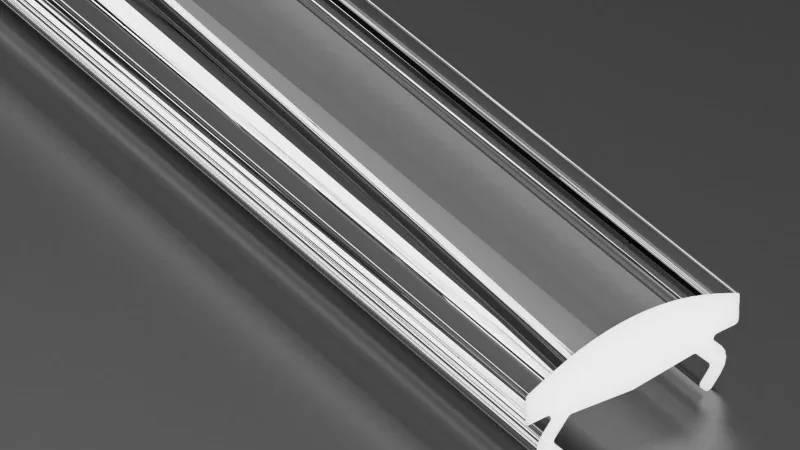
Where does PET extrusion earn its place? Clear and translucent profiles where gloss and consistency matter, appliance trims and light diffusers, strapping and monofilament, and industrial sections where a stiff, chemically resistant polyester is worth its price over PVC. For the wider technology behind all of this, our plastic extrusion overview maps the full route from resin to finished profile.
How the PET Extrusion Line Works, Step by Step
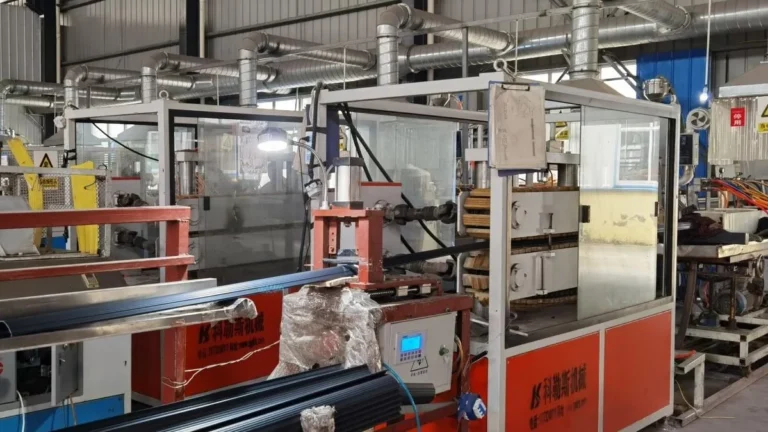
A PET profile extrusion line looks like most thermoplastic lines, but every station runs under tighter discipline:
Drying: resin is dried in a desiccant dryer before anything else happens; skimping here invalidates everything downstream.
Plasticizing: a single-screw extruder, usually with a high-compression screw and a low-shear design, brings the melt into a typical 250–280 °C window; exact settings depend on grade and equipment.
Filtration: a screen pack or automatic screen changer removes contaminants and degraded particles — PET rewards fine filtration because gels show directly on clear profiles.
Forming: melt leaves the die head and takes the section shape; profile dies are flow-balanced so melt velocity is even across the whole cross-section.
Calibration and cooling: the soft profile enters a vacuum sizing tank where water-cooled calibrators fix outer dimensions while the core solidifies.
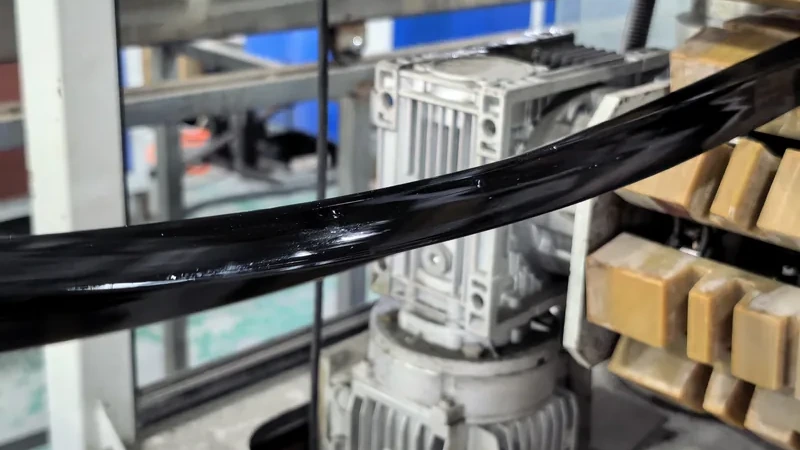
Haul-off and cutting: belts or caterpillar tracks pull the profile at a speed synchronized with the extruder, and the ratio between the two sets final wall thickness and dimensions.
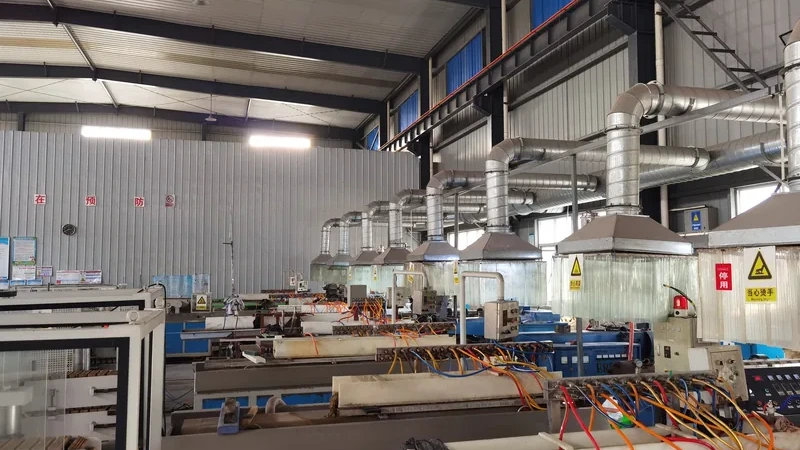
Synchronization is the quiet hero of the line. Melt temperature drift changes viscosity, viscosity drift changes die swell, and die swell changes the cross-section you measure at the tank exit — all without a single alarm. Serious profile extrusion operations therefore monitor melt temperature, vacuum level and haul-off speed as one system, and they verify wall thickness and width continuously rather than once per shift. When something does go wrong, the fastest route to a diagnosis is a structured defect troubleshooting approach that separates material causes from line causes.
ZetarVac runs 7+ automated extrusion lines with a maximum profile width of 600 mm and commits to a minimum dimensional tolerance of ±0.05 mm on the profile cross-section, subject to material and section geometry. For a temperature- and moisture-sensitive material, that tolerance is only realistic when melt, vacuum calibration and haul-off are controlled as one system.
Why Does PET Need Drying Before Extrusion?
Because PET is hygroscopic and hydrolyzes at melt temperature: the small amount of moisture that dry-looking pellets pick up from ambient air will break polymer chains inside the extruder, lowering molecular weight and leaving the finished profile brittle, hazy and streaked. Drying is a specified process step, not an optional one.1
In practice, PET resin is commonly dried to below about 0.02% moisture — some high-viscosity grades are specified lower still — using a desiccant dryer that delivers air at a dew point far below freezing, with around −40 °C a common target.2 Typical drying schedules run for a few hours at a temperature set well below the melting point, but the exact time and temperature depend on the resin grade, pellet size and dryer design, so the resin datasheet governs. Recycled PET is harder again, because it often carries residual moisture and contaminants that stress both the dryer and the filtration stage.
Verification matters as much as the setting. A moisture measurement at the machine — not a memory of warehouse conditions — should gate startup, and hoppers stay sealed and heated while the line waits, because PET re-absorbs ambient moisture within minutes of exposure. If an APET profile shows silver streaks, bubbles or unexplained brittleness, treat moisture as the first suspect, ahead of die settings or cooling rate.
"PET pellets look dry, so the resin is ready to run without a dryer."False
Moisture in PET is absorbed molecularly and is invisible on the pellet surface, so appearance proves nothing. Running damp resin causes hydrolysis in the melt, and the result is a brittle, hazy profile with streaks and voids that can scrap an entire run.
"PET must be dried in a desiccant dryer to a specified moisture level before extrusion."True
Desiccant drying at a low dew point is the standard route because simple hot-air drying cannot reach the moisture level PET requires. Resin suppliers publish the target moisture and drying conditions, and a moisture check before startup is the cheapest insurance a PET line can buy.
The cost of casual drying rarely shows at startup; it shows as field failures weeks later, when hydrolyzed material cracks in service. That is why buyers should ask a supplier directly how resin moisture is measured and recorded, and what value gates the start of a production run.
Amorphous or Crystalline: Choosing the Right PET Grade
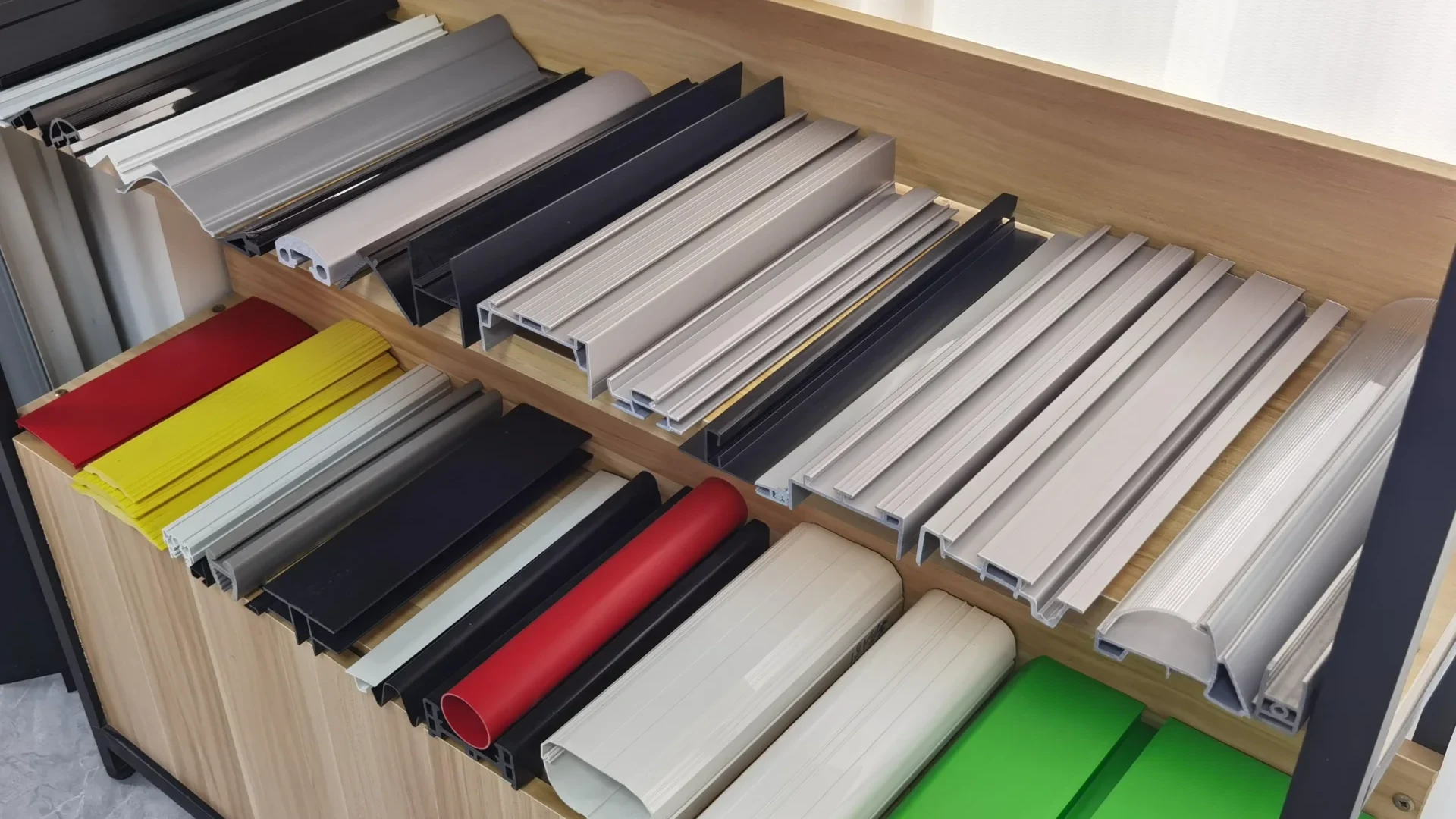
Not all PET runs the same way. Amorphous APET is the transparent workhorse: glossy, clear and comparatively forgiving in cooling. Crystalline CPET tolerates higher service temperatures, which is why it shows up in hot-fill and heated-environment applications. PETG, the glycol-modified copolyester, trades some heat resistance for toughness and a wider processing window, and it is noticeably less sensitive to small moisture excursions. Recycled rPET serves cost and sustainability goals but demands tighter drying and filtration. Molecular weight, expressed as intrinsic viscosity, is the spec behind all of these choices: higher IV means a stronger, tougher part.3
Tooling is where grade choice gets physical. A die head balanced for PVC or an olefin will not automatically hold tolerance on PET, because PET has a higher, narrower melt window and different swell behavior.
"Any extrusion die set up for PVC or polyolefins can run PET with only a temperature change."False
PET has a higher, narrower melt window and different viscosity and swell behavior, so land lengths, flow balance and filtration need re-engineering. A die head that holds tolerance on PVC often wanders out of tolerance on PET, and the scrap appears as wall variation and bow.
"PET profile extrusion needs a dedicated die design and its own process settings."True
The narrow processing window and crystallization behavior of PET reward a die head balanced for its melt viscosity, plus calibrated cooling downstream. Suppliers who run both olefins and PET keep separate process windows and trial the tool with the target resin instead of assuming one setup fits all.
Multi-material construction widens the design space further, and it is mature technology on modern lines.
ZetarVac runs up to three layers in a single co-extrusion pass, with combinations such as PP+TPV, PP+TPE, PVC+TPU, ABS+TPU and TPV+CPVC already in production. The same logic — a rigid structural body bonded to a soft functional layer — is the standard route when a profile needs a sealing lip, gasket or wear surface on a stiff section, and the tooling behind it is described in our multi-layer die head guide.
How PET Compares With Other Profile Extrusion Materials
Datasheet numbers only mean something when they come from comparable tests, so two references anchor any cross-material comparison. ISO 306 defines the Vicat softening temperature test for thermoplastics, which is used as an indicator of heat resistance when a profile will serve in warm environments.4 ASTM D638 specifies the tensile test method that is the default citation for strength and elongation values on extruded profile datasheets.5
| Property | APET / PETG | Rigid PVC | Polycarbonate | PP |
|---|---|---|---|---|
| Drying before extrusion | Required, low moisture | Not required | Recommended | Minimal |
| Typical melt range | ~250–280 °C | ~170–200 °C | ~270–320 °C | ~200–250 °C |
| Clarity | Excellent (APET) | Good | Excellent | Translucent |
| Heat resistance | Moderate to high (CPET) | Moderate | High | Moderate |
| Typical fit | Clear profiles, appliance trims | Building profiles, seals | Light covers, guards | Guides, tubes, wear parts |
Treat the table as orientation ranges, not commitments: exact values depend on the compound, the equipment and the section geometry. As a rule of thumb, PET competes where clarity, stiffness and a chemically resistant polyester body are wanted together; PVC wins on cost and inherent flame behavior for building profiles; polycarbonate wins on impact and heat; PP wins on cost and chemical resistance. Once the material is fixed, the geometry of the section itself becomes the main cost driver, which we break down in our custom profile extrusion cost guide.
What Should You Check Before Approving a PET Profile for Production?
Check three things on real parts rather than on paper: dimensional stability of the profile cross-section across a continuous run, moisture discipline on the resin feed, and appearance consistency from the first meter to the last. A part that measures well once tells you far less than a line that holds tolerance for an hour.
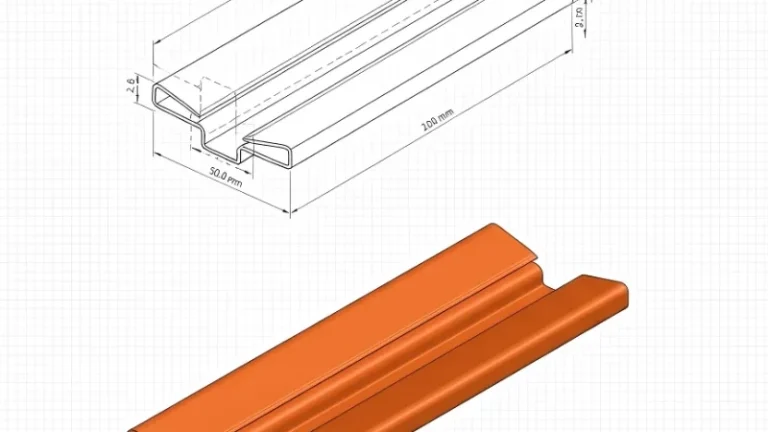
Start with the drawing. Specify tight tolerances only on the dimensions that functionally matter, state straightness and twist separately, and give the rest a general tolerance — over-tolerancing every surface raises tooling and calibration cost without adding value. Then agree on a measurement plan: which cross-section features get sampled, at what interval, at line speed. Stable haul-off control is what makes those numbers repeatable over a full run.
"Passing the first article means the profile extrusion process is stable for mass production."False
A first article is a single snapshot taken under startup conditions that will not repeat exactly across a shift. Long-run stability only shows in trend data — wall thickness, width and straightness sampled over time — because drift in melt temperature and haul-off sync reveals itself after the first hour, not before it.
"Production readiness is proven by continuous-run data, not by a single approved sample."True
Ask for measurements taken across a defined production window at line speed: a stable line holds the same cross-section dimensions at meter 10 and meter 1,000. Trend charts and a defined sampling plan are the practical proof, and they cost far less than discovering drift inside your own assembly plant.
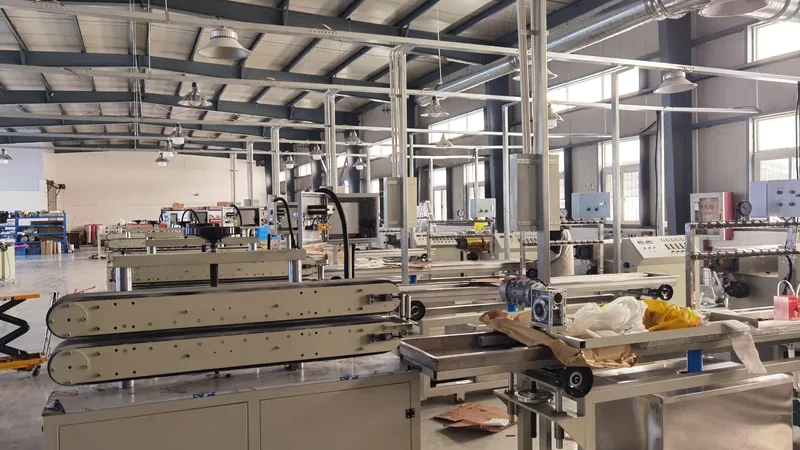
Scale is the other thing worth confirming early. A pilot run on one line and volume production on another should not change your measured results, which is why capacity and process redundancy belong in the supplier conversation.
ZetarVac supports prototyping, small batch and large batch production across 45+ production lines, with reference monthly capacity of roughly 300–500 tonnes on the extrusion lines, and runs in-line punching, embossing and printing directly on the line. For a buyer, that means a custom profile program can move from trial to volume without changing suppliers, and secondary features do not need a separate off-line pass.
FAQ
What moisture level should PET reach before extrusion?
Most PET extrusion grades are dried to below about 0.02% moisture, and some high-viscosity resins are specified even lower. The governing number is always the resin supplier datasheet, verified with a moisture measurement at the machine before startup rather than assumed from storage conditions.
What melt temperature does PET extrusion use?
Typical melt temperatures fall in the 250–280 °C range, with PETG running somewhat cooler and high-IV resins toward the upper end. Exact settings depend on the grade, the equipment and residence time, and running hotter than necessary costs strength through chain degradation.
Can PET be combined with other polymers in one profile?
Multi-layer co-extrusion is standard practice in the industry, and PET is often paired with tie layers and functional skins in sheet and profile work. The practical questions are interlayer adhesion and matched shrink behavior, so a die trial on the real layer stack is the way to prove it before volume production.
What tolerances can an extruded profile realistically hold?
Fine cross-section tolerances are achievable — ZetarVac quotes a minimum of ±0.05 mm on the profile cross-section, subject to material and section geometry. Straightness, twist and surface finish are separate characteristics with their own specifications, so state them explicitly on the drawing.
How should I evaluate a supplier for a custom profile program?
Ask how resin moisture is measured and gated, request continuous-run dimensional data rather than a single first article, and confirm the supplier has run your material class with a dedicated tool trial. When you are ready to compare your options, send your drawings to ZetarVac’s extrusion engineering team or review the full service scope to get an engineering read on tolerances, drying discipline and tooling before you commit.
-
Hydrolysis: a chain-scission reaction in which water breaks polyester molecular chains at melt temperature, reducing molecular weight and mechanical strength. ↩
-
Dew point: the moisture content of drying air; desiccant dryers for PET target dew points far below zero, which signals very dry air. ↩
-
Intrinsic viscosity (IV): a measure of molecular weight in polyester resins; higher IV means a stronger material, and processing that lowers IV weakens the part. ↩
-
Vicat softening temperature: the temperature at which a flat-ended needle penetrates a plastic specimen under a defined load, defined in ISO 306 and used to compare heat resistance. ↩
-
ASTM D638: the standard tensile test method for plastics, widely cited for strength and elongation values on extruded profile datasheets. ↩