When a sourcing engineer shortlists a profile extrusion company, the questions that decide the project rarely appear on the homepage: what tolerance the line can actually hold on your section, which materials the die shop runs every week, and what a quotation really covers. This guide answers those questions from the standpoint of a working plant, so you can compare suppliers on engineering substance rather than brochure language. If you need the process fundamentals first, the overview of plastic extrusion molding explains how a line converts pellets into continuous sections.
- A profile extrusion company lives or dies by die head engineering: cross-section design, calibration and cooling determine both tolerance and line speed.
- Dimensional capability is material- and geometry-dependent; a plant commits to ±0.05 mm on profile cross-sections only where material and section shape allow it.
- Co-extrusion of up to three layers lets one section combine rigid support with a soft functional layer — PP+TPV and ABS+TPU are proven combinations.
- First-article approval proves the die works once; sustained dimensional stability is a separate question that run data answers.
- A fair quotation states what is included: tooling, secondary operations such as punching, embossing and printing, and packaging — not just a per-kilogram price.
What Does a Profile Extrusion Company Actually Do?
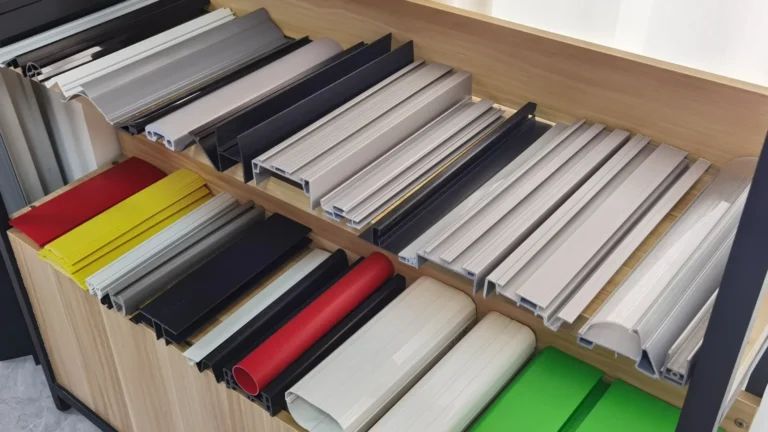
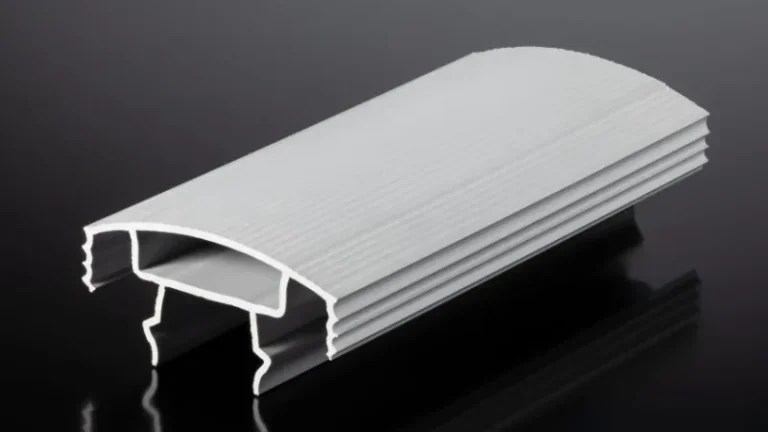
In one sentence: a profile extrusion company melts thermoplastic resin, pushes it through a shaped die head, calibrates and cools the emerging section, and cuts it to length — producing continuous parts with a constant cross-section such as channels, trims, rails, tubes and sealing strips. The line is only half the story; die design and process control decide whether the section comes out straight, stable and repeatable.
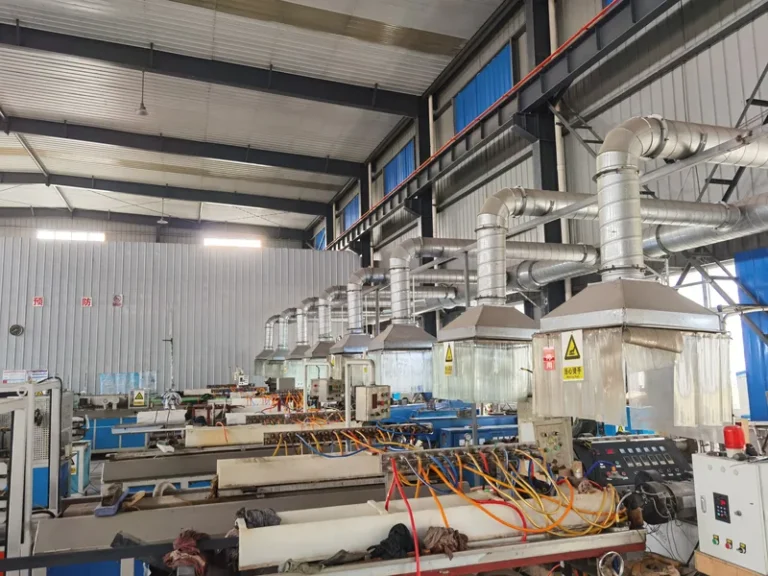
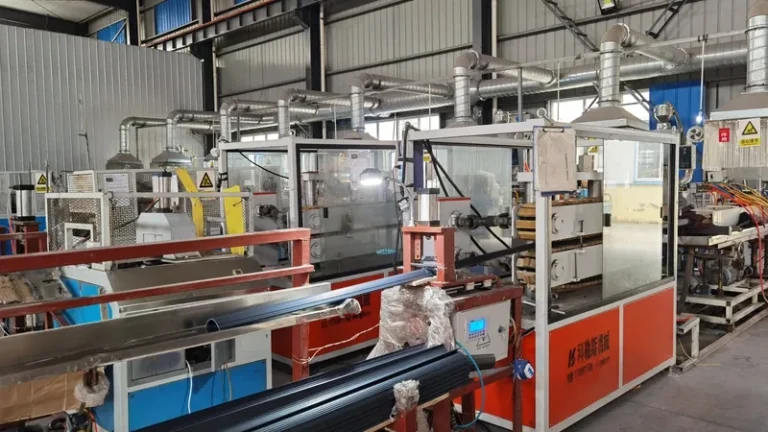
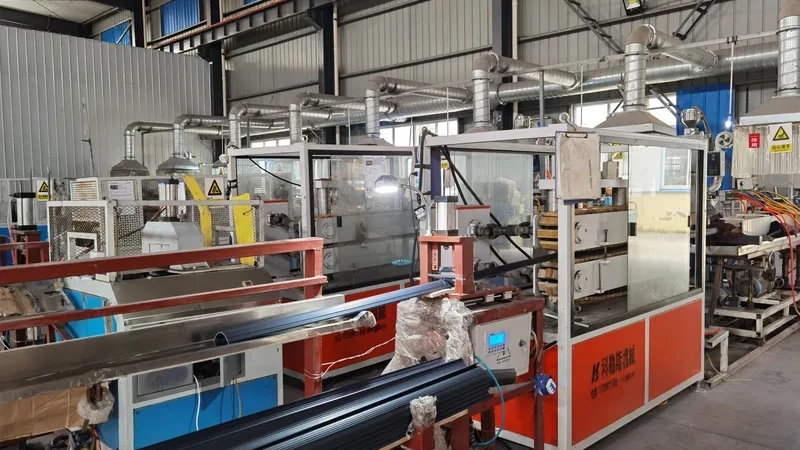
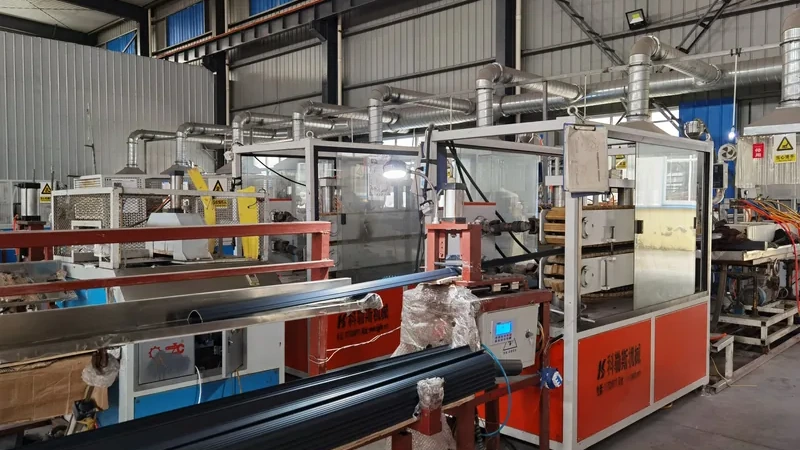
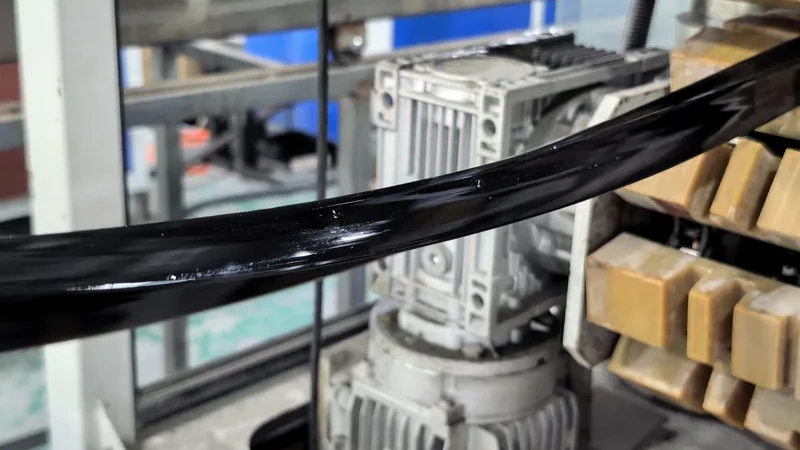
The equipment chain matters because every stage can distort the part. Downstream of the extruder and die head sit the calibration table, where vacuum and water hold the hot section to shape; the haul-off, which sets pull speed and therefore final dimensions; and the cutter or winder. On an automated line, secondary operations — punching, embossing and printing — run in-line, so holes, surface texture and markings arrive without a second handling step.
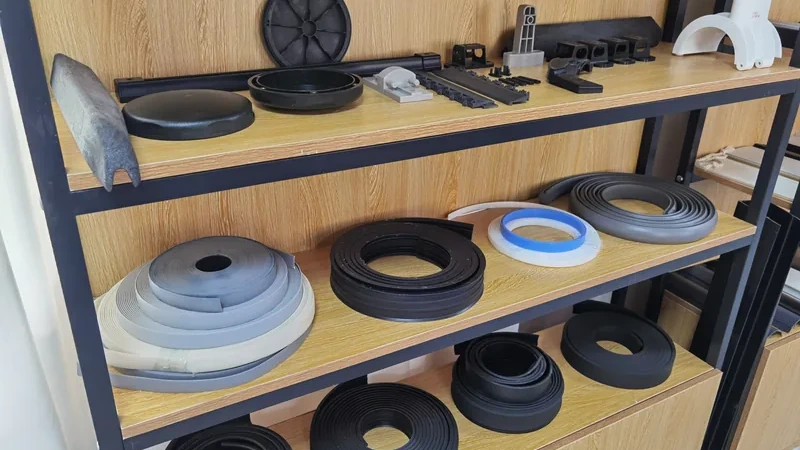
ZetarVac runs more than 7 automated extrusion lines with a maximum profile width of 600 mm, inside a plant with over 45 production lines in total. For a buyer, that means wide sections such as industrial framing or building channels are standard work, not special arrangements.
That width range has practical meaning: sections from narrow 5 mm trims up to 600 mm panels can be quoted by the same supplier, which simplifies sourcing when a product family mixes small seals with large covers.
Which Tolerances Can You Realistically Hold?
As a direct answer: on the profile cross-section, a capable extruder can hold a minimum dimensional tolerance of about ±0.05 mm, but only where the material and the section geometry cooperate. Most everyday sections sit at wider general tolerances, because thin walls, long unsupported legs and highly filled compounds all pull the achievable band outward.
"An extruder can quote the same tight tolerance on every dimension of your drawing."False
Tolerance capability is not uniform across a section. Rigid, symmetric zones hold tighter than long free legs or sharp internal corners, because cooling shrinkage acts differently on each. A supplier who promises ±0.05 mm everywhere is quoting a number that cannot be measured consistently on every feature.
"Tolerance should be graded feature by feature on the drawing before tooling starts."True
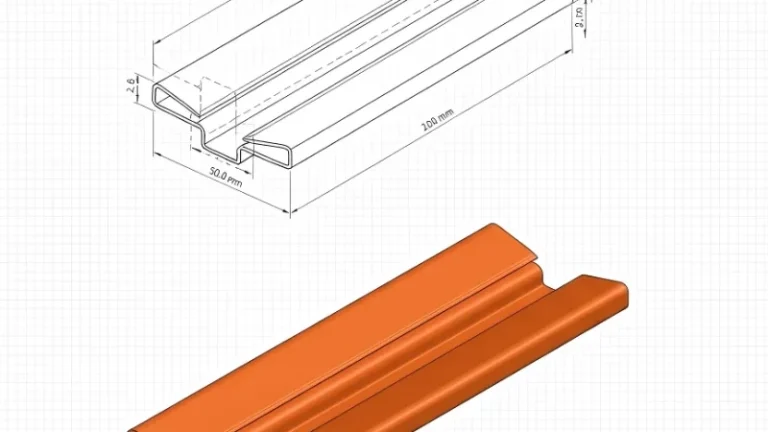
Experienced profile extrusion suppliers review the drawing dimension by dimension and mark which features are critical to function. Critical fits get the tightest realistic band; cosmetic zones get standard tolerance. This grading is also how the extrusion die and its gauges get designed.
Three drafting habits protect tolerance before a die is ever cut: keep wall thickness as uniform as the function allows, avoid abrupt thick-to-thin transitions that shrink at different rates, and give the section some symmetry so cooling loads balance. Before you freeze the drawing, run it through the DFM checklist for extruded plastic profiles and extrusion dies, which covers the section details that most often cause rework.
How Do You Match Material to Section and Service?
Material choice should start from the service environment — mechanical load, temperature, UV exposure, chemical contact — and then from the section’s function. A resin that extrudes beautifully can still fail outdoors or under cyclic load, so the shortlist should be built from working conditions, not from price per kilogram.
| Material | Typical extruded profiles | Why it is selected |
|---|---|---|
| PVC | Window and door profiles, decorative trims, pipes, sealing strips | Cost-efficient, weatherable with additives, easy to extrude |
| ABS | Automotive and industrial profiles, decorative parts | Good surface finish, impact strength, paintable |
| HDPE | Pipes, edge trims, guide rails, wear strips | Tough, chemical-resistant, low friction |
| LDPE | Film, flexible tubing, soft profiles | Flexible and low cost |
| PP | Profiles, pipes, functional parts | Fatigue and chemical resistance at low cost |
| PC | Transparent pipes, light covers, clear profiles | High clarity with impact strength |
| PMMA | Optical profiles, light covers, display profiles | Optical clarity and UV stability |
| PA6 / PA66 | Industrial profiles, wear parts, mechanical parts | High strength and wear resistance |
| POM | Precision profiles, guide rails, mechanical parts | Low friction and dimensional stability |
| TPE / TPV | Sealing strips, gaskets, automotive and building seals | Elastic recovery with a soft, weatherable contact layer |
| ASA | Outdoor and building profiles | Excellent UV and color retention |
| PP/GF | High-strength industrial profiles | Glass reinforcement for load-bearing sections |
For window and door work, EN 12608 is the European standard that specifies the profile geometry, impact resistance and heat reversion requirements for rigid PVC profiles, so a supplier quoting that family should be able to show conformance data1. Where a section faces heat or sustained load, ISO 306 — the Vicat softening temperature test for thermoplastics — gives a comparable indicator of behavior near the upper service temperature2. Fire performance is a separate axis: UL 94 classifies the flammability of plastic materials used in parts of devices and appliances, and buyers of electrical or appliance trims usually name the required class on the drawing3.
ZetarVac’s material library covers PVC, ABS, HDPE, LDPE, PP, PC, PMMA, PA6/PA66, POM, TPE, TPU, TPV, PC/ABS, ASA and PP/GF, with PP/GF reserved for high-strength industrial profiles. For a buyer, the breadth matters less than the pairing: the useful question is which grades the plant runs weekly for your application class.
What Can Co-Extrusion Do That a Single Material Cannot?
Co-extrusion joins two or three materials into one section during a single pass through the die head4, so a rigid carrier and a soft functional layer can be combined without any assembly step. Up to three layers can be run in one pass, which is enough for most support-plus-seal or support-plus-wear combinations.
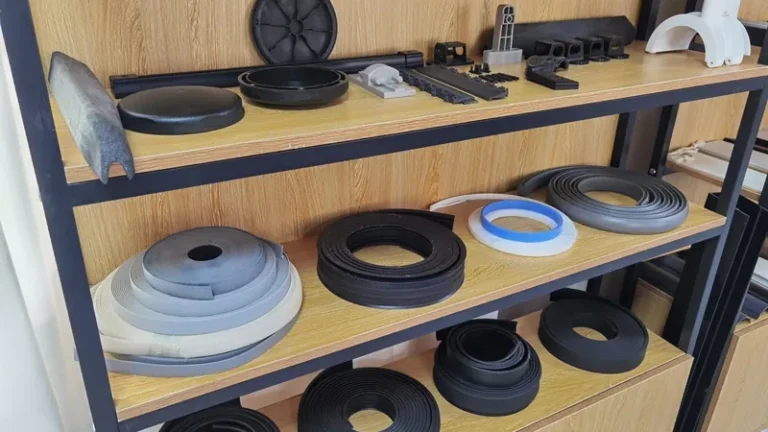
Two production examples show the logic. An automotive seat slide rail strip in PP+TPV uses the PP for structural support while the TPV lip delivers dust exclusion, guiding, wear resistance and low friction in the same section. A household robot vacuum squeegee strip in ABS+TPU pairs the ABS rigid body with a TPU wiping edge that stays flexible and resists wear. Other combinations routinely run include PP+TPE, PVC+TPU and TPV+CPVC.
The design rule is to assign each layer one job. If the soft layer is asked to carry load as well as seal, it creeps; if the rigid layer is asked to seal as well as support, it cracks at the transition. Decide which face does the sealing or wiping, and give it the soft material with enough thickness to function.
What Should a First Article Prove Before You Release Volume?
A first article proves that the extrusion die and calibration can produce your section once, within tolerance, at a defined line speed. What it cannot prove is drift over hours — that requires dimensional data collected across a sustained run.
"Once the first article passes, mass production will hold the same dimensions."False
A first article is a single snapshot taken on a freshly tuned line. Die wear, melt temperature drift and haul-off speed variation appear over hours, not minutes. Releasing volume on one approved piece is how dimension creep gets discovered at incoming inspection.
"Ask for dimensional data across a sustained trial run, not only the first article."True
A serious profile extrusion supplier samples the section at intervals during a trial and shows the spread against tolerance — the basis of SPC in continuous production[^spc]. If the spread is stable, the first article means something; if it is not, no single piece tells you anything.
Beyond dimensions, a first-article review should cover straightness over the full length, surface finish, color match against the approved standard, and — on co-extruded sections — the bond between layers. Agree the inspection points and gauge ownership before the trial, not after.
What Does a Fair Quotation Actually Include?
A complete quotation separates one-time items — die design and tooling, setup — from recurring costs such as resin, run time, secondary operations and packaging. If a price looks unusually low, the first thing to check is whether tooling, gauges, punching, embossing, printing and packaging sit inside the number or will reappear later.
"The unit price on a profile quotation is the number to compare."False
Unit price hides the structure of the deal. Two quotations with identical per-metre prices can differ sharply once tooling amortization, secondary operations and packaging enter the calculation. Comparing unit price alone reliably rewards the quote with the most exclusions.
"Compare quotations item by item: tooling, secondary operations, packaging and volume breaks."True
Ask each supplier to state what the price includes and at which volumes it steps down. In-line punching, embossing and printing change the economics because they remove a separate finishing step. A detailed cost breakdown for custom plastic profile extrusion shows how these pieces add up.
Volume flexibility belongs to the same conversation. ZetarVac supports prototyping, small batch and large batch production on the same extrusion platform, so a section validated on a prototype die can carry into volume without re-qualification. The capabilities page for a custom plastic profile extrusion manufacturer lists what to verify in the same review.
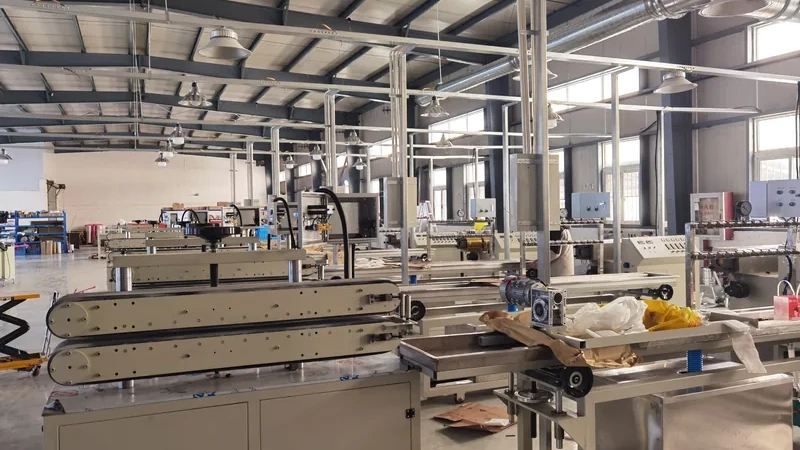
Punching, embossing and printing run in-line on ZetarVac’s extrusion lines, so functional holes and surface markings are produced during extrusion rather than in a separate finishing operation. For a buyer, that removes one supplier interface and one handling step from the cost stack.
FAQ About Working With a Profile Extrusion Company
How wide can an extruded profile be?
Width capability depends on the line, not the material alone. ZetarVac’s automated extrusion lines accept profile widths from 5 mm up to 600 mm, so trims, channels and panel-scale sections can be sourced from the same plant floor.
Can one section combine rigid and soft materials?
Yes. Up to three layers of co-extrusion are available in a single pass, and combinations actually in production include PP+TPV, PP+TPE, PVC+TPU, ABS+TPU and TPV+CPVC. The rigid layer carries load; the soft layer seals, grips or wipes.
What stands behind the ±0.05 mm tolerance figure?
It is the minimum achievable dimensional tolerance on the profile cross-section, subject to material and section geometry. Symmetric, moderately thick features can approach it; thin legs and heavily filled compounds need wider bands agreed at drawing review.
Are non-standard sections and finishing supported?
Non-standard sections are developed to customer drawing, and the extrusion lines support in-line punching, embossing and printing, so functional holes and markings are produced during extrusion rather than in a separate operation.
How do I start a profile project?
Send your drawing or a section sample with target quantities and the service environment. The engineering team reviews extrudability, material selection and tooling, then returns a technical proposal. When you are ready to compare suppliers, contact our team to request a quote through the China plastic extrusion manufacturer page, or view the full service scope to discuss your project.
-
EN 12608: European standard specifying profile geometry, impact resistance and heat reversion requirements for rigid PVC window and door profiles. ↩
-
ISO 306: Test method for the Vicat softening temperature of thermoplastics, used as an indicator of heat resistance. ↩
-
UL 94: Classification standard for the flammability of plastic materials used in parts of devices and appliances. ↩
-
Co-extrusion: Extrusion of two or more materials through a shared die head to form a multi-layer section in one pass. ↩