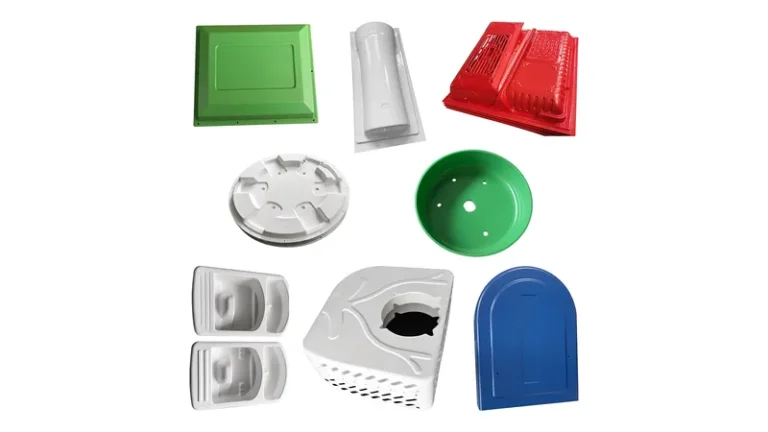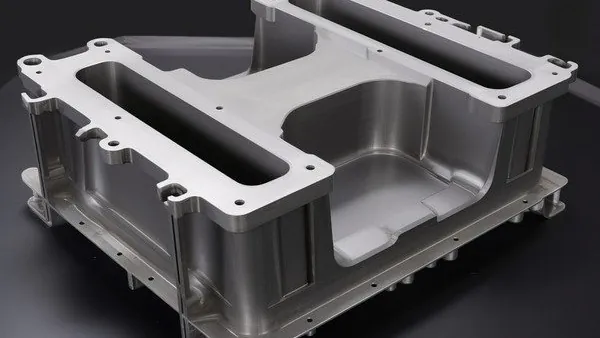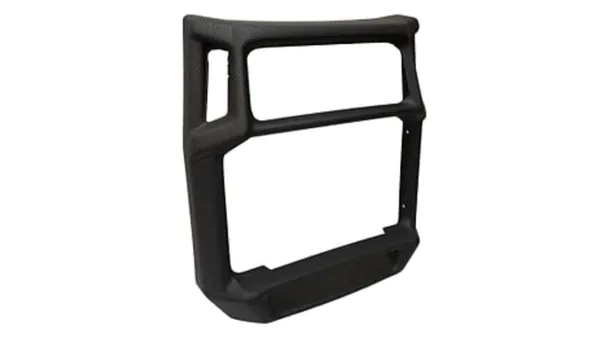
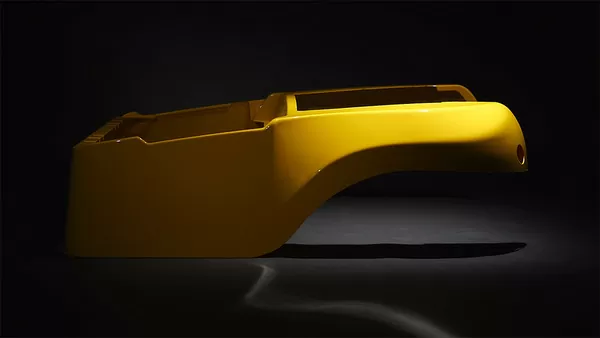
Before a production tool is cut, a heavy-gauge thermoforming project wins or loses in prototyping. A prototype mold and a disciplined trial-run process turn a 3D model into measured evidence: real sheet, real cycle behavior, real dimensional data. This guide explains how prototype vacuum forming molds are built, what a trial run on the forming machine actually involves, and how to validate parts before committing to hard tooling. It is written for procurement engineers, product designers, and plant technical leads who need to judge a supplier’s process, not just its brochure.
- Prototype molds for heavy gauge thermoforming are usually machined from aluminum or epoxy tooling board, not production steel.
- Trial runs must reach thermal steady state before any dimensional data can be trusted.
- First-article approval is not process validation; measure parts sampled across a continuous run.
- 5-axis CNC trimming lets prototype parts be finished with the same trim strategy planned for production.
- A design that only works at slow prototype cycle speeds is not production-ready.
How Does a Prototype Vacuum Forming Mold Work?
A prototype mold in vacuum forming is a fast-to-build tool that reproduces the forming geometry of a production mold so engineers can test part design, draft, material choice, and wall distribution before committing to hard tooling. It runs on the same class of machine and the same sheet thickness range, so the data it produces reflects real forming behavior rather than a simulation.
Prototype molds for heavy gauge thermoforming are typically CNC-cut from aluminum or epoxy tooling board. Male, or positive, molds are the default at prototype stage because they are cheaper to machine and easy to modify; female cavity molds are reserved for parts where the outer surface is cosmetic and controlled. The designer’s main levers are draft angle, corner radii, and vacuum hole layout, which concentrates suction at the deepest draws while keeping holes small enough to leave no witness marks on visible surfaces.
Forming windows depend on material and machine, but a prototype should run on the same sheet gauge the production part will use. Heavy-gauge lines process sheet from 0.5 to 15 mm and can form parts up to roughly 2,500 mm in length, so even large enclosures can be prototyped at true scale instead of as scaled-down models. If you are still building background on the process itself, start with our vacuum forming overview.
Wall thickness is never uniform in vacuum forming: corners thin out, deep draws stretch the sheet, and webbing appears between close parallel walls. The prototype stage exists to expose these problems while they are still cheap to fix, and a structured review such as a DFM checklist1 catches most of them before the first sheet is heated.
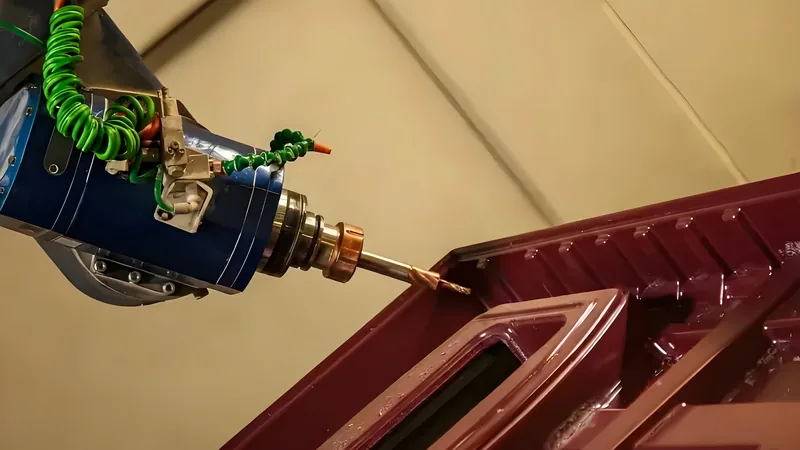
ZetarVac processes sheet from 0.5 to 15 mm and forms parts up to about 2,500 mm in length, so prototypes are made at full scale on production-class thermoforming machines. For a buyer, that means the thinning behavior, draft performance, and forming window you observe during the trial are the same conditions a production tool will face.
Choosing Prototype Tooling Material
Tooling material is a cost-and-data decision, not a formality. Epoxy and polyurethane tooling boards machine fast and rework easily, which suits early geometry checks. Aluminum conducts heat, survives hundreds of cycles, and produces dimensional data that correlates closely with a production tool. Steel is rarely justified at prototype stage because what it buys is tool life, which a short trial does not consume. Build times depend on part size and complexity, but board tooling is typically measured in days and machined aluminum in one to three weeks.
| Tooling option | Typical build time | Best suited for | Main limitation |
|---|---|---|---|
| Epoxy tooling board | Days | Early geometry checks, draft and wall evaluation | Short tool life, weaker surface detail |
| Machined aluminum | One to three weeks | Dimensional correlation, cosmetic checks, pilot batches | Higher cost than board |
| Production tool | Longer, project-specific | Validated volume production | Too slow and costly for design iteration |
"Prototype molds must be made of steel to produce trustworthy results."False
A prototype tool does not need steel because the goal is forming data, not tool life. Geometry, wall thinning, and draft behavior are faithfully reproduced by board or aluminum tooling, and aluminum’s thermal behavior closely tracks a production mold. Specifying steel for a trial adds weeks of lead time without adding any decision-relevant information.
"Match the tooling material to the question the trial must answer."True
If the trial verifies geometry, thinning, and appearance, board or aluminum both work well. If it must also prove cycle time and dimensional stability over extended running, aluminum is the right choice because its heat transfer resembles a production mold. Declaring the goal before the tool is cut prevents paying for precision the program does not need.
What Happens During a Trial Run on the Forming Machine?
A trial run is a structured series of forming cycles used to find the process window for the prototype mold: sheet temperature, vacuum timing, forming hold, and cooling duration. Its output is not just parts; it is a documented parameter set that a production tool can inherit.
A typical trial starts with oven setup. Heavy-gauge machines heat sheet from both sides, and each material has a sag window: the temperature range where the sheet drapes under its own weight without tearing or marking. PMMA and PC sit higher in the heating range than ABS or PP, so setup changes with the material. Vacuum is applied once the sheet reaches its setpoint, and the formed part is held until it cools enough to keep its shape.
Serious dimensional data only becomes valid once the mold reaches thermal steady state. In the first cycles the tool is cold and pulls heat from the sheet faster than it will in continuous running, so early parts can measure differently from cycle-thirty parts. A disciplined trial therefore runs dozens of cycles before measurement pieces are pulled, and the process window is recorded as parameter ranges rather than single points.
Common trial defects map directly to parameters: webbing between tall features, chill marks from cold tool contact, blisters from overheated sheet, and thin corners from aggressive draws. Because each defect points to a specific cause, the trial is diagnostic rather than decorative.
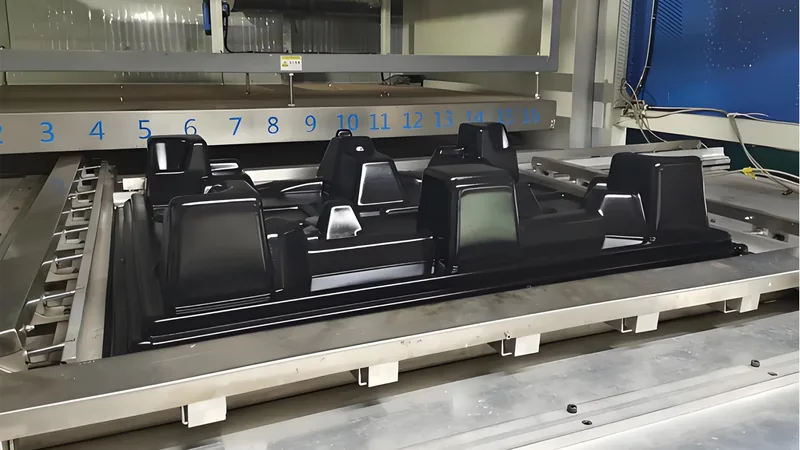
"A first article that looks correct proves the process is stable."False
A first-off part is formed against a cold tool, before the machine has settled into a repeating thermal cycle. As the mold heats up, shrinkage and warpage shift and dimensions can drift out of drawing tolerance within the first tens of cycles. Signing off on the first piece hides exactly the variation the trial exists to expose.
"Measure parts pulled across a continuous run, not just the first cycle."True
The correct practice is to let the cell reach steady state, then sample parts at defined intervals and record dimensions against the drawing. That spread shows whether the process window can absorb normal variation in sheet lots and ambient conditions. Only this evidence tells you the design is ready for a production tool.
A trial can also flow directly into a pilot batch on the same equipment, which avoids a second learning curve when the program schedule is tight. The parameters recorded during the trial become the starting setup for the pilot run rather than a document that gets archived.
ZetarVac runs more than 20 vacuum forming and thermoforming machines within 45+ total production lines, and prototyping, small batch, and large batch production are all supported. A trial mold is therefore run on the same class of equipment that would produce the parts later, and a pilot batch can follow without changing machines or requalifying the process.
How Do You Validate a Prototype Part Before Production?
Validation combines dimensional inspection against the drawing with material and application tests chosen from the part’s service environment. A prototype is approved because measured properties fall inside the ranges the application demands, not because it looks right in hand.
Dimensional validation starts with a control plan: the drawing identifies critical-to-function dimensions, and trial parts are measured on those features first. Cosmetic parts are inspected for surface finish and witness marks under defined lighting. For structural panels, stiffness is often the governing property and is commonly checked with flexural testing per ASTM D790. For material integrity, ASTM D638 specifies the standard tensile test method for plastics, and it is routinely run on thermoformed sheet coupons to confirm that forming has not degraded strength and elongation beyond acceptable limits.2
Where the part is a housing or cover for electrical equipment, standards drive acceptance. UL 94 classifies the flammability of plastic materials, and many equipment enclosures must meet a defined rating before they can be approved for use.3 For covers that must exclude dust and water, IEC 60529 defines the IP code that grades the degree of protection an enclosure provides, and a formed cover claiming a rating has to be validated against that requirement.4
Heat exposure matters as well. Heat deflection temperature measured under load indicates where a formed panel begins to lose stiffness in service,5 and materials such as PC and ASA hold shape at higher service temperatures than ABS or PP. Clear PMMA parts are additionally judged on optical clarity, since forming can haze or mark surfaces that were clear as flat sheet. External resources such as the SPE Thermoforming Division publish technical material on forming methods and testing practice if you need deeper background.
Document the results in a short trial report: parameter ranges, sampled dimensions, defects observed and corrected, and open risks. This report is something the buyer, not just the supplier, should own, because it becomes the baseline for production acceptance criteria.
What Changes Between a Trial Mold and a Production Tool?
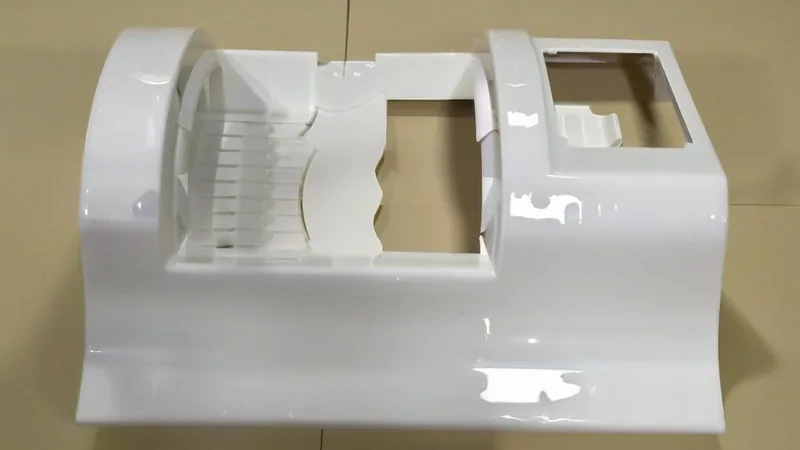
Moving from a trial mold to a production tool is an engineering step, not a copy operation. The production design adds cooling channels for repeatable cycle times, harder wearing surfaces where the sheet slides, and often multiple cavities to reach volume. Trimming also formalizes: prototype parts are finished on a 5-axis CNC trimming centre, and that same trimmed outline definition is carried into the production trim fixture so edge geometry transfers exactly from trial to production.
Cycle time is usually the biggest change. A prototype run tolerates long cooling because no one is paying for machine hours at volume; a production tool must cool the part in a commercially sensible time, which changes mold material, cooling layout, and sometimes sheet gauge. A design that only works on a slow prototype cycle is not production-ready no matter how good the trial parts looked.
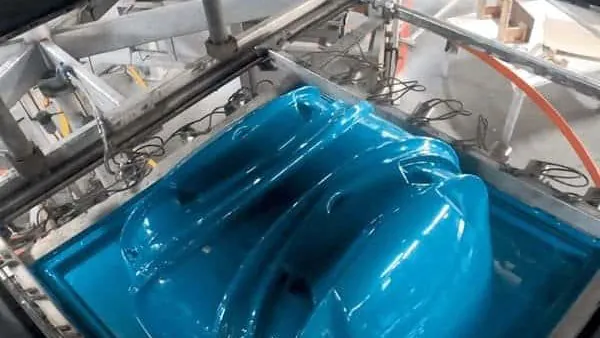
"Scaling up from a trial mold is mostly a copy-and-paste exercise."False
A production tool must survive volume running, cool on a commercial schedule, and hold tolerance across sheet lot variation, none of which a trial mold was designed to prove. Copying the tool without redesigning cooling and trim usually surfaces as warpage and slow cycles at volume. The trial gives the design intent; production tooling has to earn its own validation.
"Treat the trial report as the production tool's design brief."True
The parameter ranges, thinning observations, and dimensional spreads recorded during the trial are exactly what a mold designer needs to size cooling, vacuum layout, and trim. Handing the report over with the release package shortens tooling discussions and reduces the risk of re-cutting. It is the cheapest engineering document on the program.
For a full view of how each stage connects, from sheet selection through forming and finishing, see our step-by-step guide to the heavy gauge thermoforming process.
FAQ
How long does a heavy-gauge thermoforming prototype take?
Prototype tooling is typically measured in days for board and one to three weeks for aluminum, plus machine time for the trial itself. Real schedules depend on part size, material, and current machine load, so the reliable answer comes from reviewing your part drawing.
How many trial parts are enough before a production decision?
Enough to cover thermal steady state and at least one change of sheet lot. In practice that means parts sampled across a run of dozens of cycles rather than three first-offs, with dimensions recorded against the drawing each time.
Can a prototype mold be used for real production?
A machined aluminum prototype mold can often support pilot batches and short bridge production, but it was not designed for volume tool life. Epoxy board tooling should be treated as evaluation only. Plan the production tool as a separate deliverable with its own validation.
What should we send to start a prototype?
A 3D model, a 2D drawing with critical dimensions and tolerances, the target material, and expected annual volume. With those four inputs, a supplier can recommend tooling material and draft the trial plan before any metal is cut.
Ready to move from prototype to production?
Send your part drawing to our team and request a quote through our service page. We will review the geometry, recommend tooling, and define a trial plan before any production tool is cut.
-
DFM: Design for Manufacturability, the practice of checking part and mold design against process constraints before tooling is built. ↩
-
ASTM D638: The standard tensile test method for plastics, used to measure strength and elongation of sheet and formed parts. ↩
-
UL 94: A flammability classification standard for plastic materials, commonly required for equipment enclosures. ↩
-
IP code: The ingress protection rating defined by IEC 60529, grading how well an enclosure keeps out dust and water. ↩
-
HDT: Heat Deflection Temperature, the temperature at which a plastic specimen deflects a defined amount under a specified flexural load. ↩