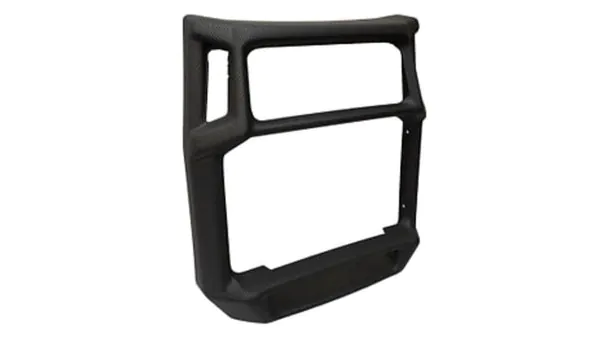
PETG and acrylic (PMMA) are the two transparent sheet materials most often shortlisted for heavy-gauge thermoforming of enclosures: machine guards, equipment covers, display housings, and protective panels. The datasheet comparison looks simple, but the decision changes once you account for forming behavior, corner thinning on deep draws, chemical exposure, outdoor aging, and flammability requirements. A material that forms beautifully on a shallow tray can tear, haze, or warp on a deep enclosure draw. This article breaks the choice into the engineering questions that actually decide it — formability, optics, mechanics, validation, and cost — so you can commit to one material before tooling is cut.
- PETG offers a wider, more forgiving forming window; acrylic needs steadier oven control but delivers higher clarity and surface hardness.
- Acrylic (PMMA) weathers outdoors far better than PETG, which can haze and yellow under long UV exposure.
- PETG is the tougher sheet in impact; acrylic is stiffer but notch-sensitive at formed corners and trimmed edges.
- Lock heat deflection and flammability requirements early; they constrain material choice more than clarity does.
- Deep draws are limited by geometry and draw ratio, not by brand names; verify thickness distribution before committing.
- Both materials trim cleanly on 5-axis CNC equipment when trim allowance is designed into the forming tool.
Where PETG and Acrylic Differ in Thermoforming
Both materials are amorphous thermoplastics: they soften when heated, take the mold shape under vacuum, and hold it once cooled. PETG is a glycol-modified polyester; acrylic is polymethyl methacrylate. The practical difference shows up in the forming window. Typical heavy-gauge forming temperatures run roughly 110–150 °C for PETG and 140–180 °C for PMMA, depending on grade, sheet gauge, and oven configuration. PETG signals readiness clearly — it sags evenly, and the gap between formable and overheated is wide. PMMA needs higher heat, often two-sided heating on thicker sheet, and more disciplined oven control before vacuum forming begins.
Cycle time follows the same logic. Acrylic generally runs longer cycles at heavier gauges because it must be heated slowly to avoid surface scorch and internal stress. PETG heats faster and cools predictably, which shortens the loop on mid-volume runs. Neither difference is a dealbreaker — both are formed daily on production tooling — but they shape unit cost and oven scheduling, and they matter most when one part is quoted in both materials.
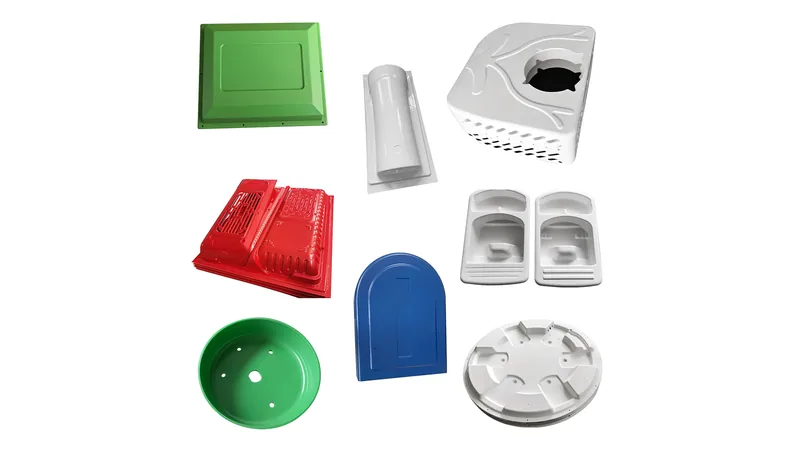
For a process refresher before the material comparison, this vacuum forming overview explains how sheet heating, tooling, and the vacuum sequence interact.
| Property (typical, grade-dependent) | PETG | Acrylic (PMMA) |
|---|---|---|
| Forming window | Wide, forgiving | Narrower, needs steady oven control |
| Typical forming temperature | ~110–150 °C | ~140–180 °C |
| Optical clarity after forming | Very good | Excellent, highest light transmittance |
| Impact toughness | High, ductile | Moderate, notch-sensitive |
| Stiffness and surface hardness | Lower | Higher |
| Outdoor UV aging | Fair, prone to haze | Excellent |
| Typical deep-draw failure | Corner thinning past draw limit | Webbing and tears when too cold |
The values above are engineering ranges for general-purpose grades, not guarantees for a specific sheet supplier. Confirm them against the datasheet of the sheet you will actually buy, because additives and regrind content shift both windows.
"PETG and acrylic can share the same oven settings because both are clear sheets."False
Similar clarity does not mean similar softening behavior. PETG and PMMA form at different temperatures and sag at different rates, so running one recipe on the other material produces haze, blisters, or torn webs.
"Each material needs its own forming window validated on the actual tool."True
Even within one polymer family, sheet suppliers and gauge changes shift the optimal sag temperature. Record sag point, vacuum apply timing, and cycle time for each material, and re-verify whenever the sheet lot or thickness changes.
Which Material Forms Better for Deep Enclosures?
PETG generally forms deep draws more reliably because it stretches evenly and tolerates aggressive thinning before tearing. Acrylic can be drawn deep as well, but it needs higher sheet temperature, slower forming, and generous radii to avoid webbing and cold tears.
The controlling parameter is draw ratio1 — the relationship between formed surface area and original sheet area. As draw depth increases, the sheet must stretch farther over corners, and material concentrates at the flange while corners thin out. PETG ductility buys margin here. PMMA has less stretch to give, so deep acrylic enclosures lean on design aids: plug assistance, larger corner radii (a common rule of thumb is 3–5 times sheet thickness), generous draft angles, and a pre-stretch bubble before vacuum is applied.
Neither material removes the geometry check. Calculate the draw ratio before locking in either material, because a part that exceeds the practical limit fails the same way in both — paper-thin corners that crack in service. If you are sizing a deep enclosure, this draw ratio calculation guide for thick-wall thermoforming walks through the math.
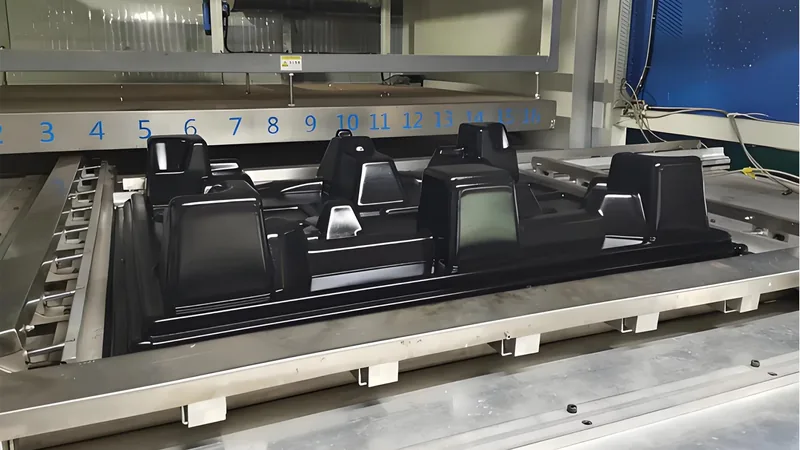
At the ZetarVac plant, forming lines process sheet from 0.5 to 15 mm and form parts up to about 2,500 mm in length, with final outlines trimmed on a 5-axis CNC centre that follows the forming tool. For enclosure projects, deep-draw geometry and precise trim features can be evaluated on the same forming tool without building a separate trimming fixture.
Optical Clarity, Chemical Resistance, and Outdoor Aging
If the enclosure is a display cover or a guard where seeing the equipment matters, acrylic still sets the reference. Total luminous transmittance of transparent plastics is specified by ISO 134682, which defines how the percentage of visible light passing through a formed clear part must be measured and reported. Formed PMMA parts reach transmittance levels close to the original sheet when the forming window is respected. PETG stays very clear too, but heavy draws can show slightly more haze at stretched corners.
Chemical exposure often decides indoor applications. PETG resists many cleaning agents, oils, and dilute acids better than PMMA, which is sensitive to some alcohols and solvents and can craze under combined stress and chemical attack. Acrylic counters with a harder surface that resists scratching and wipes clean without clouding — a real advantage on exposed covers handled daily.
Outdoors, the gap widens. PMMA is one of the most weather-stable transparent plastics available and holds gloss and clarity through years of sunlight, while PETG gradually hazes and yellows. If the housing faces permanent outdoor exposure and clarity is still required, acrylic is the default; if an opaque grade is acceptable, ASA formulated for outdoor equipment housings is a stronger candidate than either clear sheet.
How Should You Validate a Formed Enclosure?
Validate the material on your actual tool, not on a datasheet. Run trials across at least two or three sheet lots, measure thickness at the deepest corners, and test the properties your application depends on.
Start with thermal capability. Heat deflection temperature under flexural load is standardized in ISO 75-2 and ASTM D6483, which define how the temperature at which a formed panel deflects a set amount under a specified load must be measured and reported. An enclosure mounted near motors, lamps, or power electronics needs HDT margin above its real service temperature, and PETG and PMMA sit in clearly different ranges by grade.
For electrical equipment, flammability comes next. UL 944 classifies how plastic materials burn and is the rating many electrical enclosures must demonstrate before they can be specified. Confirm which rating your market requires before committing, because it can eliminate one material outright. Where the cover is part of a sealed protection concept, IEC 605295 defines the IP code that grades how well an enclosure keeps out dust and water — the formed shell provides the geometry, while gaskets and fasteners deliver the rating.
"One passing first article proves the enclosure will run consistently in production."False
A first article reflects one sheet lot, one oven state, and one operator shift. Sheet lots vary in moisture and additive content, so a part approved on a single trial can drift out of tolerance once volume production starts.
"Material approval should wait for trials across multiple sheet lots."True
Trials on two or three lots expose the real process window: corner thinning, warp, and dimensional drift. Only when the part passes across lots is the forming recipe stable enough to commit tooling and volume orders.
What Does Each Material Cost at Production Volume?
PETG almost always lands at a lower piece cost: cheaper sheet, shorter cycles, and less scrap on aggressive draws. Acrylic carries a premium in sheet price and cycle time, which you accept in exchange for clarity, hardness, and outdoor life.
Tooling cost is the same story for both — a vacuum forming tool does not care which clear sheet goes on it, so switching material rarely means recutting the mold. What changes is everything downstream: cycle time, scrap rate, secondary finishing for scratch-sensitive surfaces, and packaging that protects brittle PMMA edges in transit.
"Thicker sheet is always the safer way to make an enclosure stiffer."False
Uniform thickness adds cost and cycle time faster than it adds stiffness. Formed geometry — domes, ribs, flanged edges — raises section modulus far more efficiently than gauge, and oversized sheet can warp as it cools in the tool.
"Design stiffness into the formed geometry, then pick the thinnest gauge that passes impact tests."True
Domes and flanges stiffen a panel at a fraction of the weight and cost of extra thickness. Thinner gauge also forms faster and trims cleaner, which lowers the piece price across the whole run.
Trimming and finishing deserve their own planning. Both materials machine well, and this guide to CNC trimming and secondary operations for thermoformed parts covers edge finishing, hole patterns, and hardware insertion after forming.
Across 20+ vacuum forming machines and more than 45 production lines, the plant supports prototyping, small batch, and large batch production with a reference monthly capacity of about 100,000–200,000 pieces. That range means a PETG-to-acrylic switch can be trialed on existing tooling without changing suppliers or production sites.
When Should You Choose PETG Over Acrylic?
Choose PETG when impact toughness, chemical resistance, and unit cost outweigh maximum optical quality — indoor machine covers, equipment housings, and guards handled daily by staff. Choose acrylic when clarity, scratch resistance, or years of outdoor exposure drive the specification.
A few worked examples make the pattern clear. A ventilation cover on industrial equipment that gets wiped down with detergents: PETG, for chemical resistance and cost. A luminaire cover or retail display hood where optics sell the product: PMMA, for transmittance and surface hardness. A diagnostic instrument housing near a heat source: check HDT first, and remember the material library also covers PC and PC/ABS for equipment housings and guards when heat and impact requirements exceed both clear materials.
For a closer look at acrylic forming behavior — oven control, mold temperature, and edge quality — this acrylic thermoforming guide covers the material on its own. To see how forming, trimming, and finishing fit together in one production workflow, the ZetarVac service overview summarizes the full process from sheet to finished part.
FAQ
Can PETG and acrylic be formed on the same vacuum forming tool?
Usually yes. Both materials form on the same male or female tooling, and switching means re-validating oven settings and cycle time, not recutting the mold. Confirm trim allowance and shrinkage values for each material before the switch.
Which material survives outdoor service better?
Acrylic, clearly. PMMA holds gloss and clarity through years of UV exposure, while PETG tends to haze and yellow outdoors. For opaque outdoor housings, ASA is a purpose-built alternative.
What sheet thickness works for thermoformed enclosures?
Heavy-gauge enclosure work typically falls between roughly 1.5 and 10 mm, and the plant processes sheet from 0.5 to 15 mm. The right gauge depends on draw depth, stiffness targets, and impact requirements — thicker is not automatically better.
Can a thermoformed enclosure meet an IP rating?
The formed shell provides geometry and rigidity, but the rating itself comes from sealing design: gaskets, latches, and cable glands. IEC 60529 defines the test levels, so involve sealing design early rather than expecting the forming step to deliver it alone.
How many parts do I need before tooling pays off?
Thermoforming tooling is inexpensive relative to the volume it supports, and the plant runs everything from prototyping to large batches. As a rule of thumb, formed tooling starts paying for itself in the hundreds of parts and scales well into the tens of thousands.
If you are weighing PETG against acrylic for a specific enclosure, send your drawings for review or talk to an engineer through our vacuum forming manufacturer page — a short technical exchange on draw depth, gauge, and service environment usually settles the material choice before tooling is committed.
-
Draw ratio: The relationship between the surface area of the formed part and the original flat sheet area; it predicts how far a sheet can stretch before corners thin excessively. ↩
-
Total luminous transmittance: The percentage of visible light transmitted through a transparent plastic, measured under ISO 13468; higher values mean clearer formed parts. ↩
-
HDT: Heat deflection temperature — the temperature at which a plastic specimen deflects a defined amount under flexural load, tested per ISO 75-2 or ASTM D648. ↩
-
UL 94: The flammability classification for plastic materials, ranging from HB to V-0 and 5VA, commonly required for electrical equipment enclosures. ↩
-
IP code: The ingress protection rating defined by IEC 60529, classifying how well an enclosure resists dust and water ingress. ↩