Sourcing extruded plastic tubes looks simple from the outside — pellets in, tube out — yet quotes for the same drawing often differ by a wide margin. The difference hides in the details: how the die head distributes melt, how the sizing sleeve fixes diameter, how consistently the haul-off runs, and whether the supplier can prove material compliance. This guide explains what a capable extruded plastic tube manufacturer actually does, which tolerances are realistic, which standards belong on your drawing, and what to prepare before you ask for pricing.
- Tube quality is decided as much downstream of the extruder as at the screw: die head balance, vacuum sizing, cooling and haul-off consistency determine the dimensions you will actually measure.
- A tolerance of ±0.05 mm on the extruded cross-section is achievable, but only on stable materials and simple geometry — mark tight tolerances on functional surfaces only.
- Name standards on the drawing: ASTM D1784 cell classes for rigid PVC compounds and UL 1581 for extruded electrical insulation and jackets remove ambiguity from every quote.
- Co-extrusion, up to three layers in a single pass, combines a rigid carrier with a soft sealing, low-friction or wear-resistant layer inside one tube.
- Before requesting pricing, send a dimensioned drawing, the target material and standard, order and annual volumes, and the working environment.
What Do Extruded Plastic Tube Manufacturers Actually Make?
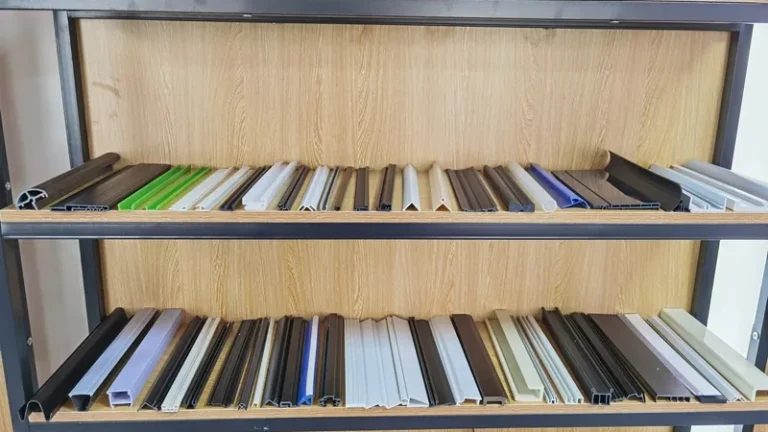
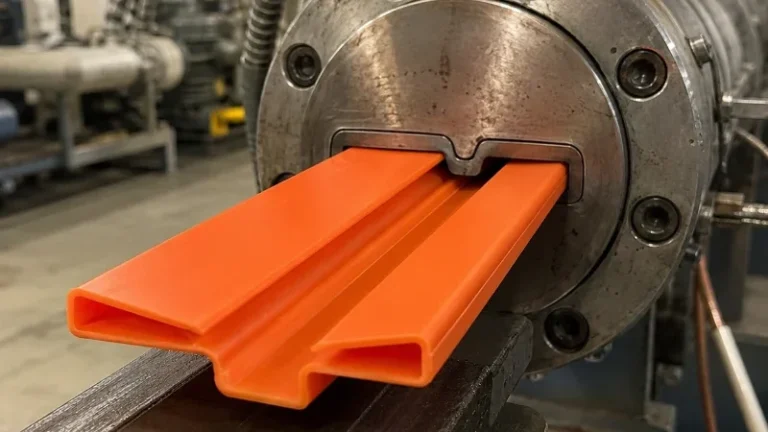
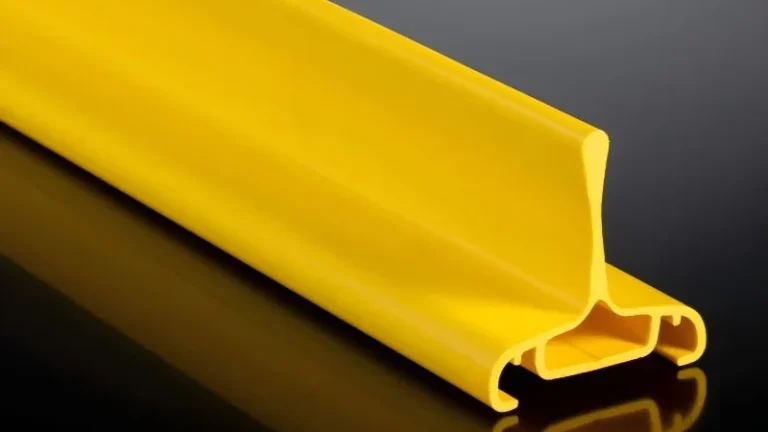
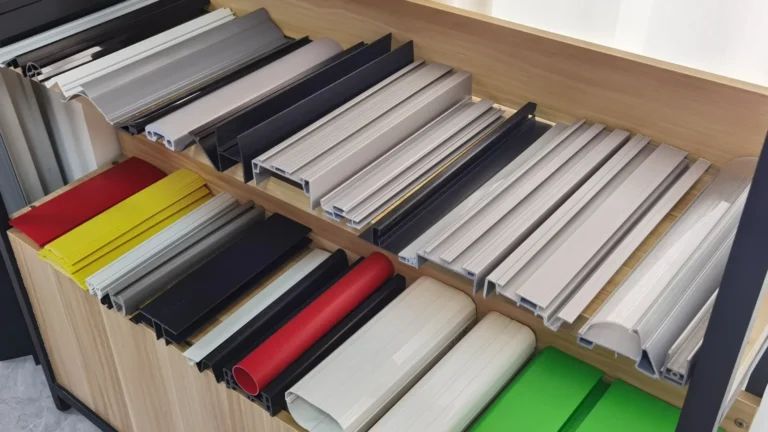
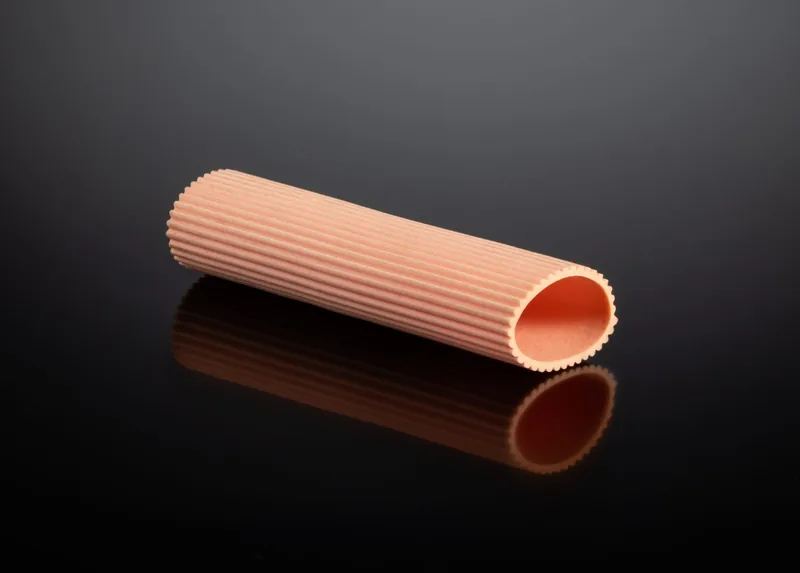
An extruded plastic tube manufacturer melts thermoplastic pellets and forces them through a shaped die head to form a continuous tube, which is then sized, cooled and cut or coiled to length. On the same class of equipment, changing the tooling shifts output from round tubing to oval, corrugated or fully custom sections, including flat and complex extruded profile shapes.
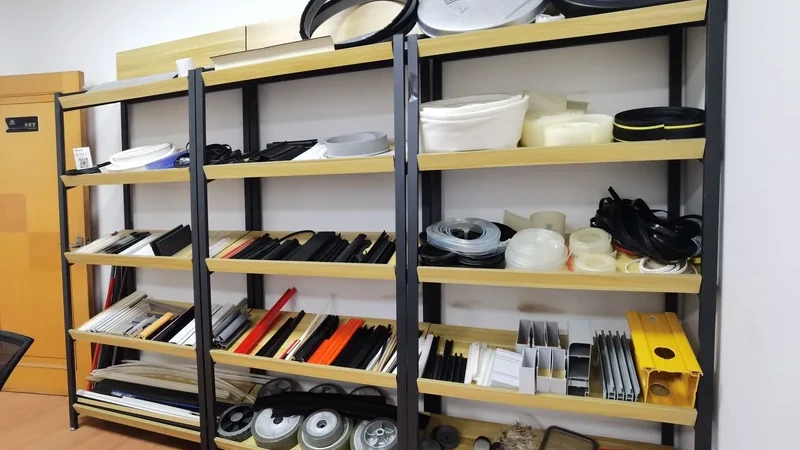
Cable protection and conduit dominate industrial demand. A transparent PVC electronic tube profile, extruded in a single pass, provides insulation, guiding and protection for wiring in electrical and electronic assemblies. At the heavier end, a PVC drainage channel profile serves building and industrial water management, its continuous open section designed for volume production and adaptable to custom cross-sections. Between those poles sit pressure pipe, corrugated ducting, laboratory tubing and multi-material tubes.
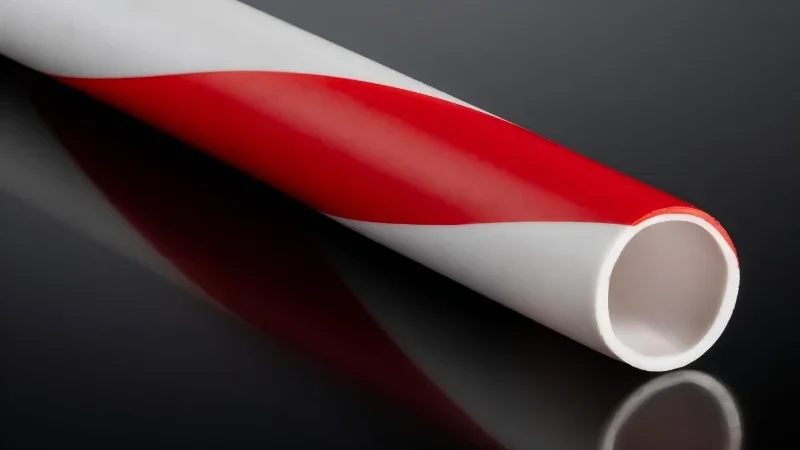
Tubes versus other extruded products: a tube is a continuous closed or open section, and most tube manufacturers also run non-round profile work on the same lines — edge trims, sealing strips, guide rails. What changes is the tooling and the sizing method, not the process. Material choice, summarized below, drives the rest of the design conversation.
| Material | Typical tube applications | What it delivers | Watch-outs |
|---|---|---|---|
| PVC (rigid) | Electrical conduit, drainage, protective sleeving | Cost, rigidity, flame performance | Confirm cell class; heat limits |
| HDPE | Water pipe, conduit, ducting | Toughness, chemical resistance | Shrinkage; control cooling carefully |
| PP | Fluid transfer, industrial tubing | Chemical and fatigue resistance | Stiffness drops with temperature |
| PC | Transparent guards, sight tubes, light covers | Optical clarity, impact strength | Requires thorough drying before processing |
| PMMA | Optical and display tubing | Clarity, surface finish | More brittle than PC |
| TPU | Hoses, protective sleeves, conveyor covers | Abrasion resistance, flexibility | Narrow processing window; higher cost |
For the wider process background behind both tubes and profiles, the plastic extrusion molding overview explains how melt, tooling and downstream equipment interact.
How Does a Tube Move From Die Head to Finished Length?
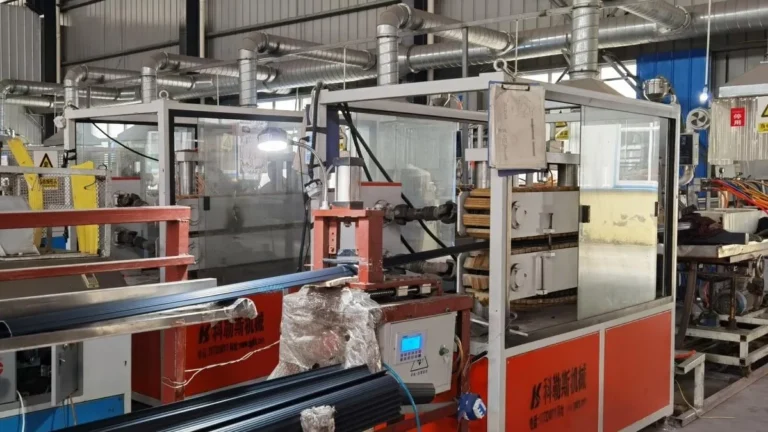
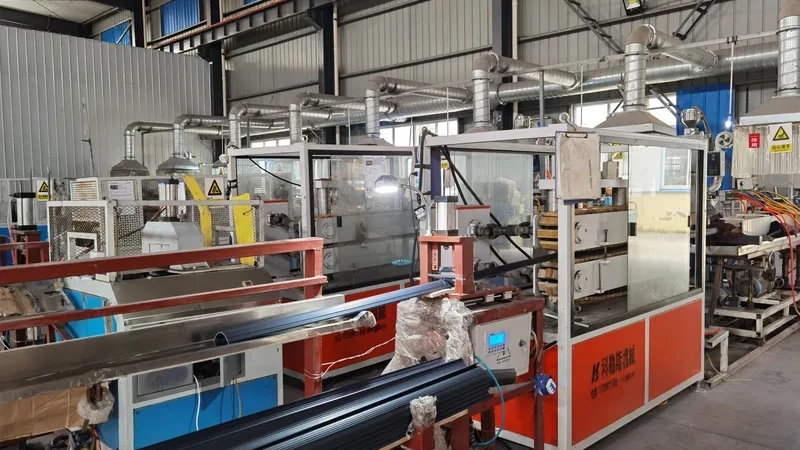
Molten polymer exits the die head as a continuous sleeve, enters a vacuum sizing sleeve that fixes the outside diameter, travels through a cooling tank, and is pulled away by a haul-off whose steady speed sets wall thickness before the tube is cut or coiled.
Everything downstream inherits the quality of the die head1 — the tool that distributes melt evenly around the mandrel and forms the annular gap. Spiral distributors reduce weld lines where melt re-converges around the mandrel supports. A poorly balanced die produces a tube with thick and thin sides that no later adjustment fully corrects, so tooling design deserves as much scrutiny as the resin choice.
The vacuum sizing tank2 then calibrates dimensions while the material is still soft. Under-applied vacuum lets diameter drift; over-aggressive cooling freezes stress into the wall and can warp the tube days later. Balanced water temperature and residence time matter more than raw chilling power.
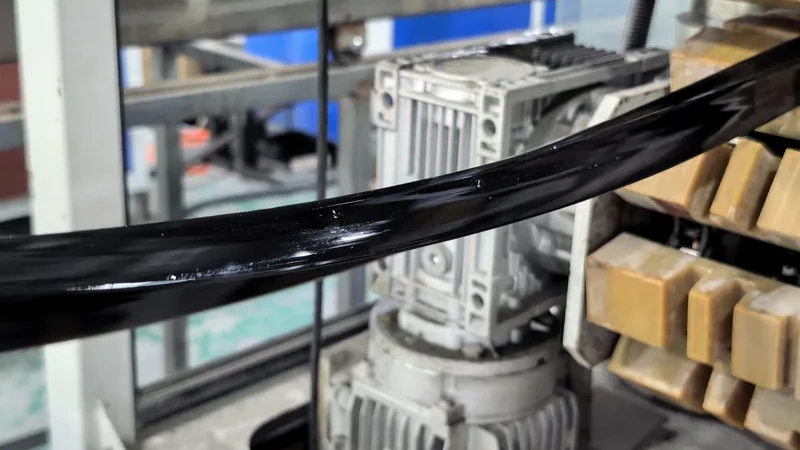
The haul-off speed relative to melt output sets draw-down, and with it wall thickness and inner diameter. Dual-belt machines grip the tube without deforming it, which matters on thin-wall or soft-material runs. Typical melt windows sit near 170–200 °C for rigid PVC, 180–230 °C for HDPE and PP, and 250–300 °C for PC, but the correct setting depends on the specific compound and machine, so treat the supplier’s process sheet as authoritative rather than generic tables.
Many lines add value in line: punching holes, embossing identification, or printing part numbers and stripes directly onto the tube, which removes a handling step and keeps cut lengths consistent. Engineer-facing references on tooling design and melt flow, such as the SPE Extrusion Division, are a useful supplement to supplier documentation.
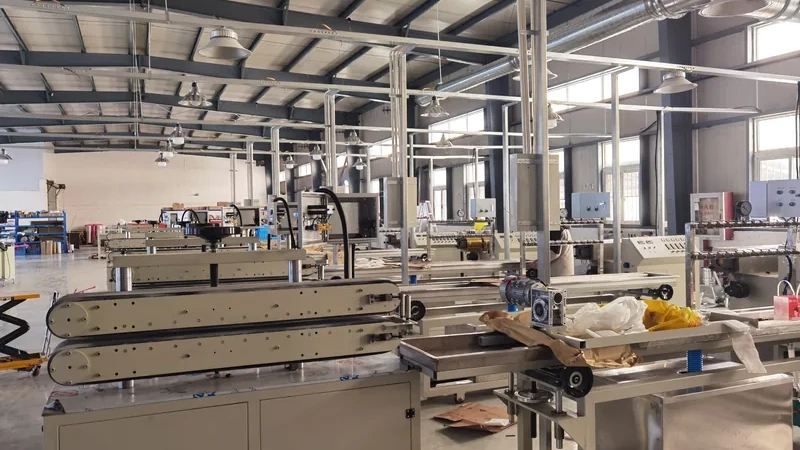
ZetarVac runs 7+ automated extrusion lines with a maximum profile width of 600 mm, inside a plant of 45+ production lines, at a reference monthly capacity of roughly 300–500 tonnes across the extrusion lines. For a tube buyer, that means pilot orders get dedicated line time instead of competing with every other part in the factory.
How Tight Can Tube Tolerances Really Get?
On a stable material and a simple, symmetric section, a well-run line holds ±0.05 mm on the extruded cross-section — the level ZetarVac commits to, subject to material and section geometry. Wall thickness distribution and ovality3 are usually harder to hold than raw outside diameter.
| Dimension | Typical achievable range | Main driver | How to verify |
|---|---|---|---|
| Outside diameter | ±0.05 mm on stable materials and simple sections; general tolerances on complex geometry | Sizing sleeve and vacuum level | Laser micrometer, in line |
| Wall thickness | A few percent of nominal wall | Die concentricity, haul-off stability | Cut samples, ultrasonic |
| Ovality | A small percentage of OD, better with symmetric cooling | Cooling symmetry, gravity sag | Ring gauge, cross-measurement |
| Cut length | Within general length tolerances, tighter with fixture-controlled cutting | Knife trigger timing | Fixture check |
Capable suppliers measure continuously rather than only at the end: laser gauges track outside diameter in real time, gravimetric control links melt output to haul-off speed for wall consistency, and cut samples verify wall distribution and ovality at intervals. Ask which parameters are monitored in line and what happens when a drift alarm fires — the answer tells you more about the factory than any certificate.
"A passed first article means the line will hold that dimension for the whole production run."False
A first article is a snapshot taken right after careful setup. Melt temperature drift, die wear and haul-off slip all act over hours, so a dimension can migrate while the process looks healthy. Long-run stability comes from in-line measurement and closed-loop correction, not from one good piece.
"Tolerance capability should be proven with in-process data across a full shift, not one sample."True
Ask for monitoring records or a run-at-rate trial before releasing volume. Continuous laser measurement plus periodic cut checks expose drift that a single first article cannot see, and they establish the reaction plan before a parameter reaches its limit.
Which Standards Should a Tube Specification Reference?
For tubes used as electrical insulation or cable jacketing, cite UL 1581, the reference standard that specifies the construction and test requirements — insulation resistance, elongation and heat aging among them — for extruded insulation and jackets. For rigid PVC tubes, ASTM D17844 classifies the compound by cell class, pinning down impact strength, stiffness and heat resistance instead of leaving “rigid PVC” open to interpretation.
Pressure pipe adds its own layer: ASTM D2241 defines the dimensional system for PVC plastic pipe, while ISO 4427 specifies material and dimensional requirements for polyethylene water-supply pipe. Where heat exposure matters, ISO 306 defines the Vicat softening test used as a comparative heat-resistance indicator for thermoplastics, and UL 94 classifies flammability for plastic parts in devices and appliances. None of these replace drawing-level tolerances; they constrain the material and test regime behind them.
"Any compound sold as rigid PVC will behave the same in a tube application."False
Rigid PVC covers a wide family of formulations, and the cell class determines impact, stiffness and heat behavior. Two compounds with the same trade description can sit in different classes, so a tube qualified with one may crack or soften with another. The specification, not the sales sheet, protects the application.
"A tube drawing should name the standard and the class, not just the material family."True
Naming the standard turns material choice into a checkable requirement. The manufacturer can certify the compound against that class, incoming inspection has an objective reference, and any substitution requires your approval rather than a quiet swap.
When Does Co-Extrusion Pay Off for Tubes?
Co-extrusion5 pays off when a tube needs two behaviors at once — a rigid structure plus a soft sealing, low-friction or wear-resistant surface — because both materials are bonded in one pass instead of being assembled or lined as a second operation.
Typical layered tubes pair a rigid PVC or ABS shell with a TPU inner layer for abrasion and flexibility, or add a foamed middle layer for insulation and weight reduction. The same dual-material logic runs across profile work: a PP + TPV automotive seat slide rail strip combines dust exclusion, guiding, wear resistance and low friction with a flexible sealing lip, while an ABS + TPU squeegee strip for robot vacuum cleaners pairs rigid support with a soft, wear-resistant wiping edge. Tubes apply identical principles wherever the contact layer does a different job than the carrier.
ZetarVac runs up to three layers in a single co-extrusion pass, with combinations actually in production including PP+TPV, PP+TPE, PVC+TPU, ABS+TPU and TPV+CPVC. A tube concept calling for a rigid carrier and a soft functional layer can therefore be validated against existing tooling experience rather than invented from zero.
Budget reality: a multi-layer tooling package costs more than a mono-layer die, and the process window is narrower. Justify the second material with a functional requirement — sealing, friction, wear, chemical resistance — not aesthetics alone. Where one material can do the job, single-layer extrusion remains the cheaper and more forgiving route.
What Should You Prepare Before Requesting a Quote?
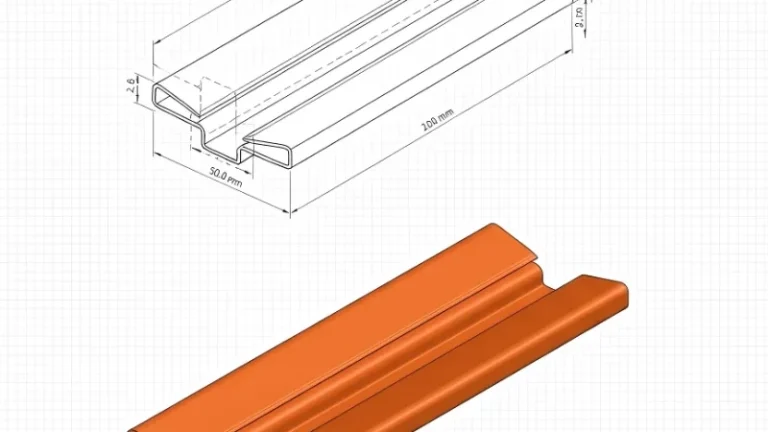
Send a dimensioned drawing with tolerances marked only where functional, the target material and its standard, per-order and annual volumes, and the working environment — temperature, chemicals, UV exposure, mechanical loads. With those four inputs, a manufacturer can size the die head and the line correctly instead of padding a quote with guesses.
When comparing suppliers, verify the fundamentals directly: whether extrusion die tooling is designed and maintained in-house, how many sizing and cooling stations the line carries, whether punching, embossing and printing run in line, and who owns the die at project end. A manufacturer controls the parameters that decide your tube’s dimensions, which is why the distinction matters most on custom sections developed to customer drawings.
Cost drivers are predictable: material selection, line speed, tolerance discipline, secondary operations and tooling amortization. A structured review of the custom plastic profile extrusion cost breakdown shows which levers move price most, and the DFM checklist for extruded plastic profiles and extrusion dies flags design choices that quietly add cost before tooling is cut.
"Tightening every tolerance on the drawing is the safest way to guarantee tube quality."False
Blanket-tight tolerances push the line into slow, high-scrap operation and inflate tooling and inspection cost across the board. Dimensions that nothing in the assembly contacts do not need the tightest available discipline, and paying for it everywhere drains budget from the features that actually matter.
"Functional surfaces deserve tight tolerances; everything else belongs under general tolerances."True
Mark the surfaces that mate, seal, guide or index, and let standard tolerances govern the rest. This concentrates process control where failure actually occurs, keeps quotes comparable between suppliers, and leaves the line capacity to hold the numbers that matter.
If a tolerance sits near the achievable limit, say so in the request for quotation. Suppliers can often hold a tighter number with an extra sizing station or a slower haul-off, but only when they know the requirement before quoting, not after the first article fails.
ZetarVac supports prototyping, small batch and large batch production, and develops non-standard custom sections directly to customer drawings. A program can start with a pilot run on production tooling, prove the dimensions in the real application, and scale volume without changing suppliers or re-cutting the die.
FAQ: Choosing an Extruded Tube Supplier
What volumes make a custom extruded tube economical?
Tooling amortization dominates small orders, so die cost per part falls steeply as volume rises. Prototyping and small batches are still worth running when they use production-intent tooling, because they retire design risk before volume commitment. Quote both your pilot quantity and your realistic annual volume to see the true cost curve.
Can one supplier handle both rigid and soft-touch tubes?
Yes, provided the line supports co-extrusion and the material library covers both sides. Rigid PVC, ABS, PP and PC carry structure, while TPU, TPE and TPV supply flexible sealing and wear surfaces. Ask which combinations the supplier has actually run, not which ones sound feasible on a website.
Which materials suit transparent or optical tubes?
PC and PMMA are the standard clarity choices: PC where impact strength matters, PMMA where surface finish and optical quality dominate. Transparent rigid PVC is a proven, economical option for cable protection and insulation, as used in electronic tube profiles for wire guiding and protection.
How is dimensional quality checked during a run?
Laser gauges monitor outside diameter continuously, gravimetric control keeps wall thickness tied to haul-off speed, and periodic cut samples verify wall distribution and ovality. In-line punching, embossing and printing are checked against artwork and gauge fixtures inside the same process control loop.
Where should a tube drawing go first?
Send the drawing, target material and standard, and annual volume to a manufacturer rather than a reseller, and ask for a die and process review before any tooling is cut. You can request a quote through our service page or contact our team as a plastic extrusion manufacturer in China — either route starts with a feasibility review of your tube, not a blind price.
-
Die head: The die head is the tool at the front of the extruder that distributes molten polymer around a mandrel and shapes it into the annular or custom section leaving the machine. ↩
-
Vacuum sizing tank: A vacuum sizing tank calibrates hot extrudate to final outer dimensions by holding it against a cooled sizing sleeve under vacuum while it solidifies. ↩
-
Ovality: Ovality measures how far a tube’s cross-section departs from a perfect circle, usually expressed as the difference between maximum and minimum diameter. ↩
-
Cell class: Cell class is the ASTM D1784 designation system that grades rigid PVC and CPVC compounds on properties such as impact strength, tensile modulus and heat resistance. ↩
-
Co-extrusion: Co-extrusion extrudes two or more materials through a shared die in a single pass, bonding distinct layers such as a rigid carrier and a soft functional surface. ↩