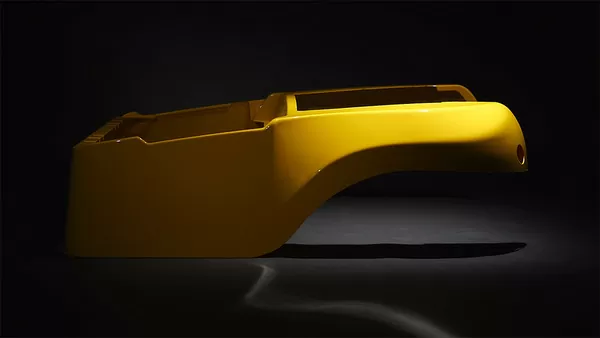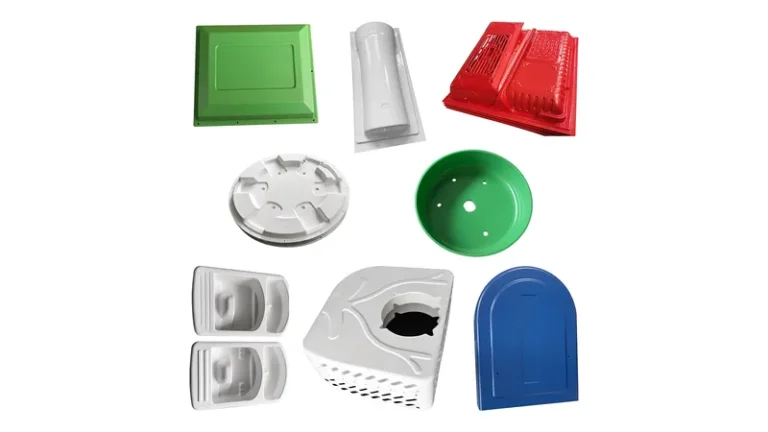
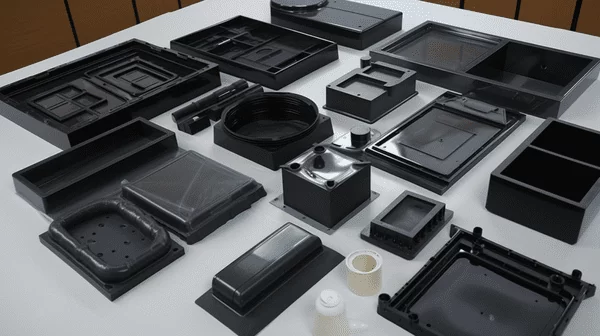
Most plastic enclosures, trays, and panels can be made by either vacuum forming or injection molding, and the drawing alone will not tell you which process a part belongs in. The two routes differ in tooling cost, achievable part size, wall uniformity, and the volumes where each becomes economical. This comparison is written for procurement engineers, product designers, and factory technical leads who need to defend the process choice on engineering grounds — including where heavy-gauge thermoforming is the structurally better answer and where injection molding earns its tooling bill.
- Vacuum forming shapes a pre-made plastic sheet over a single-sided mold with vacuum pressure, so tooling is simpler and far cheaper than a double-sided injection mold.
- Injection molding produces uniform, tightly controlled walls and fine detail on every surface, which is why it dominates high-volume compact parts.
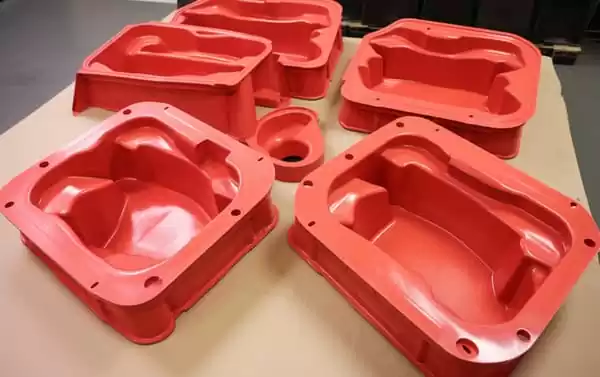
- Heavy-gauge thermoforming handles sheet from 0.5 to 15 mm and forming lengths up to about 2,500 mm, making it the practical route for large enclosures, guards, and trays.
- Formed walls thin as the sheet stretches over the mold; specify minimum wall thickness and verify it with thickness mapping, not a nominal sheet figure.
- Material tests such as tensile and flammability apply to both processes, but formed parts add wall-distribution checks that molded parts do not need.
What Is the Fundamental Difference Between the Two Processes?
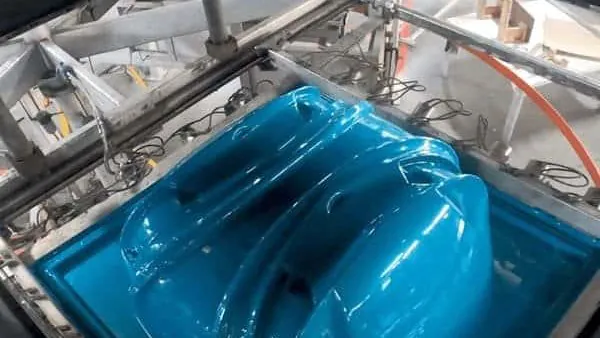
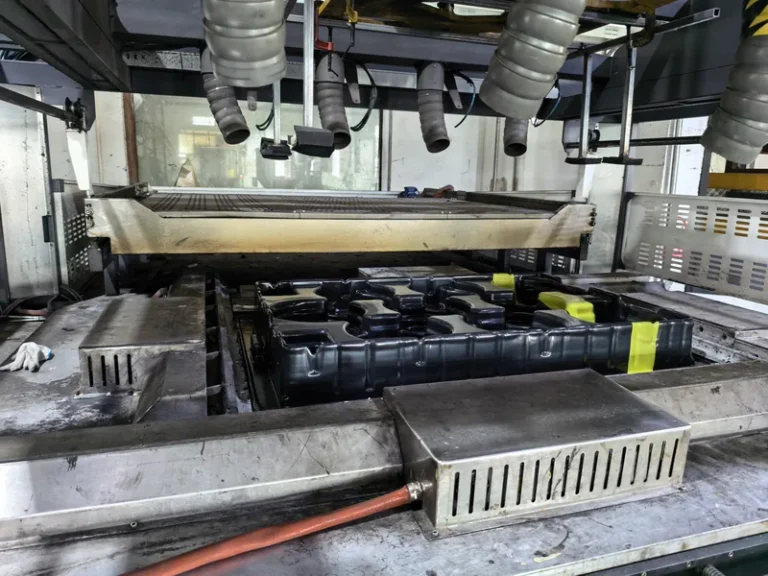
Vacuum forming starts from a pre-made plastic sheet, heats it until pliable, and draws it over a single-sided mold using vacuum pressure. Injection molding melts resin pellets and injects the melt into a closed, double-sided steel mold under high pressure.
That single structural difference drives almost every downstream decision. Vacuum alone provides roughly atmospheric pressure — about 0.09 MPa — so the sheet conforms to the tool through its own elasticity rather than being forced into fine detail. Pressure forming adds an air box on the sheet side to raise effective pressure into the 0.5–0.8 MPa range and recover some surface detail, but both variants leave one free face that the tool never touches. Injection molding packs melt at 30–150 MPa into a closed cavity, so it reproduces features on both faces, at the cost of a parting line, feed system, and ejection design on every geometry.
The consequences show up in engineering terms. Forming works from sheet stock, so heavy-gauge thermoforming is naturally the process for thick structural panels; injection molding builds wall thickness from the melt and freezes from the outside in, which suits compact parts but gets awkward and expensive on very large flat surfaces. If you want the step-by-step mechanics of the forming process itself, see how vacuum forming works in our dedicated process guide.
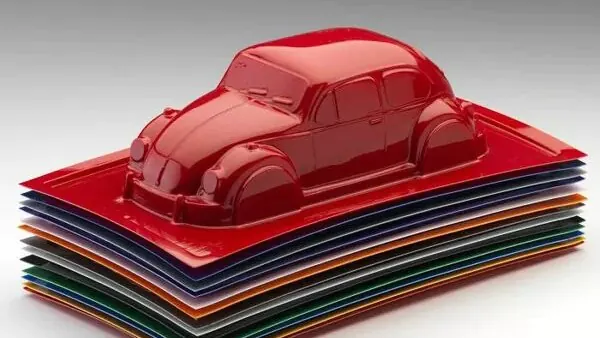
ZetarVac operates more than 20 vacuum forming and thermoforming machines and processes sheet from 0.5 to 15 mm, with a maximum forming length of about 2,500 mm. Those size ranges are the practical ceiling of heavy-gauge forming equipment, and they are a major reason enclosures, machine guards, and large trays are specified as formed parts rather than molded ones.
Where Does Each Process Win on Cost?
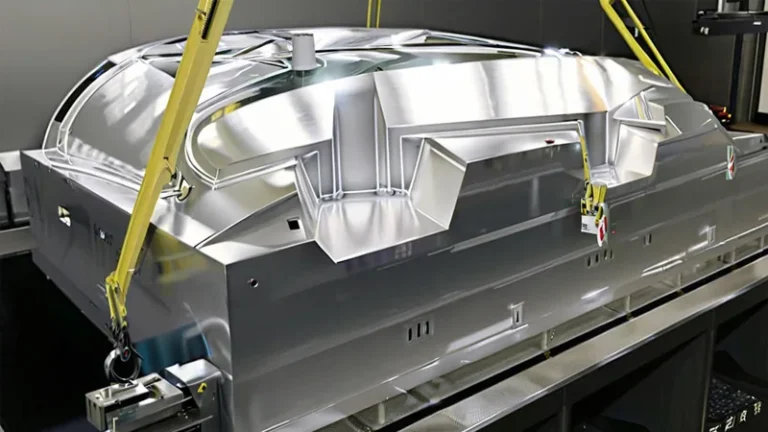
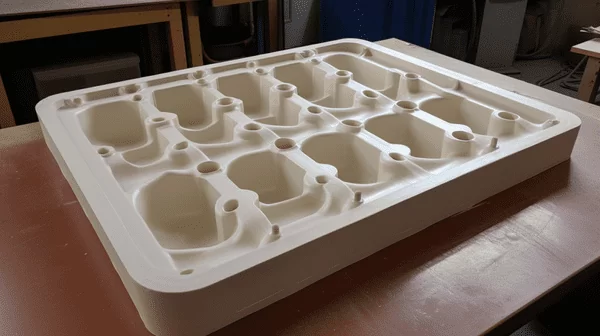
A vacuum forming tool usually costs a fraction of an equivalent injection mold because it is single-sided, often machined from aluminium or cast from composite, and needs no runner, gate, or ejection system. Forming tool lead time is typically days to weeks, while a production injection mold can take months.
The economics follow directly. Because a forming tool carries no cooling channels or feed system, geometry changes stay cheap: a revised rim, a new mounting pocket, or a different trimming outline can often be cut into the existing tool. That makes thermoforming unusually forgiving during design iteration, when a housing is still gaining cut-outs and mounting features.
Injection molds amortize their cost over volume. A hardened steel mold producing millions of parts spreads tooling into fractions of a cent per part, which is exactly why it wins at high volume. A formed part carries more of its cost in material and cycle time, so its unit cost curve is flatter — competitive at hundreds of units, still acceptable at tens of thousands, and clearly losing only where an injection mold has fully amortized.
"A vacuum forming tool costs about the same as an injection mold for the same part."False
An injection mold needs a double-sided cavity, a feed system, cooling channels, and ejection hardware, all machined into hardened steel. For the same part that multiplies tooling cost several times over and adds weeks or months of lead time before the first article is even formed.
"Tooling cost should be judged against annual volume, not as an absolute number."True
A high tooling bill can be the cheapest option when it is amortized over hundreds of thousands of units, while a cheap tool can become the expensive one if the program changes early. Compute cost per part across the expected program life before committing to either process.
How Do Part Size and Geometry Limits Differ?
Thermoforming is limited by available sheet size and platen area, not by clamp tonnage, so it scales to large parts far more readily than injection molding. Injection molding part footprint is capped by machine tonnage and mold dimensions, which climb steeply with every size increment.
For forming, the design constraints are different. Draft angles of roughly 2–5 degrees on male tools help the sheet release, deep draws concentrate thinning at corners, and the free surface cannot carry sharp detail because nothing presses it against a tool. Features such as ribs, bosses, and through-holes are not formed directly; heavy-gauge work adds them through CNC trimming and assembly, while injection molding forms them integrally. Thinning follows the draw ratio1 of the part: the further the sheet must stretch, the thinner the material at the deepest sections.
"A 5 mm sheet will produce a 5 mm wall across the whole formed part."False
The sheet stretches as it drapes over the mold, so deep draws and tight radii end up measurably thinner than the starting gauge. A drawing that treats nominal sheet thickness as the wall specification will fail inspection at the corners even when the part is formed correctly.
"Formed part drawings should specify minimum wall thickness, not nominal sheet gauge."True
Suppliers map wall distribution across the part and commit to a minimum value where it matters structurally. Writing the drawing around minimum wall lets the molder tune prestretch, plug assist, and heating so the critical zones hold, instead of chasing a nominal figure the physics will not allow.
How Do Materials and Performance Compare?
Both processes use thermoplastics, but the feedstock differs: forming consumes pre-made sheet with controlled melt strength, while injection molding consumes pelletized resin. For buyers this matters mainly through the grade list each supplier can actually run, and through which properties must survive the heating cycle.
ZetarVac’s heavy-gauge forming library covers the grades most enclosures and structural panels need: ABS for equipment housings and automotive interior parts, PC for clear guards and protective covers, PC/ABS where impact and heat resistance must coexist, ASA for outdoor housings, HDPE and PP for industrial trays and liners, PMMA for high-clarity covers and display parts, and TPE for soft liners and seals. Specialist structural grades such as PA6, PA66, and POM are run for precision industrial parts.
Material selection is then validated with the tests used across the industry: ASTM D6382 is the standard tensile test run on thermoformed sheet and formed parts, and its results are what sheet suppliers and molders quote when a housing or structural panel must carry load. Heat capability is judged from deflection temperature data such as ISO 75-23, which indicates how far a formed enclosure can rise above ambient before it relaxes under load. For neutral background on the process family, the SPE Thermoforming Division maintains reference material on forming technologies.
ZetarVac has formed PC medical equipment housings with custom cut-outs, mounting holes, and reinforcement, and high-clarity PMMA display covers for retail applications. Both cases show the same pattern: the material is chosen for a property the part must preserve, such as clarity or impact resistance, and the forming route is chosen because the geometry is large and curved.
How Should You Decide Between Them?
Decide with three numbers: program volume, part footprint, and the wall uniformity the application truly requires. There is no universal crossover, but a common working rule places forming’s advantage below tens of thousands of units per year for mid-size parts, with part size and iteration risk able to shift that line in either direction.
| Decision factor | Heavy-gauge vacuum forming | Injection molding |
|---|---|---|
| Tooling cost | Low; single-sided aluminium or cast tool | High; double-sided hardened steel mold |
| Tooling lead time | Days to weeks | Weeks to months |
| Practical part size | Very large; limited by platen and sheet size | Limited by clamp tonnage and machine size |
| Wall thickness | 0.5–15 mm sheet; walls thin with draw | Uniform, gate-controlled walls |
| Detail on free surface | Limited; one face is unformed | Full detail on both faces |
| Design iteration | Cheap tool modifications | Costly mold rework |
| Economic volume range | Prototypes through large batches | Medium to very high volumes |
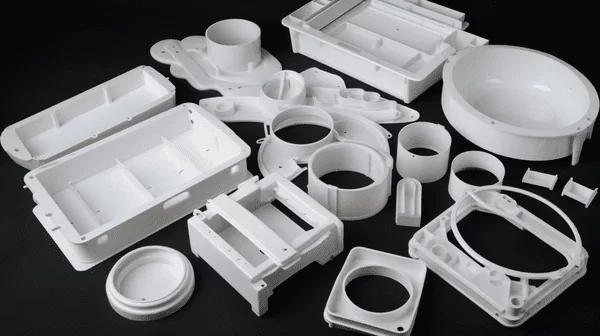
| Typical parts | Enclosures, machine guards, trays, panels | Compact precision parts, high-detail housings |
Read the table against your own program. A large machine enclosure at a few hundred units per year is a forming part almost by inspection; a small clip with tight tolerances at a million units is an injection part for the same reason. The genuinely hard cases sit in between — mid-size parts at moderate volumes — and those are settled by wall requirements and iteration risk. If your part sits in that middle ground, it is worth reviewing ZetarVac’s service scope to see how process decisions are made across a full project.
Which Quality Checks Matter Before Production?
Both processes validate material properties, but formed parts add wall distribution to the acceptance checklist. A first article should be judged on minimum wall thickness at critical zones, dimensional accuracy after trimming, and surface appearance — not on sheet gauge alone.
For enclosures and covers that house electronics, flammability is usually contractual: UL 944 defines the flammability classifications required for many equipment enclosures, and buyers commonly specify a rating such as V-0 on the sheet before forming. Clear formed parts are additionally checked for optical properties, because heating cycles can haze some transparent grades.
Dimensional acceptance on a formed part is decided after trimming. Because the trimmed outline follows the forming tool, the cutting path and the forming surface must be qualified together. Inspecting the trimmed part against its mating assembly, not the raw formed shell, is what catches tolerance stack-ups before they reach your line.
"A passed first article proves the forming process is stable for volume production."False
A first article is one sample taken at the start of a run, when sheet heating, forming time, and trimming are freshly set. Wall distribution and dimensions shift as tooling wears and sheet batches change, so a single passing part says nothing about the spread incoming inspection will see six months later.
"Process stability is proven by controlling the inputs that drift, not by one good sample."True
That means agreed sheet batch specifications, defined heating and forming parameters, and periodic re-measurement of minimum wall at the part’s critical zones. Suppliers who document those controls can hold formed parts within repeatable limits across batches.
A practical acceptance plan therefore splits into three layers: material certificates and test data before forming, thickness mapping and dimensional reports on first articles, and periodic audits on running batches. Buyers who write those layers into the purchase specification avoid most of the disputes that otherwise surface at incoming inspection.
ZetarVac trims formed parts on a 5-axis CNC centre so the cut outline follows the forming tool geometry, and supports prototyping, small batch, and large batch production with a reference monthly capacity of roughly 100,000–200,000 pieces. For buyers, that means the same process chain covers early samples and volume runs without a second tooling investment.
FAQ
Is vacuum forming cheaper than injection molding?
Tooling is almost always cheaper on the forming side, because the tool is single-sided and simpler. Unit cost depends on volume and part size: forming stays competitive at low-to-medium volumes and on large parts, while injection molding overtakes at high volumes where tooling amortizes.
Can vacuum forming match injection molding part quality?
It matches where the drawing allows: structural panels, housings, and trays in the 0.5–15 mm range are routinely formed and 5-axis trimmed to tight outlines. Injection molding keeps the advantage on fine detail, integral ribs and bosses, and very tight tolerances on both faces.
What volume justifies an injection mold?
There is no single crossover. As a working range, mid-size parts usually justify a production mold only above tens of thousands of units per year; below that, tooling amortization rarely pays back, and a formed part with a cheaper tool is the better commercial decision.
Which materials suit thermoformed enclosures?
ABS and PC/ABS are the default for equipment housings and guards, PC where clarity or impact resistance is needed, ASA for outdoor exposure, and HDPE or PP for trays and liners. The grade must also be available as sheet in the right thickness and melt strength for forming.
Where can I learn more about the vacuum forming process?
To keep digging before you lock in a process decision, explore the ZetarVac vacuum forming hub to learn how heavy-gauge thermoforming is engineered in practice, or walk through the service overview to see how a forming project moves from design review to trimmed production parts.
-
Draw ratio: Ratio of formed surface area to original sheet area in a formed part; higher draw ratios mean more stretching and more thinning. ↩
-
ASTM D638: Standard test method for tensile properties of plastics, the reference tensile test for thermoformed sheet and formed parts. ↩
-
ISO 75-2: Standard for heat deflection temperature of plastics under flexural load, indicating the upper service temperature of a formed part. ↩
-
UL 94: Standard for flammability of plastic materials, assigning ratings such as V-0 or HB that equipment enclosures commonly must meet. ↩