
Thermoforming and injection molding both turn plastic resin into finished parts, yet they diverge at the first step: one shapes a heated sheet, the other fills a closed mold with melt. That single difference drives tooling cost, lead time, achievable part size, wall thickness control and the whole economic model of a program. This guide compares the two processes the way a project engineer needs to see them — with process windows, failure modes, tolerance expectations and a selection table you can defend in a design review.
- Thermoforming shapes a heated plastic sheet against a single-sided mold; injection molding injects molten resin into a closed two-sided mold at high pressure.
- Forming tooling is single-sided and low pressure, so it costs a fraction of an injection mold and is ready in weeks rather than months.
- Formed wall thickness thins at deep draws, so formed parts are specified by minimum wall, not nominal wall.
- Heavy gauge thermoforming handles sheet from 0.5 to 15 mm and forming lengths up to about 2,500 mm — large enclosures and trays that injection machines struggle to fill.
- Injection molding wins on small, complex, high-volume parts where fine features and tight tolerances justify steel tooling.
- Formed sheet and finished parts are qualified with tensile, heat deflection and flammability tests before an enclosure design is released.
What Is the Difference Between Thermoforming and Injection Molding?
Thermoforming heats a plastic sheet until it is pliable and pulls it against a single-sided mold with vacuum, while injection molding melts resin and injects it into a closed two-sided mold at high pressure. A formed part keeps the sheet surface on one side and is trimmed to final shape afterward; a molded part leaves the tool essentially finished.
The consequences reach every line of a quotation. Because forming starts from sheet, material is bought by gauge and the part is trimmed to its outline on CNC equipment. Because molding fills a closed cavity, the geometry is created inside the tool and cost concentrates in mold amortization. Neither process is better in the abstract; volume, size and feature set decide it.
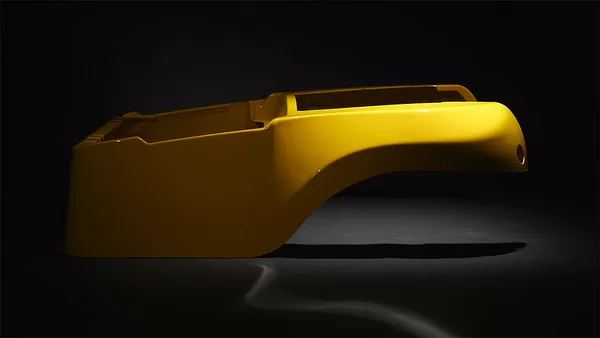
Size is the sharpest divider. Forming machines are sized by sheet area, and heavy gauge equipment processes sheet up to about 2,500 mm in forming length, so machine covers, equipment enclosures and vehicle panels stay single-piece. Injection machines are limited by clamp tonnage and shot volume, which pushes very large parts toward multi-piece assemblies or welded constructions.

How Each Process Shapes the Part
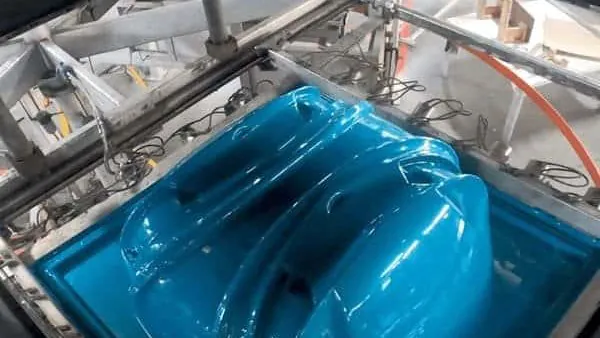
Vacuum forming is the baseline version of the process: the sheet is clamped in a frame, heated into its forming window and drawn onto the mold by vacuum. The driving pressure tops out near one atmosphere, so fine text and sharp cosmetic detail are harder to hold than in pressure forming, where a pressure box adds several bars of force. In both variants one surface of the part is defined by the mold and the other by free-formed sheet.
Draw ratio governs how much the sheet thins1. A deep pocket can pull a 5 mm sheet down to well under half its gauge at the bottom corner, so the engineer starts with heavier sheet, opens the radii or adds a plug assist to distribute stretch. Heating is just as critical: the sheet sags as it approaches the forming window, and the Vicat softening temperature gives a first indication of where a material begins to soften under its own weight.
Injection molding works from the opposite end of the pressure scale. A screw plasticates the resin and injects it at several hundred to more than a thousand bar into a closed mold, where packing pressure compensates for shrinkage as the part cools. That pressure is what buys fine ribs, bosses, snap features and molded-in texture — and what forces the tool to be hardened steel with engineered cooling channels.
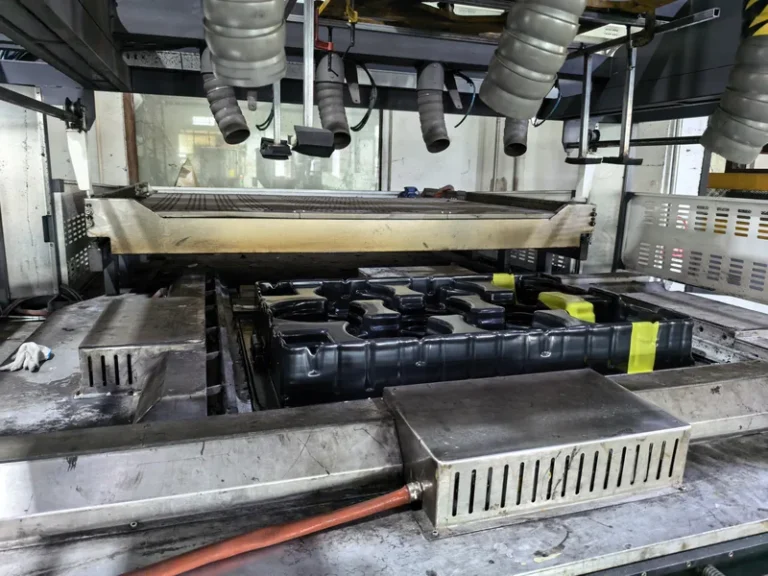
ZetarVac runs more than 20 vacuum forming and thermoforming machines processing sheet from 0.5 to 15 mm, with a maximum forming length of about 2,500 mm. For a machine enclosure or vehicle panel, that means one large cover formed as a single piece instead of several smaller molded parts stitched together.
Why Is Thermoforming Tooling Faster and Cheaper?
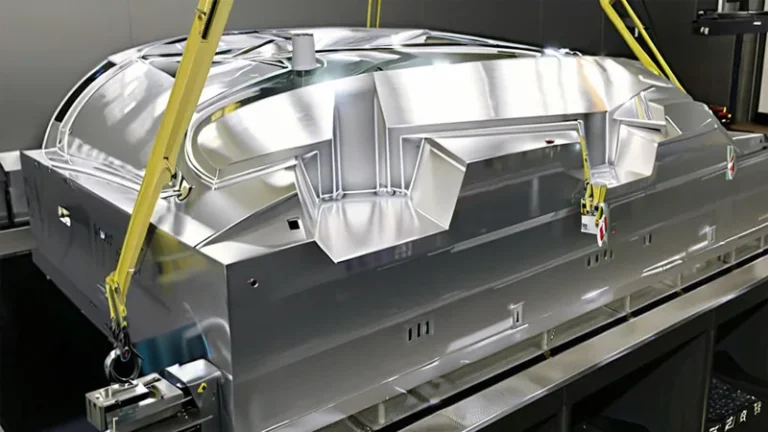
Thermoforming tools are single-sided, work near atmospheric pressure and are usually machined from aluminum, so they cost a fraction of an injection mold and are ready in weeks. Injection molds are two-sided, steel, pressure-rated and actively cooled, which multiplies machining, hardening and fitting time.
As a planning range, an aluminum forming tool with a matching trim fixture is commonly running in two to four weeks, while a production injection mold often needs eight to sixteen weeks including steel procurement, hardening and mold trials. When a program carries a fixed launch date, that gap can decide the process before any cost model is opened.
"Injection molds and thermoforming molds cost about the same to build."False
A forming tool is single-sided, works near atmospheric pressure and is usually cut from aluminum, so it skips the core and cavity steelwork, cooling layout and fitting work that dominate injection tooling cost. Treating the two as equivalent leads buyers to rule out forming on a budget that actually favors it.
"Thermoforming tooling typically costs a fraction of injection tooling."True
Because one mold face defines the part and forming pressures stay low, aluminum tools machine fast and revisions stay cheap. The trade-off sits in part detail and post-trim work, not in tooling price.
Tool revisions follow the same asymmetry. Welding and re-machining an aluminum forming tool is a days-long exercise, while changing a steel injection cavity can mean new electrodes, re-hardening and another molding trial. For products still settling their industrial design, the cheaper-to-change tool protects the schedule.
How Do Wall Thickness and Tolerances Differ?
Injection molded walls come out close to the nominal tool spacing, while thermoformed walls thin wherever the sheet stretches into the draw. Formed parts are therefore specified by minimum wall in the deepest areas, not by a uniform nominal value.
Dimensional behavior differs just as much. Formed parts pick up shrink and distortion as the sheet cools against a one-sided tool, so flatness and flange dimensions carry wider general tolerances — commonly on the order of ±1% of the characteristic dimension for deep draws — while CNC-trimmed edges hold much tighter, often in the 0.1 to 0.5 mm band depending on part size. Molded parts, constrained on two sides, hold tighter overall. None of these numbers is universal; they depend on material, gauge and geometry, and should be agreed on the drawing before tooling starts.
| Selection factor | Thermoforming (heavy gauge) | Injection molding |
|---|---|---|
| Tooling cost | Low — single-sided aluminum tool | High — two-sided hardened steel mold |
| Tooling lead time | Typically 2–4 weeks | Typically 8–16 weeks |
| Part size | Sheet to 15 mm; forming length to ~2,500 mm | Limited by clamp tonnage and mold size |
| Wall thickness | Thins with draw; specified as minimum wall | Close to nominal, set by tool spacing |
| Cycle time | Minutes per part; heating and cooling dominate | Seconds to about a minute per shot |
| Annual volume fit | Prototypes through large series | Best above roughly 10,000 identical parts |
| Surface detail | One molded side; textured sheet options | Fully molded surfaces, fine texture and text |
| Typical parts | Enclosures, machine covers, trays, panels | Small complex parts, housings, clips, gears |
"Thermoformed parts have uniform wall thickness."False
The sheet thins wherever it stretches, especially at corner radii and the bottom of deep pockets. Specifying nominal wall without a minimum-wall allowance invites failed first articles and disputes at incoming inspection.
"Formed wall thickness is engineered around the draw ratio."True
Engineers start with heavier sheet, open the radii and check the deepest draw before release. The thinnest section, not the average, is what has to meet the load and stiffness requirement.
Tolerance expectations should be written per surface: formed free surfaces get drawing-level general tolerances, while trimmed features get CNC-level tolerances. Mixing the two on one general note is one of the most common reasons forming projects stall at first article inspection.
When Should You Choose Thermoforming Over Injection Molding?
Choose thermoforming when the part is large, the annual volume is moderate, or tooling must be fast and inexpensive; choose injection molding when the part is small, complex and needed in high volume. Between those poles, tooling budget and launch date usually settle the decision.
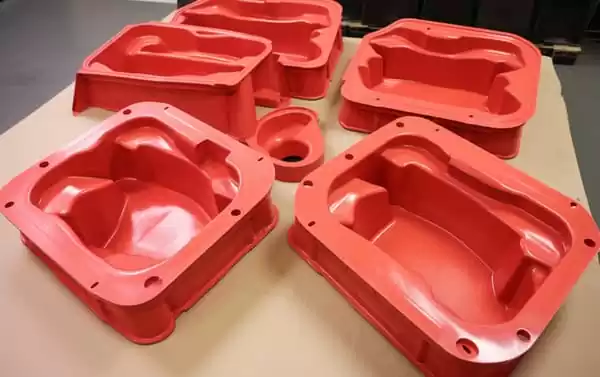
Heavy gauge forming shows its strength in exactly the parts ZetarVac builds: equipment housings and machine covers in ABS, medical and diagnostic equipment enclosures in PC with custom cut-outs and mounting features, multi-cavity seedling trays in ABS for agricultural use, and high-clarity display covers in PMMA for retail. In each case the part is too large or too style-sensitive to justify steel tooling, or the volume sits below the molding break-even.
Material availability overlaps heavily — ABS, PC, HDPE, PP, PMMA and PC/ABS all run in both processes — so the resin choice rarely decides the process; geometry and volume do. For buyers weighing gauge ranges, our heavy and thin gauge thermoforming comparison breaks down where structural heavy gauge work ends and packaging-scale work begins.
Reference monthly capacity at ZetarVac runs about 100,000 to 200,000 pieces across 45+ production lines, with prototyping, small batch and large batch production all supported. A forming program therefore does not stop at prototype scale; the same process and tooling carry into series volumes.
How Are Formed Parts Qualified and Tested?
Formed parts are qualified with the same plastic test standards used for molded materials — tensile, flexural, heat deflection and flammability — plus forming-specific checks on wall distribution and trim accuracy.
Tensile properties of the incoming sheet are measured to ISO 527-2, the standard tensile test for plastics, so material certificates can be compared across lots before forming begins. Heat resistance is screened with ASTM D648, which defines the deflection temperature of a plastic under flexural load and predicts whether a formed enclosure will sag near a heat source2.
For housings destined for electrical equipment, UL 94 grades the flammability of plastic materials and is required for many enclosures3, while IEC 60529 defines the IP code used to specify how well a formed cover seals out dust and water4. Beyond material certificates, forming adds its own inspection items: wall thickness mapping at the deepest draw, blister and web checks on first-off parts, and trim-to-form alignment. Industry resources such as the SPE Thermoforming Division publish process guidance covering many of these checks.
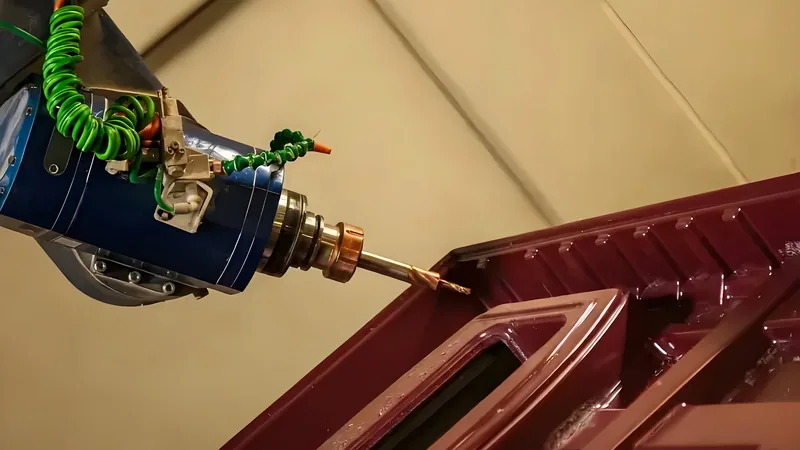
Formed parts at ZetarVac are trimmed on a 5-axis CNC centre, so the cut outline follows the same geometry as the forming tool. Trim lines, cut-outs and mounting holes stay consistent from the first article to the last part in the batch.
FAQ
Is thermoforming cheaper than injection molding?
Tooling is far cheaper for forming, while molding wins on piece price at high volume. Below roughly ten thousand identical parts a year, forming usually delivers the lower total program cost; above that, amortized steel tooling and fast molding cycles take over.
How thick can a thermoformed part be?
Heavy gauge forming commonly runs sheet from 0.5 to 15 mm. The finished wall in deep draws is thinner than the sheet gauge, so minimum wall is verified on the formed part, not assumed from the incoming sheet.
Which process makes larger parts?
Thermoforming. Forming length reaches about 2,500 mm on heavy gauge equipment, so a single machine cover or equipment enclosure can be formed, trimmed and installed as one piece.
Does thermoforming suit low-volume production?
Yes. Low-cost aluminum tooling and short forming cycles make prototyping and small batches practical, and the same tooling technology scales into series production without a process change.
What materials are common in heavy gauge thermoforming?
ABS and PC/ABS dominate housings and guards, PC adds clarity and impact resistance, HDPE and PP serve trays and liners, PMMA gives optically clear covers, and TPE or TPV supply soft liners and seals. Resin selection should be fixed before tooling because sheet gauge and forming window change with each material.
To keep digging, explore the ZetarVac vacuum forming process guide for materials, tooling and forming detail, or review how a vacuum forming manufacturer in China structures heavy gauge programs from prototype through series production.
-
Draw ratio: The ratio of formed depth to the plan area of the sheet covering the mold, used to predict sheet thinning in forming. ↩
-
HDT: Heat deflection temperature, the temperature at which a plastic specimen deflects a specified amount under flexural load in tests such as ASTM D648 or ISO 75-2. ↩
-
UL 94: A flammability classification standard for plastic materials, grading how a specimen burns and extinguishes after ignition. ↩
-
IP code: The ingress protection rating defined by IEC 60529, grading how well an enclosure excludes dust and water. ↩