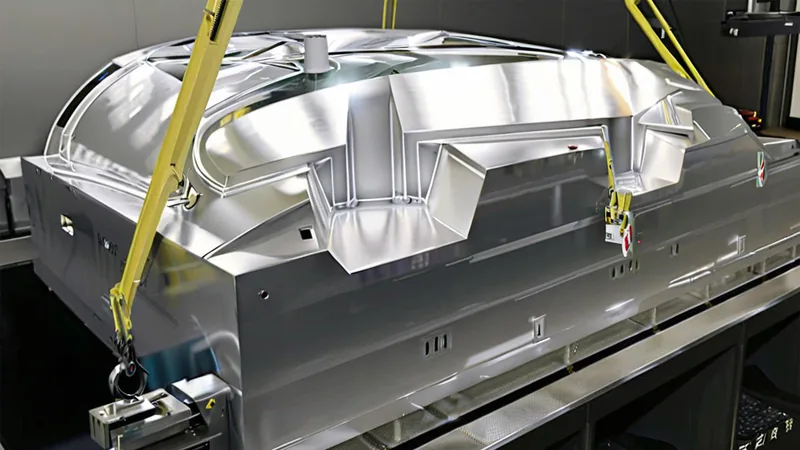
When a heavy gauge thermoforming project moves to an overseas supplier, the mold becomes the most valuable and least documented asset in the program. A vacuum forming tool for a two-metre equipment housing can represent a five-figure investment, yet many purchase orders say nothing about who owns that tool, who may run it, or what happens if the relationship ends. This guide explains how mold ownership and IP protection actually work with overseas thermoforming suppliers, and what to put in writing before the first sheet is heated.
- Mold ownership is decided by the written tooling agreement, not by who paid the invoice.
- Ownership of the physical mold and ownership of the mold data — cavity models, CNC programs, trim files — are two separate rights and must be contracted separately.
- Amortized tooling changes the picture: title transfer, buy-out price and timing all need explicit clauses.
- Validate the tool against recognized standards such as UL 94 for enclosure flammability before releasing final payment.
- Ask three questions early: where the mold sits, who is allowed to run it, and whether third-party production on your tool is contractually excluded.
- A short supplier audit or third-party inspection closes most ownership gaps before volume production starts.
Who Owns the Thermoforming Mold Once You Have Paid for It?
The tooling agreement decides, not the payment. Paying the mold invoice does not automatically transfer title to the physical tool or to the engineering data behind it. In practice, buyers who rely on a one-line tooling fee inside a purchase order often find that the supplier’s standard terms keep both the mold and the cavity files on the supplier’s side — even after full payment.
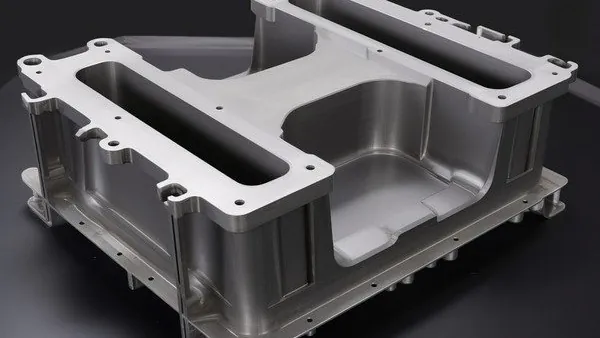
Ownership splits into three layers that buyers routinely confuse. The first is the physical mold: the machined or cast aluminum tool bolted to the forming machine. The second is the mold data: 3D cavity models, CNC toolpaths, cooling layouts and the drawings that define pocket depths, draft angles and vent positions. The third is process knowledge: sheet temperatures, vacuum dwell times, cycle settings and trim programs developed during buyoff. A contract can assign each layer to a different party, which is exactly why a tooling line item is not an ownership arrangement.
For amortized tooling, where mold cost is spread across the piece price instead of billed up front, the ambiguity gets worse.1 Until amortization is complete, most suppliers treat the tool as their asset even though the buyer funded every unit of it. If you cancel the program early, the contract should state whether you can pay the remaining balance and take the tool, or whether the supplier keeps it. Without that clause, a canceled project can strand a fully funded mold inside a factory you no longer work with.
A workable benchmark: if you cannot answer in one sentence where your mold is tonight, who may load it, and what document proves you own it, the ownership structure is not finished yet.
What Should a Written Mold Agreement Cover?
Title, data rights, run rights and exit terms. The agreement should name the owner of the physical mold, list exactly which data files belong to the buyer, restrict who may form parts on the tool, and define what happens on cancellation, wear-out and end of life. Whatever is left verbal will default to the supplier’s house rules.
| Clause | What it must state | Risk if missing |
|---|---|---|
| Title and transfer | Named owner of the physical mold; when title passes (upfront or amortized) | Supplier claims the tool after payment; buy-out impossible |
| Mold data rights | Buyer owns cavity models, CNC programs and trim files, or supplier keeps limited use | Re-qualification from scratch if you move the tool |
| Run rights | Only the buyer’s parts may be formed on the tool | Your geometry quoted to other customers |
| Cancellation and buy-out | Remaining balance formula, release timeline, transfer cost | Mold held as leverage in a dispute |
| Maintenance and life | Expected tool life, wear limits, who pays refurbishment | Mid-program arguments over tool condition and cost |
Keep the agreement as a signed one-page appendix to the purchase order rather than a loose email chain. Record the mold serial number, photograph the cavities after buyoff, and repeat the physical check annually. One of the simplest protections is a tooling register both sides confirm in writing: mold number, cavity count, last recorded cycle count and current location. Buyers who do this can move programs between suppliers in weeks; buyers who do not usually start over.
Can a Supplier Run Your Mold for Other Customers?
In most jurisdictions, yes, unless your contract forbids it. The tool sits inside the supplier’s factory, and possession works as practical control: if the tooling agreement is silent, nothing stops another customer’s parts being formed on your cavities outside your scheduled slots. The fix is an exclusivity clause backed by physical safeguards — serialized mold tags, a tooling register you can audit, and the right to witness tool movements.
This is also where IP risk concentrates. The part geometry may be yours, but every run on someone else’s thermoforming cell exposes cycle settings, sheet temperatures and trim parameters that took trials to establish. A competitor who contracts runs on your tool inherits your development effort without your development cost. Run-rights exclusivity and non-reproduction clauses are routine requests for suppliers who serve export programs, and a serious partner will accept them without friction.
"Once I own the mold, nobody can produce my parts without permission."False
Ownership of the physical tool only stops use of that tool. If the supplier keeps the cavity files, trim programs and process parameters, a duplicate tool can be cut and your parts formed elsewhere. Without data ownership and non-reproduction clauses, mold title alone protects very little.
"Data ownership matters as much as owning the tool itself."True
Securing the cavity models, CNC toolpaths and process records gives you the option to rebuild the tool at another qualified molder. Combined with a run-rights clause, it makes your ownership enforceable in practice rather than only on paper.
In day-to-day production, enforcement is physical, not legal. A named tool should appear in the molder’s machine schedule as its own asset, with running hours recorded against your part numbers only.
ZetarVac operates more than 20 vacuum forming and thermoforming machines across 45+ production lines, so a named tool is scheduled and tracked as its own asset on a specific machine. For buyers, this means an exclusivity clause maps to a real machine schedule, not to a verbal promise.
Which Mold Design Choices Affect Your Lock-In?
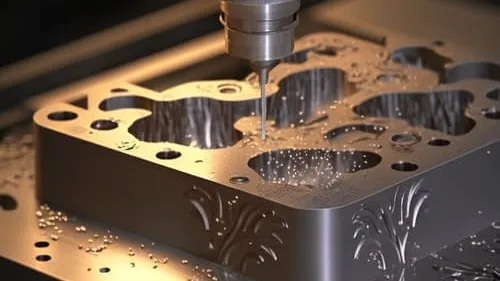
Every thermoforming tool embeds decisions that are expensive to reverse later. A positive or negative mold determines which surface of the part forms against the tool and therefore controls the dimensional authority of the finished part. Cast aluminum tools suit larger, simpler cavities; fully machined tools hold tighter detail and tolerance on housings and covers. Prototype tools — often cast composite or plaster thermoforming molds — validate geometry and draw ratios cheaply before you commit to production aluminum, and they should be treated as disposable, not as part of your owned asset base.
Cavity count is the third lever. Multi-cavity thermoforming molds raise output per cycle but add alignment and maintenance scope: each cavity insert is a separately manufactured item with its own wear history. When you buy a multi-cavity tool, list every insert with a serial number in the tooling register, and require that replacement inserts be sourced to the same controlled drawings.
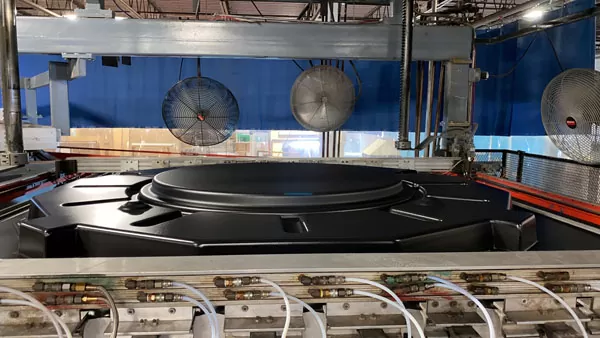
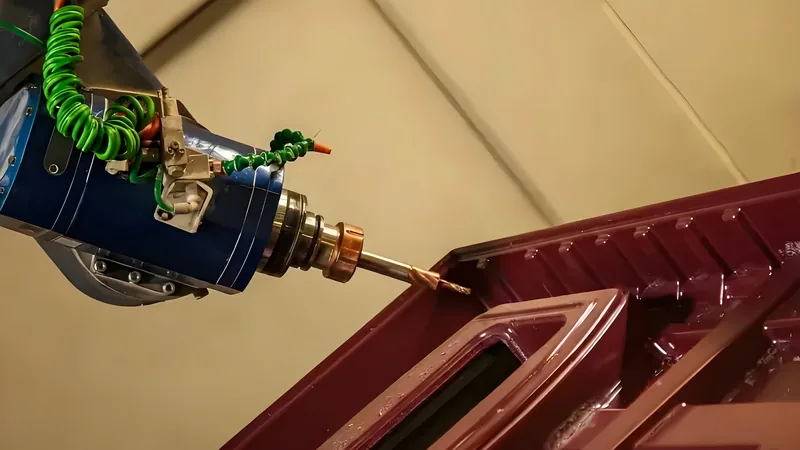
Heavy gauge parts at ZetarVac are trimmed on a 5-axis CNC centre whose trimmed outline follows the forming tool, so mold geometry and trim fixtures are a matched pair. When negotiating data ownership, include the trim program: a mold without its matching trim data is only half of the asset you paid for.
How Do You Validate the Mold Before Releasing Final Payment?
Treat validation as evidence of repeatability, not as a search for one perfect part. A first article confirms the tool can make a conforming part once; readiness needs parts from different days and sheet lots, with parameters recorded and compared. Check formed wall distribution, corner thinning and the trimmed outline before final payment.
On deep draws, corner thinning commonly reaches 30 to 50 percent of nominal sheet thickness depending on material and geometry, so record where the thin zones land and confirm they are not load-bearing.2 Material-side checks deserve the same rigor. ISO 75-2 specifies how the heat deflection temperature of a plastic is measured under a defined flexural load, and it is the standard way to confirm that an ABS or PC housing keeps its shape at service temperature.3
Where the part is an electrical enclosure, UL 94 classifies the flammability of plastic materials, and many OEM buyers will not accept a formed housing until the correct flame rating is documented against the sheet lot.4 Industry references such as the SPE Thermoforming Division publish tooling and process guidance you can use to benchmark a supplier’s answers before you sign anything.
"A signed-off first article proves the process is stable for volume."False
A first article is one part from one setup on one day. It says nothing about drift across shifts, sheet lot changes or shop temperature swings. Buyers who treat signoff as proof of stability meet the consequences mid-run, not at buyoff.
"Repeatability across several trials is the evidence that counts."True
Ask for parts formed on different days from different sheet lots, with recorded forming temperatures, vacuum times and trim settings. When dimensions and wall distribution hold across those runs, the tool and process are genuinely ready for series production.

FAQ on Mold Ownership and Tooling Rights
Should the mold ship to my own factory or stay with the molder?
Keep the tool where it runs, unless your sourcing strategy says otherwise. If one molder will produce the part for years, an on-site tool with audited run rights is cheaper than a transfer. If you plan to dual-source or expect program changes, budget for transfer costs: disassembly, export packing, requalification and trial runs at the new site.
Who owns the mold data if the supplier designed the tool?
Whatever the agreement says, so negotiate it explicitly. Mold design built on your part model is derivative work; pay for it as a line item and receive the cavity models, CNC toolpaths and all revisions. Suppliers who already serve export programs hand over data routinely once it is contracted.
How does amortized tooling change my ownership rights?
Until the amortization completes, the supplier typically retains title even though you funded the tool through the piece price. The contract should define the remaining-balance formula, the buy-out procedure, the transfer timeline and the tool’s documented condition at handover.
Do I still need an NDA if the tooling agreement covers ownership?
Yes, because the two documents cover different objects. The tooling agreement governs the asset; the NDA governs information — part geometry, volumes, applications and customer identity. Also restrict plant photography and visitor access to the cells running your parts.
Who pays for mold maintenance and eventual refurbishment?
Normal wear from running your parts is usually the buyer’s cost, since the tool serves your program. Agree a rate schedule for cleaning, polishing and insert replacement, and define wear-limit criteria that trigger refurbishment, so neither side carries an undefined liability.
If you are comparing overseas thermoforming suppliers, contact our team to review ownership terms alongside the technical quote, or request a quote with your part drawings and annual volumes. Starting the conversation from a written tooling structure is the cheapest IP protection you will ever buy.
-
Amortized tooling: a pricing structure in which mold cost is recovered through the piece price over an agreed volume instead of being billed as an upfront tooling charge. ↩
-
FAI: First Article Inspection, the documented dimensional and material verification of initial parts against the drawing before series release. ↩
-
HDT: Heat Deflection Temperature, measured per ISO 75-2 as the temperature at which a standard bar deflects a specified amount under a defined flexural load. ↩
-
UL 94: the standard flammability classification for plastic materials, grading specimens from HB to V-0 and 5VA according to burning behaviour in controlled tests. ↩