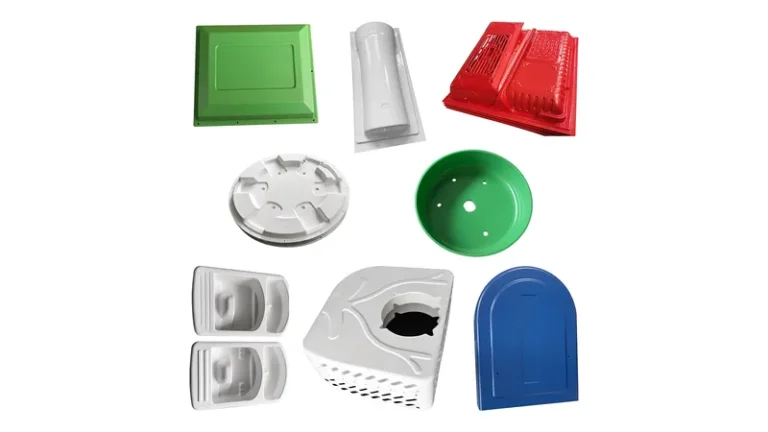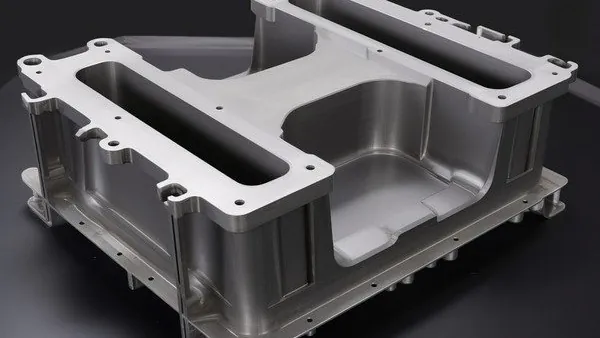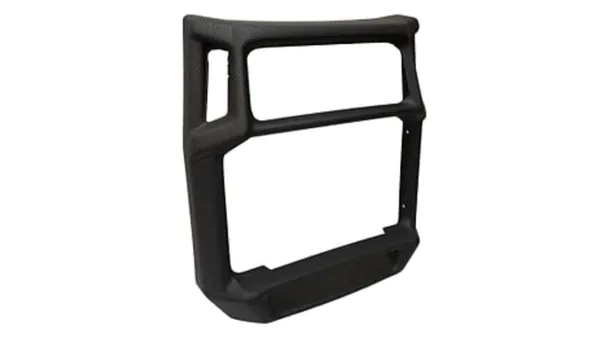
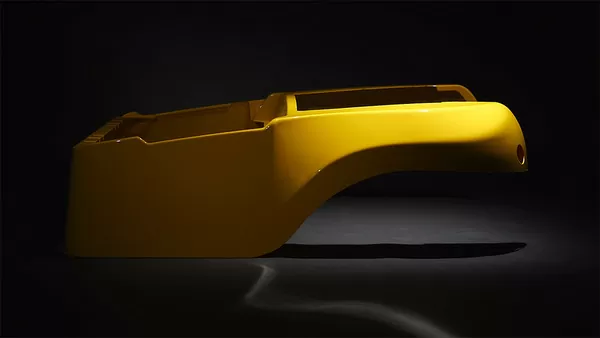
A heavy-gauge thermoforming quotation is not a single number; it is a stack of assumptions. Two suppliers can look at the same 3D model and return unit prices 30–40% apart, and both can be honest. The difference sits in how each one treats sheet material, machine time, tooling, trimming, and your volume forecast. This breakdown takes those cost blocks apart so you can read a vacuum forming quote line by line and challenge the assumptions that move the number.
- Sheet material typically accounts for 40–60% of unit cost in heavy gauge vacuum forming, so the grade and gauge you choose move the price more than anything else.
- Forming cycle cost is dominated by heating and cooling the sheet, and both scale with thickness — a 6 mm panel cannot be quoted on the clock of a 2 mm one.
- Tooling is a one-time cost driven by part size, draw depth, and trim complexity; ask whether it is charged upfront or amortized, and on what volume basis.
- Trimming method — press trim, trim fixture, or 5-axis CNC — is where comparable quotes quietly diverge.
- A comparable quotation names the material grade, starting sheet gauge, trimming method, tooling treatment, price validity, and the volume the price assumes.
- Certification requirements such as UL 94 flame ratings belong on the quotation line itself, not in a later email.
What Are You Actually Paying For in a Heavy-Gauge Thermoforming Quote?
Four cost blocks decide almost every heavy-gauge thermoforming quotation: sheet material, forming machine time, tooling, and post-forming work such as trimming and finishing. Material and machine time drive the per-piece price; tooling and setup drive the entry cost. Inspection, packaging, and secondary operations are layered on top of these four.
Sheet material is the largest block. Forming thick sheet consumes a lot of resin per part, and because sheet suppliers sell by weight while you buy formed parts by the piece, yield loss matters: the web between formed areas, the clamped frame, and the sag allowance all end up as scrap the quote has to absorb. As a working range, material represents roughly 40–60% of the unit cost on typical industrial parts, with the exact share depending on gauge and part weight.
Machine time is the second block. A heavy-gauge vacuum forming cycle is dominated by heating the sheet and then cooling the formed part, and both times scale with thickness. Doubling the sheet gauge roughly doubles the thermal mass, so heating and cooling grow together; a 6 mm panel cannot be quoted on the clock of a 2 mm one. Machine hourly rates differ between machine classes and regions, but the structural point holds: on thick sheet, the clock is the price.
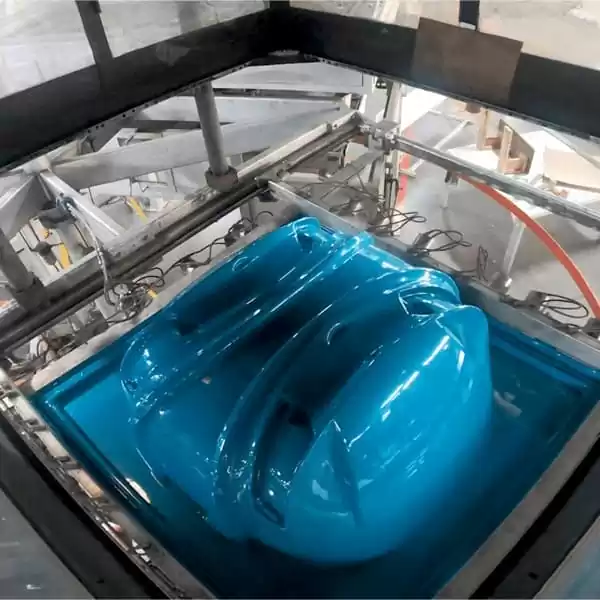
ZetarVac runs 20+ vacuum forming and thermoforming machines processing sheet from 0.5 to 15 mm, with a maximum forming length of about 2,500 mm. For a buyer, that means parts in the two-metre class are formed on equipment sized for heavy-gauge work — not stretched onto small machines, which is the situation that quietly inflates cycle time and unit price.
Why Does Sheet Choice Move the Quote More Than Anything Else?
Material selection is the strongest single lever on unit price. Moving from ABS to polycarbonate can roughly double sheet cost, and moving from 3 mm to 6 mm doubles the resin in every part while lengthening the heating and cooling cycle. Quote both alternatives and the spread between them tells you where the money actually goes.
Each material family also brings its own forming behaviour, which shows up as scrap and cycle time rather than as a line item. The table below summarizes how common heavy-gauge sheet materials behave in a quotation.
| Material | Typical formed parts | Cost behaviour in a quote | Engineering watch-outs |
|---|---|---|---|
| ABS | Equipment housings, cases, guards, automotive interior parts | Baseline engineering sheet; predictable forming window | Flame-rated grades required for many enclosures cost more |
| HDPE | Industrial trays, equipment liners, storage boxes | Low sheet cost; wide forming window | Higher shrinkage; check flatness on large panels |
| PC | Clear guards, equipment protection covers | Premium sheet; moisture-sensitive before forming | Dry the sheet or expect bubbles in cosmetic areas |
| PP | Trays, packaging, boxes, equipment liners | Low-cost sheet; strong post-forming shrink | Warpage control needed on flat sections |
| PP/GF | Automotive and industrial structural parts | Premium over neat PP; stiff but hard to draw deep | Glass content limits deep draw and sharp detail |
Grades and certification requirements belong on the quote, not in a follow-up conversation. UL 94 governs the flammability of plastic materials and is required for many equipment enclosures, so a flame-rated ABS or PC/ABS sheet carries a documented premium over a general-purpose grade — and if the quotation does not name the grade, you cannot tell which one you are buying. Mechanical data deserve the same discipline: ISO 527-2 defines the standard tensile test run on thermoformed sheet, so a supplier quoting tensile figures should be testing coupons cut from formed sheet, not copying values from a resin datasheet.
For parts that see heat — machine shrouds over drives, covers around electronics — ask for the heat deflection temperature1 of the specific grade rather than a family average. Soft features cost as well: a TPE liner on a rigid shell adds a second material, a second inspection step, and real cost, so quote it as its own line instead of letting it disappear into the piece price.
"The cheapest sheet per kilogram gives the cheapest finished part."False
Sheet price by weight ignores yield, scrap rate, and cycle time. A low-cost resin that forms with more web scrap, more rejects, or a slower heating profile frequently produces a higher cost per finished piece than a premium grade that forms cleanly on the first attempt.
"Material grade, sheet gauge, and certification requirements should be named on the quotation line."True
A quote that names grade and gauge can be checked against real sheet prices and against requirements such as UL 94 flame ratings. Unnamed equivalent material is the most common place for cost and quality assumptions to hide in a thermoforming quotation.
How Do Tooling and Trim Fixtures Shape the Upfront Cost?
Tooling is usually the largest single upfront line, but it is a one-time charge, not a unit cost. Most suppliers either quote it separately or amortize it into the piece price over an agreed volume. The treatment you choose changes what you should compare between suppliers.
Tooling cost in thermoforming is driven less by geometric complexity than by size, depth of draw, and trim method. A cast aluminum tool for a flat panel is inexpensive; a deep-draw housing with side walls, mounting features, and a matched trim fixture is a different order of cost. Undercuts, mold-side textures, and cosmetic surfaces each add casting or machining work before the first sheet is ever heated.
How the tool is paid for is a negotiation point, not a fixed rule. Paying tooling upfront keeps the unit price clean and makes supplier comparison straightforward; amortizing it protects cash flow but hides assumptions. If your volumes land below the amortization schedule, the supplier has to recover the shortfall somewhere. Tools and trim fixtures are classic non-recurring engineering costs2, so ask for them itemized and state the recovery basis in writing.
The cheapest tooling changes are the ones made before the tool is cast. A structured design review3 catches the geometry that inflates tooling cost — deep draws that could be shallow, radii that could open up, trim lines that force complex CNC work. Our DFM checklist for heavy-gauge thermoformed parts and molds sets out the checks that decide tooling cost before a purchase order is placed.
"Thermoforming tooling is always cheap because the process runs at low pressure."False
Low pressure does keep tools simpler than forming methods that run higher forming pressure, but tooling cost still scales with part size, draw depth, side actions, and the matched trim fixture. A large deep-draw housing can carry a five-figure tooling bill, and treating every forming tool as cheap is how budgets get underestimated.
"Tooling cost should appear as its own quotation line, with the amortization basis stated."True
A separate tooling line makes quotes comparable between suppliers and keeps the unit price honest when volumes change. If tooling is amortized, the assumed volume and recovery terms belong in the quotation so the piece price can be validated against your real forecast.
Which Quote Lines Do Suppliers Most Often Leave Out?
The lines most often missing are sheet yield, trimming method, price validity, and the volume the price assumes. Without them, a unit price cannot be compared with another supplier on equal terms. Ask for each one explicitly before you rank the quotes.
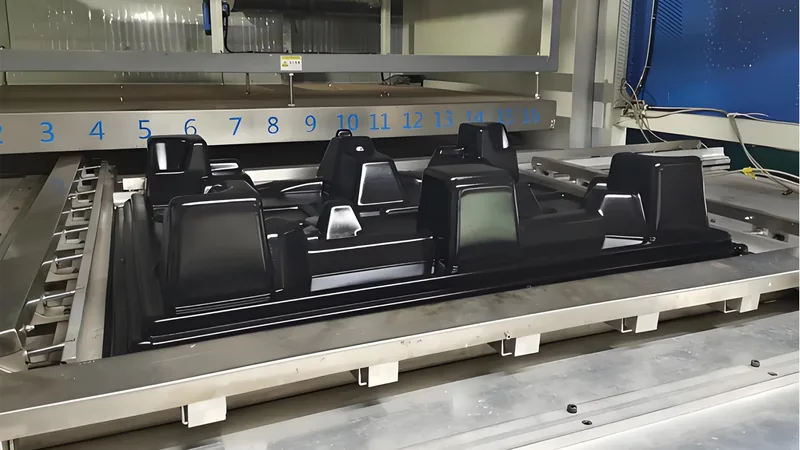
Trimming is where heavy-gauge vacuum forming quotes quietly diverge. An outline that follows the forming tool can be trimmed in the press or on a simple fixture; free-form cutouts, mounting holes, and tight radii need CNC work. A 5-axis CNC trimming centre removes the cost of a dedicated fixture for every part and handles complex outlines, but its programming and machine time still belong on the quote as a visible line rather than inside an unexplained unit price.
Secondary operations and logistics belong on the same page: painting, inserted fasteners, assembly, packaging design, and shipping terms each add cost that some suppliers bury in the unit price. A request for quotation4 that states these expectations returns prices you can actually compare; one that asks only for a unit price returns the number that wins the order, not the one that matches the invoice. For buyers new to the process vocabulary, the CustomPartNet overview of thermoforming is a useful neutral reference.
"Once the first article is approved, the quoted unit price is locked for the whole run."False
First-article approval proves the tool and the process can make the part; it does not freeze sheet resin prices, energy costs, or scrap rates over time. Price validity periods and material-index clauses exist precisely because unit costs move between first approval and the final shipment.
"A quotation should state its validity period and how material price movements are handled."True
A stated validity window and a raw-material clause protect both sides. Buyers compare quotes on equal terms and can budget for adjustments, while the supplier avoids absorbing open-ended resin price risk inside a fixed unit price.
Trimmed geometry also needs a checking method. Agree upfront how cut-outs and mounting holes will be verified — first-article measurement against the 3D model, then a defined in-process check — so trimming accuracy is a specification you can audit, not an assumption buried in the price.
ZetarVac trims formed parts on a 5-axis CNC trimming centre, so the trimmed outline follows the forming tool rather than a hand-guided cut. For a buyer, that means complex cut-outs and mounting holes hold their position from the first article to the last shipment — and the trimming step appears as a defined, checkable line in the quote.
How Does Batch Size Change the Price per Part?
Batch size changes unit price mainly through setup time, sheet yield, and tooling amortization — not proportionally. Prototypes carry full setup cost on a handful of pieces, mid-size batches amortize tooling but keep changeover losses, and large batches spread fixed costs thin while adding warehousing and cash-flow weight.
The two numbers to ask for are the piece price at your committed volume and the piece price one volume step up. On thick sheet, where heating and cooling dominate, the machine-time portion barely moves with volume; what moves is setup, yield, and amortization. If a supplier’s price drops sharply between a pilot batch and a production batch, ask which of those three assumptions changed — the answer tells you where your cost risk actually sits.
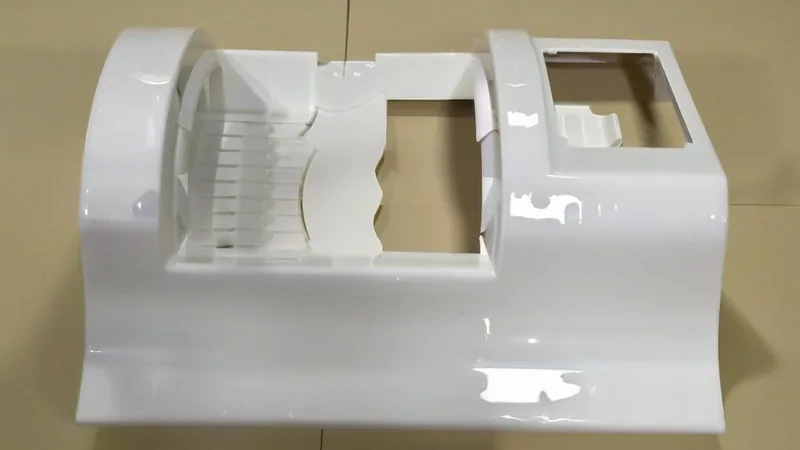
This is also where supplier continuity pays. When the team that ran your prototype also runs production, forming windows, trim programs, and material behaviour carry over instead of being relearned — and that learning cost never appears on anyone’s quote.
ZetarVac supports prototyping, small batch, and large batch production across 45+ production lines, with a reference monthly capacity of about 100,000–200,000 pieces. For a buyer, that means the same supplier can quote a first article and a repeating production schedule without moving the tool to a different plant — one of the hidden costs when prototype and production suppliers differ.
FAQ
How much of a heavy-gauge thermoforming quote is material cost?
On typical industrial parts, sheet material runs roughly 40–60% of the unit cost. The exact share depends on sheet gauge, part weight, and the grade: premium materials such as PC push the share up, while thick parts with long forming cycles push it down.
Why do quotes for the same part differ so much between suppliers?
Differences come from assumptions, not arithmetic. Suppliers assume different sheet yields, cycle times, scrap rates, trimming methods, and amortization volumes. Ask each supplier to state these assumptions and the gap usually closes to a few defensible points.
Is tooling charged upfront or amortized into the piece price?
Both models exist. Upfront tooling keeps unit prices clean and comparable; amortization protects cash flow but embeds volume assumptions. Either way, ask for the tooling cost, the assumed volume, and the terms if the program stops early.
What should I include in a request for a thermoformed part quote?
Provide the 3D model, target material or acceptable equivalent, sheet gauge, annual and per-batch volumes, tolerance needs, operating environment, and any certification requirement such as flame rating. Complete inputs produce quotes that survive contact with production.
Can I get prototype and production pricing from the same supplier?
Yes, and you should ask for it. Tiered pricing across prototype, pilot, and production volumes shows you how setup, yield, and amortization behave as your program grows, and lets you budget the cost curve instead of discovering it one order at a time.
To keep digging into the process behind these cost blocks, explore our vacuum forming process guide or see how a China-based heavy-gauge vacuum forming partner approaches tooling, trimming, and batch production — both walk through the forming and trimming decisions that shape your quotation.
-
HDT: HDT refers to heat deflection temperature, the temperature at which a plastic specimen deflects a specified amount under a defined flexural load, commonly measured per ASTM D648. ↩
-
NRE: NRE refers to non-recurring engineering costs, one-time charges such as forming tools and trim fixtures that are not repeated per unit. ↩
-
DFM: DFM refers to design for manufacturing, the practice of designing parts so they can be formed, trimmed, and inspected reliably at controlled cost. ↩
-
RFQ: RFQ stands for request for quotation, the structured document a buyer sends to suppliers to obtain comparable pricing. ↩