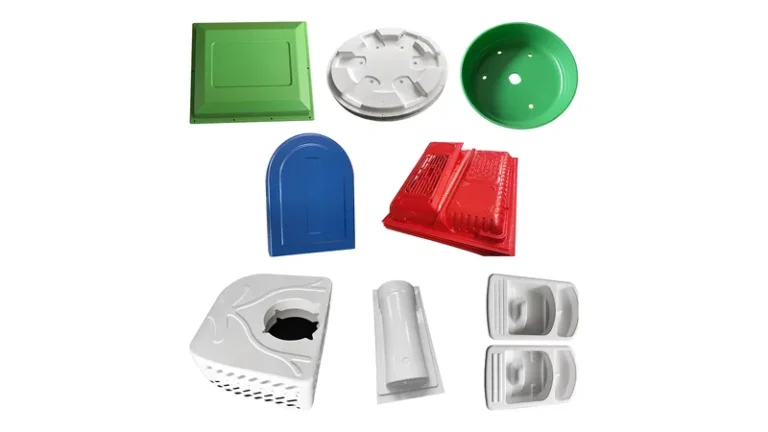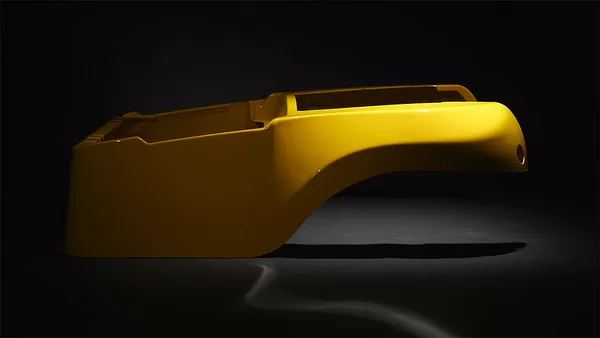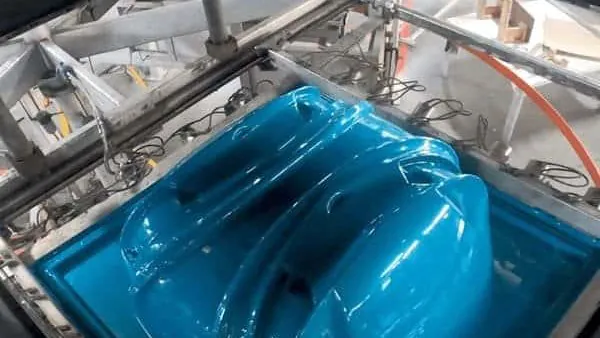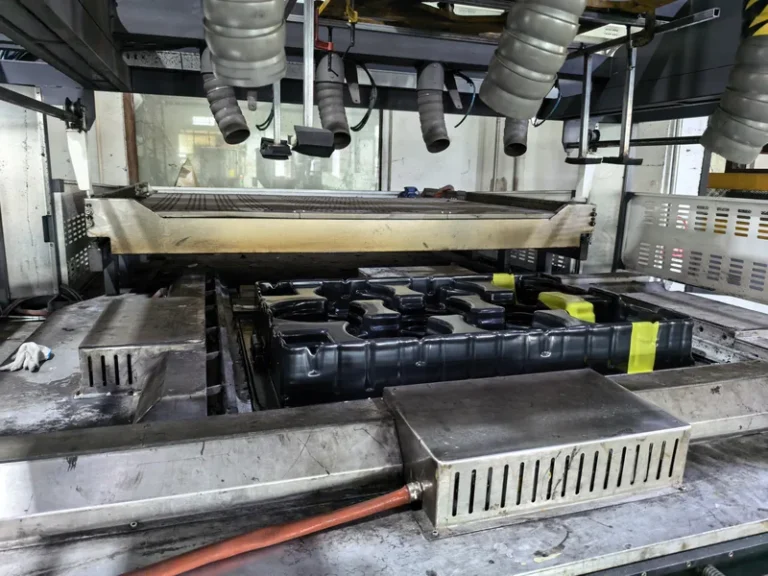

Polycarbonate has earned its place as the workhorse sheet for machine guards, protective covers, and equipment housings. It resists impact far better than acrylic, it holds its shape at service temperatures where styrenic sheets soften, and it stays optically clear when processed correctly. Those same properties are exactly what make it demanding to form: PC needs more heat than most sheet materials, it quietly absorbs moisture from the air, and it locks every thermal mistake into the finished part as residual stress.
This article walks through the challenges that show up specifically in polycarbonate heavy gauge thermoforming — drying and sag control, wall-thickness distribution in deep draws, warpage after forming, and the validation standards a formed PC part should meet before it reaches the field.
- Polycarbonate forms at a higher sheet temperature than ABS, so heater zoning and sag control decide part quality.
- Moisture is the leading defect driver: undried PC sheet produces bubbles, silver streaks, and brittle corners.
- Wall-thickness distribution, not the nominal sheet gauge, determines the stiffness of a formed panel.
- Warpage and residual stress originate in the heating and cooling balance, not in the forming step alone.
- Validate formed PC housings against flammability, heat deflection, and tensile standards before release.
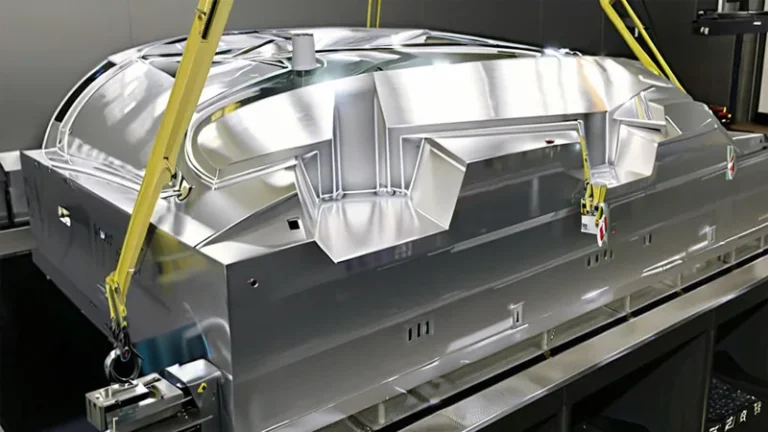
- Five-axis trimming keeps the cut outline aligned with the forming tool on deep-draw geometry.
Why Polycarbonate Punishes a Loose Forming Window
The forming window for polycarbonate sits higher on the temperature curve than most heavy gauge materials. In practice, PC sheet is typically brought to roughly 170–210 °C at the sheet surface before it will drape into tool detail, with the exact setting depending on gauge, formulation, and heater output — these are general engineering ranges, not fixed recipes. The margin between too cold (poor detail, high stress) and too hot (sag, marks, blistering) is narrower than with ABS, which is why heater zoning and staged heating matter more on a PC job.
Sag is the visible symptom. A PC sheet that reaches forming temperature unevenly will sag in a bubble over the heater field, and that bubble can touch the heater or fold onto itself during the forming stroke. Experienced operators watch the sag, not the clock: heater zones are balanced so the whole sheet reaches its drape point at the same moment, and top and bottom heat are set differently for thick sheet.
Heat resistance is usually the reason PC was chosen in the first place. ISO 75-2 defines the heat deflection temperature of a plastic under a specified flexural load, and a formed PC panel keeps working at service temperatures where lower-performing sheets would begin to deflect1. That thermal headroom has to be paid for at the forming stage, because the sheet must travel further up its temperature curve before it forms.
Sheet from 0.5 to 15 mm thick is processed on our thermoforming lines, with a maximum forming length of about 2,500 mm. For a buyer, that means one formed PC panel can cover a large machine face without a joint line — but as gauge increases, heating and cooling times stretch out, and the layout of the heater field does more work than the vacuum system does.
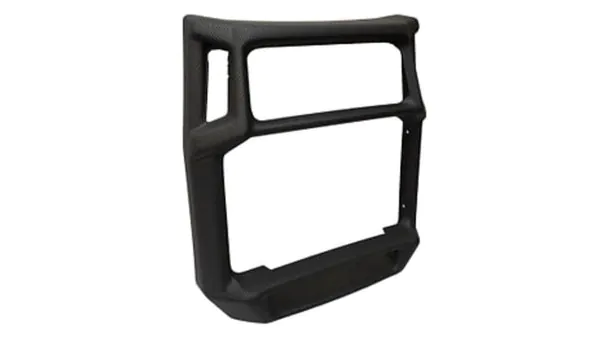
What Are the Main Challenges of Polycarbonate Heavy Gauge Thermoforming?
Moisture control, a narrower heating window, wall-thickness distribution in deep draws, and residual stress after forming are the four challenges that decide whether a PC part succeeds. Each one is manageable with process engineering, but none of them can be copied from an ABS job and expected to work.
Moisture. Polycarbonate is hygroscopic, and heavy gauge sheet stores enough absorbed water to cause real damage. Undried PC produces bubbles, silver streaks, and brittle corners, and in deep draws the moisture can blister the sheet against the mold surface. Drying time and temperature are scaled to gauge and storage history — several hours at an elevated temperature below the sheet’s softening range is the common starting point, and sheet that has sat in a humid warehouse needs more than sheet straight from sealed packaging.
Sag and heater control. On thick PC sheet, forming temperature is verified with infrared measurement at several sheet positions rather than assumed from a setpoint. Zones that run hot show up later as thin corners; zones that run cold show up as unsupported detail and stress.
Wall-thickness distribution. Vacuum forming stretches a hot sheet over a tool, so whatever stretches most becomes thinnest. Deep draws on PC thin predictably at corners and over male features, and webbing appears between tall, closely spaced features when the sheet bridges before it contacts the tool. The countermeasures are mechanical, not chemical: pre-stretch, plug assist, adjusted radii, and thoughtful part orientation on the mold.
"Polycarbonate can be formed straight from stock without drying, especially in thick gauges."False
PC is hygroscopic, and heavy gauge sheet holds enough absorbed moisture to bubble and streak at forming temperature. The defects often appear only in the deepest sections, so the first flat parts can look fine while the serious geometry fails.
"PC sheet should be dried to a controlled moisture level, with time and temperature set by gauge."True
Drying temperature and duration are set by gauge and storage history, always staying below the range where the sheet starts to soften. A dry-through check on the first formed sheet is far cheaper than scrapping a batch of deep-drawn parts.
Material choice sits behind most of these challenges, and it is worth putting the common heavy gauge candidates side by side before drawings are released.
| Selection factor | PC | PC/ABS | PMMA (acrylic) |
|---|---|---|---|
| Impact resistance | Very high | High | Low to moderate |
| Forming window | Narrow, higher heat | Wide, forgiving | Moderate, brittle when hot |
| Optical clarity | Excellent when dried well | Opaque | Excellent |
| Moisture sensitivity | High — must be dried | Low | Low |
| Typical formed parts | Guards, covers, windows | Housings, interior panels | Display covers, lenses |
How Sheet Gauge and Draw Depth Reshape the Process
Heavy gauge thermoforming spans sheet well under a millimetre up to 15 mm, and PC behaves differently at each end of that band. Thin sheet heats in minutes and forms fast; thick sheet needs long, gentle heating so the core reaches temperature without the surface overshooting. Heating time scales roughly with sheet thickness, which is why a 12 mm PC panel is a planning decision, not a line adjustment.
Draw depth is the second multiplier. A part whose draw depth approaches its smallest plan dimension is pushing into deep-draw territory, where corner thinning accelerates and detail reproduction fades. The design responses cost nothing at the drawing stage: generous radii at the base of walls, a few degrees of draft on vertical faces, and ribs positioned where the sheet is naturally thicker rather than where thinning is worst.
These geometry decisions belong in design reviews, not in tooling corrections. The fundamentals are covered in our vacuum forming overview, and a DFM checklist for heavy gauge thermoformed parts and molds is a practical way to catch radii, draft, and trim issues before cutting steel.
How Do You Control Warpage and Residual Stress in Formed PC?
Warpage comes from differential cooling and stress locked in during forming, so control starts with mold temperature and ends with how the part is held while it cools. Uniform tool temperature, balanced cooling, and a controlled cool-down under vacuum do more than any post-process correction. Persistent cases may justify annealing.
Mold temperature is the lever most often set too low. Forming PC against a cold tool freezes the skin before the sheet finishes draping, which locks in orientation stress and produces a part that keeps moving for days. Warm tooling in a typical range of roughly 70–90 °C lets the sheet finish forming before it solidifies — the exact value depends on tool material and part geometry.
Residual stress also concentrates where the part is trimmed and drilled. Stress cracking appears near trim edges, particularly when the part later contacts solvents, adhesives, or cleaners, so the trim path and hole positions deserve the same review as the formed surfaces. Annealing below the heat deflection range is an established option for stressed parts, though it adds cost and should be justified by the application rather than applied by default.
Formed parts on our lines are trimmed on a five-axis CNC centre, and the trimmed outline follows the forming tool. For a PC part, that means the cut path can be programmed away from the highest-stress corners, and deep-draw geometry does not have to be flattened or opened up to suit a simpler cut.
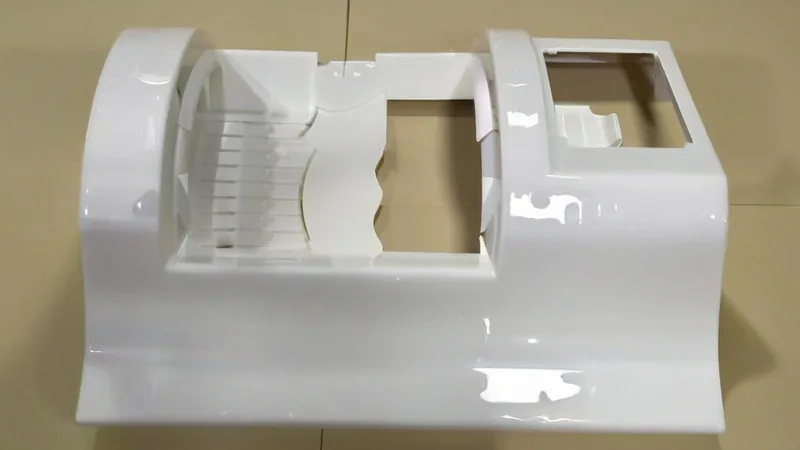
Which Standards Should a Formed PC Part Be Validated Against?
Most formed PC housings and guards are validated against three families: flammability, mechanical properties, and — for clear parts — light transmission. Enclosures for electrical equipment add ingress-protection requirements on top of the material tests.
Flammability comes first for equipment housings. UL 94 classifies the flammability of plastic materials, and many electrical enclosures require a minimum rating such as V-0 or V-2 before a formed cover can be approved2. Because forming slightly alters the skin structure of the sheet, validation is run on formed parts, not only on the incoming sheet certificate.
Mechanical validation is just as direct. ISO 527-2 specifies the tensile test method for plastics, and it is the standard tensile test run on thermoformed sheet and formed parts to confirm strength and elongation after the forming cycle3. For clear PC covers and windows, ISO 13468 defines the measurement of total luminous transmittance, which is the practical way to confirm that a formed clear part still delivers the clarity the sheet promised4. Where a formed cover must keep dust or water out of equipment, the IP code under IEC 60529 defines the protection degrees the finished enclosure is rated against5.
"A first article that passes inspection proves the production run will hold the same quality."False
A first article is formed from fresh sheet in the middle of the process window, usually by the most experienced hands. Production adds sheet lot changes, humidity swings, and machine cycling, and drift shows up mid-run, not on part one.
"Production stability should be confirmed with checks across the first lot, not only the first article."True
Measuring wall thickness at defined points, flatness, and trim positions across parts formed from different sheet lots catches drift early. Those data points also become the baseline for incoming inspection when volumes scale.
What Should You Confirm with a Supplier Before Releasing PC Drawings?
Tolerance expectations come first. Heavy gauge thermoforming holds different tolerances than machining, and a drawing that carries machined-level callouts on every feature will either be quoted with expensive secondary operations or rejected. Identify the features that genuinely need precision — mounting holes, mating faces, trim edges that meet other parts — and let the formed surfaces carry standard forming tolerances.
Then confirm the supplier’s process depth on PC specifically: drying capability, heater zoning on the machines that will run your part, tooling temperature control, and how first-article and in-process checks are recorded. Our service overview outlines how forming projects move from prototype through batch production, which is worth comparing against your program timeline.
Prototyping, small batch, and large batch production are all supported across more than 20 vacuum forming and thermoforming machines, with reference monthly capacity in the range of 100,000 to 200,000 pieces. A PC program can start as a dozen prototype parts and scale without changing suppliers or process.
Finally, ask how the supplier communicates engineering questions back to you. The cheapest problems to fix are the ones caught during drawing review, when a radius or a trim line can still be changed on paper.
FAQ
How long should polycarbonate sheet be dried before thermoforming?
Heavy gauge PC typically needs several hours of drying at an elevated temperature below its softening range, with the exact setting depending on sheet thickness, formulation, and how long the sheet was stored in humid conditions. Always verify with a trial formed sheet from the actual batch.
Can vacuum-formed polycarbonate stay optically clear?
Yes. PC keeps excellent clarity when it is dried properly, heated within its window, and formed against a clean tool finished for the application. Streaks and bubbles are processing defects, not properties of the material, and they are preventable.
Is PC or PC/ABS the better choice for a formed equipment housing?
PC when impact resistance, clarity, or higher service temperature drives the design; PC/ABS when the part has deeper draws, needs a wider forming window, or cost pressure matters. Share the service environment and loads with your supplier and let the material follow the requirements.
What sheet thickness is practical for heavy gauge PC parts?
PC is processed in a 0.5–15 mm sheet range on heavy gauge equipment. Typical equipment housings and machine covers fall in the 2–6 mm band, with stiffness gained through ribs, curvature, and flanges rather than raw thickness.
Where can I get my PC drawings reviewed before committing to tooling?
If you are comparing suppliers for a polycarbonate housing, guard, or cover, send your drawings to ZetarVac and put the forming questions directly to an engineer — the team can evaluate your part against process limits, and you can compare your design with our thermoforming and trimming capabilities before any steel is cut. Sharing drawings early is the fastest way to find the geometry changes that save the most cost.
-
Heat deflection temperature (HDT): The temperature at which a plastic test bar deflects a specified amount under a defined flexural load, measured per ISO 75-2. ↩
-
UL 94: A flammability classification standard for plastic materials, with ratings such as V-0, V-1, and V-2 based on burning behavior in vertical tests. ↩
-
Tensile test (ISO 527-2): A standardized tension test for rigid plastics that measures tensile strength and elongation on sheet and formed parts. ↩
-
Total luminous transmittance (ISO 13468): The standardized measurement of how much visible light passes through a transparent plastic part. ↩
-
IP code (IEC 60529): The ingress protection rating system that classifies how well an enclosure keeps out dust and water. ↩