A request for quotation reads like paperwork, but in heavy-gauge thermoforming it behaves like a process specification. The material families you allow, the thickness you demand, the tolerances you call critical, and the tests you require decide which machines a bidder can run and where the price lands. Two buyers can send the same 3D model and receive quotes that differ by half, simply because one document pinned the details down and the other left them open.1
This guide explains what to put into an RFQ for vacuum-formed parts — equipment housings, machine covers, trays, and structural components — and how to phrase each clause so the quotes that come back are actually comparable. It is written for procurement engineers, product designers, and factory technical leads.
- Open with four anchors: part definition, service environment, quantity ladder, and drawing package.
- Name material families and sheet thickness explicitly instead of writing “suitable plastic”.
- Keep critical tolerances separate from cosmetic wishes, and reference GD&T only where fit and sealing matter.
- Anchor acceptance criteria to standards such as ASTM D638 or ISO 75-2, never to adjectives.
- Ask bidders to declare process assumptions — forming method, cooling, trimming — in a fixed table.
- Compare quotes on a scorecard, not on unit price alone.
What Should an RFQ for Vacuum-Formed Parts Contain First?
A complete heavy-gauge thermoforming RFQ opens with four anchors: a precise part definition, the service environment, a quantity ladder, and the drawing package. Every later clause — material, tolerance, testing — hangs off these four, so settle them before anyone talks about price.
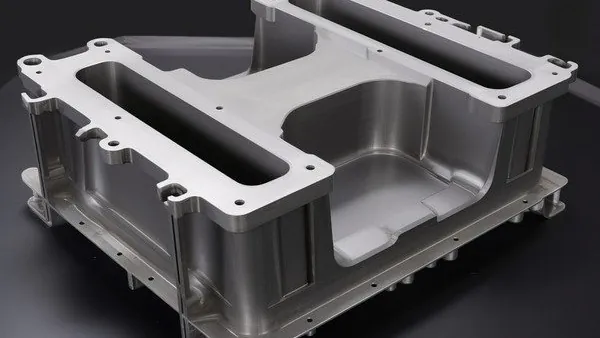
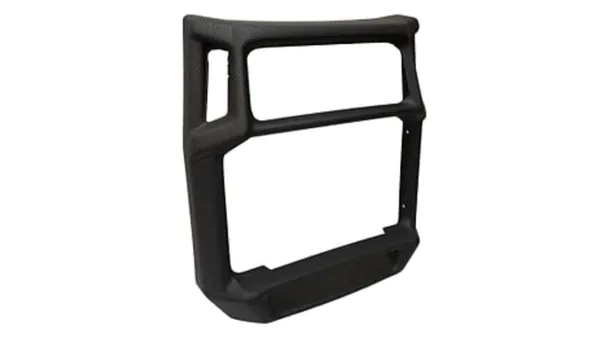
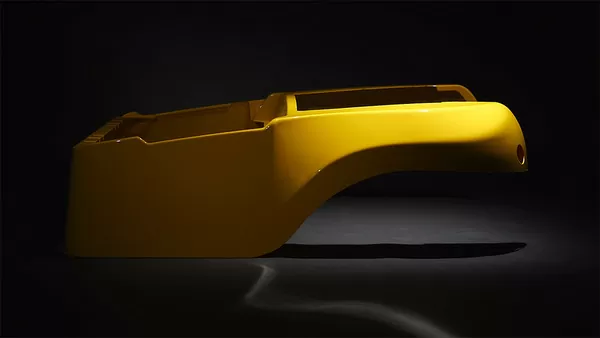
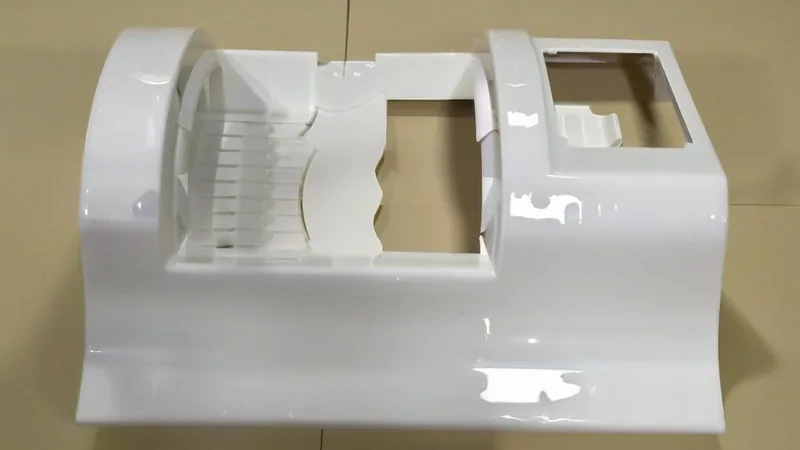
Part definition. Name the product family — equipment housing, machine shroud, pallet, tray, or structural component — and its main function. Avoid bundling unrelated families into one request; housings and stacking trays fail in different ways and should travel as separate packets so each is priced on its own merits.
Service environment. List temperature extremes, UV or outdoor exposure, cleaning chemicals, impact or stacking loads, and any food-contact or medical context. In heavy-gauge vacuum forming these lines decide the material family, the additive package, and the test scope, so one sentence per condition saves weeks of back-and-forth.
Quantity ladder. Give annual volume plus typical order sizes, from prototype batches through production runs. Suppliers can then propose the right tooling class instead of guessing one extreme. Stating that prototyping, small batch, and large batch production all need quoting keeps tooling proposals honest.
Drawing package. Provide native CAD or STEP files plus 2D drawings that mark critical dimensions, cosmetic faces, mounting interfaces, and load paths. A model without marked criticals invites every bidder to invent its own.
One more habit pays for itself: keep an assumptions table inside the RFQ. When a supplier fills a gap, they record the assumption beside the clause, so quote review becomes reading two lists instead of decoding two imaginations.
ZetarVac processes sheet from 0.5 to 15 mm and forms parts up to about 2,500 mm long, with 5-axis CNC trimming of formed parts following the forming tool, so a well-written RFQ can state maximum size and thickness directly and expect a firm feasibility answer in the first reply.
How Should Material and Sheet Thickness Be Specified?
Name the material family, any acceptable alternates, and the sheet thickness as a nominal value plus a minimum at critical features. In heavy-gauge thermoforming, thickness drives heating time, cycle time, and wall distribution, so a vague material line turns every quote into a guess.
Material family. Match resin to duty: ABS for housings, cases, and guards; PC or PMMA where clarity or impact matters; HDPE and PP for industrial trays, liners, and boxes; TPE for soft liners and seals. Offer an approved alternate only when you would genuinely accept it — every alternate widens the spread between bids.
Thickness. Forming capability commonly runs from 0.5 to 15 mm sheet, but that is a machine window, not a design instruction. Write the nominal thickness the part needs and the minimum acceptable at thinning-prone zones such as flanges, deep corners, and rib tops.
| RFQ line | Weak wording | Strong wording |
|---|---|---|
| Material | “suitable plastic” | ABS housing; PC/ABS acceptable with data sheet |
| Thickness | “as needed” | 4 mm nominal, 3.2 mm minimum at flange |
| Finish | “good appearance” | Fine texture on class-A face, molded-in color |
| Clarity | “see-through” | PC sheet, transmittance per ISO 13468 |
| Stiffness | “must be stiff” | Flexural data per ASTM D790, orientation stated |
When bidders claim strength or stiffness, ask for coupon data rather than assurances. ASTM D638 defines the tensile test method for plastics and is the standard tensile test run on thermoformed sheet, so results reported to that method — with conditioning stated — are directly comparable across bidders.2
"A thicker sheet is always the safer RFQ choice."False
Extra thickness raises cycle time and cost, and in deep draws it can actually worsen detail and wall distribution. Over-specifying thickness also shrinks the pool of machines that can heat and form the sheet, which quietly removes bidders from your comparison.
"Specify thickness as nominal plus a minimum at critical features."True
This gives suppliers a legitimate band to optimize within while protecting the zones that carry load or seal. It also converts the inevitable thickness conversation into a documented engineering exchange instead of a surprise after first samples.
Which Process Assumptions Should the RFQ Pin Down?
Require every bidder to answer the same process lines: forming method, heating approach, vacuum or pressure strategy, cooling practice, and trimming method. When those assumption rows match, unit prices finally become comparable.
Forming method. Vacuum forming is the baseline for heavy-gauge parts; pressure forming adds sharper detail and texture definition where cosmetic surfaces demand it. Invite it as an option with justification and cost impact rather than mandating it blindly.
Trimming. Ask explicitly how formed parts will be trimmed. Five-axis CNC trimming that follows the forming tool produces repeatable outlines lot after lot, while manual trimming varies with the operator. The answer belongs in the quote, not in the first-article report.
Tolerances. As an engineering rule of thumb, formed features in heavy-gauge thermoforming typically hold on the order of ±1% of the characteristic dimension, while CNC-trimmed edges tighten to a few tenths of a millimetre depending on material and geometry3. Reserve tight numbers for mounting interfaces, sealing flanges, and mating surfaces; blanket tight tolerances raise price without adding function.
"First-article approval proves the process is stable."False
A first article checks one setup at one moment in time. Stability shows up across lots — heater drift, sheet lot variation, and cooling consistency — so a golden sample can pass while the third production lot drifts out of tolerance.
"Tie part release to repeat-lot evidence, not a single sample."True
Requiring data from two or three consecutive runs, with dimensions recorded on defined features, is the cheapest insurance against a beautiful first article followed by an unstable ramp. It also shows early whether a supplier’s process control matches the quote’s optimism.
For shared industry vocabulary — sag, draw ratio, and forming windows — the SPE Thermoforming Division publishes reference material that helps internal teams use the same terms as their suppliers.
How Should Acceptance Criteria and Tests Be Written?
Write every acceptance clause as method, limit, and sample plan. Adjectives are unenforceable; a named standard with a limit and a specimen count can be checked at incoming inspection without a debate.
Mechanical properties. For panels and enclosures where flexing matters, ASTM D790 covers flexural properties of plastics, and requesting modulus results by that method — with test orientation stated — replaces endless argument over the word “stiff”.
Heat and flame. Where housings sit near motors or drives, ISO 75-2 defines the heat deflection temperature of plastics under load, so ask for the HDT4 value of the proposed sheet rather than the phrase “heat resistant”. For electrical equipment covers, UL 94 classifies the flammability of plastic materials and is required for many equipment enclosures — state the rating the part must carry instead of assuming the supplier will pick one.
Ingress. IEC 60529 defines the degrees of protection an enclosure provides against solids and liquids. If a formed cover must keep out dust or splashing water, name the IP5 target in the RFQ rather than describing it in prose.
Cosmetics. List defect types — sink marks, webbing, blisters, warpage — and agree on boundary samples before production, so “acceptable appearance” never becomes a matter of taste at final inspection.
"Ingress protection details can be added after pricing."False
An IP target changes sealing flanges, rib layout, and gasket geometry, so a late addition becomes a change order and possibly a re-cut tool. Bidders who priced a simpler base design will not absorb that silently.
"Name the IP target and any flammability rating in the first RFQ issue."True
Declaring the protection class up front lets every bidder design the flange and seal path into the quote, which keeps pricing honest and removes the most common source of post-award renegotiation on formed enclosures.
Acceptance planning should also fix the paperwork: how many samples per lot, which features get measured, and who keeps retention samples. These three lines cost nothing to write and prevent most incoming-inspection arguments.
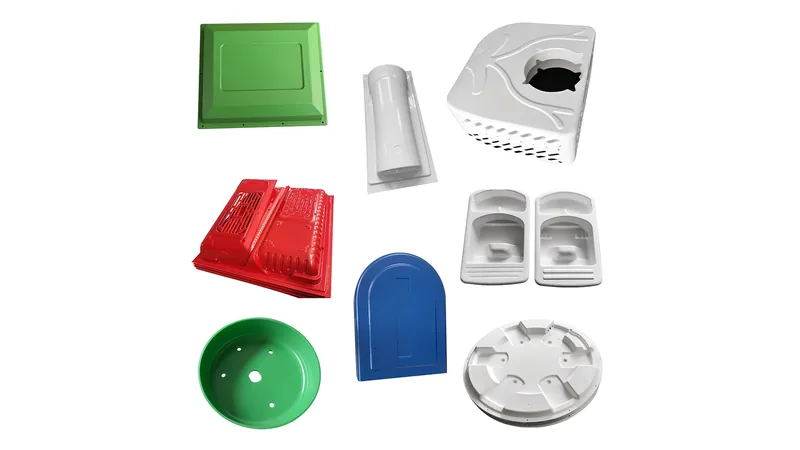
ZetarVac forms equipment housings, machine covers, trays, and structural parts across building, automotive, industrial, medical, logistics, agriculture, and consumer markets, which is why the test section of an RFQ should flex by application — a medical housing and an agricultural seedling tray rarely need the same checks.
What Should You Ask About Tooling and Prototypes?
Tooling terms belong in the technical RFQ, not only in the commercial annex. Ask what the mold is made from, how it is maintained, who owns it, and what changes cost after first samples.
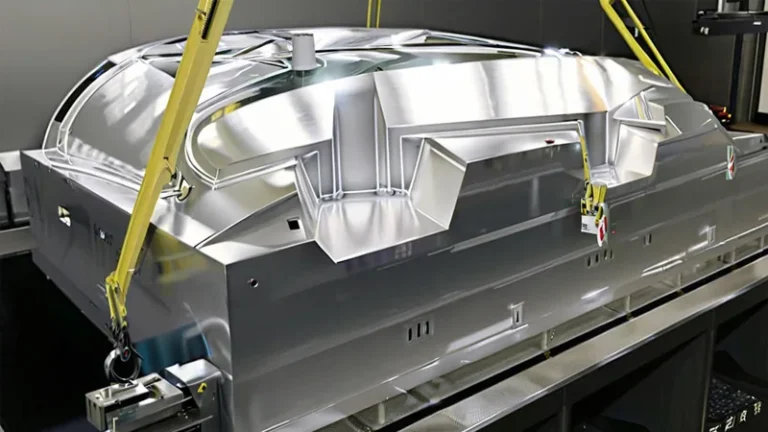
Tool class and life. Distinguish a prototype tool — often machined or printed, fast and inexpensive — from a production tool rated for the full program volume. Ask for an expected tool life in cycles and for the maintenance interval the supplier recommends.
Ownership and storage. State who owns the tool, where it is stored, and what happens if production pauses. These clauses are cheap to write now and expensive to negotiate during a supply disruption.
Change policy. Ask how dimension changes are priced after first samples: per feature, per engineering hour, or as a new tool insert. A supplier who answers this readily has done it before.
How Do You Compare Thermoforming Quotes Fairly?
Build the scorecard before quotes arrive and score every bidder on identical rows: process assumptions, material sourcing, test compliance, tooling terms, and cost at each rung of the quantity ladder.
- Process assumptions. Did the bidder fill in every assumption row, or leave the hard ones blank?
- Test compliance. Do they confirm each standard and limit, or respond with “will discuss”?
- Tooling terms. Are tool life, ownership, and change pricing stated, or deferred?
- Risk notes. Do they flag geometry concerns early, which usually signals real forming experience?
- Total cost. Compare tooling plus piece price at your ladder, not the lowest unit price alone.
A bidder who returns a complete assumptions table and flags a thin-wall risk honestly is usually a safer partner than one who says yes to everything at a lower number. For the design side of that conversation, walk through a DFM checklist for heavy-gauge thermoformed parts and molds before issuing the RFQ, and review how heavy and thin gauge forming differ so your thickness language matches your intent.
With 20+ vacuum forming and thermoforming machines among 45+ production lines, and a reference monthly capacity of roughly 100,000–200,000 pieces, ZetarVac can quote prototyping through large batch production in one plant, so asking bidders for a single-source plan across the quantity ladder is a reasonable RFQ requirement.
FAQ
How detailed do drawings need to be for a vacuum forming RFQ?
Detailed enough to mark critical dimensions, cosmetic faces, and mounting interfaces. Full GD&T on every feature is unnecessary; a short critical-dimension list plus a clean 3D model answers most supplier questions.
What tolerances can a heavy-gauge thermoformed part hold?
Formed features typically hold on the order of ±1% of the dimension, while CNC-trimmed edges are tighter, often a few tenths of a millimetre. Exact capability depends on material, geometry, and part size, so confirm tolerances during DFM review.
Should I allow pressure forming as an alternative in the RFQ?
Yes, as an option with justification. Pressure forming can improve cosmetic detail on visible surfaces, but it affects tooling cost, so let bidders propose where it earns its place.
How many first samples should I request?
Enough to measure every critical dimension at least once — commonly three to five parts — plus retention samples kept for later comparison. State the number in the RFQ so all bidders price the same inspection effort.
What happens if I leave the material choice open?
You will receive a spread of resin families chosen for the supplier’s convenience, and the quotes will not be comparable. Name a primary family and acceptable alternates, and require data for any substitution.
When you are ready to go deeper, explore the vacuum forming process overview to see how heavy-gauge parts are formed and trimmed, or review how an established vacuum forming manufacturer structures RFQ responses, tooling terms, and acceptance plans for housings and structural parts.
-
RFQ: Request for Quotation, the document that defines scope, specifications, and acceptance criteria before suppliers are asked to price a part. ↩
-
ASTM D638: Standard test method for tensile properties of plastics, specifying specimen type, conditioning, and reporting practice. ↩
-
GD&T: Geometric Dimensioning and Tolerancing, a standardized system for defining engineering tolerances on drawings. ↩
-
HDT: Heat Deflection Temperature, the temperature at which a plastic specimen deflects a set amount under load, tested per ISO 75-2. ↩
-
IP code: Ingress Protection rating defined by IEC 60529, classifying enclosure resistance to solids and liquids. ↩