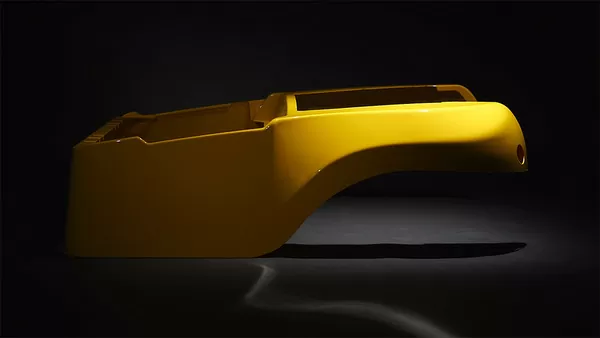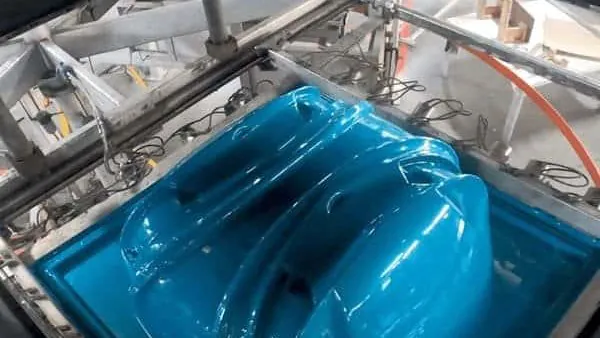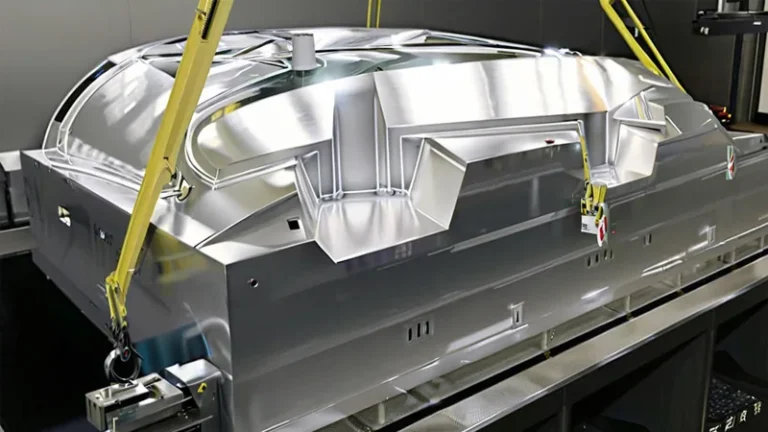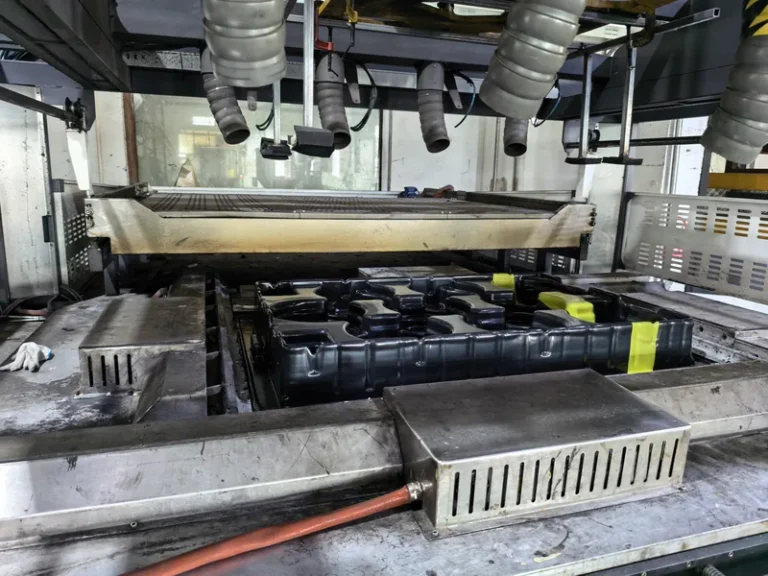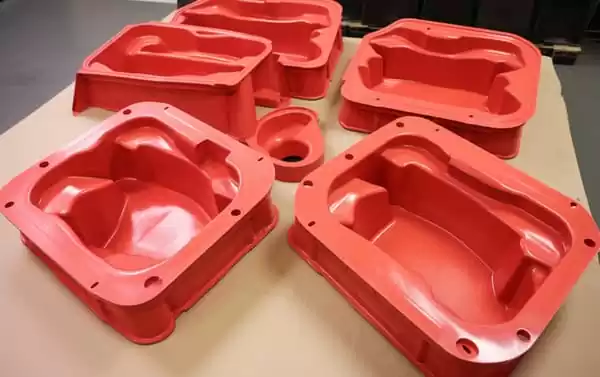
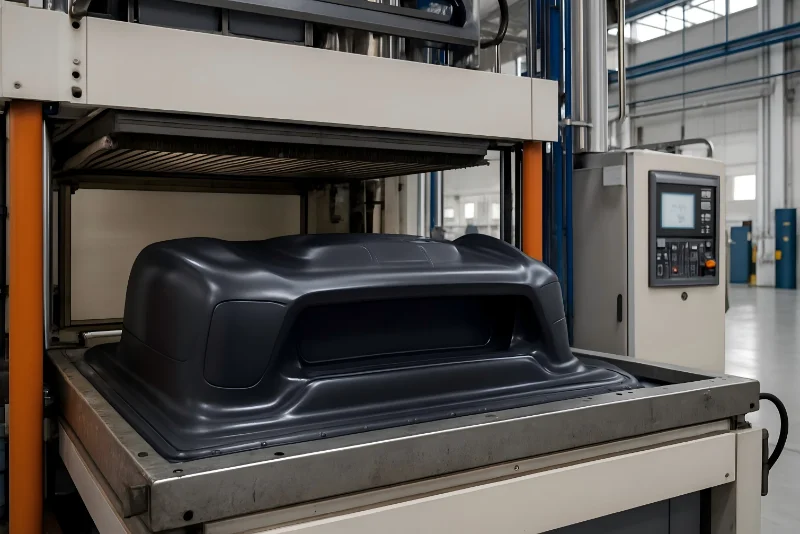
Plastic vacuum forming converts a flat thermoplastic sheet into a repeatable three-dimensional part: the sheet is heated until it softens, drawn against a single-sided mold by vacuum, cooled, and then trimmed to its final outline. In heavy-gauge work, the same process delivers structural trays, equipment housings, machine covers, and panels measured in millimeters of wall, not fractions of one. This article looks at the benefits the way a buyer or design engineer should: what the process is genuinely good at, where its limits sit, and how to verify a formed part before committing tooling money.
- Vacuum forming uses single-sided, low-cost molds, so tooling is typically a fraction of a matched metal mold and can be revised quickly during development.
- Heavy-gauge thermoforming processes sheet from 0.5 to 15 mm, which covers structural trays, enclosures, guards, and covers — not only thin packaging.
- Forming length up to about 2,500 mm allows large single-piece parts that would otherwise be fabricated from several joined pieces.
- A broad sheet library — ABS, PC, HDPE, PP, PVC, PMMA, PC/ABS and more — lets you tune impact strength, stiffness, heat resistance, clarity, and flame performance.
- Prototype, small batch, and large batch production all run on the same process, which lowers the risk of new product introduction.
- A formed part is not finished until it is trimmed and verified; 5-axis CNC trimming and documented testing decide whether the geometry is actually usable.
What Are the Benefits of Plastic Vacuum Forming?
The core benefits are low tooling cost, short development loops, large single-piece parts, wide material choice, and painless design revision. A vacuum forming mold defines one surface and can be produced in days, so geometry can be iterated without betting the project on a single expensive tool.
Each benefit comes with a condition attached. Tooling is inexpensive because the mold shapes only one side; the trade-off is that wall thickness distribution is set by how the sheet stretches, not by a cavity. Development is fast because forming, trimming, and testing a revised design can happen within days on the same tool. Part size is a structural advantage in its own right: large panels and housings form as single pieces, removing joints, fasteners, and the leak paths and alignment errors they introduce.
For a wider view of where this process sits among ZetarVac’s plastics manufacturing services — tooling, forming, finishing, and assembly — the services overview is a sensible next stop.
Why Does Vacuum Forming Cut Tooling Cost and Lead Time?
Because forming loads are low — typically a vacuum of roughly -0.07 to -0.09 MPa — the mold only has to survive atmospheric pressure differentials and repeated contact with hot sheet. Molds can be machined from aluminum or cast, which removes both the dominant tooling cost and weeks of steel-safe iteration.
In practice this changes the development math. A first-article tool is cheap enough to treat as near-disposable, so geometry revisions are measured in days, not mold rework orders. Cycle time scales with sheet thickness and material: preheat commonly sits between roughly 120 and 220 °C depending on polymer and gauge, and forming cycles range from under a minute for thin sheet to several minutes for heavy sections. These are engineering ranges, not guarantees — the real window depends on the material grade and the machine.
ZetarVac runs more than 20 vacuum forming and thermoforming machines, processes sheet from 0.5 to 15 mm, and forms parts up to about 2,500 mm in length. For a buyer, that means large thick-section parts are routine production work rather than a special-case exception.
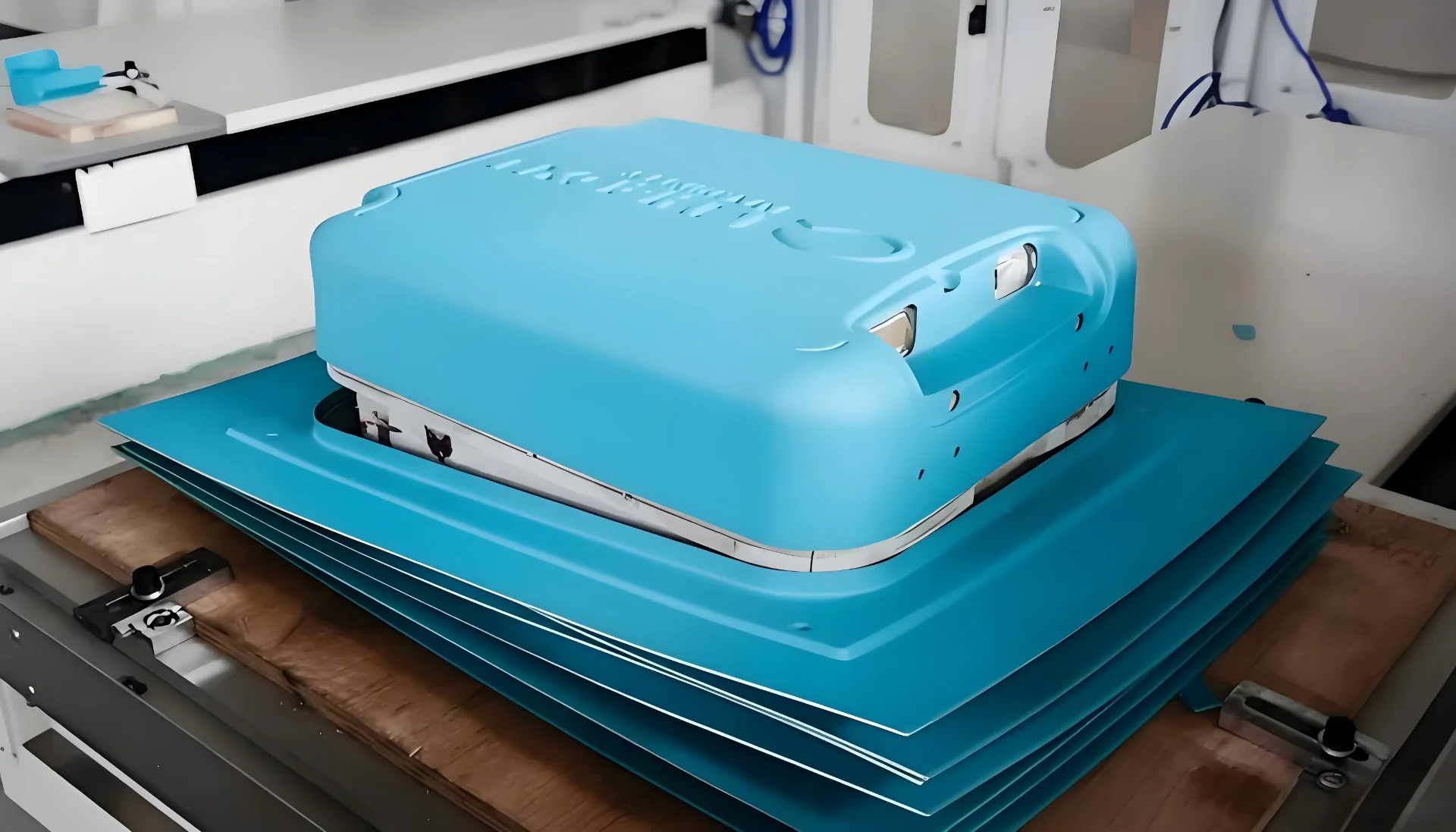
The economics also hold beyond prototyping. Once a design is validated, the same forming process runs production volumes; what changes is how heating, handling, and trimming are automated around the machines.
"Low tooling cost means vacuum forming is only suitable for prototypes."False
Cheap molds are a consequence of the single-sided tool, not a ceiling on series size. The same process that proves a housing in ten pieces can hold cycle discipline across thousands of pieces per month; what changes is the automation of heating, handling, and trimming.
"Vacuum forming covers prototype, small batch, and large batch programs on one process."True
This is exactly how heavy-gauge thermoforming is used in industry: development tools validate geometry, then production tools run the validated design. Capacity planning still matters — check monthly output and machine availability, not just tool price — but the process itself does not force a technology change between phases.
Which Materials Work Best for Heavy-Gauge Thermoforming?
Most thermoplastics that soften before they degrade can be formed; the practical shortlist for heavy-gauge work is ABS, PC, HDPE, PP, PVC, PMMA, and blends such as PC/ABS. Choose the material for the duty — impact, heat, clarity, or flame performance — then build the forming window around it.
| Material | Typical formed parts | What it buys you |
|---|---|---|
| ABS | Equipment housings, cases, guards, automotive interiors | Balanced stiffness and impact strength, forgiving forming window |
| PC | Clear guards, protection covers, medical equipment housings | High impact strength and clarity, higher forming temperature |
| HDPE | Industrial trays, equipment liners, storage boxes | Chemical resistance and toughness at low material cost |
| PP | Trays, boxes, automotive interior parts, equipment liners | Good chemical and fatigue resistance |
| PVC | Trays, packaging, industrial enclosures, liners | Low cost, good formability, broad gauge availability |
| PMMA | Clear covers, luminaires, display parts | Optical clarity and weathering performance |
| PC/ABS | Automotive interiors, equipment housings, guards | Impact strength plus dimensional stability |
Material choice drives the heating window as much as geometry does. Heavier gauges need longer, more even preheat, and materials with a narrow softening band demand tighter sag control on the machine. When judging whether a formed enclosure will hold shape near heat sources, sheet is usually compared against its heat deflection temperature.1 Clear parts are their own case: ISO 13468 specifies how the total luminous transmittance of transparent plastics is measured, so the clarity of a formed PC or PMMA cover is a number, not an opinion.
The same process serves very different material decisions. ZetarVac has formed PC into a large curved medical and diagnostic equipment housing with custom cut-outs, mounting holes, and reinforcement; PMMA into high-clarity retail display covers with custom curved geometry; and ABS into multi-cavity seedling trays with custom cell geometry for agriculture. Three end markets, one forming process.

What Design Limits Should You Check Before Committing?
Check draw ratio, minimum corner radii, draft, and the thickness distribution forming will leave behind. A formed part thins as the sheet stretches into deep features, so the number that matters is not the sheet gauge you buy but the minimum wall you will actually get.
Draw ratio — the formed surface area divided by the sheet area that produced it — sets how much the material must stretch.2 Higher ratios mean thinner corners, more risk of webbing in deep pockets, and a narrower process window. Practical countermeasures are generous radii, plug assists on deep draws, and keeping critical features away from the last-stretched zones. Draft of a few degrees on vertical walls eases release and protects the surface finish.
Tolerance strategy follows from the physics. Formed surfaces carry the tool’s shape; trimmed outlines are cut on a 5-axis CNC centre against the formed part. Put critical dimensions on trimmed features, treat formed surfaces as tool-defined, and remember that behavior differs across the 0.5–15 mm sheet range: thin sheet resolves sharp detail, heavy sheet needs larger radii and more preheat.
"The formed wall thickness equals the sheet gauge across the whole part."False
Sheet stretches during forming, so side walls and corners end up thinner than the nominal gauge — on deep draws, well below it. If stiffness or impact margin was calculated on the unformed gauge, the part will surprise you at validation.
"Thickness distribution must be measured and designed around, not assumed."True
Section a first article or measure it ultrasonically, then use those numbers to set minimum walls on the drawing. A competent supplier will show thickness maps on early samples before the tool is finalized.

How Are Formed Parts Trimmed and Verified?
Forming is only half the job; the part becomes a part at the trim station. Formed shells are trimmed on a 5-axis CNC centre, which follows the formed geometry so the outline, cut-outs, and mounting features land where the drawing expects them. Assembly holes can be drilled or routed in the same setup.
Verification should mirror end use. Tensile properties are checked to ISO 527-2, which specifies the specimen geometry, test speeds, and reporting rules for tensile testing of plastics so results are comparable across batches and laboratories.3 Where a formed housing protects electrical equipment, UL 94 applies: it classifies the flammability of plastic materials in ratings such as V-0, V-1, and HB, and many equipment enclosures must meet a specified rating before approval.4 For enclosures rated against dust and water, the IP code defined in IEC 60529 is the reference framework.5
Independent references keep supplier claims honest. The SPE Thermoforming Division publishes process guidance on sheet thermoforming that is worth reading before comparing quotations, and ZetarVac’s vacuum forming manufacturer page shows how a dedicated heavy-gauge forming operation presents its forming, trimming, and material capability.
"Passing the first article proves the production process is stable."False
A first article is a single sample from a deliberately tuned setup. Stability only shows when sheet lot, preheat, forming vacuum, and trim setup are documented and repeated parts fall inside them — which is what incoming inspection should check, not one golden sample.
"Process stability comes from a documented window plus ongoing checks."True
Ask how the window is recorded — heater zones, sheet temperature, forming time, trim datum — and how often it is audited. A supplier who can show the window can also explain why a deviation happened and what corrected it.
None of this is exotic; it is standard quality practice. The point is to agree on the process window and the acceptance checks before the tool is cut, while changes are still cheap.
ZetarVac operates 45+ production lines across the plant, trims formed parts on a 5-axis CNC centre, and supports a reference monthly capacity of about 100,000–200,000 pieces across prototyping, small batch, and large batch production.

FAQ: Benefits, Materials and Limits of Vacuum Forming
How thick can vacuum formed sheet be?
Heavy-gauge vacuum forming typically processes sheet from 0.5 to 15 mm. Thin gauges suit packaging and covers; gauges above roughly 3 mm are where parts start to carry structural loads as trays, liners, and equipment housings.
Is vacuum forming cost-effective at low volumes?
Yes. The single-sided mold is the main cost driver, so prototype and small batch runs are economically viable, and the same process scales to large batches — reference monthly capacity at ZetarVac is about 100,000 to 200,000 pieces.
How large can a single vacuum formed part be?
Forming length reaches about 2,500 mm on ZetarVac’s machines. That is large enough to produce machine covers, equipment housings, and panels as single pieces rather than welded or fastened assemblies.
Which standards apply to formed enclosures and covers?
Flame performance per UL 94, ingress protection per IEC 60529, polymeric materials in electrical equipment per UL 746C, and tensile validation per ISO 527-2. Which of these bind depends on the end market and the equipment the part protects.
How do I evaluate a thermoforming supplier’s capability?
Compare sheet gauge range, maximum forming size, trimming capability, the material library behind them, and how the supplier documents its process window. To go deeper before shortlisting anyone, explore the ZetarVac vacuum forming process guide — it walks through mold styles, material behavior, and trimming practice in detail.
-
Heat deflection temperature (HDT): The temperature at which a plastic specimen deflects a defined amount under a specified flexural load, used to judge how a formed part behaves near its service temperature limit. ↩
-
Draw ratio: The ratio of formed part surface area to the original sheet area covering it; higher ratios mean deeper parts, more thinning, and a narrower forming window. ↩
-
ISO 527-2: The part of ISO 527 that specifies tensile test conditions for plastics, covering specimen shape, test speeds, and how tensile strength and elongation are reported. ↩
-
UL 94: A flammability classification for plastic materials, with ratings such as V-0, V-1, and HB describing how a specimen burns and extinguishes under a controlled flame test. ↩
-
IP code: The ingress protection rating defined in IEC 60529, where two digits state the level of protection a closure provides against solids and liquids. ↩