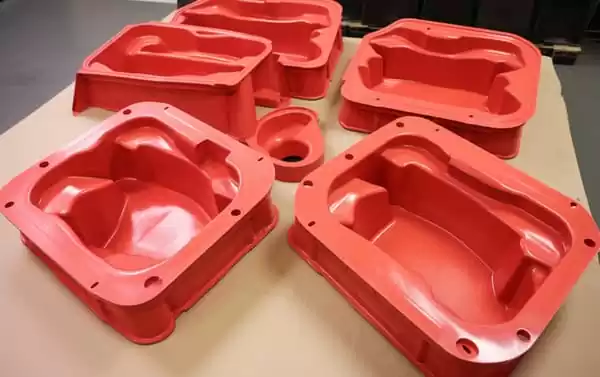
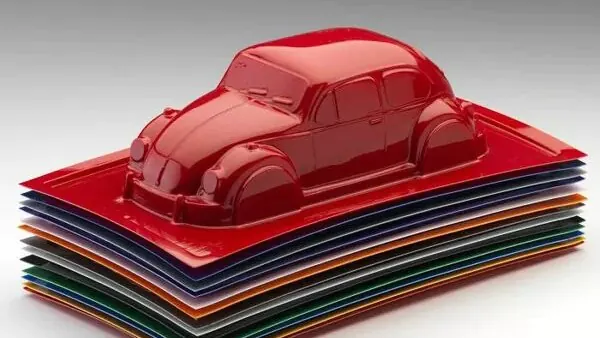
Plastic vacuum forming accepts a broad but not unlimited material palette. ABS, PC, PVC, HDPE, LDPE, PP, PMMA, PC/ABS, ASA, PA6/PA66, POM, TPE, TPU and TPV are all routinely processed as heavy-gauge sheet in industrial thermoforming, and glass-filled compounds extend the list for structural work. The real question is not whether a polymer can be stretched over a tool, but which one still meets your service temperature, impact, chemical and compliance requirements after forming has redistributed the wall thickness.
- Standard vacuum forming materials span ABS, PC, PVC, HDPE, LDPE, PP, PMMA, PC/ABS, ASA, PA6/PA66, POM, TPE, TPU, TPV and glass-filled PP.
- Every material has its own forming window: sheet temperature, sag behaviour, hot strength, pre-drying and cooling rate all differ.
- Datasheet values describe the raw resin, not the formed part, so validate tensile and impact performance on samples cut from formed components.
- Heat capability is set by HDT and Vicat softening point, while electrical housings must also clear UL 94 and, where ingress matters, IEC 60529.
- Heavy-gauge sheet from 0.5 to 15 mm and forming lengths up to about 2,500 mm cover enclosures, trays, liners and structural parts.
- Match polymer to environment: ASA and PC for outdoor duty, PMMA and PC for clarity, PP and PVC for food-contact trays, TPE for soft liners.
Which Materials Are Used in Vacuum Forming?
The standard heavy-gauge palette covers ABS, PC, PVC, HDPE, LDPE, PP, PMMA, PC/ABS, ASA, PA6/PA66, POM, TPE, TPU, TPV and glass-filled PP. ABS is the default for housings, cases and guards; PC for impact and clarity; PVC for trays and liners; PP and HDPE for chemical and wear resistance; PMMA for transparent covers; and the specialty polymers for flexible or precision structural parts.
General-purpose structural: ABS and PC/ABS. ABS forms over a wide temperature band, holds surface detail well, trims cleanly and accepts paint, welding and adhesives, which explains its dominance in equipment housings, cases, guards and automotive interior parts. Where a pure ABS shell runs out of heat or impact capability, the PC/ABS blend offers higher performance at the cost of a narrower process window and mandatory pre-drying.
Engineering transparency: PC and PMMA. Polycarbonate delivers impact resistance no other transparent sheet matches, which is why it protects machinery, covers medical and diagnostic equipment and appears throughout automotive assemblies. Acrylic (PMMA) counters with higher optical clarity, gloss and UV stability for luminaires, retail displays and covers where optics matter more than impact. Both absorb moisture and must be dried before heating, or bubbles will mar the surface.
Chemical and wear service: HDPE, LDPE and PP. The polyolefins resist acids, alkalis and detergents, making HDPE the working choice for industrial trays, equipment liners and storage boxes, while LDPE covers thin-wall packaging. PP adds stiffness and heat tolerance to automotive interiors and trays but loses hot strength quickly, so deep draws and complex geometry need careful process support.
Specialty and flexible: PA6/PA66, POM, TPE, TPU, TPV, ASA and PP/GF. These fill niches the commodity materials cannot: dried polyamides and POM for precision structural parts, ASA for UV-stable outdoor housings, TPE for soft liners and seals, TPU for flexible sleeves and protection parts, TPV for soft automotive components, and glass-filled PP where stiffness governs.

| Material | Typical heavy-gauge uses | Forming behaviour | Main watch-outs |
|---|---|---|---|
| ABS | Housings, cases, guards, automotive interiors | Wide window, even sag, good detail | Limited outdoor UV resistance |
| PC | Guards, equipment covers, medical housings | High forming temperature, requires drying | Notch sensitivity and stress cracking |
| PVC | Trays, packaging, industrial liners | Low forming temperature, crisp detail | Narrow thermal stability window |
| HDPE / LDPE | Industrial trays, liners, thin-wall packaging | Strong memory, high shrinkage | Poor hot strength on deep draws |
| PP | Automotive interiors, trays, boxes | Narrow window, low hot strength | Warpage without uniform cooling |
| PMMA | Clear covers, luminaires, displays | Brittle when heated unevenly | Impact resistance below PC |
| PC/ABS | Automotive interiors, equipment housings | Blend of both windows | Pre-drying is mandatory |
| ASA | Outdoor housings, automotive exterior parts | UV-stable, ABS-like handling | Higher material cost |
| PA6 / PA66, POM | Precision industrial structural parts | Strict drying and temperature control | Very narrow process window |
| TPE / TPU / TPV | Soft liners, seals, flexible sleeves | Low modulus, gentle vacuum needed | Prone to bridging and webbing |
| PP/GF | Structural automotive and industrial parts | Fibre limits deep draw | Abrasive on trimming tools |
For a family-by-family walkthrough with typical grades, see our overview of the plastics that can be used in vacuum forming.
How Does the Forming Window Differ Between Materials?
The forming window — the band of sheet temperature, heating time, vacuum timing and cooling that yields dimensionally stable parts — moves substantially from polymer to polymer. As an engineering starting point, ABS sheet forms comfortably near 130–180 °C, PC generally needs 170–210 °C, PVC works lower at roughly 120–160 °C, and the polyolefins sit between but lose hot strength fast. These ranges depend on gauge, heater layout and compound formulation, so treat them as trial starting points, not fixed recipes.
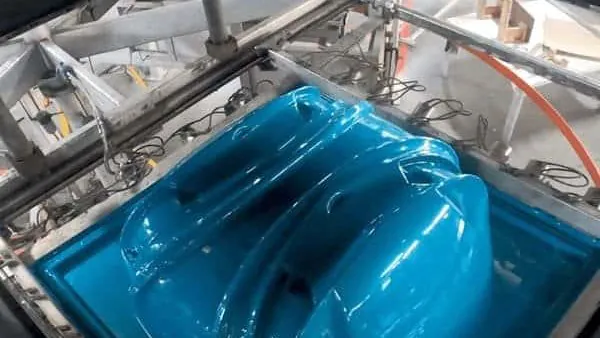
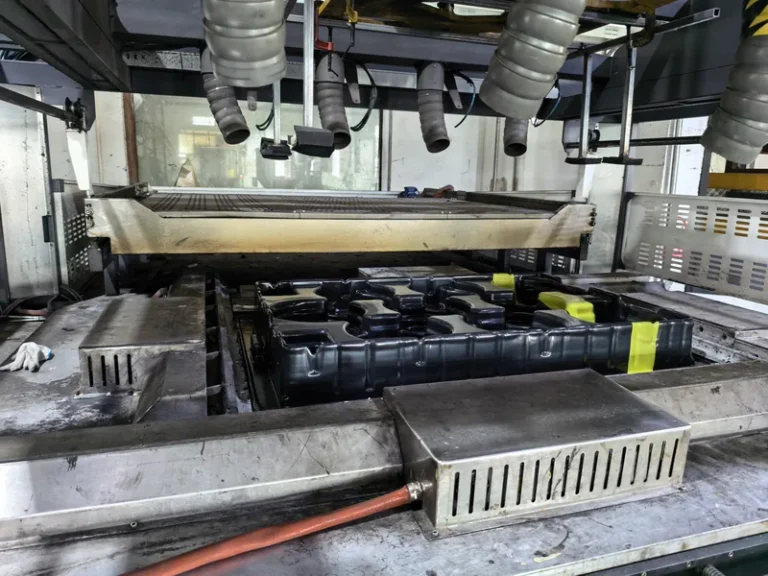
Heating is judged by sag rather than by the clock. The sheet is brought to a controlled, even sag across its span, then the tool closes and vacuum is pulled within a second or two to freeze detail before the material cools below its forming range. Underheated sheet gives poor detail and excessive thinning; overheated sheet tears, blisters or sticks to the tool.
Moisture is the second gate. PC, PC/ABS, PA6 and PA66 absorb ambient humidity, and trapped water flashes into bubbles and streaks at forming temperature; standard practice pre-dries these hygroscopic materials for several hours immediately before the cycle, at a drying temperature set well below the sheet softening point. ABS and the polyolefins are far more tolerant, which is one practical reason they dominate high-volume housing and tray work.
Cooling closes the window. Semicrystalline materials such as PP and HDPE shrink roughly 1.0–2.0 percent as they crystallise, while amorphous ABS and PC sit nearer 0.5–0.8 percent, and uneven cooling warps panels toward the hotter side. Tool temperature, draft angles and cooling-hole layout are therefore tuned per material, not reused blindly between them.
"Any thermoplastic sheet forms with the same settings."False
A cycle tuned for ABS blisters a polyolefin or under-forms polycarbonate, because sag point, hot strength and cooling behaviour all differ. Re-qualify the forming window whenever the sheet material or grade changes, even at the same gauge.
"Deep draws need hot strength, not just temperature."True
Reaching forming temperature does not guarantee the sheet carries its own weight across a deep cavity. Better melt strength, plug assist or pre-stretch holds wall distribution where weaker hot sheets web and tear.
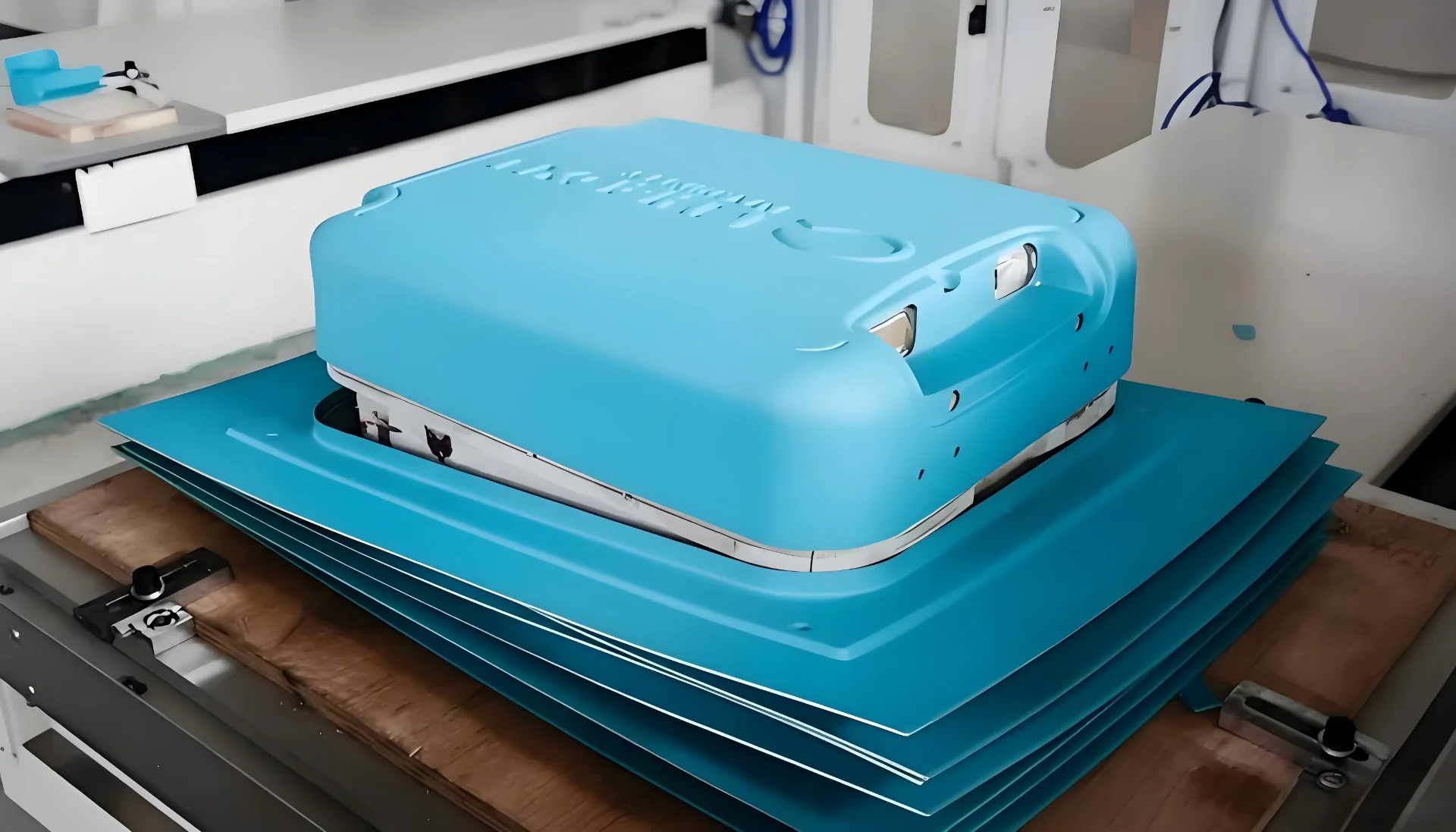
ZetarVac processes sheet from 0.5 to 15 mm with a maximum forming length of about 2,500 mm on 20+ vacuum forming and thermoforming machines, so a housing or tray family can be trialled in several materials and gauges before tooling is committed.
What Happens to Sheet Properties During Forming?
Forming stretches the sheet non-uniformly. Flanges and clamped edges stay close to the original gauge, while corners and deep radii thin out — commonly 20–50 percent local reduction on aggressive draws — and the cycle freezes in molecular orientation the raw sheet never had. A material datasheet therefore describes the incoming sheet, not the part you ship.
Thinning concentrates where the draw ratio is highest1. A deep, narrow cavity pulls the same sheet area over far more surface, so the last regions to form — internal corners and floor radii — can end up at less than half the nominal gauge. Wall distribution is steered with tool temperature zones, plug assist geometry, vacuum hole placement and, where the geometry allows, pre-stretch or billow forming.
Orientation cuts both ways. Strength and stiffness improve along the stretch direction, but shrinkage becomes anisotropic, so large flat panels can bow when reheated later by paint ovens, sunlight near glazing or nearby motors. Dimensional checks on first articles should include a heat exposure cycle, not just measurements off the tool.
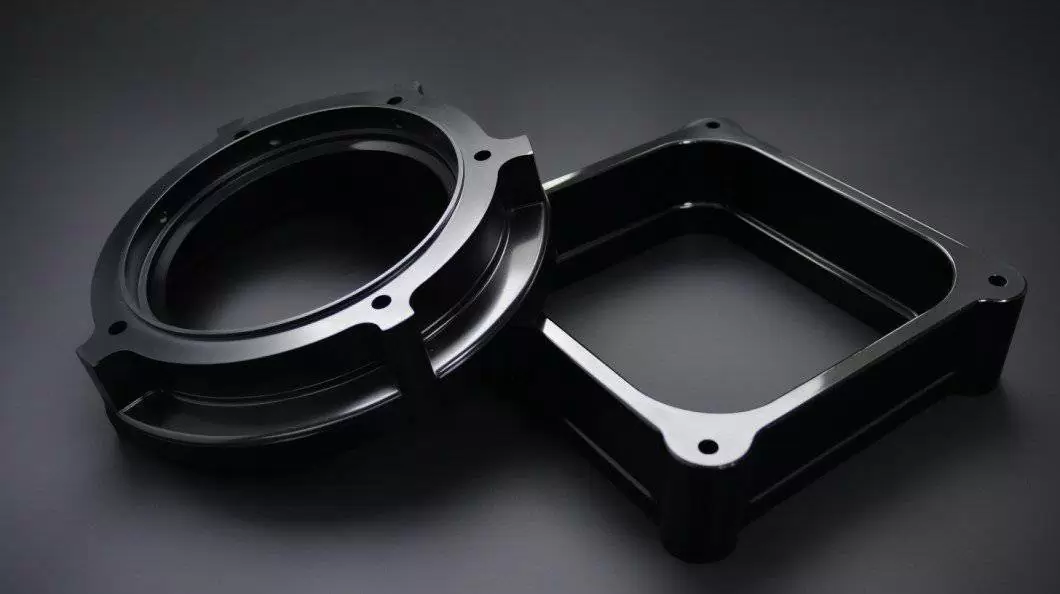
"Datasheet values describe the finished formed part."False
Datasheet numbers come from test pieces of the raw resin, not from stretched sheet. Forming thins corners and adds orientation, so corner strength can fall well below the sheet value — test cut-outs from the actual part.
"Corner thinning predicts where a part fails."True
The deepest radii lose the most thickness and therefore impact and creep margin. Gauge corners ultrasonically and reinforce or soften the radius there before the design freezes.
Because properties move during forming, part-level validation beats sheet-level assurance. Cut tensile and impact specimens from trimmed areas of first articles, re-check wall thickness at critical corners with ultrasonic gauging, and only then sign off the material choice.
Which Standards Should Gate Material Approval?
Approval should be gated by tests that mirror the part’s real failure risks: tensile strength on formed samples, heat deflection and Vicat data for service temperature, flammability class for electrical enclosures, ingress protection for outdoor covers, migration compliance for food trays, and transmittance for clear parts.
ISO 527-2 specifies the tensile test for rigid plastics and is the standard tensile check run on thermoformed sheet, which makes it the practical way to confirm that forming has not degraded the strength your design assumed. Heat capability is read from ISO 75-2 or ASTM D648, which define the heat deflection temperature under flexural load2, and from ISO 306, whose Vicat softening point3 indicates where a formed part starts to sag in service.
For electrical equipment, UL 94 classifies the flammability of plastic materials, and many formed enclosures are specified at UL 94 V-0 or HB depending on the end use4; where dust or water ingress matters, IEC 60529 defines the IP code the finished cover must meet as an assembly5. Food-contact thermoformed trays fall under EU 10/2011, which governs overall and specific migration limits for plastics touching food.
Clear PMMA and PC covers can additionally be checked against ISO 13468 for total luminous transmittance, and trays exposed to impact can be screened with ISO 6603-2 instrumented puncture testing. For process background and ongoing industry references, the SPE Thermoforming Division publishes material and process guidance used across the industry.
Which Material Fits Your Application?
Start from the environment the part will live in. Outdoor duty points to ASA or UV-stabilised PC; clear guards exposed to impact to PC; optical covers and luminaires to PMMA; chemical and washdown exposure to PP or HDPE; precision dry mechanisms to PA6, PA66 or POM; soft seals, liners and flexible protection to TPE, TPU or TPV. Regulatory gates then narrow the shortlist before cost is discussed.
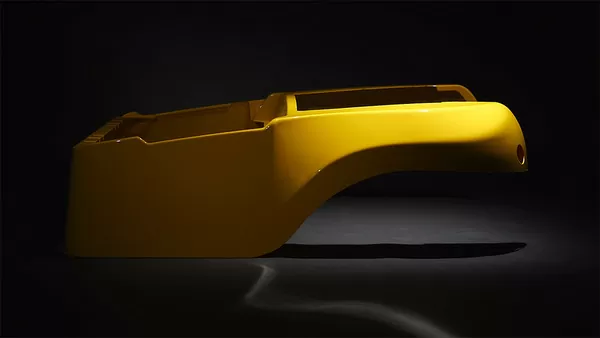
The plant’s own case mix shows the pattern. An ABS multi-cavity seedling tray serves agricultural seedling raising with custom tray size and cell geometry; a PC housing for medical and diagnostic equipment combines large curved surfaces with custom cut-outs, mounting holes and reinforcement; a PMMA display cover gives a retail application high clarity over custom curved geometry. One process, three polymers, each selected for the conditions it must survive.
"Material selection is mainly a price comparison."False
The cheapest apparently suitable sheet often wins the quote and loses the field: UV, chemicals or heat retire it early, and replacement plus downtime erases the saving. Qualify on service conditions first, then compare price within the qualified set.
"Compliance gates narrow the material list early."True
Flammability, ingress and food-contact rules eliminate candidates before cost enters the discussion. Fixing them at specification stage prevents a late material change that forces re-tooling and re-approval.
When loads, temperatures and environments overlap — an enclosure that is both outdoor and electrical, a tray that is both food-contact and dishwasher-exposed — rank the constraints and let the strictest one disqualify first. That ordering saves weeks of trial cycles on marginal candidates.
Across 45+ production lines, ZetarVac supports prototyping, small batch and large batch thermoforming with a reference monthly capacity of about 100,000–200,000 pieces, so a material decision can be validated at production scale rather than on one-off samples.

FAQ
What sheet thickness can plastic vacuum forming handle?
Heavy-gauge vacuum forming typically works sheet from 0.5 to 15 mm. Gauges under 1.5 mm suit packaging and liners, while 3–12 mm covers machine housings and structural trays, and forming lengths up to about 2,500 mm define the practical part size envelope.
Does every material need drying before forming?
No. ABS, HDPE, LDPE and PP are moisture-tolerant and usually form as supplied, while PC, PC/ABS, PA6 and PA66 absorb humidity and need several hours of pre-drying before the cycle to prevent bubbles and streaks.
Which material should I choose for an outdoor enclosure?
ASA is the first candidate because it resists UV without paint; UV-stabilised polycarbonate follows where impact matters more. Avoid unpigmented ABS outdoors, since it chalks and yellows within a few seasons of direct sunlight.
Is vacuum forming a good choice for clear parts?
Yes. PC delivers impact-resistant guards and covers, PMMA gives the highest clarity and gloss for displays and luminaires, and both can be verified against ISO 13468 for total luminous transmittance. Dry both materials before the cycle.
Can recycled or regrind sheet be used?
It can for non-critical industrial trays and liners, but regrind reduces melt stability and batch-to-batch consistency, so parts with cosmetic surfaces, tight tolerances or compliance requirements should use virgin or controlled-blend sheet.
To keep digging into process and material trade-offs, explore the ZetarVac vacuum forming overview, or see how heavy-gauge vacuum forming projects are structured from material trial to trimmed parts on our China vacuum forming manufacturer page.
-
Draw ratio: the ratio of the formed part’s surface area to the original sheet area; higher ratios mean deeper draws and more corner thinning. ↩
-
HDT: heat deflection temperature, the temperature at which a standard flexural bar deflects a set amount under load, defined by ISO 75-2 and ASTM D648. ↩
-
Vicat softening temperature: the temperature at which a flat-ended needle penetrates a specimen 1 mm under a specified load, per ISO 306. ↩
-
UL 94: the flammability classification standard for plastic materials, ranging from HB up to V-0 and 5VA ratings. ↩
-
IP code: the ingress protection rating defined in IEC 60529, such as IP54 for limited dust and splash protection. ↩