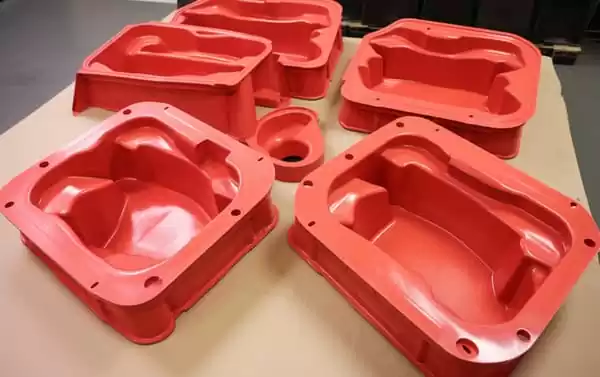
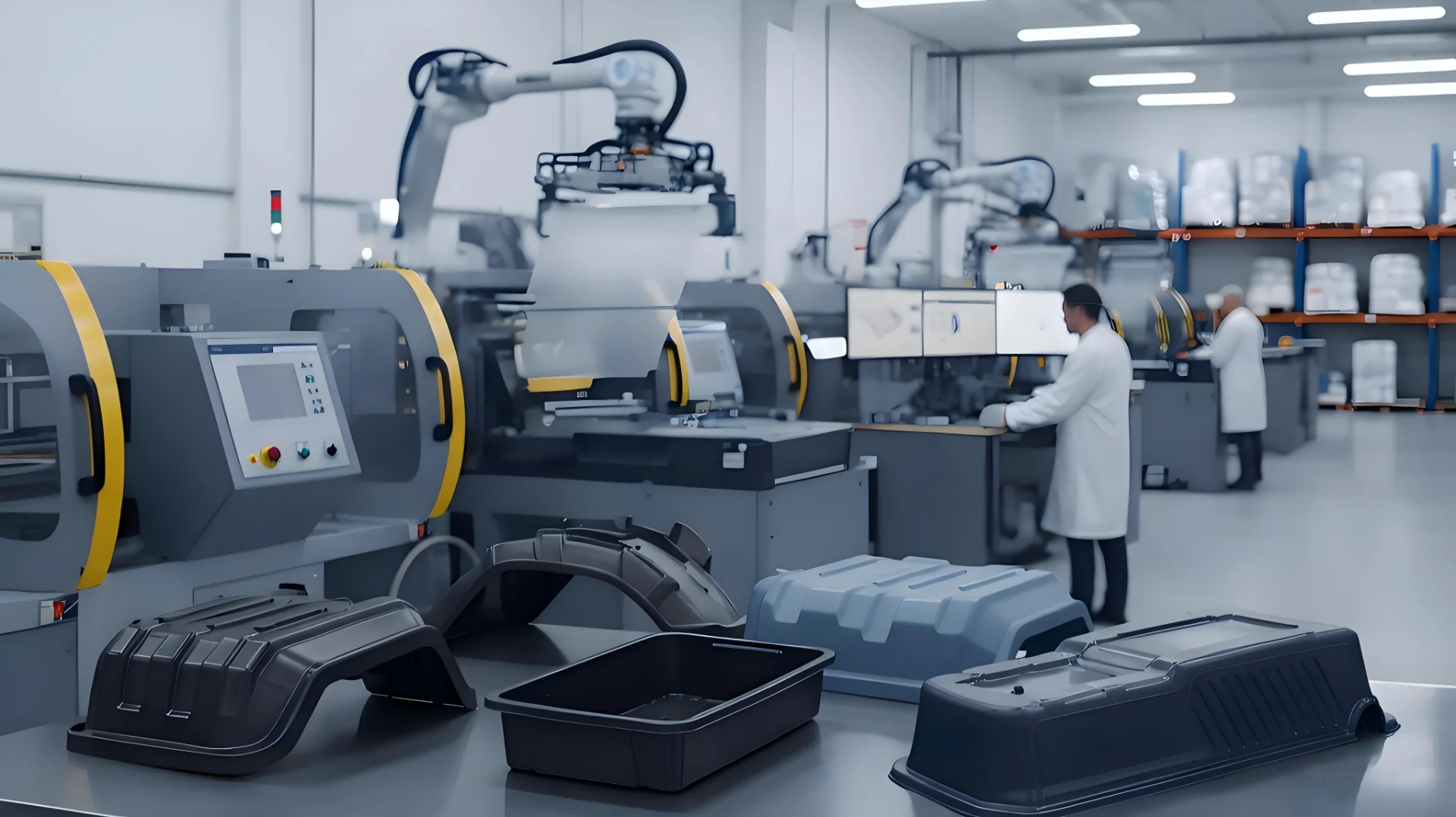
Buyers searching for the top plastic vacuum forming factories in New Zealand usually have one of two jobs: qualify a local heavy gauge1 thermoforming supplier for equipment housings, trays, guards, or structural covers, or decide whether an offshore forming partner delivers better capability per dollar. This guide gives procurement engineers and product designers the checks that separate a production-grade vacuum forming factory from a job shop that only handles thin packaging blisters. The framework works whether you source inside New Zealand or compare a local plant against an offshore one.
- No verified public ranking identifies the top plastic vacuum forming factories in New Zealand; build your own shortlist from capability checks, not directory listings.
- Heavy gauge capability is defined by sheet thickness range, forming envelope, mold engineering, and trimming precision — 0.5 to 15 mm sheet and roughly 2,500 mm forming length is a practical industrial benchmark.
- Resin knowledge is a factory-level skill: ABS, PC, HDPE, PP, PMMA, and TPE each need a different forming window.
- Standards such as UL 94, IEC 60529, and ISO 527-2 give you objective acceptance criteria for formed enclosures, guards, and structural parts.
- A first-article approval does not prove process stability; ask for documented forming parameters and in-process thickness data.
- An offshore forming partner can complement local New Zealand capacity when a part exceeds a local plant’s forming envelope or monthly capacity.
Who Are the Top Plastic Vacuum Forming Factories in New Zealand?
There is no independent, verifiable ranking of the top plastic vacuum forming factories in New Zealand, and any list of ten named companies you find online is usually a directory page rather than an audited comparison. The reliable way to answer the question is to screen every candidate against ten engineering checks — forming envelope, sheet gauge range, mold capability, trimming precision, material library, testing, quality documentation, capacity, batch flexibility, and design support.
Directory and listicle pages rank suppliers by advertising spend, submission timing, or affiliate arrangements, not by measured capability. New Zealand has a small base of industrial-grade formers, so a list padded to ten names will include packaging shops, prototype studios, and importers that never run heavy gauge thermoforming production at all.
A practical approach flips the order. Define the part first: formed dimensions, draw depth, target wall thickness, material class, and annual volume. Then ask each factory to answer the ten checks in the next section in writing. A top-tier vacuum forming factory answers with numbers; a weak supplier answers with adjectives.
The Ten Checks That Separate a Top-Tier Forming Factory
Use this table as your qualification scorecard. A factory that clears eight or more checks deserves a design review; one that fails three or more core rows — forming envelope, gauge range, trimming, or testing — will struggle on industrial work.
| Check | What to verify | Typical red flag |
|---|---|---|
| Forming envelope | Maximum formed length, width, and depth of draw | Claims large parts but trims by hand |
| Sheet gauge range | Minimum and maximum sheet thickness processed | Only thin packaging gauges, no heavy gauge range |
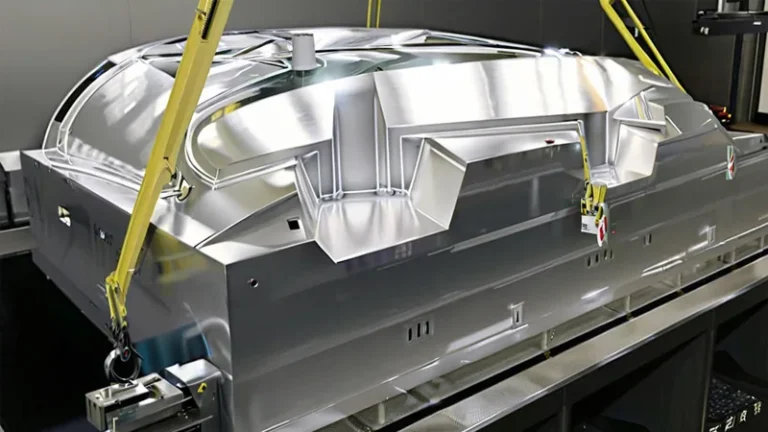
| Mold engineering | In-house tool design, mold materials, cooling strategy | Tooling outsourced, no process data |
| Trimming precision | CNC trimming, fixture strategy, edge quality | Hand trimming with nominal tolerances |
| Material library | Grades on file: ABS, PC, HDPE, PP, PMMA, TPE and more | One material offered for every job |
| Testing | Tensile, heat deflection, flammability tests in-house or via a partner lab | No measurable acceptance criteria |
| Quality documentation | First articles, in-process thickness checks, traceability | Photos only, no data |
| Capacity | Machine count and monthly output | Cannot state batch planning numbers |
| Batch flexibility | Prototype, small batch, and large batch under one roof | Prototype shops that cannot scale to production |
| Design support | Draft angle, draw ratio2, and DFM feedback before tooling | Quoting without reviewing the model |
Two checks deserve extra weight for industrial buyers. Trimming precision determines whether your assembly lines up: on a properly equipped plant, formed parts are cut on a multi-axis CNC so the trimmed outline follows the forming tool geometry, keeping mounting holes and flanges consistent from piece to piece. Design support is the earliest maturity signal: a factory that questions your draft angles before cutting a mold has formed thousands of parts and remembers the failures.
The quality documentation check is where most sourcing exercises are won or lost. First articles are produced under the best setup a technician can assemble; production runs are produced by whichever shift is on duty. When you ask how part five thousand stays identical to part one, the answer tells you whether quality is a system or a lucky day.
"A first-article-approved vacuum formed part proves the production run will stay stable."False
First articles come from the best possible setup, often with hand-picked sheet and an experienced operator. Without documented forming parameters and in-process thickness checks, sheet gauge drift and heater variation move dimensions long before anyone inspects them.
"Process stability comes from documented parameters, not from a single approved sample."True
Repeatability lives in machine settings, tool condition records, and measurement data kept between shifts. Factories that can show those records reproduce first-article quality across the run; factories that cannot are selling you one good day.
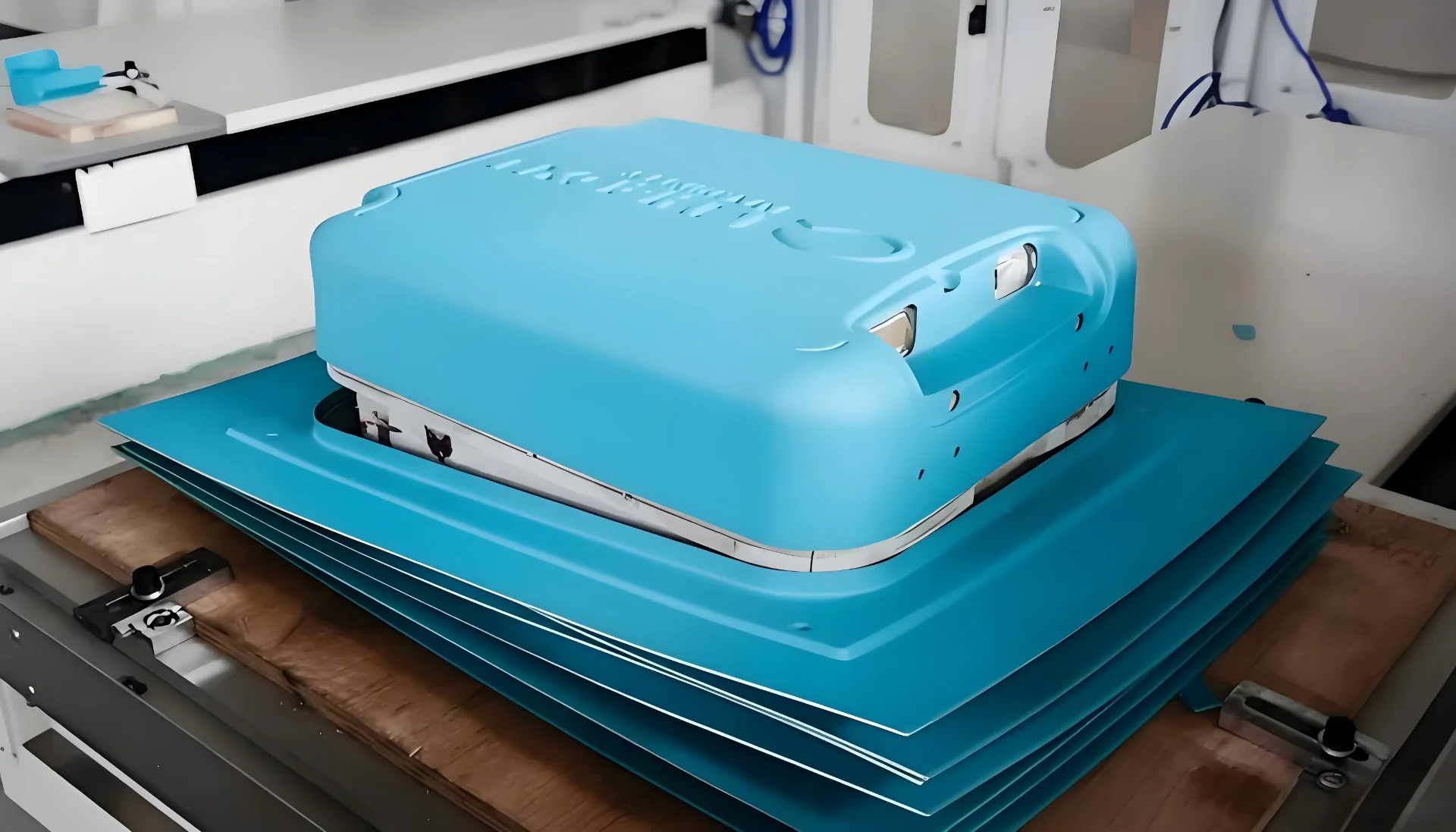
For context on how an experienced forming partner organizes tooling, prototyping, and production under one plant, review the ZetarVac service overview.
Heavy Gauge Capability: Sheet Thickness and Machine Scale
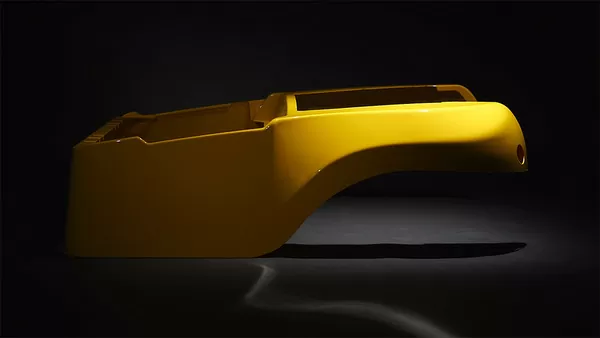
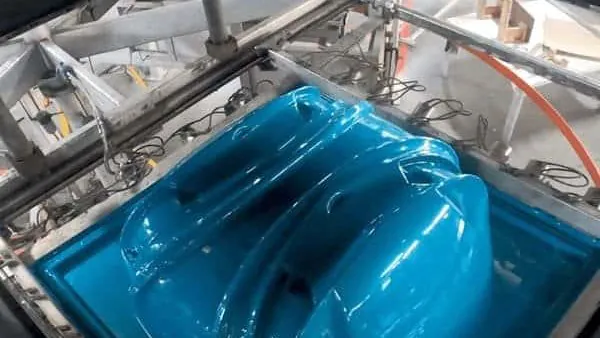
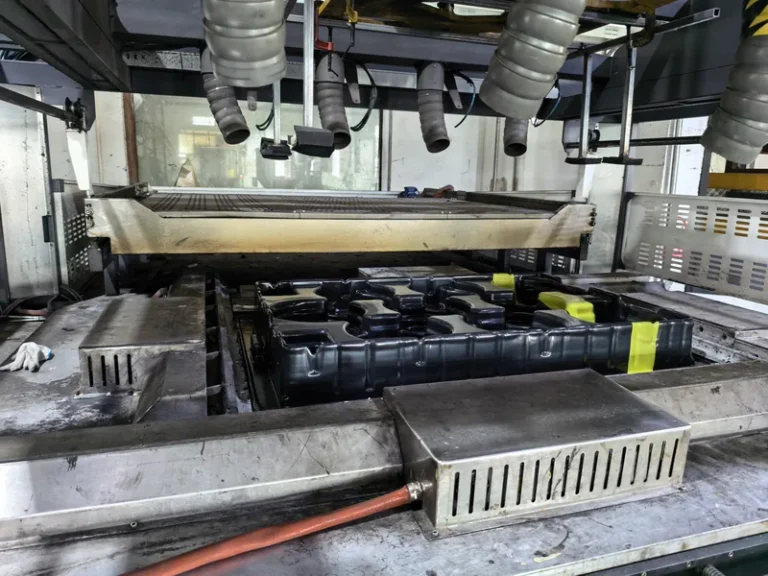
The fastest way to classify a vacuum forming factory is to ask two numbers: the sheet thickness range it processes and the maximum part length it can form. Thin-gauge packaging work and heavy gauge industrial forming are different disciplines with different machines, heating strategies, and failure modes. A plant that forms sheet from 0.5 to 15 mm serves packaging trays at the bottom of the range and machine covers, equipment housings, and structural components near the top, where wall thickness and stiffness actually carry load.
Forming length matters just as much. A maximum forming length of about 2,500 mm accommodates full-size equipment enclosures, long agricultural trays, and elongated guards in one piece — no bonding, no mechanical joins, and no tolerance stack across a glued seam. When a local shop caps out at a shorter platen, that single number can end the conversation before price is ever discussed.
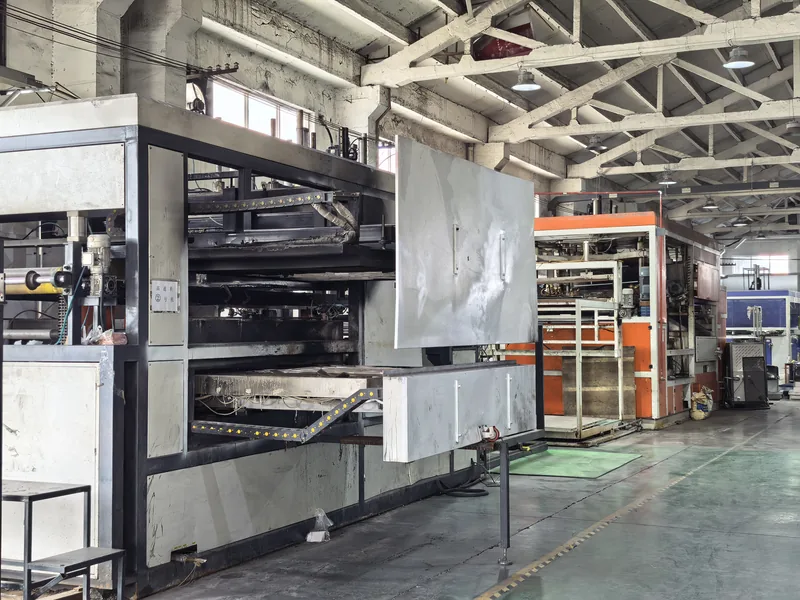
ZetarVac runs more than 20 vacuum forming machines processing sheet from 0.5 to 15 mm with a maximum forming length of about 2,500 mm, supported by 5-axis CNC trimming of formed parts. For a buyer, that combination matters more than machine count alone: large enclosures and trays are formed and trim-cut in-house, so the trimmed outline stays tied to the forming tool instead of a manual layout line.
There is a tolerance implication here that many first-time buyers miss. Forming drapes heated sheet over a tool, so wall thickness thins where the material stretches most — usually over deep corners and tall draws — and stays close to nominal near the flange. Tolerances must therefore be evaluated by zone, not across the whole surface.
"A vacuum formed part can hold machined-part tolerances across its entire surface."False
Sheet stretches unevenly as it drapes over the tool, so thickness and geometry vary with draw depth. Tight callouts on free-form areas inflate tooling cost and generate rejects that were never formable in the first place.
"Forming tolerances should be tightest near the tool surface and looser on free spans."True
Geometry that contacts the mold reproduces tool detail reliably, while unsupported areas follow sheet thinning and springback. Zoning the drawing this way keeps parts formable, inspectable, and affordable at production volume.
How Do Resin Choice and Forming Windows Affect Your Part?
Resin choice determines the forming window — the sheet temperature, heating time, and vacuum rate at which a specific plastic stretches without tearing, webbing, or losing surface quality — and it also determines how the part behaves in service. A factory that runs a broad material library has solved window-setting problems across many resins; a factory that offers one sheet for every job has not.
The common industrial grades behave very differently in thermoforming. ABS is forgiving and widely used for housings, cases, and guards; PC demands precise heating but yields tough, dimensionally stable parts; HDPE and PP have narrow windows and strong memory, which shows up as warpage on flat panels; PMMA forms into high-clarity covers; TPE and TPV serve as soft liners and seals. Heat resistance is where selection gets technical: heat deflection temperature3 sets how much load a formed panel carries before it distorts, and an ABS housing and a PC housing do not behave the same way near a heat source.
| Material | Typical formed applications | Property to verify before release |
|---|---|---|
| ABS | Equipment housings, cases, guards, automotive interiors | Impact strength and surface finish |
| PC | Clear guards, equipment protection covers | Transmittance and heat deflection |
| HDPE | Industrial trays, liners, storage boxes | Warpage on flat areas |
| PP | Trays, boxes, automotive interior parts | Sag control and springback |
| PMMA | Clear covers, luminaires, display parts | Optical clarity after forming |
| PVC | Trays, packaging, industrial enclosures, liners | Chemical and flammability requirements |
| TPE / TPV | Soft liners, seals, soft industrial parts | Compression set and durometer |
| PC/ABS | Automotive interiors, equipment housings | Heat and impact balance |

ZetarVac forms PVC, ABS, HDPE, LDPE, PP, PC, PMMA, PA6/PA66, POM, TPE, TPU, TPV, PC/ABS, ASA, and PP/GF sheet — a library that spans soft liners to glass-filled structural parts. Real projects show the range: an ABS seedling tray for agriculture, a large curved PC medical equipment housing with cut-outs and mounting holes, and a high-clarity PMMA retail display cover.
Resin discipline also explains why quotes differ between factories. Shops that keep heating profiles and vacuum settings documented per material reproduce results across shifts and seasons; shops that tune by feel depend on whichever operator is on duty that day.
"Any plastic sheet can be vacuum formed with the same heating profile."False
Resins differ in melt strength, sag temperature, and memory, so a profile tuned for ABS will web or tear HDPE and haze PC. The result is scrapped sheet, unstable dimensions, and surfaces that fail cosmetic inspection.
"Each resin grade needs its own forming window validated on the actual machine."True
Sheet temperature, heating time, and vacuum rate interact with tool geometry and platen size. Machine-specific, documented windows are what let a factory repeat first-article quality across a full production run.
Which Standards Should a Forming Factory Be Able to Test Against?
A qualified forming factory should test against UL 94 for flammability, IEC 60529 for enclosure protection, and ISO 527-2 for tensile properties of formed sheet, with ASTM D790 and ISO 13468 added where stiffness or clarity governs acceptance.
Standards turn supplier conversations from opinions into numbers. UL 944 classifies the flammability of plastic materials and is required for many equipment enclosures, so ask which rating your formed housing material carries before it goes near electrical hardware. IEC 605295 defines the IP code that grades how well an enclosure excludes dust and water — a formed cover marketed as protected needs a tested rating, not a marketing label.
Mechanical validation is equally standardizable. ISO 527-2 specifies the tensile test method for plastics and is the standard tensile test run on thermoforming sheet, letting you compare incoming material and formed parts on the same scale. For clear PMMA parts, ISO 13468 defines total luminous transmittance, so a display cover can be accepted on measured clarity rather than a visual check. For structural panels and enclosures, ASTM D790 governs flexural properties — the stiffness number behind whether a flat cover rattles or holds. Industry bodies such as the SPE Thermoforming Division publish process guidance that helps buyers understand which of these properties forming actually changes.
Local New Zealand Sourcing Versus Offshore Forming Partners
Local sourcing inside New Zealand buys you short logistics, fast design iterations, and easy plant visits, and for low volumes or parts within a local shop’s forming envelope it is often the pragmatic choice. The constraints are structural rather than motivational: a small national market means fewer plants carry a wide heavy gauge material library, deep forming envelopes above two meters, or the monthly capacity to absorb a production ramp.
An offshore partner does not replace local supply — it extends the envelope. The qualification work is identical: run the same ten checks, ask for the same test data, and review forming parameters before tooling is cut. Regional buyer guides such as the ZetarVac Argentina thermoforming companies overview show how the same screening logic applies market by market, and the China vacuum forming manufacturer profile documents what a high-capacity forming plant discloses about sheet range, tooling, and trimming.

ZetarVac supports prototyping, small batch, and large batch production in the same plant, with reference monthly capacity of about 100,000 to 200,000 pieces. For a buyer, the practical meaning is continuity: the parameters validated on your prototype carry into volume production on the same machines instead of being re-derived at a different supplier.
FAQ
How thick can vacuum formed plastic parts be?
Industrial heavy gauge vacuum forming commonly processes sheet from about 0.5 mm up to 15 mm, depending on machine class and heater power. Parts at the upper end — equipment housings, structural trays, guards — need robust heating and longer cycles, which is exactly where a factory’s documented forming windows prove their value.
What is the difference between vacuum forming and pressure forming?
Both are thermoforming processes. Vacuum forming draws heated sheet against a tool using vacuum alone, while pressure forming adds air pressure on the opposite side to push sheet into fine tool detail. For most industrial housings and trays, vacuum forming is sufficient; pressure forming earns its extra tooling cost when sharp textures or crisp cosmetic detail matter.
Which materials work best for thermoformed equipment enclosures?
ABS and PC/ABS are the workhorses because they balance impact strength, heat resistance, and formability. PC suits clear or high-heat covers, ASA extends outdoor life, and PP or HDPE fit cost-driven trays and liners. Match the grade to the environment first, then confirm the factory has formed it before.
How do I judge whether first samples represent production quality?
Treat a first article as a design confirmation, not a capability certificate. Ask for the documented forming parameters behind the sample — sheet temperature, cycle time, vacuum rate — and request thickness measurements at defined points on consecutive production parts. Stability across parts is the evidence.
Is vacuum forming suitable for parts longer than two meters?
Yes, where the machine envelope allows it. A forming length of about 2,500 mm covers full-size equipment enclosures and long industrial trays in one piece, and 5-axis CNC trimming keeps long free edges accurate. Confirm maximum formed length and trimming method in the same conversation, because one without the other halves the benefit.
To keep building your shortlist, explore the ZetarVac vacuum forming guide for sheet gauge ranges, forming envelope details, and material options, or walk through how a China vacuum forming manufacturer structures heavy gauge projects from design file to trimmed part.
-
Heavy gauge: Heavy gauge describes thermoforming with thick industrial sheet, used for structural and durable parts rather than thin film packaging. ↩
-
Draw ratio: Draw ratio is the relationship between formed part surface area and the original flat sheet area, indicating how far the sheet must stretch during forming. ↩
-
HDT: HDT stands for heat deflection temperature, the temperature at which a plastic specimen deflects a specified amount under a defined flexural load. ↩
-
UL 94: UL 94 is the standard that classifies the flammability of plastic materials through horizontal and vertical burn testing. ↩
-
IP code: The IP code, defined in IEC 60529, classifies the level of protection an enclosure provides against dust and water ingress. ↩