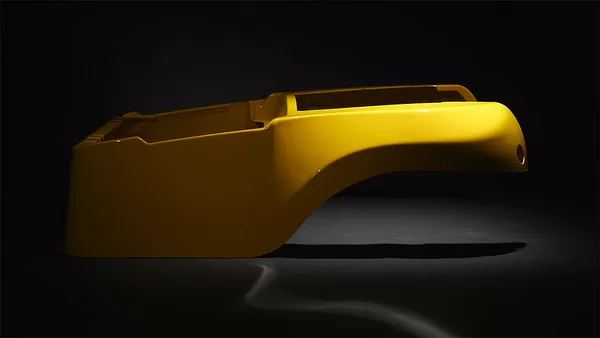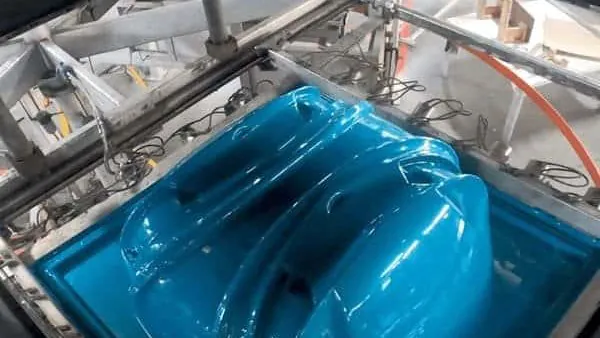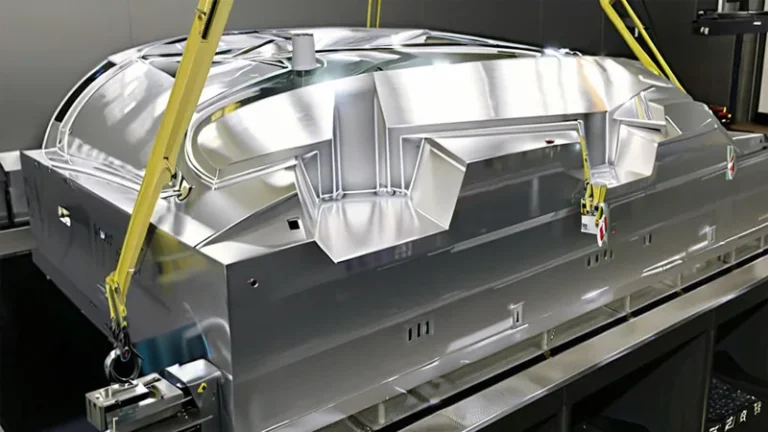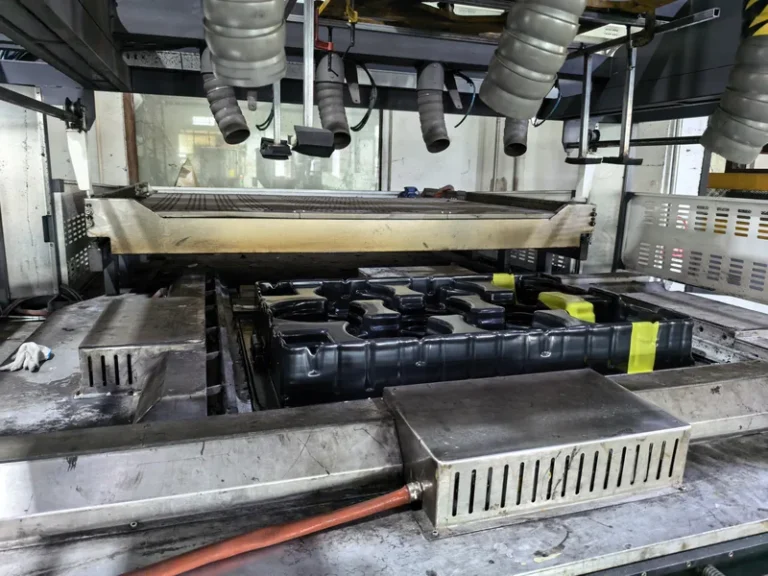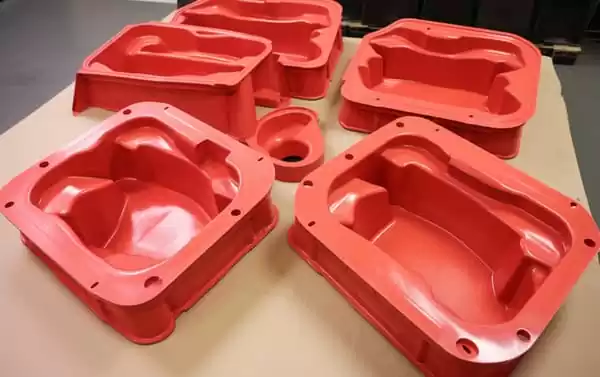
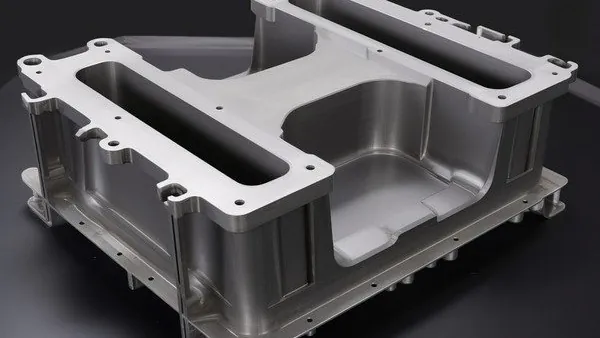
Acrylic occupies a special position among thermoforming sheet materials: it is specified for clarity, gloss and weathering resistance, yet it is the least forgiving of the common heavy-gauge materials to form. This guide explains where acrylic (PMMA) earns its place, what forming window it needs, which failure modes to expect and how formed parts should be validated, so the material decision still holds up when the design reaches the forming press.
- Acrylic (PMMA) is the thermoforming choice when optical clarity, UV stability and a glossy surface matter more than deep draw or impact strength.
- Its forming window sits above the ABS range: sheet temperatures roughly in the 140–180 °C region, with exact settings depending on grade, thickness and heater layout.
- The dominant failure modes are wall thinning in deep draws, stress cracking around sharp features, and mark-off from rough or dirty mould surfaces.
- Draw ratio and plug assist design decide whether an acrylic geometry can be vacuum formed at all, so review them before tooling starts.
- Validate formed parts with material tests, not just dimensional checks: tensile per ISO 527-2, heat deflection per ISO 75-2, and transmittance per ISO 13468.
- Thick-gauge acrylic is routine: sheet from 0.5 to 15 mm and forming lengths up to about 2,500 mm are processed on our vacuum forming lines.
Why Use Acrylic in Vacuum Forming at All?
Acrylic earns its place in heavy-gauge thermoforming when the part must be clear, weather-stable or cosmetically flawless. It is the practical default for display covers, luminaire diffusers, machine guards and retail display items, where PC is more than the application needs and ABS cannot offer transparency at all. The price of those properties is a narrower forming window and lower impact strength, and both must be engineered around rather than discovered late.
Chemically, acrylic is PMMA1, a rigid amorphous thermoplastic with very high light transmission, high gloss and excellent outdoor weathering behaviour. In sheet form it thermoforms into large curved panels without losing its polished appearance, which is why luminaire covers and display hoods are formed from it rather than fabricated from flat sheet with joints. Forming from one piece removes glue lines, seals better and gives a continuous optical surface.
The applications where this pays off are specific. A retail display cover needs clarity to sell the product inside it. A luminaire cover needs stable transmittance over years of lamp heat. An equipment protection cover needs a hard, glossy surface that resists yellowing outdoors. In each case the material is chosen for optics and surface, not for load-bearing performance, and that distinction drives every process decision that follows.
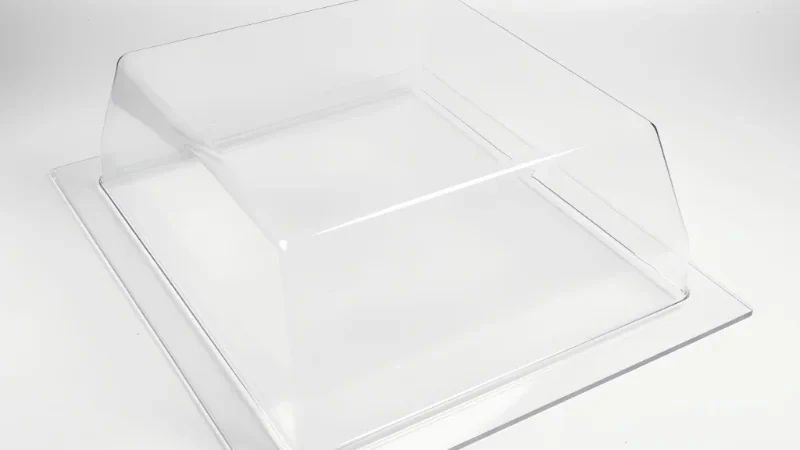
In the ZetarVac material library, PMMA is specified for clear covers, luminaires, display parts and retail display items — exactly the applications where optical quality justifies the extra forming care that acrylic demands.
Acrylic vs PC and ABS: Choosing the Right Sheet
Most acrylic forming projects start as a three-way comparison against the other common heavy-gauge sheet materials. The table condenses the trade-off into the properties that actually decide formed-part outcomes.
| Property | Acrylic (PMMA) | PC | ABS |
|---|---|---|---|
| Optical clarity | Excellent, glass-like gloss | Good, slight tint in clear grades | Opaque |
| Impact strength | Moderate, notch sensitive | Excellent | Good |
| Forming window | Narrow, sensitive to overheating | Wide and forgiving | Wide, most forgiving |
| Outdoor stability | Excellent, resists yellowing | Needs UV-stabilised grades | Poor without coating |
| Stress cracking risk | Real around sharp features | Low | Low |
| Typical formed parts | Covers, diffusers, display items | Guards, protection covers, housings | Housings, trays, cases, guards |
The comparison usually ends one of two ways. If the part must be clear and lives indoors or outdoors under UV, acrylic wins and the process is designed around its forming window. If impact resistance or deep draw dominates, PC or ABS takes over and clarity is handled by other means. For the full decision framework across ABS, HDPE and PC, see the heavy-gauge thermoforming material selection guide.
Cost rarely decides on its own. Acrylic sheet generally sits between ABS and PC in price, and the premium for PC is only justified when its impact performance is genuinely required. The costlier mistake in practice is not the sheet price but the process care: acrylic needs tighter heating control, cleaner tooling and more conservative geometry.
One of the most common assumptions in this comparison deserves a direct test.
"Clear acrylic sheet guarantees a clear formed part."False
Every draw stretches the sheet, and wall thinning concentrates exactly where the geometry is deepest. Scratches, absorbed moisture and mark-off from an under-polished mould also become far more visible once the part is formed, so clarity is a process outcome, not a sheet certificate.
"Formed clarity is engineered through sheet handling, mould polish and draw control."True
Optical-grade sheet, a polished forming surface, clean handling and conservative draw ratios together preserve transmittance after forming. Suppliers quote clarity for the sheet; the moulder has to hold it through heating, forming and trimming.
What Forming Window Does PMMA Need?
For most thermoforming grades of acrylic, sheet temperatures land roughly in the 140–180 °C region, clearly above the ABS range, with moulds commonly warmed rather than run cold. Exact settings depend on sheet grade, thickness and the heater layout of the machine, so treat any published number as a starting point that is confirmed against the behaviour of the actual sheet.
Acrylic telegraphs its condition. As it reaches forming temperature the sheet sags visibly, and experienced operators use sag depth rather than a timer alone to trigger the forming stroke. Underheated PMMA will not reproduce fine detail and freezes with high internal stress; overheated sheet blisters, degrades and loses surface clarity permanently. Because the distance between under- and overheating is narrower than for ABS, heater zoning and even sheet support matter more on acrylic work.
Vacuum is applied deliberately gently on clear parts. A slow, staged vacuum lets the sheet drape without freezing flow lines into the surface, which is standard practice on heavy-gauge machines with graduated vacuum control. Deeper geometry needs a plug assist2 to redistribute material before the vacuum pulls it thin, and the choice of plug material and geometry is covered in the thermoforming plug assist material guide.
Cooling is the last critical stage. Formed acrylic must be cooled below its heat deflection temperature3 before release, because parts released hot will distort as they continue to cool in the rack. ISO 75-2 specifies the heat deflection temperature of plastics under flexural load, and that value tells you how long a formed panel needs on the mould before it can be handled without losing shape.
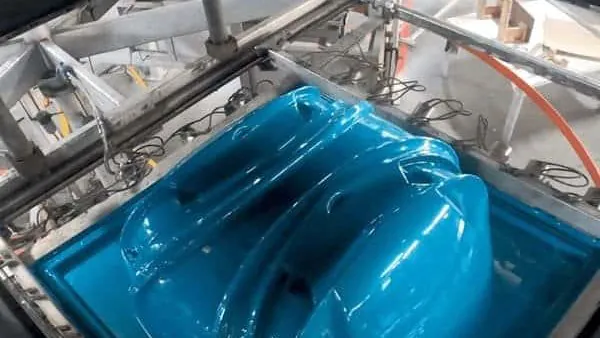
Heating and forming practice for acrylic is well documented by the industry body for the process: the SPE Thermoforming Division publishes process guidance on sheet heating, forming and tooling that applies directly to PMMA work.
ZetarVac processes sheet from 0.5 to 15 mm with a maximum forming length of about 2,500 mm across more than 20 vacuum forming machines, so large thick-gauge acrylic panels for covers and diffusers form in a single stroke without joining.
Which Failure Modes Show Up in Formed Acrylic?
The three failures you will actually meet are excessive wall thinning in deep draws, stress cracking around holes and sharp corners, and surface mark-off from the mould. Each has a distinct root cause in geometry, material behaviour or tooling condition, and each is far cheaper to design out than to rework after forming.
Wall thinning follows draw ratio4, the ratio of part depth to its smallest opening dimension. As a rule of practice, straight vacuum forming is comfortable near or below a 1:1 depth-to-opening ratio; deeper cavities pull material away from corners and leave the floor thin. Acrylic tolerates less redistribution than ABS because its melt strength in the forming window is lower, so the safe ratio is smaller and plug assist or pre-forming becomes necessary earlier. The consequence is not only cosmetic: a corner thinned to half nominal thickness also loses proportional stiffness and impact margin.
Stress cracking is the second acrylic-specific trap. PMMA is notch sensitive, and residual forming stress concentrates at sharp internal corners, unmachined burrs and over-tightened fasteners around mounting holes. Generous radii, annealing after forming for highly stressed parts and sensible fastener torques keep crazing out of service returns. Surface mark-off, the third mode, comes from dust, sheet debris or an under-polished forming surface; it shows immediately on a glossy clear part and is controlled through mould surface finish and sheet handling discipline rather than any process setting.
Two judgments on this section separate confident buyers from surprised ones.
"Deep-draw acrylic cavities can be vacuum formed without a plug assist."False
Vacuum alone pulls the sheet against the mould faster than the material can redistribute, so the floor thins and corners web. Acrylic has lower melt strength in the forming window than ABS, so draws beyond roughly 1:1 depth-to-opening need plug assist or pre-forming to hold minimum wall.
"Draw ratio decides whether an acrylic feature can be formed at all."True
Checking depth against the smallest opening before tooling tells you whether straight vacuum forming, plug assist or a geometry change is the right path. It is a ten-minute design review that prevents the classic failure: a mould that thins every corner below minimum wall and cannot be rescued by process settings.
How Are Formed Acrylic Parts Checked and Accepted?
Acceptance for formed acrylic combines dimensional checks on trimmed parts with material-level tests on samples, because dimensional conformance alone says nothing about residual stress or clarity. A practical inspection plan covers geometry, structure and optics as three separate steps.
On the material side, ISO 527-2 defines the tensile test used to qualify plastic sheet and formed parts5, and cutting coupons from formed areas rather than from raw sheet is what catches strength loss caused by excessive thinning. Where the formed cover sits near lamps, motors or outdoor heat, the heat deflection value measured per ISO 75-2 becomes the acceptance number that protects against in-service sagging. For clear parts, ISO 13468 specifies the total luminous transmittance of transparent plastics, and measuring it on samples cut from the formed panel verifies that forming did not degrade the optics the part was selected for.
Dimensional verification happens after trimming. ZetarVac trims formed parts on a 5-axis CNC centre whose cut path follows the forming tool, so cut-outs, mounting holes and outlines stay consistent across a batch and keep their designed relationship to the formed geometry. Visual checks complete the plan: clarity, mark-off, sinks near thick features and crazing at fastener points are inspected under normal lighting, because those are the defects a customer notices first on a glossy clear part.
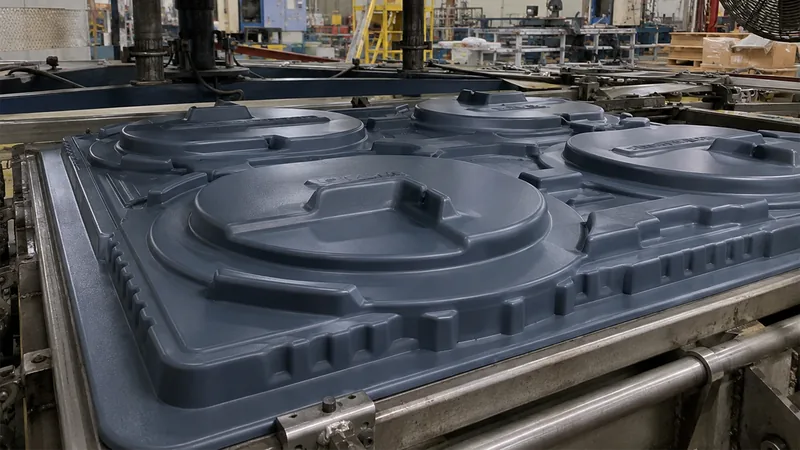
"Passing the first article proves the acrylic forming process is stable."False
A first article shows the process hit specification once, with fresh sheet and a clean mould. Stability only appears across a production lot, where sheet lot changes, heater drift and mould surface wear move wall thickness and clarity around.
"Stability is demonstrated with in-process checks across the production run."True
Periodic wall-thickness measurements at fixed points, transmittance spot checks on clear panels and a defined re-qualification trigger when the sheet lot changes turn a one-off pass into a controlled process. The same logic applies whether the part is a display cover or a structural panel.
These checks are not overhead: on a clear cosmetic part most rejects are visual, while on a structural panel most are dimensional, and the inspection plan should reflect which one the application really is.
The result of this discipline is documented in the ZetarVac PMMA display cover case: a high-clarity cover with custom curved geometry, thermoformed for retail and commercial product display.
FAQ
Can thick acrylic sheet be vacuum formed?
Yes. Heavy-gauge acrylic forming is routine practice: sheet up to 15 mm falls inside the processed thickness window at ZetarVac, and thick PMMA panels are formed for covers, diffusers and display structures. The practical limits come from draw ratio and heating uniformity, not from the thickness itself.
Will a formed acrylic part be as clear as the original sheet?
It can come close, but forming is not optically neutral. Every draw thins the sheet slightly, and any mark-off or flow line from the mould shows through a glossy surface. With optical-grade sheet, polished tooling and conservative draws, formed panels retain very high transmittance, which can be verified with transmittance measurements on the part.
Why is acrylic harder to thermoform than ABS?
Three reasons: a narrower forming window, lower melt strength within that window, and notch sensitivity after forming. ABS forgives uneven heating and aggressive draws; acrylic punishes both with blisters, thin corners and later crazing. The reward for the extra care is a combination of clarity and weathering that ABS cannot offer.
Is acrylic the right choice for outdoor formed parts?
Usually yes. PMMA resists UV yellowing far better than unmodified ABS, which is why it appears on outdoor equipment covers and signage panels. Where the part needs outdoor durability plus colour stability rather than clarity, ASA is the alternative grade in the material library for outdoor equipment housings and automotive exterior parts.
Where should I go next on this topic?
Start with the complete process overview on our vacuum forming hub, which walks through sheet selection, heating, forming, trimming and inspection step by step. To see how heavy-gauge acrylic projects like these are produced at scale, review how ZetarVac presents its vacuum forming manufacturing capability.
-
PMMA: Polymethyl methacrylate, the technical name for acrylic sheet, a rigid amorphous thermoplastic known for optical clarity, gloss and weather resistance. ↩
-
Plug assist: A mechanically driven plug that pre-stretches the sheet into the cavity before vacuum is applied, redistributing material to keep wall thickness even. ↩
-
HDT: Heat deflection temperature, the temperature at which a standard plastic beam deflects a defined amount under a specified flexural load. ↩
-
Draw ratio: The ratio of a formed part depth to its smallest opening dimension, used to judge forming difficulty before tooling is committed. ↩
-
ISO 527-2: The part of ISO 527 that specifies test conditions for determining the tensile properties of plastics. ↩