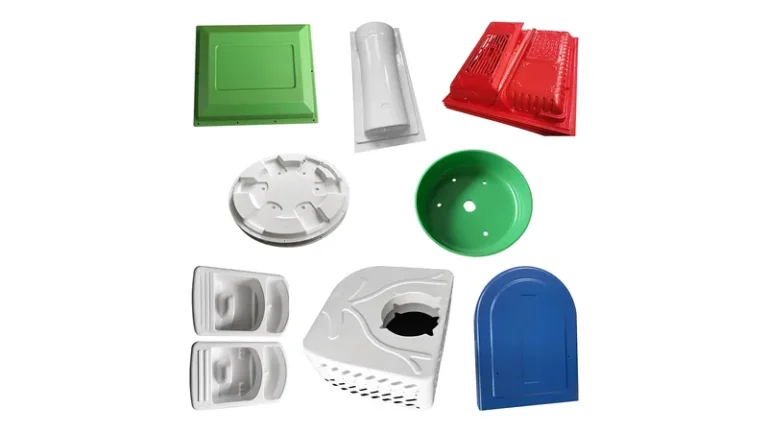
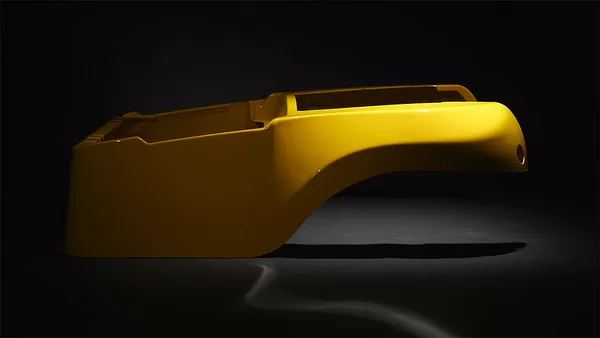
Choosing between pressure forming and vacuum forming is one of the most common decisions in heavy gauge thermoforming, and it is often settled too early or too late. Some teams default to vacuum forming because the tooling is cheaper; others pay for pressure forming on parts that never needed it. This article breaks the decision into the questions a procurement engineer or product designer should actually ask: how the two processes differ mechanically, where each one wins, what the cost and quality trade-offs look like side by side, and how to validate a part before production starts.
- Pressure forming adds controlled compressed air above the heated sheet, so it reproduces mold texture and sharp radii that vacuum forming alone cannot reach.
- Vacuum forming remains the practical default for industrial trays, liners, and covers where one finished surface and moderate tolerances are acceptable.
- Pressure forming earns its tooling premium mainly on visible housings, textured surfaces, and tighter corner radii.
- With sheet processed from 0.5 to 15 mm and forming lengths up to about 2,500 mm, both processes cover most heavy gauge part sizes.
- Validate either process with tensile, heat-deflection, and flammability data before locking the tooling design.
What Actually Separates Pressure Forming From Vacuum Forming?
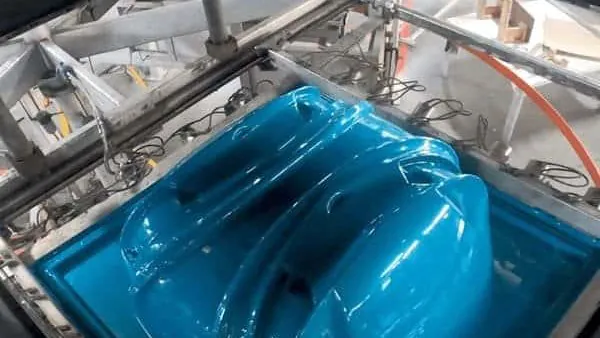
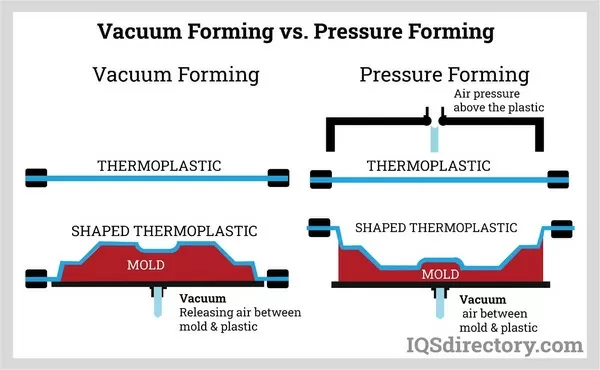
In vacuum forming, a vacuum drawn beneath the heated sheet leaves atmospheric pressure to press the plastic onto the mold from one side. Pressure forming adds controlled compressed air above the sheet, so the material is driven into the mold from both sides at once. The sheet material and the trimming steps are identical; the driving force and the tooling construction are not.
That mechanical difference explains nearly everything downstream. A vacuum-only system can never pull more than about one atmosphere of differential pressure, no matter how large the pump. Compressed air above the sheet is limited only by the pressure box and press, so well-sealed pressure forming tooling commonly runs at several times that force. More force means the sheet copies the mold surface instead of bridging over it: texture transfers, radii tighten, and the finish on the tool side approaches the finish of the mold itself. The benefit shows up most where draw ratios are demanding1 and cosmetic quality matters.
"Pressure forming is essentially vacuum forming with a stronger vacuum pump."False
The two processes use different driving forces. Vacuum forming relies on a pressure differential that can never exceed about one atmosphere, while pressure forming applies positive compressed air against a sealed tool. Specifying a vacuum tool and expecting pressure-formed detail leads to soft radii, missing texture, and costly tool rework.
"Pressure forming needs a sealed pressure box and tooling rated for air pressure."True
Positive pressure only works if the tool, seal, and clamping frame contain it. That is why pressure forming tools cost more to build and maintain, and why the extra cost should be justified by detail requirements rather than assumed as a general upgrade.
Neither process changes what happens after forming. Heating, forming, cooling, and CNC trimming follow the same sequence either way, which is why the choice should be made on part requirements alone.
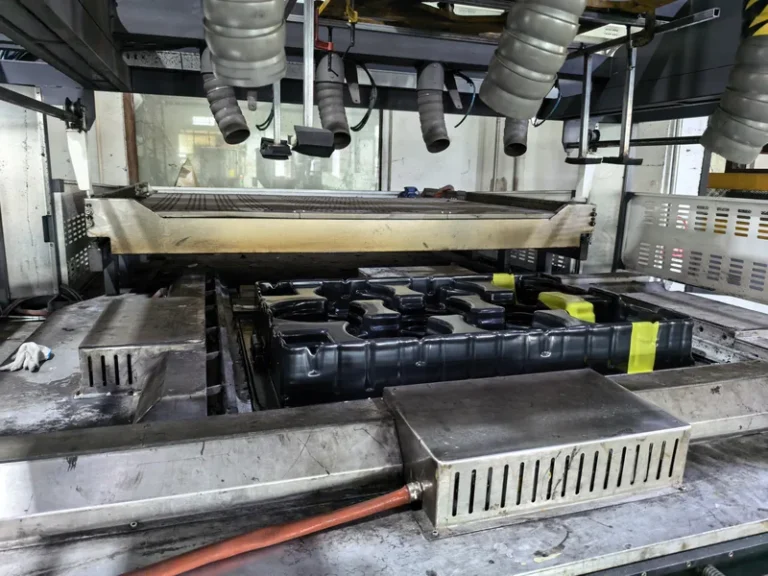
Both processes run on the same plant equipment at ZetarVac: 20+ vacuum forming and thermoforming machines processing sheet from 0.5 to 15 mm, forming lengths up to about 2,500 mm, and 5-axis CNC trimming of formed parts. The process decision therefore affects surface quality and forming force, not the downstream trimming route.
When Is Vacuum Forming the More Practical Choice?
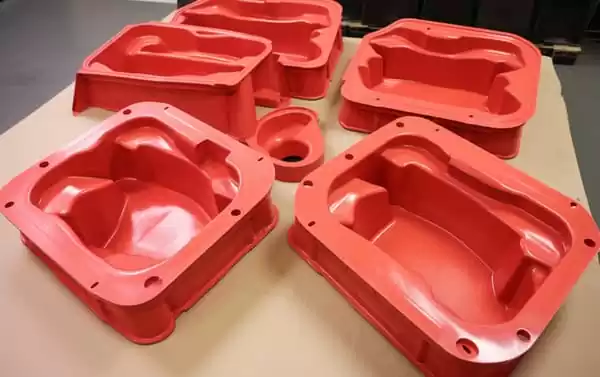
Vacuum forming is the right call when cosmetic demands are moderate and the geometry is forgiving. Industrial trays, equipment liners, material-handling boxes, and machine covers that face away from the user all fit this profile.
For these parts, the mold can often be cast or machined quickly, vent holes replace engineered seals, and tooling cost stays proportional to the part’s duty rather than its appearance. Sheet thickness is not the limiting factor: heavy gauge vacuum forming routinely processes 10–15 mm sheet for structural parts. What vacuum struggles with is fine texture and radii tighter than roughly 3–5 mm, not mass. If the outer surface is hidden, painted, or finished in a secondary operation, paying for pressure capability buys little.
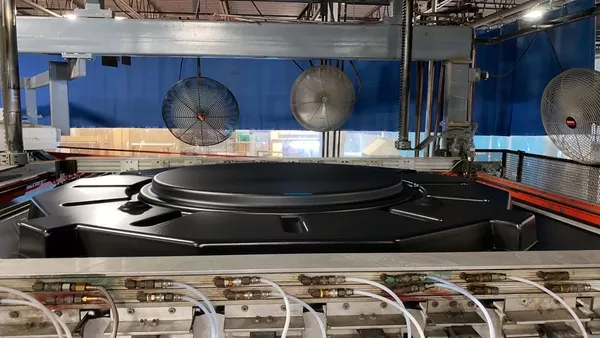
For a broader map of the process, its materials, and typical part families, see our vacuum forming guide. Application examples across equipment, logistics, and industrial markets are collected in our heavy gauge thermoformed applications overview.
"Thick sheet always requires pressure forming to fill the mold."False
Heavy gauge vacuum forming routinely forms sheet up to 15 mm for structural and industrial parts. Thickness raises the forming force required, but vacuum forming handles it when radii are generous and detail demands are modest. Assuming pressure forming is mandatory for thick parts inflates tooling budgets without a quality gain.
"Detail radius and draw depth, not sheet thickness, drive the process choice."True
A 12 mm tray with generous radii forms cleanly under vacuum, while a 4 mm visible cover with tight radii and texture may need pressure. Judge each part by the sharpness of its features and its cosmetic surface, then choose the least demanding process that meets those requirements.
Pressure forming pays for itself where surface quality would otherwise require secondary work. Three situations cover most cases.
- Visible equipment housings and covers. When the tool side of the part is what the customer sees, pressure forming transfers mold texture and produces a finished appearance straight off the machine.
- Tight radii and defined edges. Compressed air pushes material into corners that vacuum leaves rounded, which matters for housings that stack, align, or mate with other components.
- Reduced secondary finishing. Every hour of sanding, filling, or painting that pressure forming removes is a recurring cost, and it removes a source of batch-to-batch cosmetic variation.
Textured pressure forming tools also hide scratches and handling marks better than gloss surfaces, which helps perceived quality hold up over the part’s service life.
Material selection interacts with the process decision. ZetarVac’s material library covers ABS and PC/ABS for equipment housings and automotive interiors, PC for clear guards and protection covers, ASA for outdoor housings, and PMMA for high-clarity display covers — each of which accepts texture and detail differently under vacuum versus pressure.
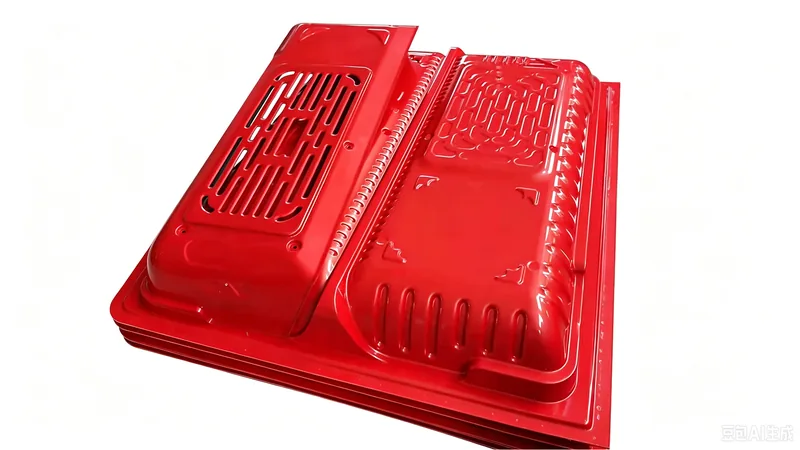
Before committing either way, run the part through a design review. Our DFM checklist for heavy gauge thermoformed parts and molds lists the drawing details that decide formability, draft, and trimming strategy.
How Should You Compare the Two Processes Side by Side?
The comparison comes down to force, tooling, and finish. The table below collects the trade-offs in one view.
| Criterion | Vacuum Forming | Pressure Forming |
|---|---|---|
| Driving force | Vacuum below the sheet, capped near one atmosphere | Compressed air above the sheet, several times atmospheric force |
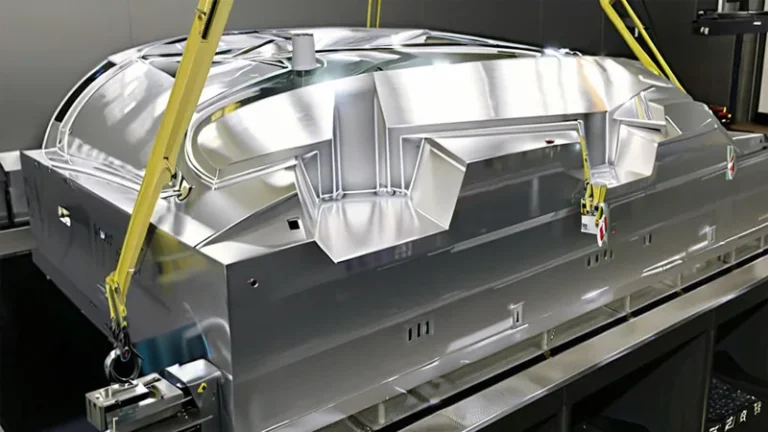
| Tooling | Lower cost, vented, cast or machined | Sealed pressure box, stiffer mold, higher cost |
| Surface detail | Soft radii, limited texture transfer | Sharp radii, faithful texture on the tool side |
| Formed tolerances | Moderate, adequate for most structural parts | Tighter on formed features and edges |
| Best-fit parts | Trays, liners, hidden covers, structural panels | Housings, visible covers, textured enclosures |
| Cycle time | Set by sheet heating and cooling | Set by sheet heating and cooling |
Read the cycle time row carefully: both processes spend most of their cycle heating and cooling the same sheet, so pressure forming is rarely a throughput decision. It is a surface-quality decision, and it should be justified against the cost of secondary finishing rather than against cycle time.
Tolerances deserve a word of caution. A first article inspection2 samples one moment in time, on one sheet lot, with one oven profile. Sheet lot changes and heater drift move formed dimensions over a production run, especially on heavy gauge parts with long heating cycles, so the sampling plan matters as much as the first result.
"A signed-off first article proves the process will hold tolerance for the whole run."False
A first article samples a single point in time. Sheet lot variation, oven profile drift, and ambient changes move formed dimensions over a production run, particularly on heavy gauge parts with long heating cycles. One approval cannot capture that variation.
"Dimensional checks must continue across sheet lots to keep heavy gauge parts in tolerance."True
Ongoing checks on critical dimensions — flange flatness, hole positions after trimming, wall thickness at the deepest draw — catch drift before it becomes scrap. Define which dimensions are critical, how often they are measured, and what triggers corrective action on the forming line.
If you are building a sampling plan, our first article inspection guide for heavy gauge thermoformed parts walks through what to measure on the first part and what to keep measuring afterward.
How Do You Validate a Heavy Gauge Part Before Production?
Validation starts with the sheet, not the tool. Tensile properties, heat deflection temperature3, and — for enclosures — flammability ratings give you a material baseline that both processes must respect.
ASTM D638 defines the standard tensile test used to establish a plastic’s strength and elongation properties, and it is the reference test for qualifying thermoforming sheet and formed parts. Forming stretches and thins the sheet, most severely at high draw ratios, so tensile data measured on the formed part — not just the incoming sheet — shows whether the process degraded the material.
UL 94 classifies the flammability of plastic materials, and many formed equipment enclosures must meet a specified rating such as V-0 or V-2 before they can be released for electrical applications. Where a cover is rated against dust or water ingress, IEC 60529 defines the IP code4 degrees of protection that the formed shell, its cut-outs, and its sealing details must achieve together.
For neutral process terminology while you write a specification, the IQS Directory thermoforming guide summarizes the vocabulary used across the industry.
ZetarVac supports prototyping, small batch, and large batch production on the same forming lines, with reference monthly capacity of about 100,000–200,000 pieces. Validation runs therefore scale into production without changing the process route or the tooling approach.
During trials, measure wall thickness at the deepest draw and at flanges, and compare the values against thickness predictions for the part’s draw ratio. Check trimmed dimensions on the CNC fixture, because trimming follows the forming tool and any forming distortion appears directly in the trimmed outline.
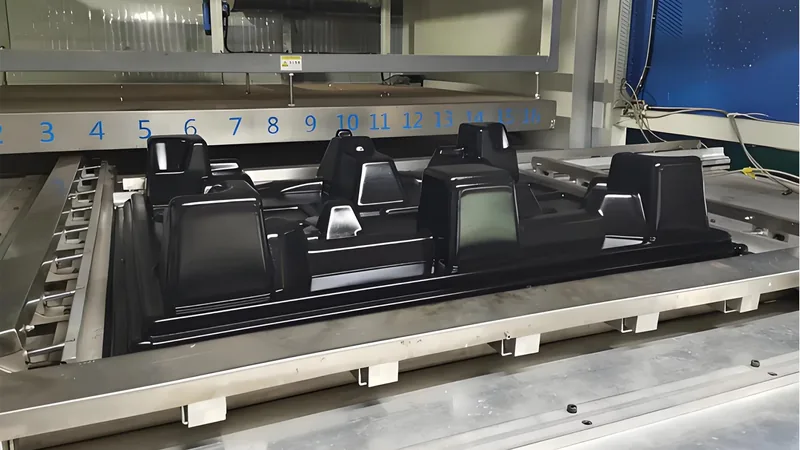
Record the trial results against the drawing’s critical dimensions, and agree on acceptance criteria with your molder before the thermoforming tool is approved. That agreement, more than the process itself, is what prevents disputes later.
FAQ: Pressure Forming vs Vacuum Forming for Heavy Gauge Parts
Can vacuum forming achieve the same detail as pressure forming on thick sheet?
Rarely on visible surfaces. Thick sheet loses detail faster than thin sheet because it cools before it fully conforms, so vacuum forming on heavy gauge stock produces generous radii and limited texture. Pressure forming closes part of that gap, though very fine texture is difficult at any gauge above roughly 8–10 mm.
Does pressure forming change the materials I can use?
Not fundamentally. The same thermoplastics — ABS, PC, HDPE, PP, and their blends — form under both processes, but each material has a forming window where it accepts texture and detail. Ask your molder to confirm the pressure forming window for the specific grade rather than assuming vacuum forming data transfers.
Can one mold serve both vacuum and pressure forming?
Only if it was built for it. Pressure forming requires a sealed pressure box and clamping rated for air pressure; a vacuum-only mold cannot be retrofitted by adding an air line. If there is any chance of moving to pressure forming later, size the tooling envelope for it at the start.
Which process should I choose for a UL 94 rated enclosure?
The process does not determine flammability — the material does. Choose a compound with the required UL 94 rating first, then check whether its cosmetic requirements need pressure forming. Many compliant enclosures are vacuum formed, with texture supplied by the mold or added in finishing.
How early should the process decision be made on a new part?
At the design review, before tooling is quoted. The decision affects mold construction, draft angles, radii, and drawing tolerances, so reversing it after tooling kickoff usually means new tooling rather than a modification.
If you are evaluating either process for a heavy gauge thermoforming project, share your drawings with the engineers at ZetarVac’s vacuum forming operation for a process and tooling assessment, or review the full forming and finishing scope on our service page.
-
Draw ratio: The relationship between formed surface area or part depth and the original sheet dimensions; higher draw ratios increase sheet thinning and reduce achievable detail. ↩
-
FAI: First article inspection, the formal verification of the first production part against the drawing before series release. ↩
-
HDT: Heat deflection temperature, the temperature at which a plastic specimen deflects a specified amount under flexural load, measured per ASTM D648 or ISO 75-2. ↩
-
IP code: Ingress protection classification defined by IEC 60529, rating how well an enclosure excludes solids and liquids. ↩