
Polycarbonate (PC) and polyvinyl chloride (PVC) are two of the most commonly specified sheets in heavy gauge thermoforming, and they are often confused for the wrong reasons: both arrive as flat sheet, both vacuum form into large parts, and both end up as equipment housings, guards and trays. The real engineering differences sit in the forming window, the service environment and the validation tests. This article breaks down where each material wins, where each one fails, and what to check before committing to tooling.
- PC forms at higher sheet temperatures, roughly 150–190 °C at the surface, while rigid PVC forms at roughly 110–150 °C.
- PVC has a narrow degradation margin: overheated PVC releases hydrogen chloride, so heater zoning matters more than heater power.
- PC wins on impact strength, heat deflection temperature and optical clarity; PVC wins on chemical resistance, inherent flame retardancy and cost.
- UL 94 flammability and IEC 60529 ingress protection are judged on the finished formed part, not on the raw sheet certificate.
- Both materials run reliably on heavy gauge vacuum forming lines within a 0.5–15 mm sheet range.
- A good-looking prototype does not validate a material; tensile and heat-deflection tests on the formed wall do.
What Is the Real Difference Between PC and PVC in Thermoforming?
PC is an amorphous engineering thermoplastic selected for impact strength, heat resistance and optical clarity, while rigid PVC is a cost-driven compound valued for chemical resistance and inherent flame retardancy. In thermoforming, that translates into different heating profiles and different failure modes: PC forms at higher temperatures with a wide sag window, while PVC forms easily but degrades quickly if overheated. Neither is universally better; the right choice depends on what the formed part must survive.
The chemistry drives the behaviour. PC is a high-molecular-weight amorphous polymer with exceptional ductility at forming temperature, which is why it deep-draws without tearing and stays tough at low service temperatures. Rigid PVC is a compound rather than a pure polymer: the sheet maker blends PVC resin with heat stabilizers, impact modifiers and lubricants, and that formulation decides how the sheet sags, how sharply it picks up texture and how much thermal margin you have before decomposition starts.
| Selection factor | PC sheet | Rigid PVC sheet |
|---|---|---|
| Typical forming temperature | ~150–190 °C sheet surface | ~110–150 °C sheet surface |
| Process window | Wide sag window, heat-sensitive above ~200 °C | Forms easily, tight degradation margin |
| Impact strength | Very high, retains toughness when cold | Moderate; impact-modified grades improve it |
| Heat deflection temperature | ~125–135 °C unfilled | ~60–75 °C |
| Flammability | HB as standard, FR grades available | Inherently self-extinguishing |
| Chemical resistance | Fair; attacked by some solvents and alkalis | Good against acids, alkalis and salts |
| Optical clarity | Excellent, near-glass | Good in clear grades, slight tint |
| Typical formed parts | Machine guards, clear covers, equipment housings | Trays, liners, industrial enclosures |
How Do PC and PVC Behave in the Vacuum Forming Process?
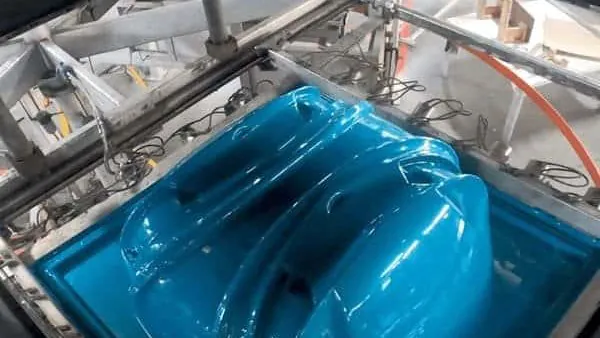
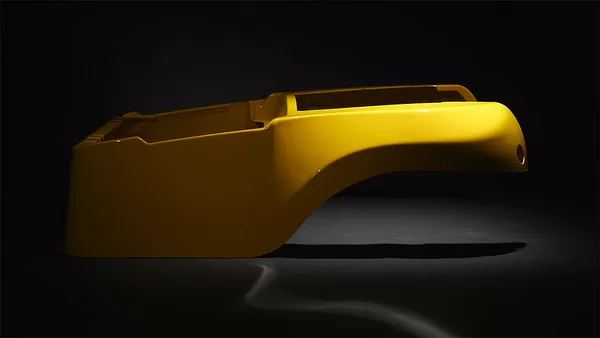
PC needs more heat input and a slower ramp, but it stretches deep without tearing. PVC heats fast, forms at low vacuum demand and holds crisp detail, but its window closes quickly once the sheet surface passes its softening point. In practice, PC rewards patient heating and PVC rewards precise heater zoning.
On the machine, PC sags dramatically because its elongation at forming temperature is high, and an overheated sheet can drop onto the heater bank; two-stage heating or shadow masks are the usual controls. PVC sags early and then weakens, so its zones run cooler and the sheet is presented to the mold the moment it becomes formable. ISO 306 defines the Vicat softening temperature method, the measurement that tells you where a formed sheet starts to soften under load1, and typical rigid PVC compounds soften around 75–90 °C while PC does not reach a usable forming state until well above 150 °C.
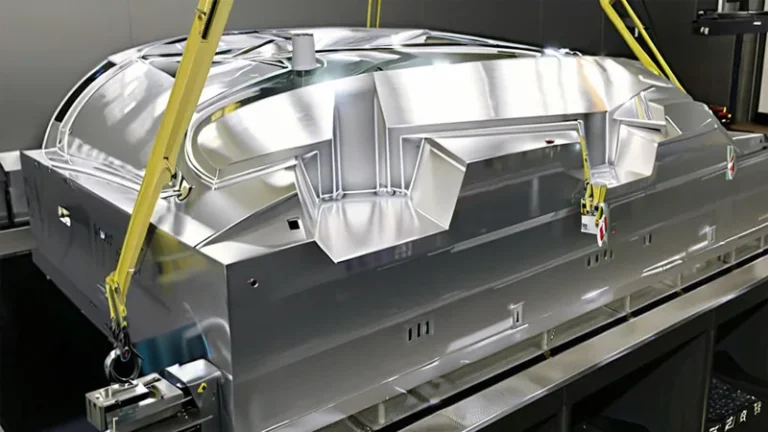
Wall distribution diverges too. PC deep-draws with better wall uniformity and tolerates plug-assisted draws; PVC forms crisp texture and sharp radii but thins faster over deep male tools. Where surface detail matters on either material, pressure forming adds air pressure above the sheet and pushes texture into the tool more sharply than vacuum alone. The choice between a positive and a negative mold should therefore be made per material, not per habit — our guide to positive and negative thermoforming molds covers how cavity geometry changes material behaviour.
"PC and PVC can run on the same heater settings because both are amorphous sheets."False
PC needs surface temperatures roughly 40–60 °C higher than PVC, and running PVC on a PC recipe pushes the sheet past its degradation point. The result is hydrogen chloride release, discoloured parts and corroded heater banks within a single shift.
"Each material needs its own heating profile and forming window."True
PVC is normally run 40–60 °C cooler with tighter zone control, while PC needs a slower ramp and a deeper sag before forming. Qualifying a recipe per material is what keeps first articles and production parts consistent.
None of this is exotic; both behaviours are exactly what a first-article qualification should capture before the tool is released for volume production. Cooling is the last divergence: PC carries more heat into the part and needs longer, better-controlled mold cooling, while PVC releases quickly and shortens the cycle.
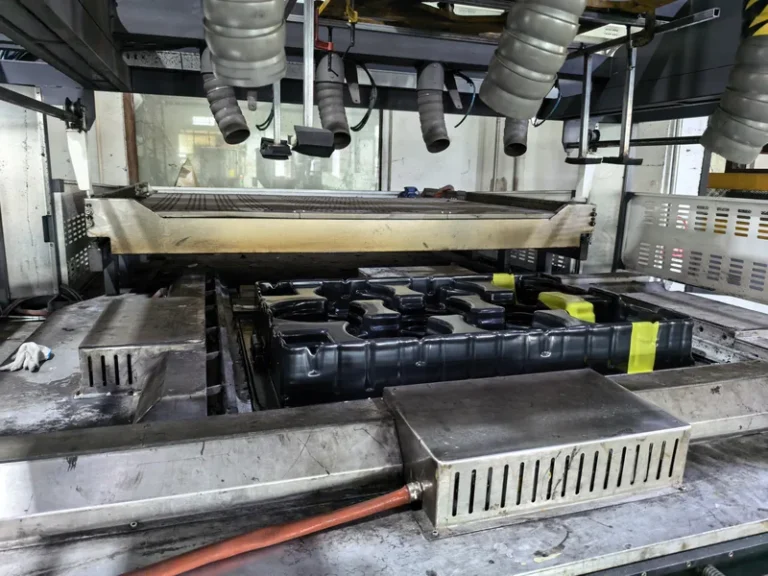
ZetarVac processes sheet from 0.5 to 15 mm on more than 20 vacuum forming machines, with a maximum forming length of about 2,500 mm and 5-axis CNC trimming of formed parts, so PC and PVC can both be trialled at production gauge instead of scaled-down lab sheet.
Which Material Survives Your Service Environment?
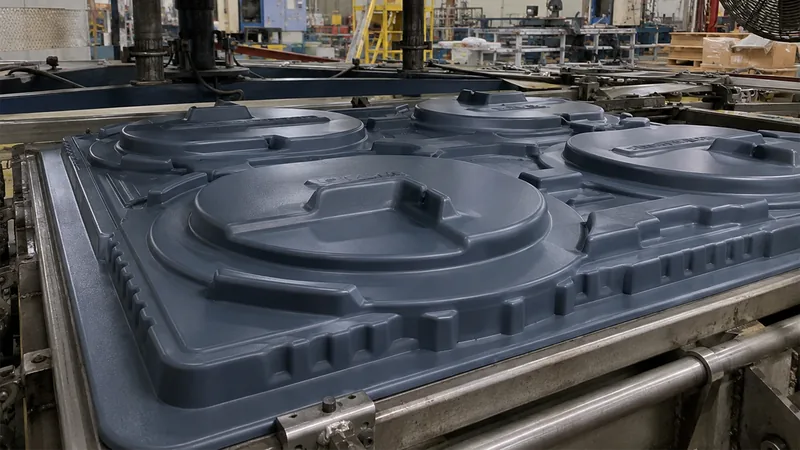
PC is the default where the part must take impact, run hot or stay transparent: machine guards, protective covers and medical or diagnostic equipment housings. PVC is the default where the part faces chemicals, moisture and cost pressure: trays, liners, industrial enclosures and packaging.
Impact is the sharpest separator. Polycarbonate keeps its toughness at low temperature and resists denting near moving machinery, which is why formed guards over rotating equipment are usually PC. Heat follows the same pattern: ISO 75-2 specifies the heat deflection temperature test under a defined flexural load, and typical unfilled PC grades deflect around 125–135 °C against roughly 60–75 °C for rigid PVC2 — a gap that decides whether a panel near a heat source creeps or holds its shape.
Flammability is where the trade flips. UL 94 classifies the flammability of plastic materials, and many formed equipment enclosures are specified with a minimum rating such as V-0 or HB before they can be approved3; rigid PVC is inherently self-extinguishing in most formulations, while standard PC needs a flame-retardant grade to reach V-0. For dust and water, IEC 60529 defines the ingress protection code that grades how well an enclosure seals out both, and formed covers rated to NEMA 250 Type 4 are judged against the same intent4.
Chemical exposure favours PVC, which shrugs off acids, alkalis and many salts; PC is attacked by strong alkalis and some solvents and can stress-crack around cleaning agents where residual forming stress remains. Outdoors, neither is perfect: unstabilized PC yellows and PVC chalks, so UV-stabilized grades, coatings or an ASA-capped sheet belong in that conversation. If your real comparison is PC against ABS for an interior automotive or housing part, our PC versus ABS thermoforming article covers that pairing in depth.
"An inherently flame-retardant PVC sheet guarantees the finished enclosure passes flammability approval."False
Forming thins the wall, trimming exposes new edges and welding or fastening adds stress, so the effective gauge at the critical section is rarely the sheet gauge. Ratings are judged on the finished part in its final form, and a sheet certificate is a starting point rather than an acceptance document.
"Flammability and ingress protection must be validated on the finished formed part."True
Wall thinning during forming changes the effective gauge, and trim edges or seams become the weak points reviewers look at first. Specify the rating on the drawing and test the trimmed, finished housing before release.
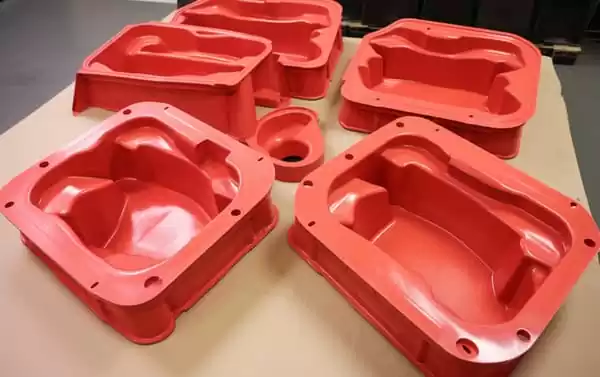
A practical example of where PC earns its position: a vacuum-formed medical equipment housing made in PC, large and complex in curvature, with custom cut-outs, mounting holes and reinforcement, relies on the material’s stiffness and clarity together — the same geometry in PVC would need thicker walls to reach comparable rigidity.
What Should You Check During Design and Prototyping?
Before cutting the mold, check draft angles, corner radii, draw ratio and sheet gauge against each material’s thinning behaviour, because PC and PVC distribute wall thickness differently over the same tool.
Draw ratio is the first gate: a 600 mm deep draw from a 1,500 mm frame is a different conversation at 15 mm gauge than at 3 mm. PC tolerates deeper draws and thinning better; PVC prefers shallower geometry with generous radii, since sharp male corners pull the sheet thin exactly where PVC is weakest. Trim strategy is the second gate — on heavy gauge parts the trimmed outline follows the forming tool, and 5-axis CNC trimming holds that relationship consistently for both materials.
Prototype with production-gauge sheet, not downgauged samples, and validate properties on the formed wall: ISO 527-2 specifies the tensile test used for thermoformed sheet and formed parts, and running it on cut-outs from the formed part shows how much strength the forming process itself costs you5. Acceptance criteria should be written per material as well — minimum wall percentage, optical distortion limits for clear PC panels, and discolouration limits for PVC where heater contact risk exists.
How Do Cost and Volume Change the Choice?
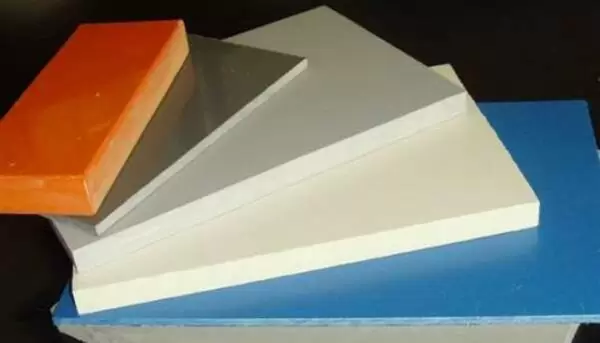
PVC sheet generally costs less per kilogram and cycles faster, which compounds into meaningful per-part savings at volume; PC carries a premium but often removes secondary work such as glazing, painting or over-designing walls for impact.
Cycle time amplifies the price gap: PVC cools and releases quickly, while PC holds heat longer and needs extended mold cooling, so the effective cost difference is larger than the sheet invoice alone. Tooling is largely material-agnostic on the vacuum forming side — the same tool can form both — but heater recipes, vacuum sequences and trim fixtures are requalified per material. Volume matters less for the choice than environment does: prototyping, small batch and large batch runs are all viable in either material, and switching later usually costs more in requalification than in tooling. For a broader view of how gauge changes the whole process, see our comparison of heavy and thin gauge thermoforming.
ZetarVac runs 45+ production lines with a reference monthly capacity of about 100,000–200,000 pieces and supports prototyping through large batch production, which makes a PC-versus-PVC decision something you can verify on real tools before committing to volume.
FAQ: PC vs PVC in Thermoforming
Is PC or PVC easier to thermoform?
Rigid PVC is easier in the sense that it heats fast and forms at lower temperatures, but it punishes sloppy heater control with degradation. PC is more forgiving in the oven and less forgiving in deep geometry.
Which material is cheaper for formed parts?
PVC usually wins on per-part cost through a lower sheet price and shorter cycles. PC earns its premium when impact, heat or clarity eliminates secondary operations and wall over-design.
Can PC and PVC run on the same vacuum forming machine?
Yes. The machine, tooling and trimming are shared; the heater zones, vacuum sequence and cooling recipe are not, and each material should carry its own qualified process.
Which material is better for outdoor formed parts?
Neither, unstabilized. UV-stabilized PC or an ASA-capped sheet handles outdoor housings; PVC is better kept to indoor trays, liners and enclosures unless a weatherable formulation is specified.
Does PVC release fumes during thermoforming?
Only when overheated. Decomposing PVC releases hydrogen chloride, which corrodes equipment and marks parts; correct heater zoning keeps forming temperatures well below that point.
How should I decide between PC and PVC for my part?
List the environment first — impact, temperature, chemicals, transparency and flame requirements — then check which material clears every line at the required gauge. To keep digging into how heavy gauge vacuum forming works and where each sheet fits, explore the ZetarVac vacuum forming resource hub, or walk through what a China vacuum forming manufacturer offers for PC and PVC projects before locking your material selection.
-
Vicat softening temperature: The temperature at which a flat-ended needle penetrates a plastic specimen to a defined depth under load, defined by ISO 306. ↩
-
HDT: Heat deflection temperature, the temperature at which a plastic specimen deflects a defined amount under a specified flexural load, measured per ISO 75-2. ↩
-
UL 94: The Underwriters Laboratories standard that classifies the flammability of plastic materials, with ratings such as HB, V-2 and V-0 based on burning behaviour. ↩
-
IP code: The ingress protection rating defined by IEC 60529 that grades how effectively an enclosure keeps out dust and water, written as IPXX numbers. ↩
-
Tensile test: The tensile strength and elongation test defined by ISO 527-2, used to compare raw sheet against material cut from a formed wall. ↩