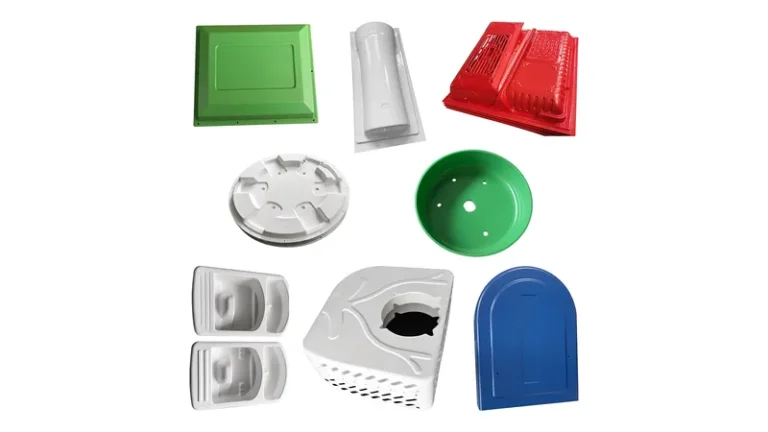
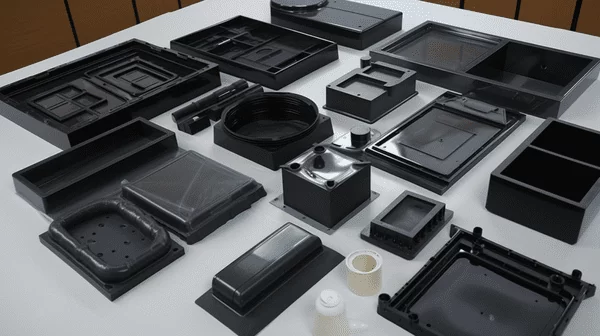
Buyers searching for the difference between thermoforming and vacuum forming usually get a one-line answer: thermoforming is the umbrella, vacuum forming is one technique under it. True, and not useful on its own. What a procurement engineer or product designer actually needs is where the two diverge in forming force, tooling, achievable detail, sheet thickness and the tests that validate a material call — because those are the levers that move part cost and quality. This article gives the engineering version of the difference and turns it into selection criteria you can apply to a drawing before you talk to suppliers.
- Thermoforming is the family of processes that shapes heated plastic sheet over a mold; vacuum forming and pressure forming are its two main branches.
- Vacuum forming drives the sheet with vacuum alone, so forming force tops out near one atmosphere, roughly 0.1 MPa.
- Pressure forming adds compressed air above the sheet, multiplying forming force several times for sharper detail and texture.
- Heavy-gauge thermoforming processes sheet from about 0.5 mm to 15 mm, far beyond thin-gauge packaging territory.
- Tensile, heat-deflection and flammability checks on formed sheet run to published standards, not ad-hoc tests.
- The right branch depends on cosmetic surface requirements, feature sharpness, part size and tooling budget.
What Is the Difference Between Thermoforming and Vacuum Forming?
Thermoforming is the general process of heating a plastic sheet until it is pliable and forming it over a mold; vacuum forming is the variant that shapes the sheet with vacuum alone. Pressure forming is the other common variant, adding compressed air above the sheet. Tooling, detail sharpness and cost all follow from which driving force is used.
In practice the distinction shows up in three places. First, forming force: vacuum alone can never exceed about one atmosphere, which caps how sharply the sheet picks up fine features. Second, tooling: pressure forming needs a sealed pressure box around the mold, which raises tooling cost. Third, application fit: vacuum forming dominates industrial trays, liners and large enclosures where detail demands are moderate, while pressure forming competes where a molded, consumer-facing appearance matters. The sections below work through each difference with the parameters behind it.
How Does Vacuum Forming Shape Heavy-Gauge Sheet?
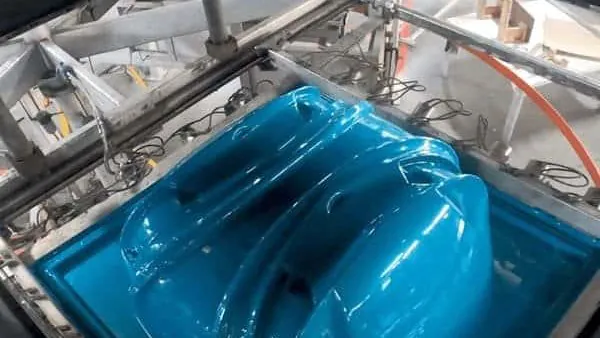
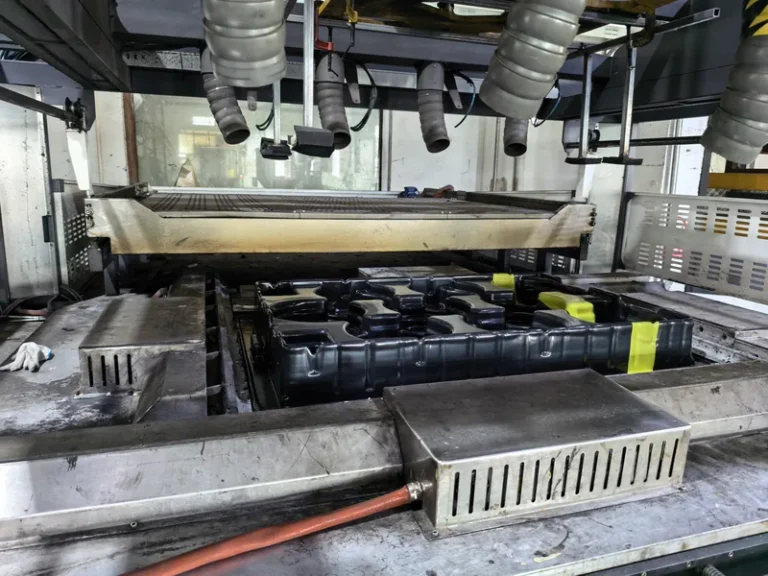
A heavy-gauge vacuum forming cycle runs in five stages. The sheet is clamped in a frame and heated from one or both sides; ceramic or infrared heaters bring the sheet surface into a forming window that typically sits between about 120 °C and 180 °C depending on the material, with ABS near the middle of that range and PC toward the top. The plasticized sheet sags, the mold rises into it or the sheet drapes over the tool, and vacuum is pulled through vents in the mold surface.
Because the pressure differential cannot exceed roughly one atmosphere, deep draws rely on even sheet-level heating and controlled pre-stretch rather than brute force. The part cools on the tool with fan or mist assistance, then is released for trimming.
Process control lives in the details. Vertical walls carry draft angles of roughly 2°–5° so the part releases without scuffing1; fillet radii below about 3 mm on heavy-gauge parts invite corner thinning. The recurring failure modes are webbing between tall features, thinning at the bottom of deep draws, and chill marks where hot sheet meets cool tool too early. Each traces back to a specific lever: heater zoning, plug assist geometry, or vacuum hole layout. When a supplier debugs a corner, ask which of the three they changed — the answer tells you whether the fix is repeatable.
Sheet thickness processed on ZetarVac heavy-gauge lines runs 0.5–15 mm, with a maximum forming length of about 2,500 mm and 5-axis CNC trimming whose outline follows the forming tool. For a buyer, that means large, deep parts and accurate trimmed outlines are standard process capability, not special requests.
Does Thermoforming Include More Than Vacuum Forming?
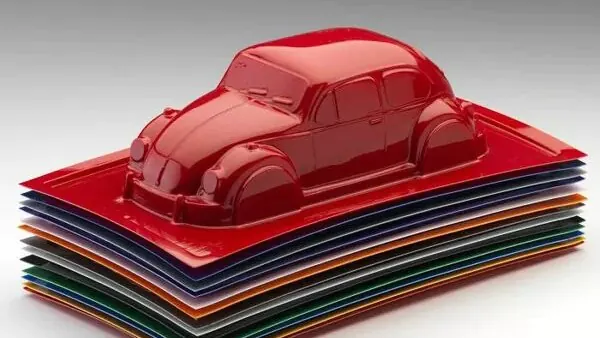
Yes. Pressure forming is the thermoforming variant that seals the heated sheet inside a pressure box and pushes it into the mold with compressed air, typically 0.3–0.8 MPa on top of vacuum. That is several times the force vacuum alone can generate, which is why pressure-formed surfaces carry fine texture, sharp ribs and crisp logos that vacuum forming would round off.
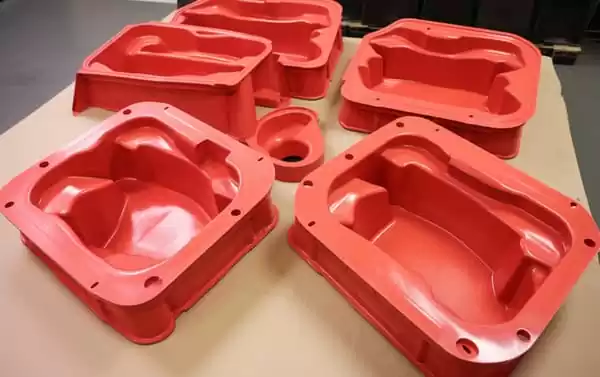
Everything upstream and downstream stays the same: same heater banks, same mold materials, same trimming logic. What changes is the tool package — the mold gains a sealed platen so air can act on the sheet — and the use case. Vacuum forming is the default for trays, liners and large machine enclosures where detail demands are moderate and tooling budget matters. Pressure forming earns its cost on cosmetic surfaces such as medical and diagnostic equipment housings and retail display covers.
"Thermoforming and vacuum forming are just two names for the same process."False
They are not. Vacuum forming is one branch of thermoforming, and pressure forming is another that uses air pressure several times stronger than vacuum. Treating the terms as interchangeable hides the pressure-forming option when a drawing needs sharp texture, and it inflates quotes when vacuum forming would do.
"Vacuum forming is one branch of thermoforming, alongside pressure forming."True
The umbrella term covers every process that forms heated sheet over a mold using applied force. Vacuum forming uses vacuum only; pressure forming stacks compressed air on top of vacuum. Both share the same heating, molding and trimming steps, so switching branches changes the tool package, not the whole production line.
Which Materials and Sheet Thicknesses Fit Heavy-Gauge Thermoforming?
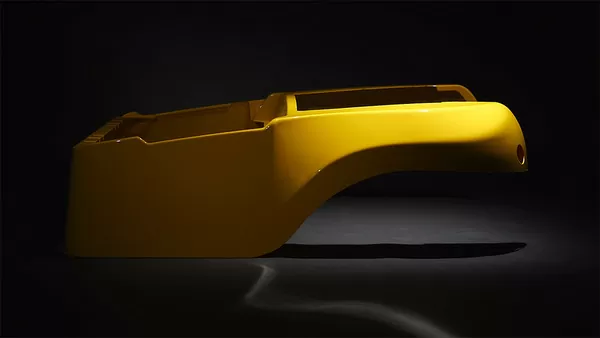
Heavy-gauge thermoforming works sheet from about 0.5 mm to 15 mm thick, a range thin-gauge packaging never touches. Material choice drives both the forming window and the service environment of the part. ABS is the workhorse for equipment housings, cases and automotive interiors; HDPE and PP cover industrial trays, liners and boxes; PC serves clear guards and protective covers; PMMA supplies high-clarity display and luminaire covers; PC/ABS and ASA take parts that need impact behaviour plus heat or weather resistance. Elastomer grades such as TPE, TPU and TPV cover soft liners, seals and flexible protection parts.
Two families of tests keep these choices honest. Tensile properties of thermoformed sheet are measured to ISO 527-2, which specifies the standard tensile test method — specimen geometry, test speed and result calculation — used to validate thermoformed sheet and finished parts2; because forming stretches the sheet unevenly, the properties of the formed part, not of the raw sheet, are what a design should be checked against. For electrical equipment, formed housings and covers are specified against UL 94, which classifies the flammability of plastic materials and is required for many equipment enclosures3. Parts facing heat sources are screened with heat deflection temperature before a grade is committed4.
| Selection factor | Vacuum forming | Pressure forming |
|---|---|---|
| Forming force | Vacuum only, up to about 0.1 MPa | Vacuum plus compressed air, typically 0.3–0.8 MPa |
| Surface detail | Rounded features, softer texture transfer | Sharp ribs, crisp texture and logos |
| Cosmetic surface | Mold side only | Both sides defined |
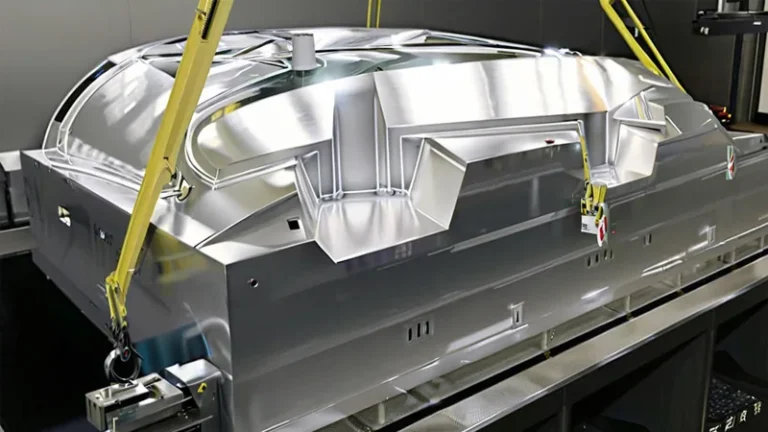
| Tooling package | Single mold, lower cost | Mold plus sealed pressure box, higher cost |
| Best fit | Trays, liners, guards, large enclosures | Housings, covers, consumer-facing panels |

The plant material library covers ABS, PC, PC/ABS, ASA, HDPE, PP, PMMA, POM, PA6/PA66 and elastomer grades, each mapped to typical uses such as equipment housings, automotive interiors, clear guards and industrial liners. For a buyer, that means grade selection can be driven by the environment the part serves, not by what a line happens to run.
How Do Size and Tolerance Limits Differ Between the Two Branches?
The forming force does not set size limits — sheet width, forming length and tool design do. In both branches, formed dimensions on large heavy-gauge parts typically hold tolerances of about one to two millimetres as a common industry engineering range, while CNC-trimmed outlines hold tighter; material shrinkage and sheet thickness variation, not vacuum versus pressure, govern those numbers.
What pressure forming changes is cosmetic fidelity, not dimensional tolerance: texture definition and edge crispness improve, while overall dimensions stay governed by sheet behaviour. For part size, the machine envelope matters — heavy-gauge forming handles lengths up to about 2,500 mm, enough for full-size machine enclosures and large trays in one piece. Deep draws approaching a 1:1 depth-to-width ratio deserve early review in either branch, because thinning at the bottom of the draw is the first limit to appear.
"Once the first article is approved, the thermoforming process is stable for volume production."False
A first article proves the tool, the material and the setup on a single part. Stability in heavy-gauge forming comes from controlled heater zoning, sheet temperature windows and repeatable cooling, and it drifts with ambient conditions and material lots. Release volume only after dimensional data across a trial batch backs up the first article.
"Process stability in thermoforming is demonstrated across a trial batch, not by one approved part."True
Sheet temperature distribution, vacuum timing and cooling rate all vary between runs, so a single perfect sample says little about run number five hundred. Ask for dimensional measurements across a trial batch and for the inspection method behind them, then set release criteria on batch data. That is what separates a repeatable process from a lucky setup.
When reviewing tolerances on a drawing, separate three numbers: formed dimension tolerance, trimmed outline tolerance, and flatness over the panel area. Asking for one blanket tolerance across all three forces the supplier to quote against the worst case — usually flatness on a large panel — and inflates cost without improving the part.
When Should Vacuum Forming Be Your Default Choice?
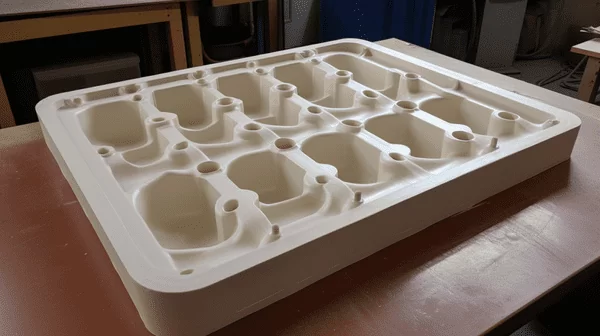
Default to vacuum forming when the part is large, the surface is industrial rather than consumer-facing, and tooling budget is finite: equipment liners, machine enclosures, material-handling trays, agricultural seedling trays and guards. Move to pressure forming when texture must read sharply, when end users touch the surface, or when a two-sided cosmetic finish is specified. Neither branch changes the material logic, and both reward early decisions on draft, radii and trim lines, because those are frozen once the forming tool is cut.
Before comparing suppliers, review how a China vacuum forming manufacturer organizes heavy-gauge production, and see how the vacuum forming process is structured end to end. For tool-level decisions, the choice between male and female vacuum forming molds determines which side of the part carries the cosmetic surface, and the ABS versus HIPS comparison is the most common material fork.
More than 20 vacuum forming and thermoforming machines operate alongside 45+ production lines across the plant, with reference monthly capacity of about 100,000–200,000 pieces and support for prototyping, small batch and large batch production. For a buyer, that means a validated process can scale from first articles to volume without changing suppliers.
FAQ
Is vacuum forming always cheaper than pressure forming?
Usually yes at the tooling stage, because a vacuum forming tool needs no sealed pressure box. Part price depends more on sheet thickness, cycle time and trimming content than on which branch is used, so two parts of the same size and material can price similarly across both processes. The real cost difference concentrates in tooling and cosmetic detail.
Can heavy-gauge thermoforming handle sheet thicker than 10 mm?
It can. Thick-sheet forming commonly processes 0.5–15 mm stock, and the upper end of that range is used for structural parts and heavy enclosures. Toward the top of that range, heater penetration and cycle time dominate the process window, so it is worth reviewing the specific thickness with the supplier early rather than assuming it forms like thin stock.
What tolerances can a formed part realistically hold?
Plan on roughly one to two millimetres for formed dimensions on large heavy-gauge parts as a typical industry range, tighter on CNC-trimmed outlines, and discuss flatness separately for large panels. Exact values depend on material, sheet gauge and part geometry, so treat them as subjects for a drawing review, not as generic promises.
Which materials are most common for formed equipment housings?
ABS, PC and PC/ABS dominate, with ASA where outdoor weathering is part of the duty. ABS covers general housings and automotive interiors, PC adds impact strength and clarity where needed, and PC/ABS balances both. Flammability requirements narrow the grade list, so state them on the drawing from the start.
Where can you keep researching heavy-gauge vacuum forming?
Walk through the vacuum forming process hub to see the full heavy-gauge workflow — sheet selection, tooling, forming and 5-axis trimming — and how each stage maps to the part you are designing. If you want the manufacturing-side view next, compare how a China vacuum forming manufacturer presents capacity and quality control.
-
Draft angle: A draft angle is the slight taper on the vertical walls of a formed part that lets it release from the mold without scuffing the surface. ↩
-
ISO 527-2: ISO 527-2 is the standard tensile test for plastics, specifying specimen geometry, test speed and result calculation for thermoformed sheet and formed parts. ↩
-
UL 94: UL 94 is the classification standard for the flammability of plastic materials, commonly required for formed equipment enclosures and covers. ↩
-
HDT: Heat deflection temperature is the temperature at which a plastic bar deflects a defined amount under a specified flexural load, used to judge how a formed part behaves near heat. ↩