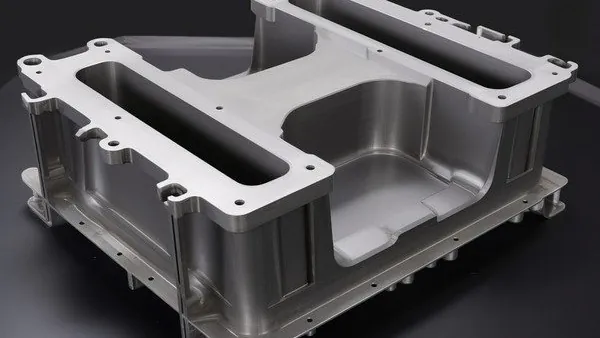

Choosing between ABS and HIPS is one of the most frequent sheet-material decisions in heavy-gauge thermoforming, and it is also one of the easiest to get wrong. The two materials look interchangeable on a quotation, yet they differ in impact strength, heat resistance, surface quality, forming window and cost — and those differences decide whether a formed housing survives drop testing, passes a flammability review, or simply costs more than it should. This article compares ABS and HIPS specifically for vacuum forming of heavy-gauge parts such as equipment housings, trays, covers and structural panels, and gives you engineering criteria for making the call before tooling starts.
- HIPS forms at lower sheet temperatures with a wider process window, which shortens trials on simple geometries and makes it the default for cost-driven trays, covers and display parts.
- ABS carries roughly 1.5–2 times the tensile and impact performance of general-purpose HIPS, which is why enclosures, guards and load-bearing panels default to ABS.
- Neither polymer is inherently flame retardant; a UL 94 rating must be confirmed on the specific sheet grade, never assumed from the material name.
- HIPS shows slightly higher and more variable post-forming shrinkage with a matte surface; ABS offers better cosmetics, paintability and low-temperature toughness.
- Gauge and size envelope matter as much as material: parts are formed from 0.5–15 mm sheet with forming lengths up to about 2,500 mm and trimmed on 5-axis CNC equipment.
What Is the Difference Between ABS and HIPS in Vacuum Forming?
ABS is the tougher, more heat-resistant and more cosmetically capable sheet, while HIPS is a lower-cost, easier-forming styrenic used where loads and temperatures are modest. In vacuum forming, HIPS typically forms at lower sheet temperatures with more process forgiveness, whereas ABS needs tighter heater control but delivers better impact strength, surface finish and paint adhesion. Choose HIPS for economy, ABS for performance.
Chemically, both belong to the styrenic family, but they are not the same polymer. ABS is a terpolymer of acrylonitrile, butadiene and styrene: the acrylonitrile contributes stiffness and chemical resistance, the butadiene phase absorbs impact energy, and the styrene carries rigidity and processability. HIPS is polystyrene modified with rubber particles to overcome polystyrene’s natural brittleness. That rubber modification helps, but the resulting impact performance still lands well below ABS, especially at low temperature.
For buyers, the practical translation is simple: HIPS is a forming-friendly material with modest mechanical targets, while ABS is a mechanical and cosmetic material that asks slightly more from the process. Everything else in this comparison follows from that distinction.
How Do ABS and HIPS Differ at the Forming Stage?
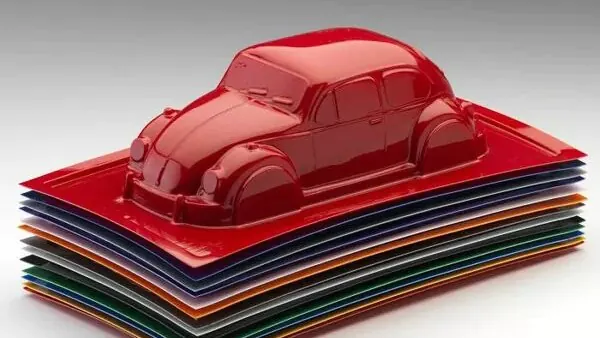
HIPS generally forms in a lower sheet-temperature band and tolerates more process drift before showing defects, which shortens trial time on simple geometries. ABS needs a hotter, more evenly controlled sheet and more careful drying, but it holds surface detail and finish better on visible parts. In both cases the working window shifts with sheet gauge, so the figures below are engineering starting points rather than fixed recipes.
As conventional ranges, HIPS sheet is typically formed around 120–160 °C and ABS around 140–180 °C at the sheet surface, with exact setpoints depending on gauge, heater type and machine airflow. Sag behavior differs as well: ABS shows a pronounced sag peak that experienced operators use as a forming signal, while HIPS sags earlier and more gradually. On deep draws, both materials need effective vacuum and, on cosmetic surfaces, plug assistance or pressure forming to keep corner thickness inside specification — see how vacuum forming and pressure forming differ when surface detail governs the choice.
Sheet handling is where the two materials behave most differently day to day. ABS is hygroscopic and picks up enough moisture to cause bubbles or silver streaks if it is not dried before forming, so storage discipline and pre-drying belong to the process, not to the option list. HIPS absorbs less moisture and is generally more tolerant, though condensation on cold sheet can still mark the surface. Mold temperature follows the same logic: warm tooling, roughly 40–70 °C depending on the material and tool type, helps ABS hold texture and reduce internal stress, while HIPS releases cleanly with simpler control.
For a neutral third-party overview of the process itself, the IQS Directory thermoforming guide covers machine types and process variants in more depth.
| Property (typical, general-purpose grades) | ABS | HIPS |
|---|---|---|
| Sheet forming temperature, conventional range | ~140–180 °C | ~120–160 °C |
| Tensile strength | ~35–50 MPa | ~20–30 MPa |
| Notched impact at room temperature | High | Moderate |
| Low-temperature toughness | Good | Limited |
| Heat deflection temperature | ~85–100 °C | ~70–85 °C |
| Surface finish | Glossy, paintable | Matte, variable gloss |
| Post-forming shrinkage | ~0.4–0.8 % | ~0.5–0.8 %, more drift |
| Moisture sensitivity | Drying required | More tolerant |
| Relative sheet cost | Baseline | Typically 10–25 % lower |
| Typical formed parts | Housings, enclosures, guards, automotive interior parts | Trays, covers, displays, packaging |
Datasheet ranges vary by grade and supplier, so treat the table as a screening tool: confirm the values on the datasheet of the actual sheet lot before locking a specification.
Which Material Meets the Mechanical and Thermal Requirements?
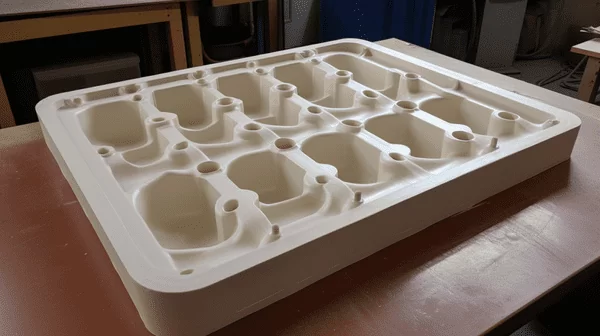
Specify ABS when the formed part must carry load, survive impact or low-temperature shipping, or present a finished cosmetic surface. Specify HIPS when the dominant requirements are low cost, shallow-to-moderate draws and non-critical surfaces. When either material goes into an electrical equipment enclosure, flammability and thermal limits become pass/fail criteria rather than preferences.
Datasheet numbers describe flat sheet, but formed parts do not always behave like the plaque they were tested on, so verification matters. ASTM D638 specifies the standard tensile test for plastics and is the usual method for characterizing thermoforming sheet and validating formed parts against structural load targets. For enclosure walls and flat or lightly curved panels, ASTM D790 specifies the flexural test that characterizes the stiffness of formed panels and covers in their real orientation.
Thermal limits need the same discipline. The heat deflection temperature, measured under ISO 75-2 or ASTM D648, marks where a formed enclosure begins to lose stiffness under a defined flexural load, and the gap between general-purpose ABS and HIPS is one of the main reasons electrical and industrial housings default to ABS.1 Where the part is an electrical equipment cover, UL 94 defines the flammability classifications required for many equipment enclosures, and a material only qualifies if the specific sheet grade carries the rating.2
"HIPS is just cheaper ABS, so the two materials are interchangeable in any vacuum forming project."False
The two polymers share a styrene base but differ in structure, and the swap shows up exactly where it hurts: impact strength drops, low-temperature toughness disappears, and a design qualified in ABS can crack in HIPS during drop or vibration exposure. The unit-cost saving vanishes the first time a shipment is rejected.
"HIPS is the rational choice for cost-driven, lightly loaded parts with simple cosmetic demands."True
For inner covers, trays, packaging and point-of-purchase displays where loads are modest and a matte surface is acceptable, HIPS forms at lower temperature with fewer process constraints and costs less per sheet. Reserving ABS for parts with impact, thermal or cosmetic requirements keeps both the bill of materials and the process risk under control.
What Should You Watch During Trial Runs and Series Production?
The most common trial failures with both materials are webbing between deep male features, excessive corner thinning on deep draws, and post-forming warpage from uneven cooling. HIPS adds a shrinkage-drift risk, ABS adds bubble and streak risk from residual moisture. All three are caught cheaply at the first-article stage if the checks below are on the checklist.
Corner thinning is the failure mode to quantify first. In vacuum forming the sheet stretches over the tallest feature first, and corners on deep draws can end up at 30–50 % of the original gauge on aggressive geometries. Whether the sheet is ABS or HIPS, measure thickness at corners, rims and panel centers on the first article and compare against the functional minimum rather than a flat average — the draw ratio, not the polymer choice, usually decides whether a deep part is feasible in one forming operation.3

Shrinkage and warpage come next. HIPS tends to show slightly higher and more variable post-forming shrinkage, so parts with flat panels and tightly positioned slots need consistent mold temperature and disciplined cooling to hold dimension across runs. ABS warps less but can hold internal stress if it is pulled off a cold mold, which then releases as distortion after trimming. Trim method matters for both: formed parts are cut on 5-axis CNC equipment so the trimmed outline follows the forming tool, keeping trim-to-form consistency without re-clamping error.
"Once the first article passes inspection, the ABS or HIPS choice is validated for series production."False
A first article proves the geometry, not the process spread. Sheet lots change, regrind ratios drift, and heater and mold temperatures move between shifts, so a marginal forming window in HIPS or an under-dried ABS lot can pass unseen and surface as scrap weeks into production.
"Material validation means testing production-representative sheet across multiple forming runs."True
Pull tensile coupons and check forming behavior on sheet from the lots that will actually run, across several shifts or cycles. This exposes regrind variation, moisture problems and process drift before they become rejects, and it documents the forming window limits that operators can hold.
Regrind content is the variable most often missed in material comparisons. Both sheet types commonly carry reprocessed content, but HIPS regrind shifts impact performance more visibly than ABS, and uncontrolled lot-to-lot variation shows up as brittleness in cold weather. Ask the sheet supplier for the regrind policy and lock it into the purchase specification.4
ZetarVac processes sheet from 0.5 to 15 mm on 20+ vacuum forming and thermoforming machines, with a maximum forming length of about 2,500 mm and 5-axis CNC trimming of formed parts. That envelope covers both ABS and HIPS across shallow covers and large deep-draw panels, so candidate materials can be compared on the same tooling platform before volume production.
Where Does Each Material Fit in Real Projects?
HIPS dominates cost-driven, moderate-duty work: packaging trays, inner covers, point-of-purchase displays and short-life utility parts. ABS dominates engineered parts: equipment housings, machine guards, cases, automotive interior components and any panel that will be painted, textured or load-bearing. When a product line contains both profiles, running the two materials in one forming program is common and usually the lowest-risk split.
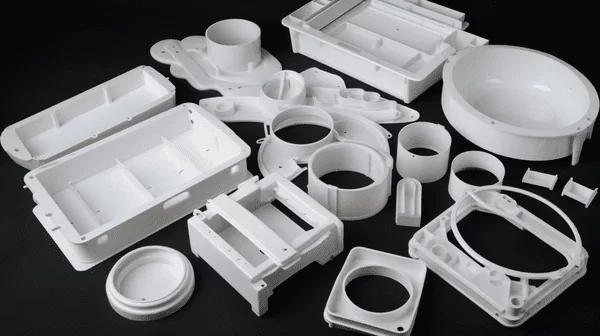
ABS’s position comes from the combination of toughness, finish and processability. In equipment housings and cases it survives handling and fastener loads; in automotive interior parts it accepts texture and paint; in guards it meets higher impact expectations than HIPS. ABS also serves utility applications: one formed reference part is an ABS heavy-gauge multi-cavity seedling tray with custom tray size, cavity count and cell geometry for agricultural seedling raising — a reminder that material choice follows function, not fashion.
For food-contact work, compliance matters as much as mechanics. EU 10/2011 regulates plastic materials and articles intended to come into contact with food, so any thermoformed tray or packaging part in that service must use a declared-compliant sheet grade.5 For outdoor equipment, neither general-purpose styrenic is the default: UV-stabilized grades exist, but outdoor housings and automotive exterior parts are typically specified in ASA or PC/ABS, which hold color and properties far longer in sunlight.
ZetarVac’s material library includes ABS for automotive interior parts, equipment housings, cases and guards, alongside PC/ABS and ASA for applications needing higher heat tolerance or outdoor durability, and PC for clear guards and protective covers. When an application outgrows general-purpose HIPS or ABS, the forming approach and tooling method usually stay the same while the sheet specification changes.
FAQ
Is HIPS easier to vacuum form than ABS?
Yes, generally. HIPS forms at lower sheet temperatures, tolerates wider process drift and is less sensitive to moisture, which shortens trial time on simple heavy-gauge thermoforming geometries. ABS rewards the extra process discipline with better surface quality, detail retention and impact performance on the finished part.
Can ABS and HIPS parts be painted and bonded?
ABS accepts paint, adhesives and decorative finishes well and is the standard choice when a formed part must be painted. HIPS bonds easily with common adhesives and solvent cements, but its matte surface is less predictable under coatings, so cosmetic painted parts default to ABS.
Which material is more flame retardant?
Neither. General-purpose ABS and HIPS sheet both sit in the lower flammability classifications, and any enclosure that must meet a flammability requirement needs a grade certified to the applicable standard, confirmed on the datasheet for the exact sheet lot being purchased.
Do ABS and HIPS shrink differently after forming?
Slightly. Both show post-forming shrinkage in the region of roughly 0.4–0.8 % depending on gauge and tooling temperature, but HIPS tends to vary more from lot to lot. Flat panels and tightly positioned slots in HIPS need controlled cooling and dimensional checks across several runs.
Which material should I choose for an outdoor housing?
Neither general-purpose ABS nor HIPS is the default for prolonged outdoor exposure. UV-stabilized grades exist, but formed outdoor housings and automotive exterior parts are typically specified in ASA or PC/ABS, which retain color and mechanical properties much longer in sunlight.
How do I validate an ABS or HIPS choice before committing to tooling?
Start from the part’s governing requirements — impact and load path, service temperature, surface finish, flammability and regulatory compliance — then match them against the comparison above and confirm the candidate grade on its datasheet, backed by tensile or flexural tests on production sheet where the loads justify it. To keep going deeper into heavy-gauge thermoforming, explore the vacuum forming process overview, or review how a China vacuum forming manufacturer approaches material selection, prototyping and part validation.
-
HDT: Heat deflection temperature, the temperature at which a plastic specimen deflects a set amount under a defined flexural load, measured per ISO 75-2 or ASTM D648. ↩
-
UL 94: The standard flammability classification system for plastic materials, commonly required for electrical equipment enclosures and covers. ↩
-
Draw ratio: The ratio of formed part surface area to original sheet area, a primary driver of corner thinning in deep vacuum forming parts. ↩
-
Regrind: Reprocessed sheet or edge trim blended into virgin resin, which can shift impact performance and lot-to-lot consistency. ↩
-
EU 10/2011: The European Union regulation on plastic materials and articles intended to come into contact with food, covering compliance for thermoformed trays and packaging. ↩