Searching for the top vacuum forming factory in Luxembourg usually starts as a shortlist problem: the Grand Duchy has a dense industrial base, but not every molder that lists thermoforming on its website can hold heavy-gauge parts to drawing. This guide breaks supplier selection into five capabilities — forming envelope, material range, thickness control, validation testing and secondary operations — so you can judge any Luxembourg or cross-border factory on engineering evidence instead of brochure claims. The same criteria apply whether your part is a machine enclosure, an agricultural tray or a clear protective cover.
- Rank candidate factories on five capabilities — forming envelope, material library, thickness control, validation testing and trimming accuracy — not on machine count alone.
- A credible heavy-gauge supplier processes sheet from about 0.5 mm to 15 mm and forms parts up to roughly 2,500 mm long, with 5-axis CNC trimming after forming.
- Ask each supplier how it validates material and parts; tensile testing to ISO 527-2 and heat-deflection data to ISO 75-2 should be routine for structural thermoformed components.
- For formed equipment housings, flammability evidence matters: UL 94 is the flammability standard behind most electrical enclosures, and the resin choice (ABS, PC, PC/ABS) decides the achievable rating.
- Tooling approach, QC documentation and secondary operations separate real production partners from job shops — compare those before comparing unit price.
What Separates a Top Vacuum Forming Factory in Luxembourg From an Ordinary Molder?
A top factory is one that can form your geometry in the correct material, hold trimmed dimensions to drawing, and prove both with documented tests. Anything less is a job shop that happens to own a vacuum former.
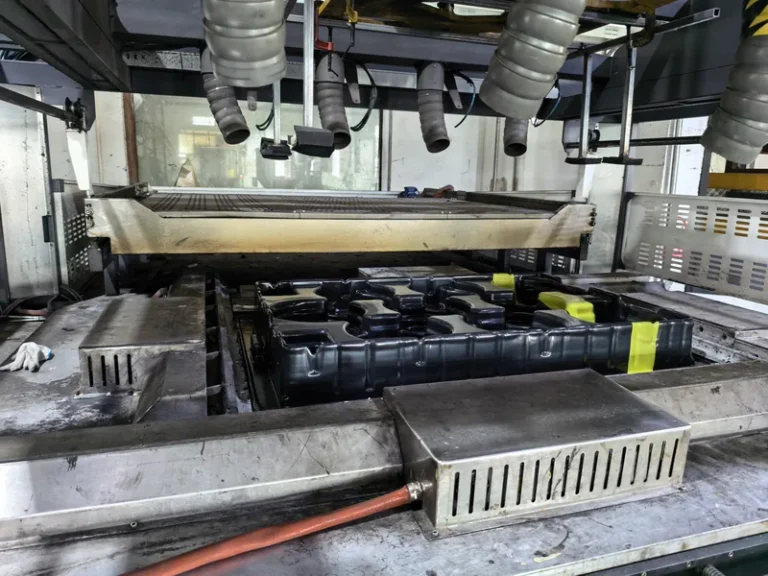
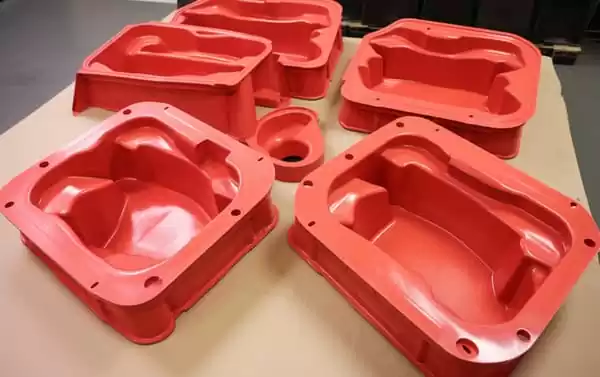
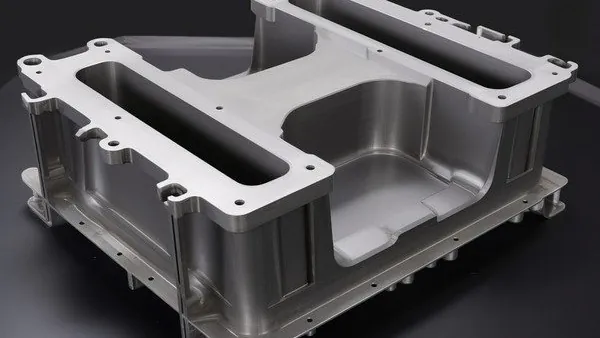
Three things create that gap in practice. First, the forming envelope: heavy-gauge work is defined by sheet above roughly 1.5–2 mm, where heating, sag control and plug assist become engineering problems rather than manual ones. A serious plant processes sheet across a wide window — 0.5 mm up to 15 mm — and forms parts up to about 2,500 mm long, because enclosure panels and tray blanks rarely fit small-format machines. Second, trimming: formed parts leave the mold with web and clamp-frame edges attached, and the trimmed outline follows the forming tool. Five-axis CNC trimming turns a formed shell into a finished part with mounting holes and clean cutouts.
Third, materials. A factory that forms only one or two resins will steer your design toward its comfort zone; a plant with a genuine material library — ABS, PC, HDPE, PP, PMMA, TPE and glass-filled grades — selects the resin around your part’s function. Industry overviews such as the IQS Directory’s thermoforming pages describe the same split: thin-gauge roll-fed packaging on one side, heavy-gauge cut-sheet work on the other, with equipment and quality systems built accordingly.
Which Capabilities Should You Verify Before Shortlisting a Factory?
Verify five capabilities before a factory earns a place on your shortlist: forming envelope, material range, thickness control, validation testing and secondary operations. Each can be checked with a specific question or document request, which makes supplier comparison objective instead of impression-based.
| Capability | What to ask the factory | Red flag |
|---|---|---|
| Forming envelope | Maximum sheet thickness and forming length; machine formats | Only thin-gauge sheet, or one small-format machine |
| Material library | Resin list with datasheets; PC, PMMA and glass-filled capability | “Whatever sheet we have in stock” |
| Thickness control | How corner thinning is predicted and measured on your draw ratio | No thickness prediction, no first-article sectioning |
| Validation | Tensile tests to ISO 527-2, HDT to ISO 75-2, UL 94 evidence for housings | Testing available “on request only” |
| Trimming and finishing | 5-axis CNC trimming, fixture strategy, hole and cutout accuracy | Hand trimming for structural parts |
Walking through this table with each candidate takes less than a day and typically eliminates half the list. The suppliers that answer with documents — datasheets, test reports, first-article photos — are the ones worth a plant visit or a sample run, because their willingness to specify is the best predictor of how they will handle a drawing revision two years later. When comparing depth rather than breadth, review each candidate’s service scope to see which stages — prototyping, forming, trimming, finishing — are handled inside one facility.1
How Do Heavy-Gauge Thermoforming Factories Keep Wall Thickness Under Control?
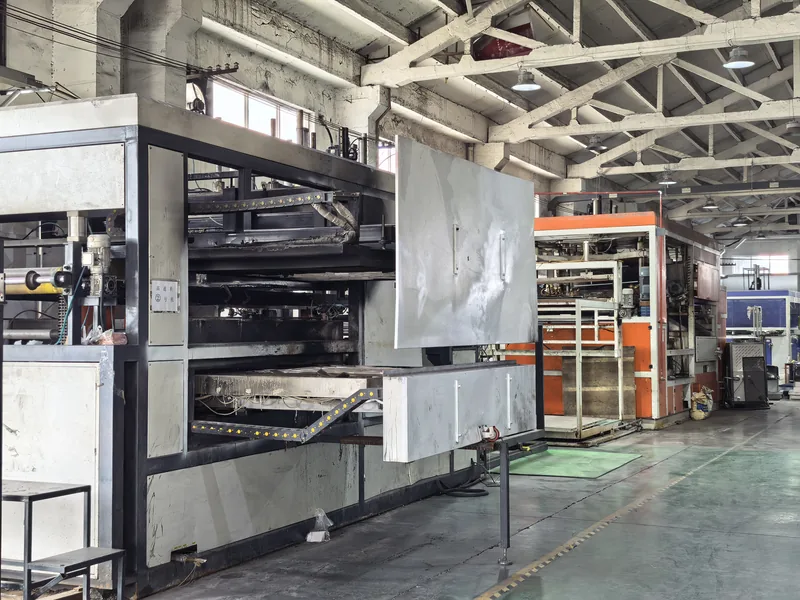
By managing three variables: sheet temperature uniformity, draw ratio and forming vacuum or pressure. Thickness distribution is a physics outcome of those variables, so a capable factory predicts it before cutting sheet — not after trimming the first article.
When heated sheet stretches over a mold, the material that travels furthest thins most: deep-draw corners routinely lose 30–50% of nominal gauge in conventional vacuum forming, depending on draw ratio and resin behaviour.2 Competent molders counter this with plug assist, generous draft angles, pre-stretch stages and deliberate vacuum-hole layout, and some move to pressure forming when a part needs crisp detail on the forming surface. The check method is simple and non-negotiable: section a first article at the deepest corner, a flat wall and a rib junction, then measure actual gauge against the prediction.
Sheet temperature windows are material-specific as well. ABS forms comfortably around a moderate window in most shops, PC needs more heat and tighter control, and the heat deflection temperature of the chosen resin3 sets the upper service limit of the finished part. Any factory that quotes formed thickness “as formed, no guarantee” is telling you it does not measure — treat that as a disqualifying answer for structural work.
"Corner thickness on a deep draw stays close to the nominal sheet gauge."False
Thinning is driven by draw ratio and stretch behaviour, so deep corners routinely lose a substantial share of nominal gauge even on well-run jobs. Without plug assist, pre-stretch and measured sectioning, the buyer discovers the shortfall only after the part fails in assembly.
"First-article sectioning is the only reliable thickness verification."True
A cut-and-measure check at the deepest corner, a flat wall and a rib junction shows the real gauge distribution. It takes minutes, costs almost nothing, and turns thickness from a promise into a measured fact before production commits.
What Materials Can Heavy-Gauge Suppliers Form, and for Which Applications?
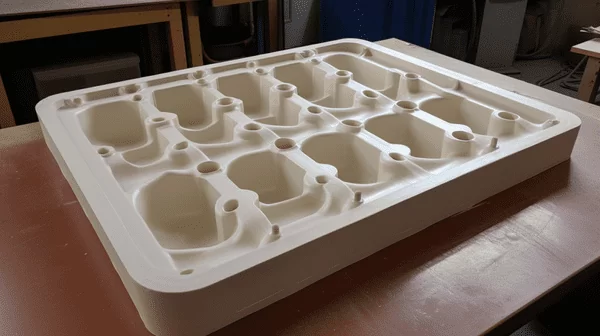
The material answer defines a factory more than its machine list does. Formable resins span rigid engineering plastics to soft thermoplastic elastomers, and each maps to a distinct class of formed products.
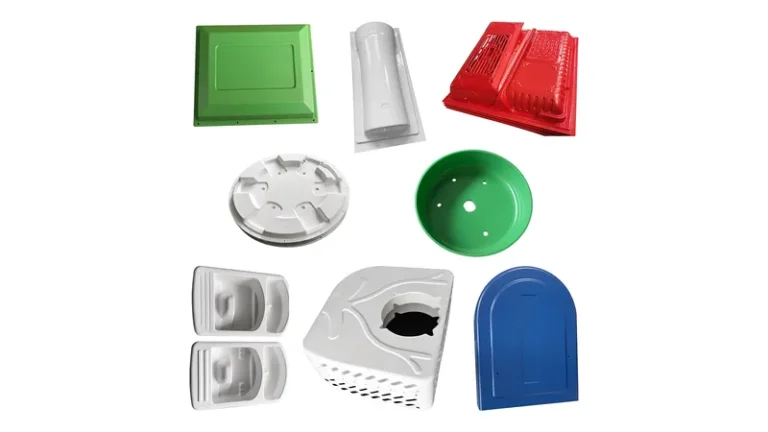
ABS remains the workhorse for housings, cases and guards; PC and PMMA cover transparent protection, luminaires and display work; HDPE, PP and their glass-filled variants serve trays, liners and structural parts; TPE, TPU and TPV add soft liners, seals and flexible sleeves. In practice:
| Resin | Typical formed applications | Why it is chosen |
|---|---|---|
| ABS | Equipment housings, cases, guards, automotive interiors | Balanced formability, impact strength, finishing options |
| PC / PC/ABS | Clear guards, protection covers, electrical enclosures | Transparency or heat resistance; UL 94 path for housings4 |
| HDPE / LDPE | Industrial trays, liners, storage boxes, thin-wall packaging | Chemical resistance and cost efficiency |
| PP / PP/GF | Automotive interiors, structural trays and boxes | Stiffness with heat resistance; glass fill adds rigidity |
| PMMA | Clear covers, luminaires, retail displays | Optical clarity and weatherability |
| TPE / TPU / TPV | Soft liners, seals, flexible sleeves | Elastomeric function formed in one piece |
ZetarVac’s material library covers exactly this span — PVC, ABS, HDPE, LDPE, PP, PC, PMMA, PA6/PA66, POM, TPE, TPU, TPV, PC/ABS, ASA and PP/GF — so a buyer can move a part from an ABS prototype to a PP/GF structural version without changing suppliers. That matters when a tray or enclosure program migrates between product generations.
One note for packaging and agricultural work: thermoformed trays that contact food fall under EU Regulation 10/2011, which governs plastic materials and articles intended to come into contact with food, so the resin and its additives need documented food-contact compliance. If your application is seedling trays or consumer packaging, request that documentation during supplier evaluation rather than at the production gate.
Should You Buy From a Luxembourg Factory or Work With an Overseas Thermoforming Partner?
Buy locally when volumes are small, iterations are frequent and logistics dominate total cost. Move to an overseas partner when tooling economics, capacity depth and material breadth outweigh freight — which is often the case for heavy-gauge programs running above a few thousand pieces per month.
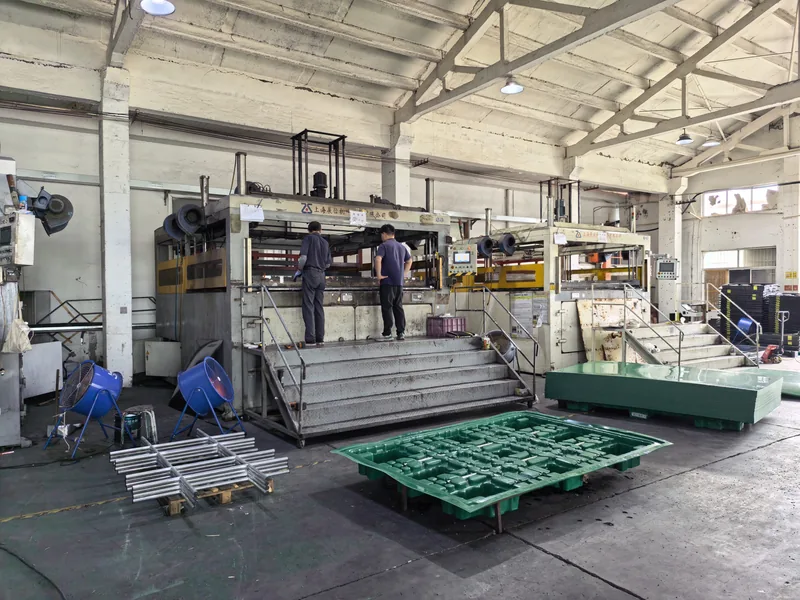
Luxembourg sits inside the Benelux corridor, so buyers routinely evaluate Belgian thermoforming companies alongside local suppliers, since forming capacity for large enclosures is thin in any single small market. The credible alternative is a dedicated heavy-gauge plant abroad: a China vacuum forming manufacturer running 20+ thermoforming machines across a 0.5–15 mm sheet window, with reference monthly capacity in the 100,000–200,000 piece range, absorbs tooling cost over larger volumes and keeps prototype, small-batch and mass production under one roof. The trade-offs are freight time, time-zone communication and the need for tighter specification discipline — drawings, test standards and acceptance criteria must be written down, not assumed.
"Overseas thermoforming only makes sense for very high volumes."False
Modern heavy-gauge shops overseas run prototypes and small batches routinely on production-grade tooling. The real decision variables are program duration, tooling amortisation and specification discipline — not a fixed volume threshold.
"Write acceptance criteria into the RFQ wherever you buy."True
Whether the factory is in Luxembourg or abroad, defined gauges, corner-thickness limits and test standards decide the outcome. Clear criteria make cross-border sourcing predictable and protect the local option too.

How Should You Compare Quotes During Supplier Selection?
Compare quotes line by line on scope, not just total price: tooling material and ownership, forming cycle assumptions, trimming method, exact resin grade and datasheet, test scope, packaging and delivery terms. Two quotes that differ by 20% often differ because one includes 5-axis trimmed parts with documented first articles, while the other prices hand-trimmed shells.
When the buyer is ready to compare suppliers in detail, a structured checklist beats intuition: the suppliers that engage seriously with your criteria document are the same ones that will engage seriously with your change requests after launch.
ZetarVac runs 45+ production lines across the plant, with prototyping, small-batch and large-batch production supported in one facility — a useful benchmark question for any shortlisted factory: can a program scale from first samples to monthly volume without changing process, tooling or supplier?
FAQ
What sheet thickness counts as heavy gauge in vacuum forming?
Most industry practice treats roughly 1.5–2 mm and above as heavy gauge, with production-grade heavy-gauge work commonly spanning that range up to 15 mm. Thin-gauge packaging runs below the window on roll-fed machines, while heavy-gauge plants process cut sheet — which is why the sheet window a factory quotes reveals its real specialty.
Can a vacuum formed enclosure meet fire-safety requirements?
Yes, when the resin grade is chosen for it. UL 94 is the flammability standard for plastic materials used in many equipment enclosures, and ABS, PC and PC/ABS sheet grades with defined ratings are widely available. Ask the factory to name the exact flame-rated grade on the datasheet, not just “flame retardant ABS”.
What tolerances can a trimmed heavy-gauge part hold?
Formed geometry typically holds looser tolerances than machined parts — commonly around ±1% of the dimension for well-controlled forming — while 5-axis CNC trimming brings trimmed edges, holes and cutouts back to near-machined accuracy. Split your drawing accordingly: forming tolerances on the shell, trim tolerances on fixture-trimmed features.
How large can a single vacuum formed part be?
Production-grade machines form parts up to roughly 2,500 mm long, which covers most enclosure panels, equipment covers and oversized trays. Beyond that, parts are designed as split assemblies with flanges and fasteners — a decision to make before tooling, not after.
Which tests should I require before releasing a part for production?
Require tensile validation to ISO 527-2 for structural parts, heat-deflection data to ISO 75-2 for parts near heat sources, and UL 94 evidence for electrical housings. For transparent covers, total luminous transmittance to ISO 13468 documents optical clarity. Each test maps to a failure mode buyers actually encounter in the field.
If you are still mapping the supplier landscape, explore the ZetarVac vacuum forming capability hub to understand forming methods, tooling choices and material behaviour, or see how a China vacuum forming manufacturer structures heavy-gauge programs from prototype through volume. Both give you concrete reference points for the shortlist you are building.
-
Trim allowance: the excess web and clamp-frame material left on a formed part, removed during CNC trimming to reach final dimensions. ↩
-
Draw ratio: the ratio of heated sheet area to the projected mold surface area; higher draw ratios mean deeper forming and more corner thinning. ↩
-
HDT: heat deflection temperature, the temperature at which a plastic specimen deflects a defined amount under a specified flexural load. ↩
-
UL 94: the standard for flammability of plastic materials, classifying resins by burning behaviour such as V-0, V-1 and HB ratings. ↩