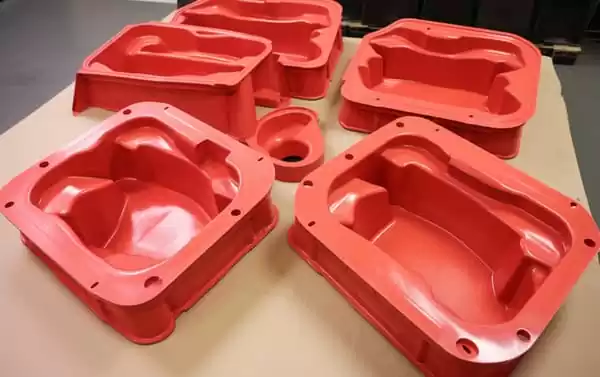
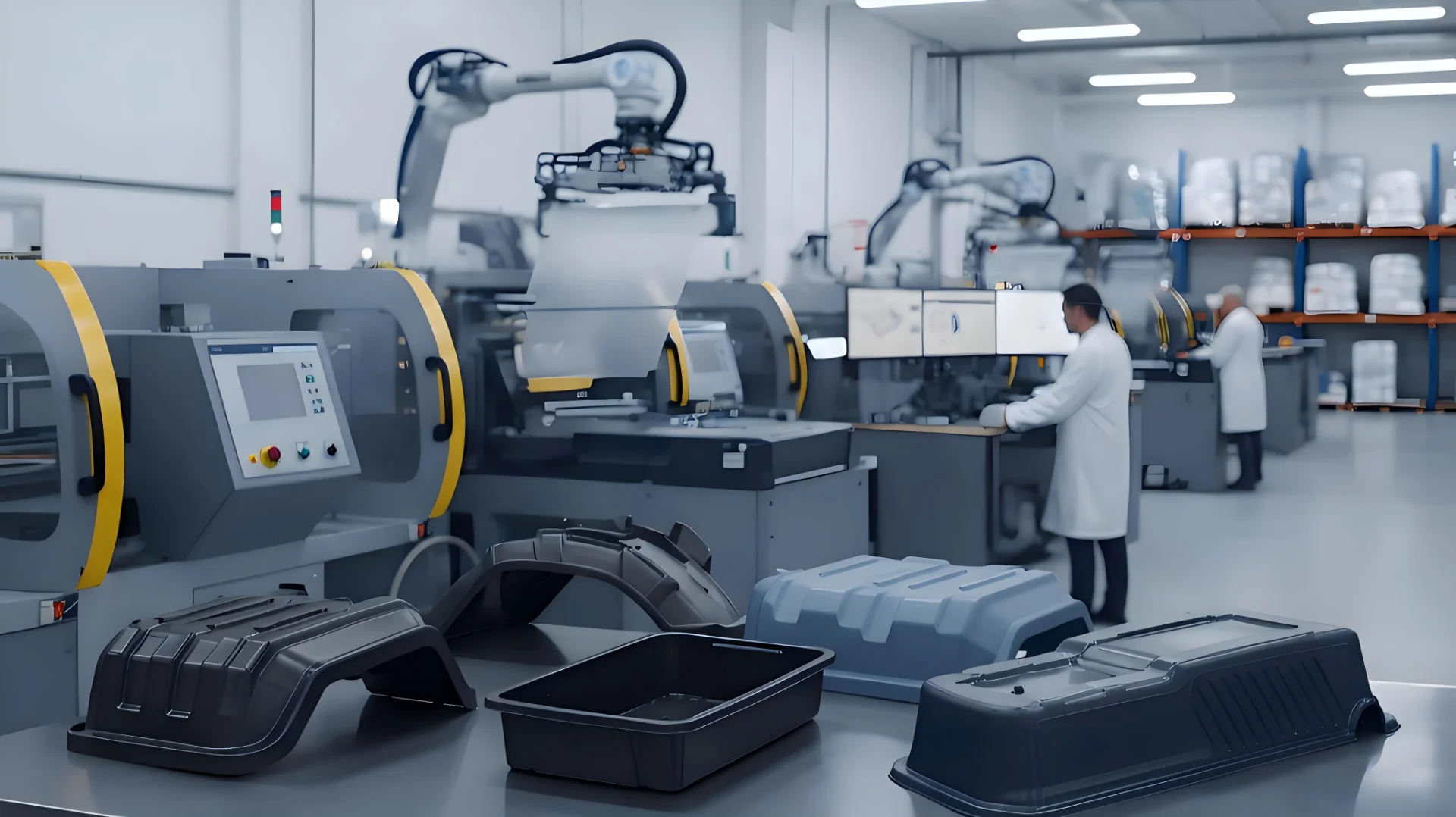
Searches for the top plastic vacuum forming factory in Australia usually start with a drawing on one screen and a deadline on the other. A ranked list tells you which suppliers are visible; it does not tell you who can form your part. The criteria that actually separate leading heavy-gauge thermoforming factories are measurable — sheet gauge range, forming envelope, trimming method, material depth and documented testing. This guide turns those criteria into checks you can run on any shortlist, in Australia or overseas.
- Capability data beats rankings: a factory’s sheet thickness range, maximum forming length and trimming method define what it can actually hold on your part.
- Heavy-gauge thermoforming typically covers processed sheet from 0.5 mm to 15 mm, with formed lengths up to roughly 2,500 mm on large-format machines.
- Material depth is a proxy for competence: leading factories form ABS, PC, HDPE, PP, PMMA and ASA as routine work, not one or two stock sheets.
- A signed-off first article is not evidence of production stability; ask for tensile and heat-deflection data across a pilot run.
- Enclosure work should be qualified against named standards, including UL 94 flammability and IEC 60529 ingress protection.
- Many Australian buyers pair a local partner for prototypes with an overseas manufacturing partner for volume; the same engineering checks apply to both.
What Separates a Top Plastic Vacuum Forming Factory in Australia?
The factories that lead this field are not the ones with the most polished website or the longest list placement. They are the ones that publish verifiable capability data: a defined sheet thickness window, a maximum forming envelope, a stated trimming method, a broad material library and named test standards. In heavy-gauge vacuum forming, those five data points decide whether your part is feasible. Rank every supplier on them before anything else.
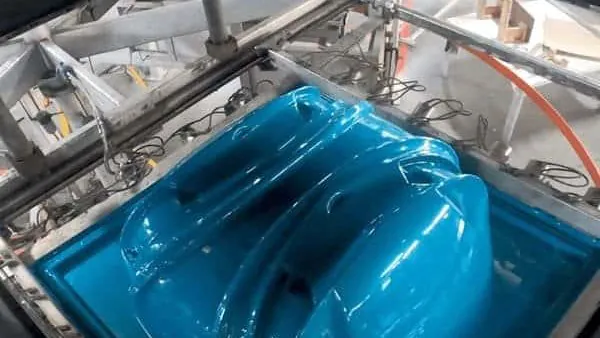
Vacuum forming is the process most people picture: a heated plastic sheet is clamped, draped over a mould and drawn down by vacuum. IQS Directory keeps a useful plain-language overview of the process and its variants. Heavy-gauge — sometimes written heavy gauge or thick-gauge — work is the demanding end of that family, because thick sheet stores a lot of heat and wants to sag, warp and mark unless the heating and forming windows are controlled.
Australia’s industrial base makes this scrutiny worth the effort. Mining support equipment, agricultural machinery, medical and diagnostic devices, transport interiors and retail displays all need formed parts that are large, structural and often weather-exposed. A factory that only forms thin point-of-sale packaging will not survive that workload, and the capability numbers in the next section are how you tell the difference in ten minutes.
Capability Benchmarks: Sheet Gauge, Forming Envelope and Trimming
Three numbers define a heavy-gauge thermoforming plant, and every serious supplier can state them immediately.
The first is the sheet thickness window. Thin-gauge packaging runs well under a millimetre; heavy-gauge structural parts start around 2–3 mm and extend to 15 mm and beyond. The window matters because thick sheet needs zone-controlled heaters, longer soak times and precise top-and-bottom heat balance. A plant that routinely forms 10–15 mm stock has solved sag control, sheet-to-mould contact at depth and differential cooling; a plant that only sees 1 mm sheet has not.
The second is the forming envelope. Parts up to about 2,500 mm long put machine beds, clamping frames and mould handling under real load. Large parts amplify every process weakness: uneven sheet temperature shows up as wall-thickness variation, and mould temperature drift shows up as warp. Ask how the factory verifies sheet temperature before forming — infrared measurement or embedded thermocouples are the credible answers.
The third is trimming. Thermoforming produces a part with web and clamp-frame margins attached, and the trimmed outline is what your drawing actually sees. A 5-axis CNC trimming centre that follows the forming tool datum holds outlines consistent from part to part; hand trimming does not. For housings with mounting holes, cut-outs and flanges, 5-axis trimming is the difference between parts that assemble and parts that fight the assembly line.
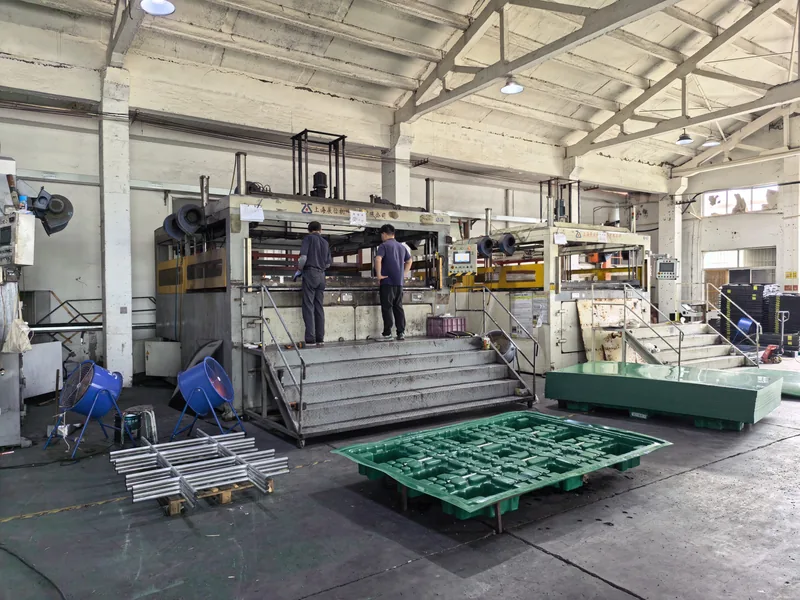
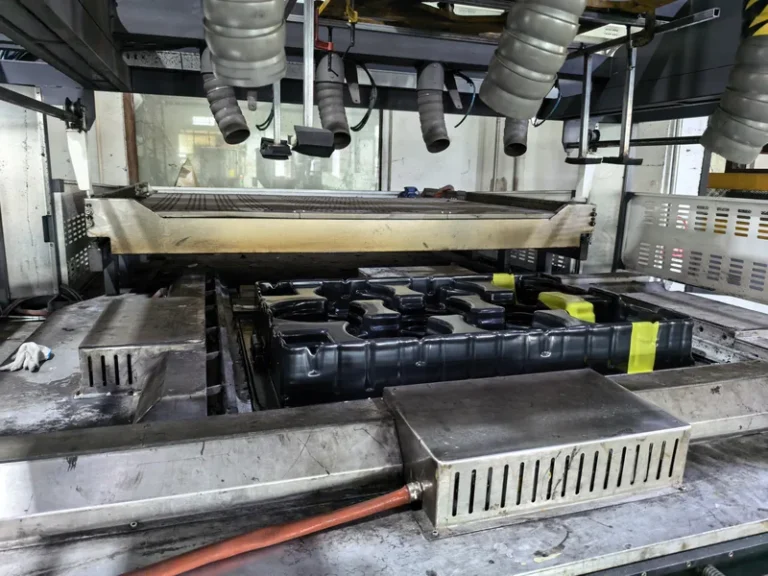
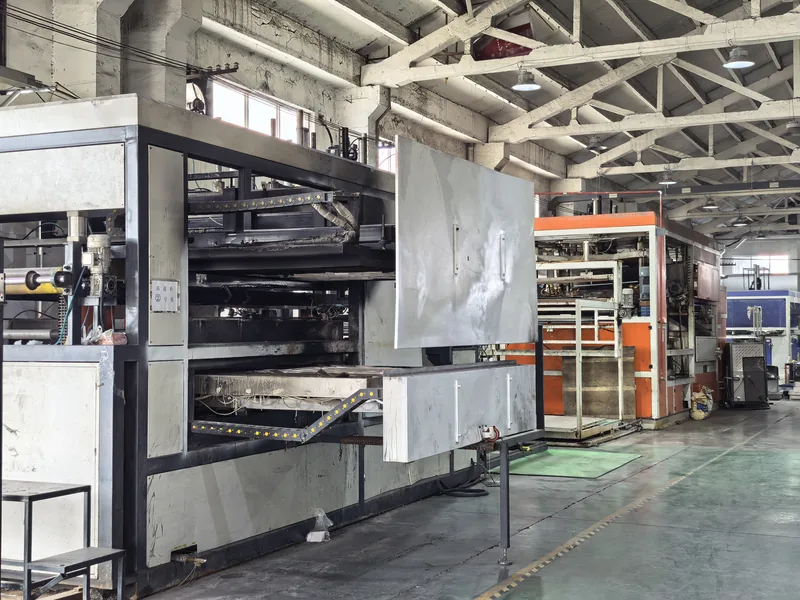
Plants that process sheet from 0.5 mm to 15 mm, form parts up to about 2,500 mm long and trim on 5-axis CNC centres can cover thin packaging gauges and heavy structural panels on one site. ZetarVac runs 20+ vacuum forming and thermoforming machines among 45+ production lines to that envelope. The practical meaning for a buyer is simple: one drawing can move from prototyping through volume without changing process or supplier.
How Do Leading Factories Prove Material and Part Quality?
They put numbers on the sheet. Incoming material is verified against grade specifications, formed parts are validated with tensile, flexural and heat-deflection testing, and electrical enclosures are qualified against flammability and ingress-protection standards. If a supplier cannot name its test methods, its quality claims are marketing copy.
Tensile testing is the baseline. ISO 527-2 defines the tensile test run on thermoformed sheet and formed parts, giving buyers a comparable stiffness and strength figure regardless of which laboratory produced it1. Because forming stretches a sheet unevenly, tensile data on the formed part — not just the raw sheet — is what reveals thin spots and orientation effects.
Heat resistance is the second gate. ASTM D648 and its international counterpart ISO 75-2 specify the heat deflection temperature of a plastic under flexural load, which tells you how much a formed panel or enclosure wall will relax at service temperature2. For equipment housings sitting near motors, drives or hot Australian interiors, heat deflection is frequently the property that disqualifies a material choice.
For enclosures, two more frameworks apply. UL 94 classifies the flammability of plastic materials, and many electrical and medical housings cannot proceed without a rated resin and a forming process that preserves that rating3. IEC 60529 defines the IP code that grades how well an enclosure excludes dust and water4, which is the language every electrical engineer reads on a formed cover.
"A signed-off first article proves the production run will hold the same tolerances."False
A first article is formed under watchful, unhurried conditions; it shows the tool and sheet can work together, not that cycle after cycle will reproduce the result. Without tensile and heat-deflection data taken across a pilot run, dimensional drift on thicker sheet stays invisible until assembly rejects appear.
"Ask for test data across a pilot run, not just one approved part."True
Tensile results to ISO 527-2 and heat-deflection data on parts from several cycles show whether the heating and forming windows are stable. That is the evidence a production release should rest on, and a confident factory will provide it without being chased.
Which Materials Do Top-Tier Factories Form in Volume?
Depth of the material library. A leading factory forms ABS, PC, HDPE, PP, PMMA, ASA and glass-filled sheet as routine production, because Australian end markets — transport, mining support, agriculture, medical and retail — demand different property sets. A supplier limited to one or two stock sheets will bend your design toward its inventory rather than your application.
The table below condenses the material decisions that recur in heavy-gauge vacuum forming:
| Material | Typical formed parts | Key selection property | Watch-outs |
|---|---|---|---|
| ABS | Equipment housings, automotive interiors, guards | Balanced impact strength and formability | Degrades under sustained UV without protection |
| PC | Clear guards, machine covers, protection panels | Impact strength plus clarity | Narrower forming window; scratch sensitivity |
| HDPE | Industrial trays, liners, storage boxes | Chemical and moisture resistance | Higher shrinkage; warpage control needed |
| PP | Trays, boxes, equipment liners | Fatigue and chemical resistance | Sag control on thick sheet |
| PMMA | Display covers, luminaires, retail displays | Optical clarity and surface finish | More brittle than PC; careful heating required |
| ASA | Outdoor housings, exterior automotive parts | UV and weather resistance | Higher material cost |
| PP/GF | Structural industrial and automotive parts | Stiffness from glass fibre | Fibre read-through on formed surfaces |
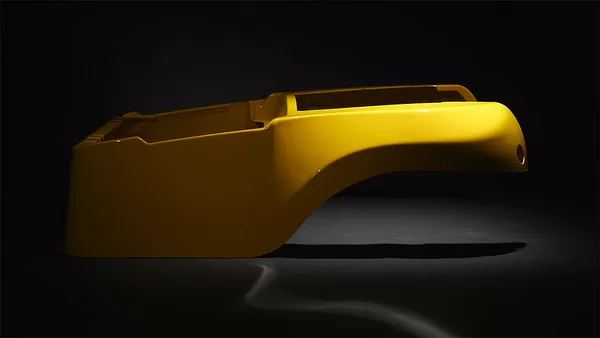
Three real cases show how the choices play out. An agricultural seedling tray in ABS works because the material tolerates wet soil contact, repeated handling and multi-cavity forming at custom cell geometry. A medical equipment housing in PC works because the material delivers impact resistance across a large, complex curved form with custom cut-outs and mounting holes. A PMMA display cover works because clarity is the product. Different property sets, same process — which is exactly why material breadth is a legitimate selection criterion.

"ABS is always the safe default for a heavy-gauge enclosure."False
ABS forms easily and costs less indoors, but it embrittles under sustained UV and falls behind PC on impact. An outdoor housing in plain ABS will chalk and weaken within a few Australian summers, which is why ASA and PC/ABS exist for exposed service.
"Match the resin to the load case and environment first."True
PC for impact and clarity, ASA for weathering, HDPE or PP for chemical exposure, ABS for protected interiors. A factory that forms all of these routinely can follow your application instead of its stock sheet, and it will flag the conflict early in design review.
What Should You Check Before Shortlisting a Supplier?
Five checks, in writing: the stated sheet gauge range, the maximum forming envelope, the trimming method, the named test standards, and whether prototyping and volume production run on the same plant. A supplier that hesitates on capability data will hesitate on quality data too. These five answers separate a thermoforming manufacturer from a sheet-trimming service within one email exchange.
Pressure forming belongs in this conversation as well. Where vacuum forming draws roughly one atmosphere against the sheet, pressure forming adds air pressure on the top side for sharper texture and crisper detail — useful when a housing face carries a branded texture or fine ribs. Ask which of the two a proposed part actually needs; specifying pressure forming when vacuum forming suffices adds tooling cost without adding function.
Reference monthly capacity of about 100,000–200,000 pieces, with prototyping, small batch and large batch production supported on the same equipment, is a realistic benchmark when you qualify a factory. Ask any supplier — local or overseas — to state its equivalent numbers in writing before you commit tooling.
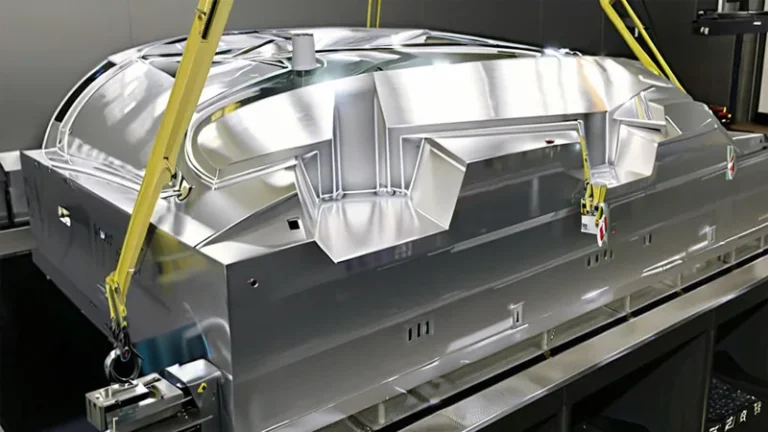
Tooling economics deserve the same scrutiny as forming capability. Moulds for heavy-gauge work cost a fraction of injection tooling, but the number that matters is the finished, trimmed part. Sheet utilisation — how much of the sheet becomes product versus clamp-frame waste — plus forming cycle and trimming time explain most of the spread between two quotes for the same drawing. If you want to see how an integrated plastics manufacturer structures forming work end to end, the service overview on zetarvac.com lays out the path from material selection to finished parts.
"A low tooling quote means the project will come in cheap."False
Tooling is a fraction of total formed-part cost. Sheet yield, forming cycle, trimming time and finishing dominate volume economics, so a cheap mould paired with an inefficient forming window costs more per part within the first few thousand units.
"Compare quotes on total cost per formed part, not on tooling alone."True
Ask each factory to state sheet utilisation, expected cycle time and trimming method. Those three numbers explain most of the spread between quotes for the same drawing, and they are impossible to fake for long once production starts.
Local Australian Capacity and Overseas Manufacturing Partners
The practical picture for Australian buyers is usually hybrid. Local formers earn their place through fast prototypes, design iterations and parts where freight or intellectual property sensitivity dominates. Volume production of large structural parts, however, is increasingly placed with overseas manufacturing partners whose forming envelopes, material libraries and trimming capacity match or exceed local options — provided the engineering discipline travels with the program.
Distance does not change the physics, so it should not change the checklist. Whether the plant is in Melbourne or offshore, insist on the same evidence: capability numbers stated in writing, material certificates for every sheet lot, first-article reports with measured dimensions, and defined process windows for heating, forming and trimming. A supplier that documents its forming window — sheet temperature setpoints, mould temperature, vacuum hold time — is telling you it controls the process rather than trusting the operator.
Logistics change the arithmetic, though. Large formed parts ship inefficiently, so nesting design, freight density and finished-part protection deserve extra attention when the plant is overseas. Against that, lower tooling and per-part costs frequently offset freight at volumes beyond a few hundred units, which is why the hybrid model keeps growing rather than shrinking.
Material depth is verifiable. ZetarVac forms PVC, ABS, HDPE, LDPE, PP, PC, PMMA, PA6/PA66, POM, TPE, TPU, TPV, PC/ABS, ASA and PP/GF — including ABS seedling trays for agriculture, PC housings for medical and diagnostic equipment, and PMMA display covers for retail. That breadth lets a buyer consolidate a multi-material program with one thermoforming partner.
FAQ: Choosing a Vacuum Forming Factory in Australia
What sheet thickness counts as heavy-gauge vacuum forming?
Formed sheet from roughly 2 mm upward is generally treated as heavy-gauge, and capable plants process 0.5–15 mm. The dividing line matters because above about 3 mm you need zone-controlled heating, longer soak times and a deliberate cooling strategy — capability that thin-gauge packaging shops often lack.
How large a part can vacuum forming produce?
Practical forming envelopes on industrial machines reach about 2,500 mm in length. Size itself is not the constraint — uniform sheet temperature over a large area and 5-axis trimming of the formed outline are. Ask a supplier how it heats and trims large parts, not just how big its platen is.
Which standards should an Australian buyer ask for?
Start with ISO 527-2 for tensile validation, ASTM D648 or ISO 75-2 for heat deflection, UL 94 for flammability on electrical housings, and IEC 60529 or NEMA 250 when the part is an enclosure cover. A factory that quotes these unprompted has done this class of work before.
Is vacuum forming cost-effective for low volumes?
Yes, and that is one of its structural advantages. Tooling costs a fraction of injection moulds, so prototyping and small batches are economic, and the same plant can scale to reference volumes of 100,000–200,000 pieces per month. The crossover point depends on part size and volume, not on a fixed rule.
How do I compare two vacuum forming quotes fairly?
Normalise on finished, trimmed parts. Ask both factories for sheet utilisation, expected forming cycle, trimming method, finishing scope and the test data included. The quote that looks cheaper before those items are stated usually becomes the expensive one after assembly.
If you are still researching rather than ready to talk to suppliers, a sensible next step is to explore the vacuum forming process and capability overview or to see how a China-based vacuum forming manufacturer approaches heavy-gauge programs for Australian buyers. Both walk through the capability data above in more detail.
-
ISO 527-2: The standardized tensile test for plastics, run on thermoformed sheet and formed parts to establish comparable stiffness and strength data. ↩
-
HDT: Heat deflection temperature, measured per ASTM D648 or ISO 75-2, indicating the temperature at which a formed panel deflects under a specified flexural load. ↩
-
UL 94: The flammability classification standard for plastic materials, commonly required for electrical and medical equipment enclosures. ↩
-
IP code: The ingress protection rating defined by IEC 60529, grading how well an enclosure excludes dust and water. ↩