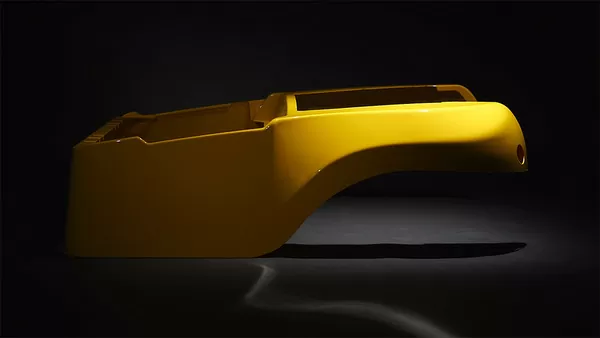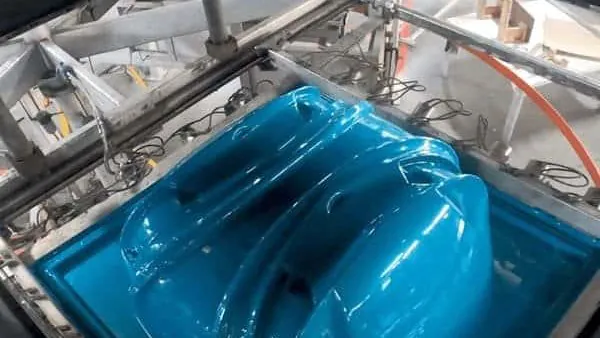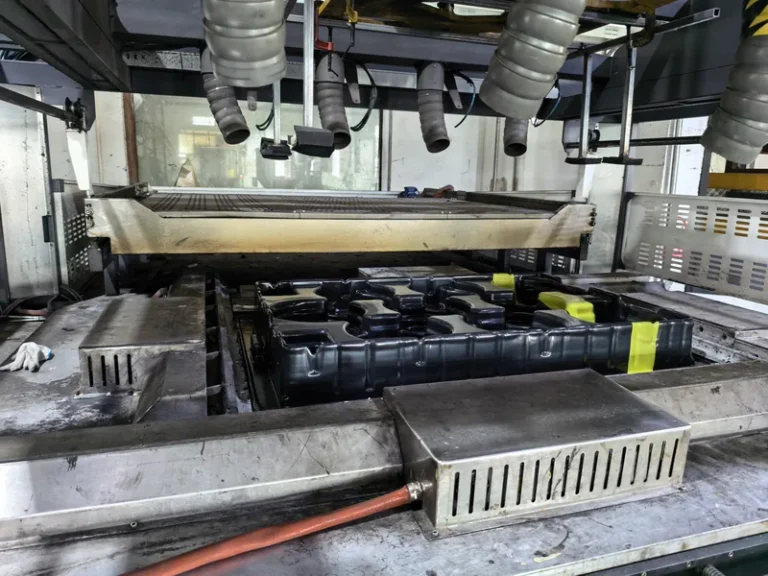

Surface finish looks like a one-line note on a drawing, but on a heavy gauge vacuum formed part it is the combined result of three decisions: the texture cut into the tool, the sheet the part is formed from, and the work done after forming. Align those three and the part ships with a durable finish at minimal added cost. Get them wrong and the project pays for paint, rework and disputes over gloss levels. This guide walks through every finish route used on thermoformed parts, the trade-offs behind each one, and the checks that keep a finish consistent from prototype through production.
- Vacuum formed parts get their finish from four routes: mold texture, sheet selection, applied coatings, and post-forming machining or polishing.
- Mold texture is specified before tooling is cut; it is the most durable finish because it is part of the formed surface, not a layer on top of it.
- Sheet selection controls color, gloss, weatherability and even pre-applied texture before any secondary process is considered.
- Painting and coating solve what sheet cannot deliver, but adhesion must be validated per material on formed coupons, not flat sheet.
- Enclosure-grade finishes inherit flammability and ingress-protection requirements from the end product, and finish choices must respect them.
- An approved first article does not guarantee finish consistency; texture transfer and color depend on a stable process window across sheet lots and shifts.
What Surface Finishes Can Be Applied to Vacuum Formed Parts?
A vacuum formed part receives its finish from four routes: the texture molded into the tool surface, the appearance engineered into the sheet itself, applied finishes such as paint and coatings, and post-forming work including trimming, edge treatment and polishing. Most commercial parts combine two or three of these routes rather than relying on a single one.
The cheapest finish is the one that never becomes a separate operation. Mold texture and sheet selection are absorbed into tooling and raw material, so every part carries them at no marginal cost. Coatings and polishing, by contrast, add a per-part operation with its own labor, cycle time and scrap rate. That economics shapes every decision in this article: push as much of the appearance requirement as possible into the tool and the sheet, and reserve painting and polishing for what they alone can deliver — exact color matching, metallic effects, conductive or antistatic layers, or optical clarity on trimmed edges.
The right mix also depends on what the part is. A machine housing specifies fire performance and ingress protection, so the finish system has to survive alongside those requirements. A seedling tray specifies function, not looks, so sheet color is usually the entire finish decision. A retail display cover lives or dies by clarity, which pulls the specification toward polish and transmittance testing. Finishing is a systems decision, not a cosmetic afterthought.
Mold Texture: The Finish You Build Into the Tool
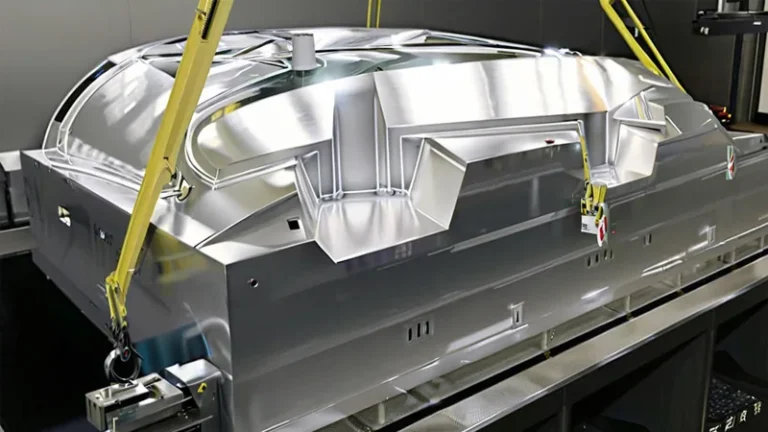
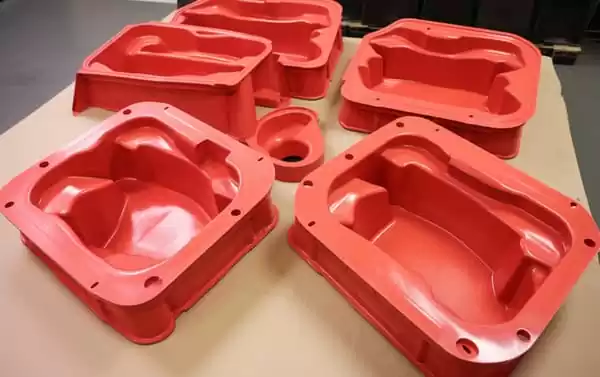
The mold surface is the master for the part surface. Whatever the tool carries — polished, bead-blasted, chemically etched grain, EDM matte or a woodgrain pattern — transfers to every part that forms against it. For heavy gauge thermoforming, texture is a tooling decision with a permanent effect: it costs once at tool build and nothing per part for the life of the program.
Three engineering points drive texture choice. Draft comes first: texture depth increases friction between part and tool, so common practice adds roughly 1 to 1.5 degrees of draft for every 0.25 mm of texture depth, tuned to the material’s shrink and stiffness1. Defect masking comes second: a medium texture hides draw marks, faint webbing between tall features and handling scuffs that would glare on a high-gloss surface, which is why industrial enclosures and equipment liners almost never ship gloss. Release comes third: deep textures grip the sheet longer, so textures are usually graded shallower on steep walls than on flat faces.
Texturing methods differ in what they can produce. Chemical etching reproduces the standard grain libraries, EDM gives uniform matte finishes, and bead blasting produces a soft satin look. Specify a texture plate or code rather than describing the feel in words, and require a sample formed from the actual production sheet before the tool is approved — texture transfer reads differently on a stretched wall than on a flat plaque.
The SPE Thermoforming Division publishes tooling and process guidance that is useful background reading before a texture specification is locked.
"A texture can be added to finished vacuum formed parts just as easily as it can be molded into the tool."False
On a thermoformed part the surface texture is a mirror of the tool face, so it exists only if it is built into the mold before forming. Adding texture afterwards means a paint or coating system with recurring per-part cost, and coatings wear through first on the textured walls that need them most.
"Mold texture must be specified before tooling is cut, together with the draft angles."True
Texture is etched or machined into the mold surface, so a late change means tool rework or a replacement tool. Draft and texture depth interact, and adding 1 to 1.5 degrees of draft per 0.25 mm of texture depth prevents release problems and wall scoring when parts are pulled.
The takeaway for buyers is to treat texture as a tooling specification with a sign-off step, exactly like material and tolerance, rather than a preference raised after first samples arrive.
ZetarVac processes sheet from 0.5 to 15 mm and forms parts up to about 2,500 mm long, so one texture specification has to read correctly across that whole gauge range. A grain that looks right on a 6 mm equipment housing can appear coarse and over-scaled on a 1.5 mm packaging tray.
How Does Sheet Selection Control the Final Finish?
Sheet selection sets color, gloss, weatherability and even a pre-applied texture before the sheet ever reaches the vacuum forming oven. An embossed or capped sheet delivers a finish that paint would otherwise have to create, at no marginal cost beyond the material itself.
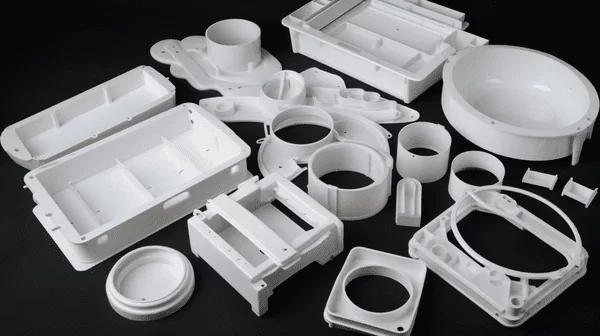
The materials library does most of the work here. Colored ABS covers the majority of equipment housings and cases. ASA and ASA-capped ABS carry outdoor color without paint. PC gives the tough, lightly glossy surface needed for guards and protective covers, while PMMA gives the highest gloss and clarity for display parts and luminaires. PP and HDPE serve trays, liners and boxes where function and texture outweigh gloss, and TPE liners add soft-touch surfaces where the application wants them. Embossed sheet adds a factory-applied texture that transfers through forming and never wears off. The table below condenses the common pairings:
| Material | Finish it delivers | Typical fit |
|---|---|---|
| ABS | Colored, textured or gloss surfaces | Equipment housings, cases, guards |
| ASA / ASA-capped ABS | UV-stable color without paint | Outdoor enclosures, exterior parts |
| PC | Tough, lightly glossy, clear options | Guards, protection covers |
| PMMA | Highest gloss and optical clarity | Display covers, luminaires |
| PP / HDPE | Functional, embossable, matte | Trays, liners, storage boxes |
| TPE | Soft-touch liner surfaces | Soft liners and seals |
Gauge changes how these choices behave. A cap layer that reads cleanly on 3 mm sheet can stretch thin over deep draws on a 10 mm panel, so finish and thickness should be chosen together — the earlier guide on the maximum thickness of a part that can be formed by vacuum forming covers that dimension in detail.
Painting and Coating Formed Parts
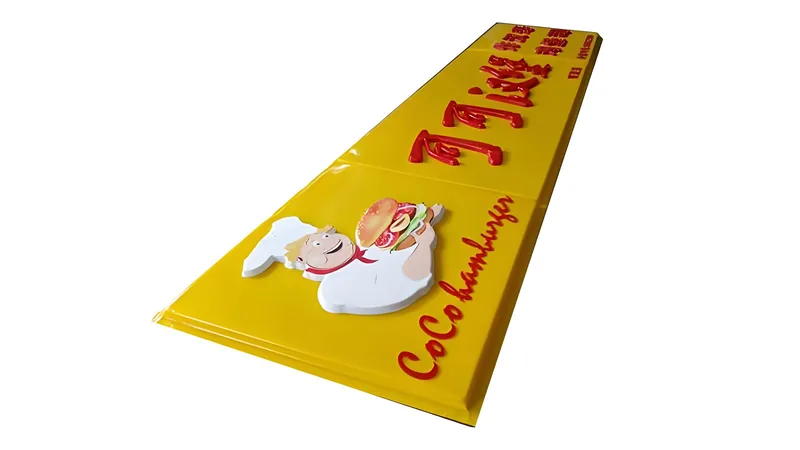
Paint earns its place when the sheet cannot deliver the requirement: exact brand colors, metallic or soft-touch effects, antistatic or conductive layers for electronic enclosures, or graphics that must survive abrasion. It is the only finish route with full color freedom, and the only one priced per part.
Adhesion is the failure mode to manage. ABS, ASA and PVC accept coatings after simple cleaning, while PP and HDPE have low surface energy and need flame treatment, plasma treatment or a dedicated primer before any coating will hold. Validate adhesion on coupons cut from formed parts, not on flat sheet, because the thermal history of forming changes the surface the coating actually meets. Keep any bake or cure schedule below the material’s heat deflection temperature, or the part will relax and pull out of tolerance2.
Masking is the second cost driver. Trimmed edges, mounting holes and clip features often stay uncoated, and the masking operation is usually more labor than the painting itself. Budget coatings the way you budget machining: as a process step with fixtures, cycle time and inspection, not as an add-on at the end.
"Plastic sheet accepts paint the same way regardless of material, so adhesion problems are rare."False
Surface energy differs sharply across thermoforming materials. ABS, ASA and PVC take coatings readily, while polyolefin surfaces such as PP and HDPE repel paint unless they are flame-treated, plasma-treated or primed. Skipping material-specific adhesion validation is the classic root cause of paint peeling in the field.
"Paint adhesion has to be validated on coupons cut from formed parts, not on flat sheet."True
Forming stretches and heats the sheet, which changes the surface the coating will actually meet. A coupon taken from a formed part carries the same thermal history and biaxial orientation, so cross-hatch and pull-off results on it predict service behavior.
Trimming, Edges, and Clear Part Finishing
Trimming is the most underestimated finish step. A formed part leaves the tool with excess sheet around the perimeter, and the quality of that cut decides whether the part needs deburring and sanding or goes straight to assembly. Edge finishing for formed parts is mostly about consistency: the same trim line and the same burr level, part after part.
ZetarVac trims formed parts on a 5-axis CNC centre, and the trimmed outline follows the forming tool. Because the trim path and the formed geometry come from the same master, edge finishing after forming is reduced to deburring and cosmetic touch-up rather than re-fixturing each part.
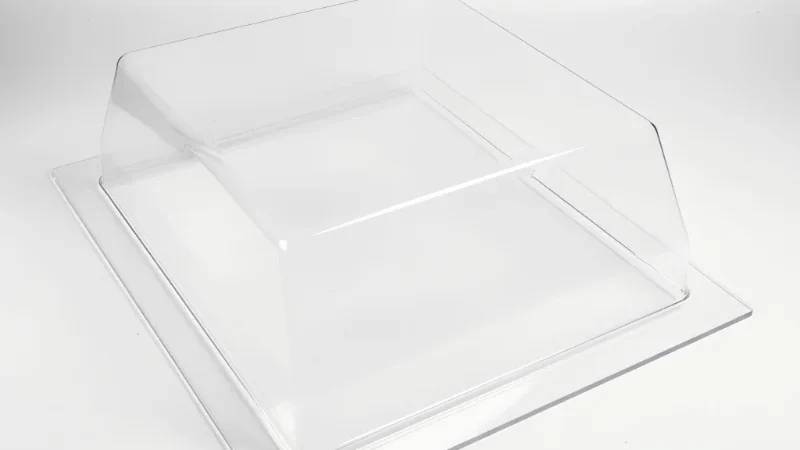
Clear parts carry their own finishing rules. A PMMA display cover or a PC guard is judged on clarity, so trimmed edges are polished — flame or mechanical polishing on acrylic edges, careful deburring on polycarbonate. Clarity itself is a measurable finish property: ISO 13468 specifies the measurement of the total luminous transmittance of transparent plastics, and it is the reference behind the clarity figures quoted for clear formed covers3.
What Inspection Criteria Apply to Finished Vacuum Formed Parts?
Finished surfaces are inspected against an agreed standard sample under defined lighting and viewing distance, backed by objective tests where the application demands them.
Two standards dominate enclosure work. UL 94 classifies the flammability of plastic materials, and formed equipment enclosures are commonly specified against it because the cover is part of the electrical assembly4. IEC 60529 defines the degrees of protection provided by enclosures — the IP code — so a formed cover meant to seal electronics has to be evaluated for the rating the end product claims5. Finish choices interact with both: a heavy texture or a paint system must not compromise the material grade or the gasket face that delivers the rating.
For appearance parts the working tools are simpler: a golden sample approved at first article, a texture plate for grain comparison, and gloss or color readings taken per shift or per sheet lot. Log the readings. At production volume, finish drift found late is drift spread across a whole week of parts.
"A first article with an approved finish proves the finish will stay consistent through the production run."False
First-article approval only validates the setup at that moment. Texture transfer and color both drift with new sheet lots, oven temperature profiles and tool temperature, so a run started next month on different sheet can look visibly different from the approved sample.
"Run-to-run finish consistency comes from a controlled process window, not from the first article alone."True
Sheet lot control, oven profile records and tool temperature checks at defined intervals hold gloss and color in band across shifts. Define these checks in the control plan before ramp and log them per shift, so any visual drift can be traced to its cause.
FAQ
Does mold texture affect the draft angles I need?
Yes. Texture depth raises friction between the part and the tool, so textured surfaces need more draft than polished ones. A working rule adds 1 to 1.5 degrees of draft per 0.25 mm of texture depth, tuned per material, and it is cheapest to settle this before tooling is cut.
Can a vacuum formed part be painted any color?
Practically yes, but the base material decides how. ABS, ASA and PVC paint directly after cleaning, while PP and HDPE need surface treatment or a specific primer first. If the color is stable across a program, colored or capped sheet is usually cheaper than paint because it removes the operation entirely.
What finish works best for an outdoor enclosure?
An ASA sheet or an ASA-capped ABS sheet gives UV-stable color and weathering resistance without paint, and a medium mold texture masks weathering and handling over years of service. Painted ABS can work outdoors, but the coating becomes the UV barrier and has to be maintained.
How do you keep a matte texture consistent across large formed parts?
Consistency on a large part comes from uniform mold temperature and even sheet heating, because texture transfer sharpens wherever the sheet runs hot. On parts formed up to about 2,500 mm long, oven profile control and per-shift tool temperature checks are what keep the grain reading the same from end to end.
Does a textured finish add cost to a project?
It adds a one-time tooling cost and removes a recurring per-part finishing cost. Over the life of a program, molded texture is almost always the cheaper route, and it also hides the small surface defects that would otherwise push scrap rates up on gloss parts.
If you are still mapping finish options before comparing suppliers, explore the vacuum forming process guide to see how tooling, sheet selection and finishing fit together, or walk through the capabilities of a China vacuum forming manufacturer to understand how these finishes are produced on a single shop floor.
-
Draft angle: The taper built into a formed part’s walls that allows the part to release from the mold; textured surfaces require more draft than polished ones. ↩
-
HDT: Heat deflection temperature, the temperature at which a plastic deflects under a specified flexural load; cure and bake schedules must stay below it. ↩
-
Total luminous transmittance: The percentage of visible light passing through a transparent material, measured per ISO 13468 for clear formed parts. ↩
-
UL 94: The standard classification of the flammability of plastic materials, widely specified for formed electrical equipment enclosures. ↩
-
IP code: The ingress protection rating defined by IEC 60529, describing how well an enclosure seals against dust and water. ↩