

Recycled content is now a standing line item in RFQs for heavy-gauge thermoformed parts, next to tolerances and material callouts. Buyers want the sustainability story and the cost relief; engineering teams worry about sag behavior, lot-to-lot drift, and scrap rates that quietly erase the savings. Both concerns are legitimate. Recycled sheet — in-house regrind or post-consumer resin — changes how a sheet heats, sags, and shrinks, and it changes where material yield is won or lost across a run. This article walks through the engineering side of the question: how recycled sheet behaves during vacuum forming, what regrind ratios are workable, where yield actually gets lost, and how to specify and test sheet before a run goes sideways.
- Recycled content shifts melt flow, sag timing, and shrinkage; test the sheet, not the resin datasheet.
- Material yield in heavy-gauge thermoforming is dominated by the trim skeleton and start-up scrap, not by recycled content itself.
- In-house regrind is viable at a fixed, controlled blend for non-cosmetic parts; cosmetic enclosures and clear parts usually stay virgin.
- Food-contact thermoformed trays are restricted: EU 10/2011 governs what recycled content can touch food.
- Specify per-lot melt flow, heat deflection, and tensile data; one first-article pass does not prove lot stability.
- Ask suppliers for regrind ratio, source declaration, and drying records as part of the sheet specification.
Why Recycled Sheet Behaves Differently Under Heat
Every heating cycle a polymer survives shortens and rearranges its molecular chains. Recycled sheet carries at least one more heat history than virgin sheet, so melt flow index drifts upward1 in many resins and the softening window narrows. On the machine this shows up first as sag: the sheet droops earlier, and unevenly across the width when the blend is not homogeneous. Sag is the process thermometer in vacuum forming, so a sheet that sags differently is, for production purposes, a different material.
Thickness amplifies the problem. Heavy-gauge work runs sheet from 0.5 to 15 mm, and thick sheet holds a larger thermal gradient between its faces; a recycled blend with a broader softening range turns that gradient into visible thickness variation after forming. Hygroscopic materials such as ABS, PC, and PA6 add a second failure mode when drying records are missing — moisture in the regrind flashes to vapor under the heater and blisters the sheet surface.
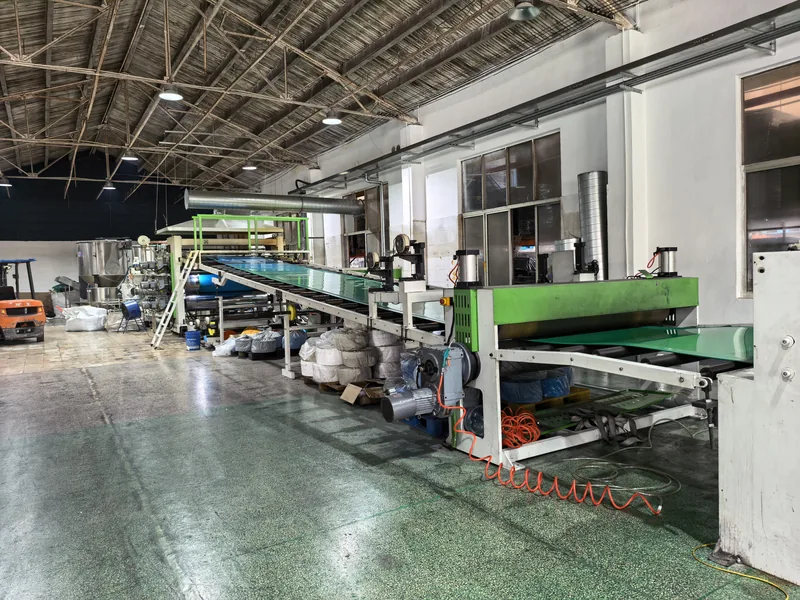
None of this argues against recycled sheet. It argues for retuning: heater zone settings, forming temperature, and vacuum ramp all shift with the blend. Teams that run recycled sheet as if it were virgin with a color tint buy webbing, thin corners, and rejected start-ups that cost more than the resin saved.
Can Recycled Sheet Meet the Mechanical Requirements of a Formed Part?
Usually yes for non-cosmetic, non-load-critical parts, provided the sheet is tested per lot rather than assumed from the resin datasheet. Chain shortening bites impact strength and elongation first, while tensile strength and stiffness of PP, HDPE, and ABS typically stay within a few percent of virgin at moderate regrind ratios.
Test against the same standards you would apply to virgin material. ISO 527-2 defines the standard tensile test for plastics and is the direct comparison point between recycled and virgin sheet2. For panels and enclosures that carry load near heat sources, ISO 75-2 defines the heat deflection temperature under load — the number that tells you where a formed panel stops carrying its design load3.
Impact is where recycled content usually shows its age, and formed parts concentrate stress anyway: corners thin during draw and the trim line leaves a stress edge. For a tray or liner that sees drops and rough handling, insist on impact data measured on the actual sheet blend, not generic resin values.
"Recycled thermoforming sheet always fails earlier in service than virgin sheet."False
Degradation tracks the polymer, its heat history, and the regrind ratio, not the recycled label. Controlled PP or HDPE regrind at moderate percentages routinely tests within a few percent of virgin on tensile and flexural properties. Blanket rejection of recycled material raises cost without an engineering reason.
"Mechanical properties must be verified per lot with standard tests, not inherited from the resin datasheet."True
Each reprocessing cycle shortens polymer chains, so datasheet values for the original resin do not describe the sheet on your machine. Require lot-level tensile and heat deflection reports before release, and reject on the numbers.
Cosmetic and optical requirements shrink the space further. Clear PC and PMMA parts are graded on total luminous transmittance4, and recycled content reliably lowers clarity and adds color drift, which is why clear guards and display covers are almost always specified virgin.
Where Does Yield Actually Get Lost in a Vacuum Forming Run?
Two places dominate: the trim skeleton and the start of the run. The skeleton — formed sheet cut away at trimming — commonly represents 20–40% of sheet area on awkward parts, and start-up sheets lost while heaters stabilize add several more before the first good part.
Skeleton loss is a geometry and nesting problem. With a maximum forming length of about 2,500 mm, most industrial parts can be nested two or more per sheet, and each extra part per sheet takes a direct bite out of scrap. Start-up loss is a stability problem, and recycled sheet raises it: broader sag behavior means more retuning of heater zones per lot, and operators burn extra sheets finding the new setting.

Trimming quality also feeds yield. On a 5-axis CNC trimming centre the cut outline follows the forming tool, so parts are trimmed to the same reference every time — which means dimensional rejects from trimming are usually a shrinkage or setup issue rather than random cutting error. Most recurring defects have known causes; the common thermoforming faults guide walks through the failure modes worth checking first.
With sheet thickness processed from 0.5 to 15 mm, a maximum forming length of about 2,500 mm, and 5-axis CNC trimming available, nesting two parts per sheet instead of one is often the single largest material-yield improvement available on a heavy-gauge thermoforming project — the trim skeleton dwarfs almost every other loss.
What Regrind Ratio Is Safe for Thermoformed Parts?
For non-cosmetic parts, a fixed, controlled blend of in-house regrind into virgin resin is the common working approach; cosmetic housings and clear parts usually stay all-virgin. There is no universal safe percentage: the workable number depends on the polymer, the number of prior heat histories, and how far the part draws, so it is established by trial on the actual sheet and then locked.
| Sheet option | Cosmetic quality | Formability window | Typical use | Specification risk |
|---|---|---|---|---|
| All-virgin sheet | Best, stable sag | Widest | Clear guards, display covers, tight-draw parts | Minimal |
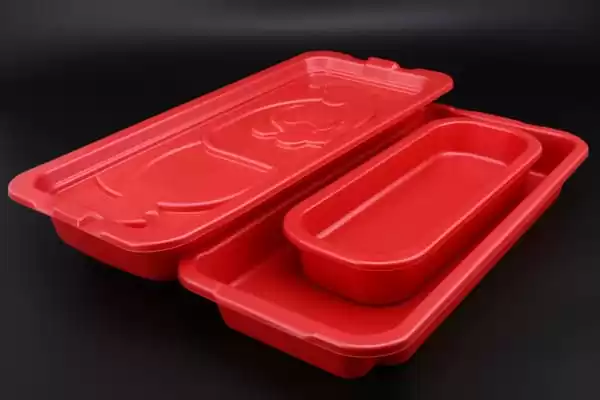
| Virgin + controlled in-house regrind | Good on textured or non-cosmetic surfaces | Moderate; heater zones need retuning | Industrial trays, equipment liners, storage boxes | Low to medium with lot control |
| Supplier post-consumer blend | Variable lot to lot | Narrower; expect more start-up scrap | Non-cosmetic structural parts | Medium to high; audit the source |
"All trim skeleton scrap can be reground and fed straight back into the same parts."False
Skeleton scrap carries texture transfer, trimming burns, and unknown heat histories; fed back uncontrolled, it drags contamination into every sheet. The visible result is uneven sag, weak corners, and a rejection rate that climbs until someone stops the line.
"In-house regrind is usable at a controlled ratio after cleaning, drying, and melt-flow screening."True
Grind clean, dry to specification, screen melt flow against a defined window, and blend at a fixed percentage with traceability. That discipline is the difference between regrind and scrap.
Whatever ratio you settle on, treat it as a specification parameter: state the blend percentage and its tolerance on the process traveler, and keep each sheet lot traceable to one blend record. A ratio that silently drifts upward eventually presents itself as a mystery defect nobody can reproduce.
How Should You Specify and Test Recycled Sheet?
A recycled sheet specification needs more fields than a virgin one. Require a source declaration (in-house regrind, post-industrial, or post-consumer), a regrind percentage with a tolerance band, per-lot melt flow data against a defined window, drying records for hygroscopic resins, color measurement, and density. For enclosures, UL 94 sets the flammability classes required for many thermoformed equipment housings, and the recycled blend must meet the same V-rating the enclosure was designed around.
For anything that touches food, the regulatory answer comes first: EU 10/2011 governs plastic materials and articles intended to come into contact with food, and it sharply restricts mechanically recycled content in those applications5. Most recycled thermoforming therefore serves industrial trays, logistics, agricultural, and non-cosmetic structural uses rather than food packaging.
Then define the incoming test plan: tensile per lot, heat deflection for load-bearing panels, and appearance inspection at the heater. Write pass and fail limits into the drawing package so acceptance is decided by numbers, not negotiated at the machine.
"Passing the first article proves the recycled sheet is ready for production."False
A first article samples one sheet from one lot. Recycled material drifts lot to lot in melt flow, color, and contamination, so one good part says nothing about lot forty.
"Production readiness comes from a per-lot control plan, not from a single approval."True
Define incoming checks — melt flow, appearance, moisture — with pass and fail limits before the first run. Stability then becomes a property of the process, not of luck.
Is Recycled Sheet the Right Choice for Your Application?
It depends on the part class. Industrial trays, equipment liners, storage boxes, and non-cosmetic structural parts are the natural fit for controlled regrind blends, while cosmetic housings, clear guards, and display covers usually stay virgin.
Equipment housings and automotive interior parts sit in between: they depend on the governing material specification, where PC/ABS or PP/GF callouts usually lock the sheet to qualified sources. Clear PC and PMMA parts stay virgin for clarity. The heavy-gauge material selection guide compares ABS, HDPE, and PC in detail, and the step-by-step process walkthrough shows where each of these decisions lands on the shop floor.
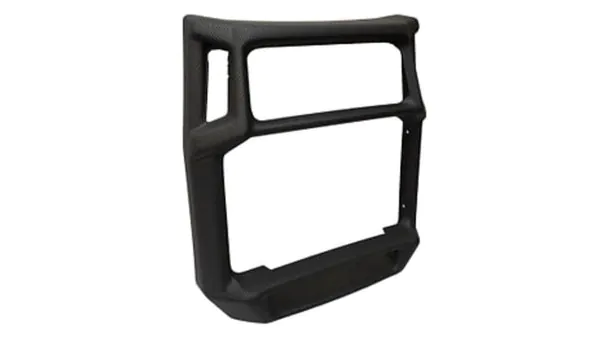
Because prototyping, small batch, and large batch production are all supported across 45+ production lines, a regrind ratio can be proven on a short run with real heater settings and real inspection before it is written into the production specification.
One framing keeps the decision honest: recycled content is a resin decision, while material yield is a process decision. The cheapest sheet wins nothing if the skeleton and start-up scrap balloon; the tightest process wins nothing if the sheet specification is uncontrolled. Manage both together and recycled thermoforming pays for itself.
FAQ
Does recycled content change forming temperature or cycle time?
Usually the heater settings rather than the cycle time. Recycled sheet often sags earlier, so zones are retuned downward or redistributed; once set, cycle time typically lands within a few percent of the virgin baseline for the same part and gauge.
Can recycled sheet be used for food-contact thermoformed trays?
Rarely, and only under specific regulatory paths. EU 10/2011 restricts mechanically recycled content in food-contact plastic articles, so most recycled thermoformed trays serve industrial, logistics, and agricultural applications instead.
How much does recycled sheet actually save?
It depends on polymer markets and on how much material you buy. The durable saving is engineering-driven: controlled regrind of your own trim scrap converts a disposal cost into feedstock, while purchased recycled resin shifts with market prices.
Does recycled content affect tolerances on formed parts?
Shrinkage variance is the main risk. Because the trimmed outline follows the forming tool, higher shrinkage drift shows up directly in final dimensions, so dimensional parts made from recycled sheet need tighter shrinkage control and more frequent first-off checks.
Where can I read more before fixing a material callout?
Start with the process-level guides, then move to supplier-level pages once the material decision is framed. Explore the vacuum forming hub to see how sheet behavior, tooling, and material selection connect across the whole process, then review how an experienced vacuum forming manufacturer in China controls sheet lots and forming parameters, and walk through the integrated service scope when you begin comparing suppliers.
-
MFI: Melt flow index, a measure of how easily molten plastic flows under a fixed load, used to track polymer degradation in recycled sheet. ↩
-
ISO 527-2: The standard tensile test for plastics, used to compare mechanical properties of recycled and virgin thermoforming sheet. ↩
-
HDT: Heat deflection temperature under flexural load, defined by ISO 75-2; marks the temperature where a formed panel stops carrying its design load. ↩
-
ISO 13468: The standard for total luminous transmittance of transparent plastics, used to grade clear formed parts. ↩
-
EU 10/2011: The EU regulation on plastic materials and articles intended to come into contact with food, which constrains recycled content in food-contact thermoformed trays. ↩