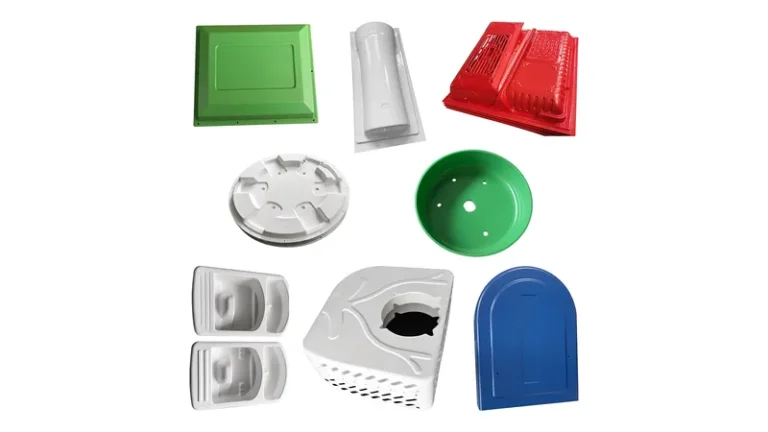
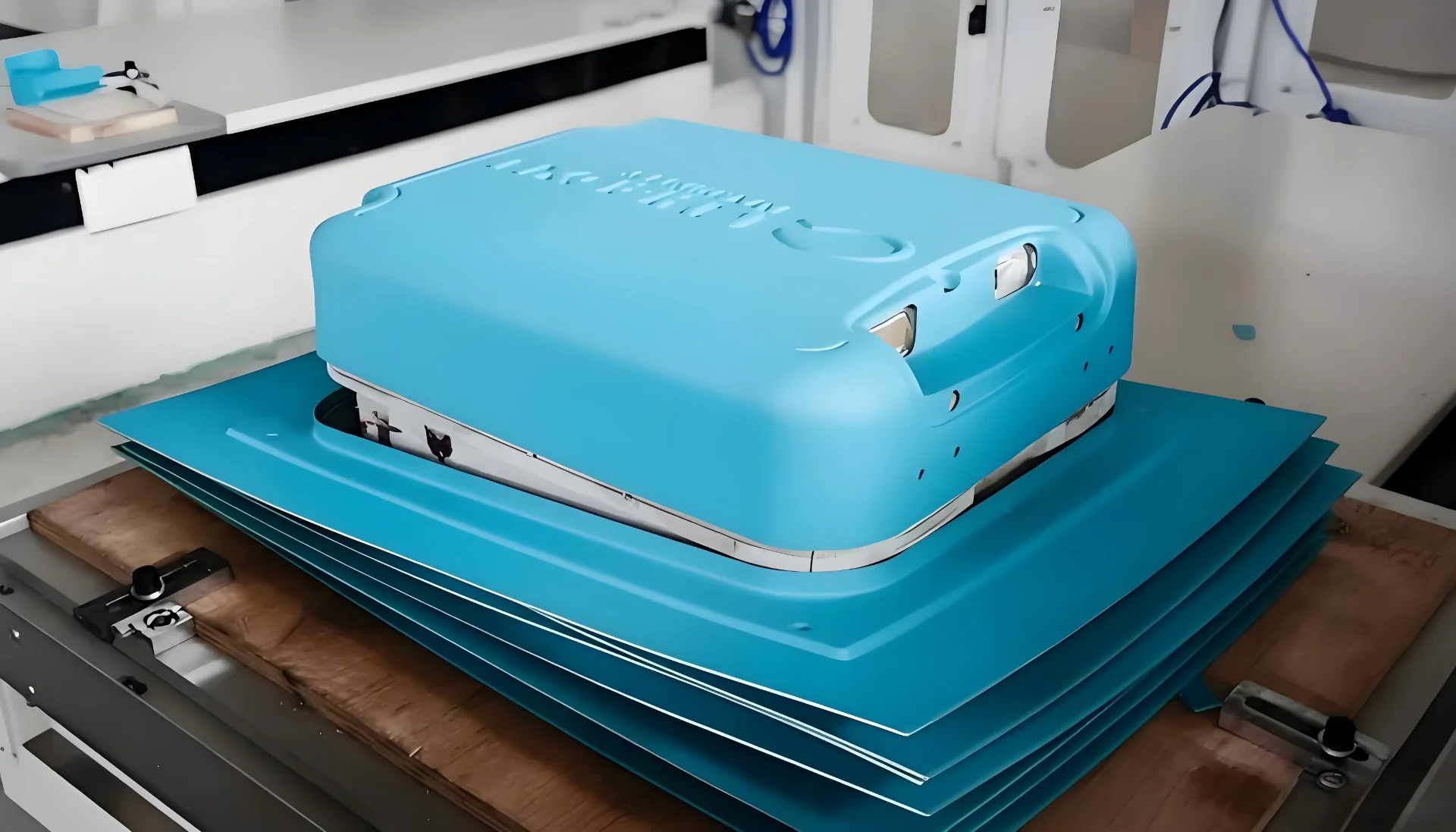
When procurement teams search for the top plastic vacuum forming factory in USA, the list itself matters less than the evidence behind each name. A heavy gauge thermoforming partner is judged on sheet gauge range, maximum forming size, trimming accuracy, material traceability and the way process parameters are recorded cycle after cycle. This guide converts the usual supplier shortlist into engineering checks you can run during supplier selection, so a vacuum forming source is evaluated on forming capability rather than website polish. The same checklist works whether you are qualifying a domestic shop or comparing it against overseas capacity.
- Heavy gauge vacuum forming covers sheet from roughly 0.5 mm to 15 mm; part class, not machine count, decides which window you need.
- A maximum forming length near 2,500 mm lets large enclosures, machine guards and logistics trays come out of one thermoforming cycle.
- 5-axis CNC trimming that follows the forming tool protects edge quality and hole position better than manual finishing.
- Formed-sheet tensile data and heat deflection data say more about your part than resin datasheets ever will.
- Compare suppliers on forming window control, trimming scope and documentation before comparing piece price.
- Global alternatives, including China-based vacuum forming manufacturers, deserve the same checklist as domestic options.
What Defines a Top Plastic Vacuum Forming Factory in the USA?
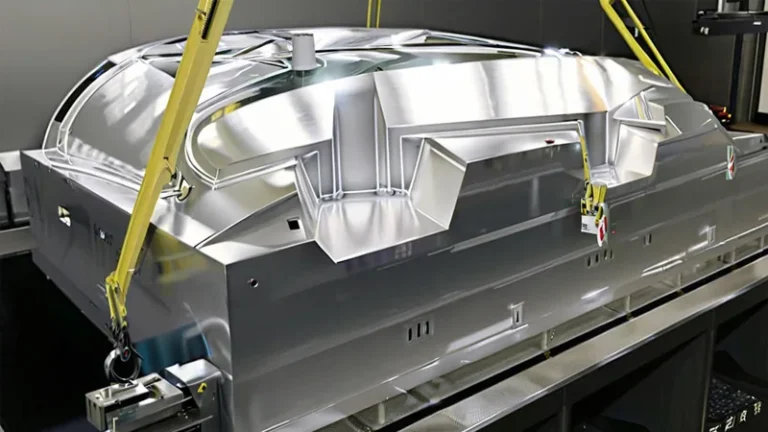
A top plastic vacuum forming factory in the USA is defined by process control over heavy gauge sheet, not by list placement. Three benchmarks decide most programs: a sheet thickness window that covers your part class, forming length near 2,500 mm for large enclosures, and CNC trimming that follows the forming tool. Certificates, capacity figures and material options all hang off those three capabilities.
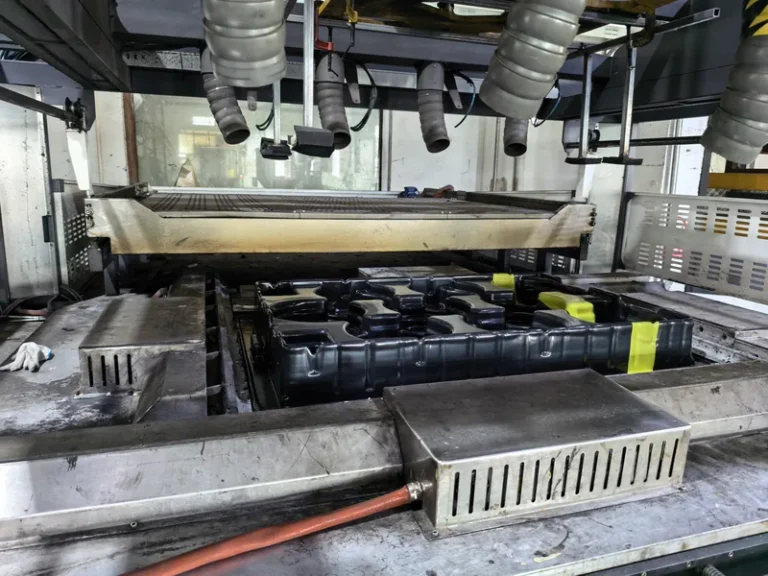
In heavy gauge work1, a shop heats cut sheet in zoned ovens, drapes it over a machined mold under vacuum, and cools the part on the tool before trimming. What separates leading factories from general job shops is how tightly those steps are instrumented: the number of independently controlled heater zones, vacuum ramp control, plug assist availability for deep draws, and mold temperature regulation held across a run. Each variable shows up directly in wall thickness distribution and post-trim dimensional scatter.
When you audit a shortlisted supplier, ask for maximum sheet size and forming depth per machine, the draw limits they respect per material, and how trimming fixtures are qualified. A factory that answers with specific numbers — for example, sheet from 0.5 to 15 mm and forming length near 2,500 mm — is describing a plant built around heavy gauge programs rather than a shop that occasionally forms thick sheet.

ZetarVac processes sheet from 0.5 to 15 mm and forms parts up to about 2,500 mm long, with 5-axis CNC trimming that follows the forming tool. For a buyer, that combination means large enclosures, guards and logistics trays can come off one forming cycle and one trimming setup instead of being split into joined pieces.
The full capability context is summarized in the ZetarVac vacuum forming process overview, which maps these benchmarks onto typical part families.
How Thick Can Thermoforming Sheet Go Before Accuracy Suffers?
Commercial heavy gauge shops form sheet from about 0.5 mm to 15 mm, but the practical window narrows with material and geometry. Thin PVC and LDPE packaging sits at the low end; ABS, HDPE and PP trays and housings cluster between 3 and 10 mm; PC guards and structural panels push toward 15 mm, where heating time, vacuum demand and cooling all grow and tolerance risk rises with them.
Engineering ranges help frame the conversation. Sheet preheat for ABS typically runs around 130–180 °C depending on gauge and heater type, PC needs higher forming temperatures and slower ramps to avoid bubbling, and vacuum at the forming station usually reaches 0.07–0.09 MPa for heavy gauge work. These are conventional windows, and exact settings depend on material, machine and tool — which is exactly why documented settings per part matter more than generic claims.
The failure modes also change with gauge. Thick sheet amplifies chill marks where cold tool contact freezes the surface, webbing between deep features, and thinning at tight radii. High draw ratio parts2 need plug assist or pre-blowing to keep wall distribution usable. Reputable suppliers verify wall thickness with sectioned parts or ultrasonic spot checks and confirm flatness after full cooling, not while the part is still warm on the tool.
"Thicker sheet always gives you tighter tolerances on a formed part."False
Heavy gauge sheet above roughly 6 mm stores more heat and cools unevenly against the tool, which pushes warpage and flatness error the other way. Tolerance is governed by temperature uniformity, draw ratio and mold temperature control, not gauge alone. Specifying thickness as a proxy for accuracy usually buys sheet you cannot hold.
"A documented forming window is what makes dimensions repeat in vacuum forming."True
Oven zone settings, sheet preheat time, vacuum ramp and mold temperature recorded per cycle are the variables that decide part-to-part agreement. A supplier who can show those records can usually show dimensional repeatability too. Ask for the process sheet, not just the part print.
Which Material and Quality Standards Separate Leading Suppliers?
The leaders are the factories that test the formed part, not the raw sheet, and that reference the standards your industry already requires. For formed equipment housings and electrical covers, UL 943 is the flammability standard for plastic materials that defines the burn classifications many end customers mandate before a thermoformed enclosure can ship. For structural properties, ASTM D6384 — the standard tensile test run on thermoformed sheet — specifies how tensile strength and elongation are measured so formed-sheet results can be compared across suppliers. Heat resistance is confirmed the same way: ISO 75-25 defines the heat deflection temperature of plastics under flexural load, which tells you where a formed panel starts to soften in service.
Material selection follows the application. ABS remains the default for equipment housings and automotive interior parts; PC brings impact strength and clarity for guards and protection covers; ASA holds color and gloss on outdoor equipment; HDPE and PP serve industrial trays and liners; PMMA covers displays and luminaires where optical clarity matters; TPE and TPU supply soft liners and flexible protection parts. A supplier worth shortlisting maintains grades across these families and traces every sheet lot to a certificate.
The ZetarVac material library covers ABS, PC, HDPE, PP, PVC, PMMA, ASA, PC/ABS, PA6/PA66, POM, TPE, TPU and TPV grades. This matters when one program mixes an ABS housing, a PC protective cover and a PVC tray: a single supplier can align material certificates and forming parameters across all three.

For a housing program, the strongest evidence package combines three items: a formed-sheet tensile report from the actual production lot, a heat deflection value measured on the same material, and a flammability classification where the enclosure is electrical. Suppliers who produce these routinely are telling you they validate thermoforming as a controlled process, not just a forming operation.
"An approved first article proves the whole production run will hold tolerance."False
One sample comes from one forming cycle at one sheet temperature. Oven zones drift, sheet lots change and mold temperature climbs across a shift, so a part approved in the morning can drift by the afternoon. First article approval only confirms the process was capable once.
"In-process checks spread across a shift reveal what a single sample cannot."True
Measuring formed wall thickness, trimmed outline and hole position at the start, middle and end of a run exposes drift before it becomes scrap. Suppliers who log these checkpoints can demonstrate stability over the batch. That record is the closest thing to a guarantee heavy gauge thermoforming offers.
How Should You Compare Vacuum Forming Suppliers Side by Side?
Score every candidate on the same capability fields before any pricing discussion. Price per part only means something once tooling scope, trimming operations and inspection deliverables are stated in writing, because two quotes that look identical can differ by an entire process step.
| Evaluation area | What to ask for | Warning sign |
|---|---|---|
| Sheet window | Min and max gauge per material, on their own machines | One thickness number quoted for all materials |
| Forming size | Maximum formed length and depth for parts like yours | Machine counts quoted instead of part dimensions |
| Trimming | 5-axis CNC capacity6 and fixture qualification method | Manual finishing presented as the standard route |
| Material control | Certificates traceable to the sheet lot used | Grade named without lot traceability |
| Validation | Formed-sheet tests against the standards above | Datasheet values offered instead of formed-part data |
| Volume path | Prototype, pilot and batch rates from the same tooling | Prototype tooling that cannot reach production |
The trimming row deserves extra weight. Because the trimmed outline follows the forming tool in 5-axis work, edge quality and feature position stay consistent across the batch; shops that hand-finish heavy gauge parts introduce an operator variable into every dimension you care about. Treat documented trimming capability as a filter, not a preference.
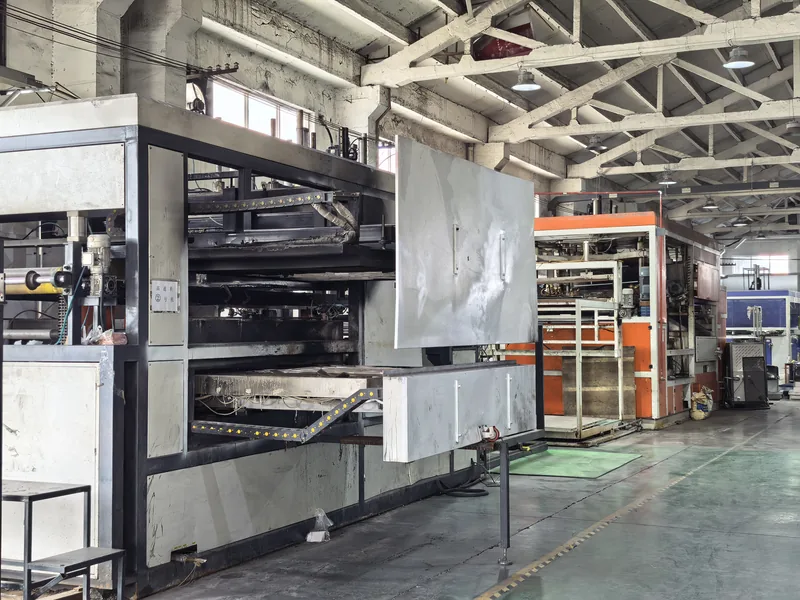
Across 45+ production lines, ZetarVac runs more than 20 vacuum forming machines with reference monthly output around 100,000–200,000 pieces, supporting prototyping, small batch and large batch production. A supplier structured this way can take a program from a short pilot to sustained volume without moving tools to a different process floor.
A plant of that scale gives you a volume path, but expectations still need to match before samples are cut. The ZetarVac services page sets out how formed part programs are scoped, which is useful when you want one supplier brief instead of several.
Where Do Global Buyers Source Beyond US Vacuum Forming Capacity?
Domestic shortlists fill up fast, and many buyers add regional and international candidates to the same evaluation. Industry directories such as the SPE Thermoforming Division and the IQS Directory thermoforming listing are common starting points for identifying qualified formers by region and process focus.
The same engineering checklist travels well. Buyers weighing offshore capacity can review how a China vacuum forming manufacturer documents heavy gauge programs, while regional references for Argentina, Austria and Belgium show how the market maps in other geographies. Whatever the location, hold every candidate to the sheet window, forming size, trimming and validation rows in the table above; logistics math never rescues a supplier who cannot hold tolerance.
Freight, duties and communication overhead are real, but so is the gap between a list placement and a process audit. Ranking documents help you build the long list; only forming data shortens it.
FAQ
What sheet thickness counts as heavy gauge in vacuum forming?
Most of the industry treats heavy gauge as cut sheet above roughly 1.5 mm, with common industrial work between 3 and 10 mm and specialized structural parts approaching 15 mm. The dividing line matters because machine format, heating strategy and trimming all change once you cross into thick sheet.
How large can a single vacuum formed part be?
Practical forming length at capable heavy gauge factories reaches about 2,500 mm on one cycle. Larger assemblies are built by forming modules and joining them, which is why maximum forming length should be checked against your largest single part early in design.
Which materials work best for thermoformed equipment housings?
ABS and PC/ABS dominate housings for impact strength and finish; PC adds clarity and higher heat resistance for protection covers; ASA suits outdoor exposure. Your enclosure requirement drives the choice: any electrical application should start from the flammability class the final assembly must meet.
What tolerance should I expect on a vacuum formed part?
As an engineering convention, formed features commonly hold tolerances in the range of about ±1% of the characteristic dimension, with tighter results on trimmed edges machined against a fixture. Anything tighter should be called out on the drawing and confirmed with the supplier before tooling starts.
Can vacuum forming meet enclosure protection requirements?
Yes, within the design. Formed covers can be detailed with flanges, gasket grooves and mounting bosses so the assembled enclosure reaches its target ingress protection rating; the formed part is one element of a sealed system rather than a rated component on its own.
When you are ready to keep building the shortlist, explore the vacuum forming process in detail or see how a China-based vacuum forming manufacturer documents heavy gauge programs, then bring the checklist above to your next supplier conversation.
-
Heavy gauge: Heavy gauge refers to thermoforming work on thick cut sheet, typically above about 1.5 mm, used for structural and industrial parts. ↩
-
Draw ratio: Draw ratio is the ratio of formed part surface area to starting sheet area; higher values mean more wall thinning and tighter process control. ↩
-
UL 94: UL 94 is the flammability classification standard for plastic materials, required for many formed equipment enclosures and electrical covers. ↩
-
ASTM D638: ASTM D638 is the standard tensile test for plastics, run on thermoformed sheet to verify strength and elongation after forming. ↩
-
ISO 75-2: ISO 75-2 defines the heat deflection temperature of plastics under flexural load, indicating where a formed panel starts to soften. ↩
-
5-axis CNC trimming: 5-axis CNC trimming is multi-axis machining of formed parts, allowing the trimmed outline to follow complex formed geometry. ↩