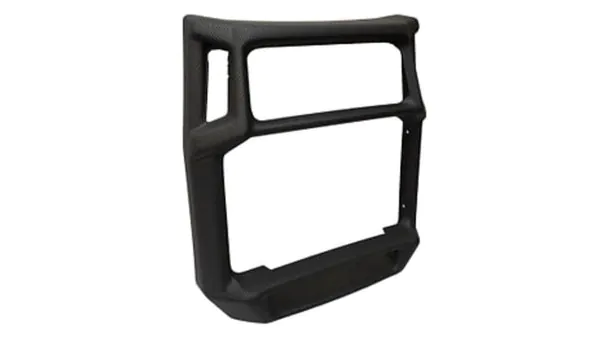

When a heavy-gauge part moves from sample to production, per-part cycle time decides whether the program is profitable. An equipment housing that forms in twelve minutes costs roughly twice as much to run as the same part at six minutes, because machine time, labor and energy all follow the clock. Cycle time reduction in vacuum forming is not a single trick but a disciplined review of heating, forming, cooling, trimming and handling. This guide walks through where the minutes actually go, which levers cut them, and where the engineering risks sit.
- Heating is usually the largest single block of a heavy-gauge vacuum forming cycle, often 40–60% of total time, and it is governed by sheet thickness far more than by heater power.
- Cooling time is set by mold material, cooling-channel design and the safe ejection temperature of the resin — not by impatience on the shop floor.
- Trimming and part handling frequently hide as much time as the press itself; nested layouts and 5-axis CNC trimming recover it.
- Design choices such as uniform draw, generous radii and consistent wall thickness shorten the cycle before any machine setting changes.
- Every rate improvement must be validated with dimensional first-article checks and material tests before it is promised to a customer.
Why Does Cycle Time Matter So Much in Heavy-Gauge Thermoforming?
Cycle time is the base cost driver in heavy-gauge thermoforming: every minute on the machine carries heating energy, labor, depreciation and floor space. Cutting the cycle roughly in half halves the machine-rate portion of the part price without touching material or tooling. For buyers, it is the most reliable early indicator of whether a forming supplier can hold both a target price and a production schedule.
The physics differ from thin-film packaging work. Heavy-gauge thermoforming processes sheet from about 0.5 mm up to 15 mm thick, and heat moves through that thickness slowly: doubling the gauge roughly doubles heating time and extends cooling even more. Thick sheet also stores substantial heat when it leaves the mold, so ejection temperature becomes a real constraint rather than a formality. A supplier who quotes cycle times without stating sheet thickness, resin and part depth is guessing.
Geometry matters as much as gauge. A high draw ratio1 — a deep pocket pulled from a flat sheet — needs thicker starting material and longer heating, while a shallow panel forms quickly from thinner stock. Understanding this relationship early lets a designer trade wall depth against cycle cost before the tool is ever cut.
Where Does a Vacuum Forming Cycle Actually Spend Its Time?
A useful mental model splits the cycle into four blocks. Heating commonly takes 40–60% of the total; cooling takes 25–40%; active forming — the vacuum draw, plug assist, or pressure forming where finer detail is required — takes seconds; and ejection, trimming and handling take the remainder. The exact split depends on sheet gauge, resin and machine layout, but the ordering rarely changes: heat and cool dominate.
Measure before optimizing. A simple time study — stopwatch across twenty consecutive cycles, logging heat-on to sheet-ready, form, cool, mold-open and unload — almost always surprises teams, because the block everyone assumed was fast turns out to hold the delay. Industry bodies such as the SPE Thermoforming Division publish practical process guidance for exactly this kind of cycle analysis, and a day spent measuring is cheaper than a month spent tuning the wrong variable.
Because two blocks dominate, improvement effort should follow them. Shaving five seconds from the vacuum draw of a six-minute cycle is noise; cutting ninety seconds from heating or cooling moves the unit cost visibly. That said, the small blocks matter at scale — an extra minute of manual handling per cycle across a month of two-shift production is a full lost shift.
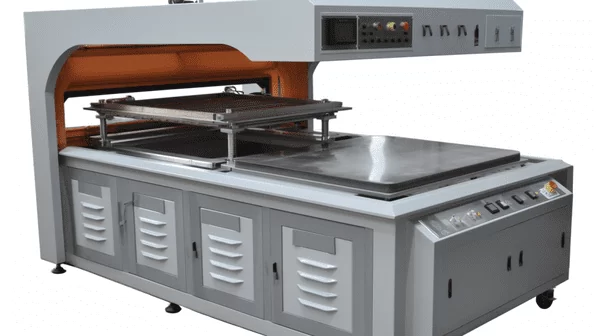
ZetarVac runs more than 20 vacuum forming and thermoforming machines, processing sheet from 0.5 to 15 mm with a maximum forming length of about 2,500 mm. For a buyer, that means a housing, tray or structural cover can stay on one machine platform from prototype through volume production, and cycle assumptions made at the sample stage remain valid when volumes grow.
How Much Faster Can Sheet Heating Get?
Substantially — but the gains come from heater zoning and control, not raw power. Moving from a single-zone oven to independently controlled top and bottom heater zones with closed-loop temperature feedback typically shortens heating time by 10–25% on the same sheet, because each region of the sheet reaches its forming window together instead of sequentially.
Radiant heater technology matters less than zoning. Ceramic and quartz heaters both reach forming temperature quickly; what separates fast shops is how finely the oven is divided and how consistently each zone holds its setpoint across the sheet width. Edge masking keeps the thin clamp-frame margin from overheating while the center catches up. For darker resins, which absorb radiant energy faster than natural or clear ones, zone-by-zone recipes are essential rather than optional.
Sheet temperature is also a judgment skill. The target is a sheet hot enough to reproduce tool detail but not so hot that it sags2 uncontrollably between the clamp frame. Experienced operators read sag as a live gauge: a controlled droop of a few percent of the span usually signals readiness. Where automatic sag detection is fitted, it removes operator-to-operator variation from that judgment entirely.
"Turning the heaters to maximum is the fastest way to shorten a thermoforming cycle."False
Surface scorch arrives long before the sheet core reaches forming temperature, so the skin marks, bubbles or degrades while the middle is still stiff. The result is rejected parts and a longer effective cycle than a properly zoned oven would deliver.
"Sheet heating time should follow sheet thickness and resin, not heater power."True
Heat conducts through plastic at a rate no heater setting can change. Recipes keyed to gauge and material give repeatable heating, stable sag and a forming window that survives shift changes and operator turnover.
Preheating the sheet before it enters the clamp frame — on a rack or in a dedicated oven — removes a further slice of in-machine heating time at the cost of extra handling. It suits high-volume, low-variety programs; shops running mixed part sizes usually keep the whole thermal cycle inside one machine.
What Can Cooling Do for Cycle Time?
Cooling is the second-largest lever and the least negotiable one: eject a part too warm and it distorts within minutes. The two practical tools are mold construction and disciplined ejection temperature.
Mold material sets the ceiling. Aluminum tools with internal water channels pull heat out of the formed sheet far faster than wood or composite tools, which rely on ambient air through their mass. On volume programs the tooling premium usually pays back within the first production campaign. Forced-air fans and water mist can accelerate cooling on the free surface, but both must be tuned to avoid uneven shrinkage and warped flanges.

The ejection criterion is thermal, not visual. Heat deflection temperature3 defines how hot a formed panel may still be before it slumps under its own geometry: ISO 75-2 specifies the method for determining the deflection temperature of plastics under a defined flexural load, which makes it the reference for setting a safe release window for each resin. ASTM D648 is the equivalent test commonly used for sheet and formed part validation. Ejecting a little below the deflection range costs seconds; ejecting above it costs warped housings and scrapped trays.
Resin choice shifts the whole cooling budget. Semi-crystalline materials such as PP and HDPE shrink more and need firmer cooling before release, while amorphous resins such as ABS and PC release at more forgiving temperatures but generally need longer heating. This is one more reason the material decision belongs in a conversation with the forming engineer rather than on a drawing note.
"A formed part can be ejected as soon as it holds its shape."False
A part that looks stable can still sit far above its safe ejection temperature through the wall thickness. It keeps cooling on the rack and pulls flanges out of tolerance, and the distortion surfaces at assembly, weeks after the press moved on.
"Ejection temperature, checked against the resin's deflection limits, should govern mold-open timing."True
Setting the release window from HDT data per ISO 75-2 or ASTM D648 keeps parts dimensionally stable and turns cooling time into an engineering number rather than a shop-floor habit.
Do Trimming and Handling Limit the Real Cycle?
Very often, yes. The press may form a part in ninety seconds while trimming, stacking and moving it quietly add several minutes that never appear on the cycle report.
The fix is layout planning, not heroics. Nesting several parts on one formed sheet raises output per cycle without touching the press. Designing the trim line so a single fixture and one CNC program finish the part in one setup removes changeovers between operations. Formed parts at ZetarVac are trimmed on a 5-axis CNC trimming centre, and because the trimmed outline follows the forming tool directly, first-pass trim accuracy stays high and rework loops stay short.
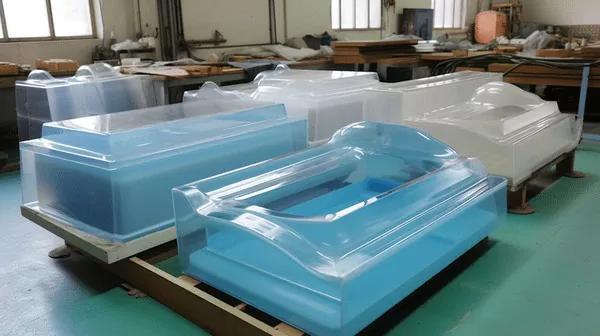
ZetarVac supports prototyping, small batch and large batch production across 45+ production lines, with a reference monthly capacity of about 100,000–200,000 pieces. A cycle time improvement only counts if it survives that scaling, so process changes are proven at small batch first and then locked into the standard cycle documentation.
Handling responds to the same logic. Simple part-specific racks, defined unload stations and protective trays keep parts from being re-touched, re-inspected or damaged after forming. Every avoided re-touch is cycle time recovered without a single change to heaters, molds or materials.
"Trimming is a fixed cost that process engineers cannot improve."False
Trim hides a large share of cycle time in secondary setups, manual fitting and rework loops. Each extra fixture change adds minutes per part, and those minutes compound across every production month.
"Nested sheet layouts and single-setup CNC trimming remove real minutes from the process."True
Designing the trim line and nesting several parts per sheet converts press output into delivered parts with fewer touches, cutting labor time and eliminating a whole class of trimming errors.
Which Cycle Time Upgrades Pay Back Fastest?
Not every improvement deserves the same urgency. The table below ranks common levers by typical impact and payback logic for a buyer planning a heavy-gauge program.
| Lever | Typical cycle impact | Cost / risk | Best fit |
|---|---|---|---|
| Zoned heaters with sag control | 10–25% shorter heating | Low; mostly controls work | Any sheet gauge |
| Aluminum temperature-controlled tool | 20–40% shorter cooling | Medium tooling investment | Volume programs with tight tolerances |
| Thinner, more uniform wall design | 15–30% shorter overall cycle | Redesign at drawing stage | New projects, not running tools |
| Nested multi-part forming | More parts per cycle | Trim fixture planning | Trays, covers, flat panels |
| Automated unload and in-line trim | Removes 1–3 min handling | Automation capital | Large, stable batches |
Two cautions apply. First, never let a rate promise outrun validation: the tensile properties of the formed sheet should be confirmed with a standard method such as ASTM D638 before a faster cycle becomes the production standard. Second, speed never suspends other requirements — for equipment enclosures, UL 94 flammability classification still governs the material choice no matter how fast the part is formed. If you want to see how these levers sit within a full manufacturing setup, our services overview maps forming capability alongside the surrounding processes.
FAQ: Quick Answers on Vacuum Forming Cycle Time
How long does a typical heavy-gauge vacuum forming cycle take?
For commonly formed gauges of 2–4 mm ABS or PP, a complete cycle — heat, form, cool, eject — often runs three to six minutes. Thicker sheet above 8 mm, deep draws and large-format panels push well beyond that. Any honest estimate needs sheet thickness, resin, part depth and machine layout, because ranges vary with material and equipment.
Does a faster cycle always mean a cheaper part?
Usually, but only if quality holds. A faster cycle that raises the scrap rate from two to eight percent erases its own savings in material and rework. Accept cycle reductions together with dimensional and property evidence, not on machine-time claims alone.
Can cycle time be cut without changing the mold?
Yes. Heater zoning, sheet temperature recipes, clamp-frame masking, unload timing and trim nesting all improve the cycle on existing tooling. The ceiling is the mold material itself: once an aluminum temperature-controlled tool is in place, most of the thermal leverage has already been used.
Which materials form with the shortest cycles?
Thinner sheets of polyolefins such as PP and HDPE heat and cool quickly, which is why they dominate packaging and tray work. ABS balances formability and stiffness for housings; PC and thicker structural grades need slower, more controlled heating and firmer cooling. Treat material choice as part of the cycle-time conversation, not an afterthought.
How is quality verified after a cycle time change?
Through first-article inspection4 on dimensions, plus material verification: tensile tests on the formed sheet and, for housings, confirmation that flammability and enclosure requirements are still met. Ejection temperature is logged so the process is repeatable rather than operator-dependent.
Where can I read more about vacuum forming capability?
Explore our vacuum forming overview for a deeper walkthrough of materials, sheet gauges and forming options. To see how a China-based vacuum forming manufacturer structures heavy-gauge programs from prototype through volume, review our manufacturer profile.
-
Draw ratio: the depth of a formed part relative to the width of the starting sheet; higher draw ratios require thicker sheet and longer thermal cycles. ↩
-
Sag: the downward droop of a heated sheet between the clamp frame; controlled sag is used as a practical indicator of forming readiness. ↩
-
HDT: heat deflection temperature, the temperature at which a plastic specimen deflects a specified amount under a defined flexural load. ↩
-
FAI: first article inspection, the complete dimensional and documentation check performed on the first production part to confirm process capability. ↩