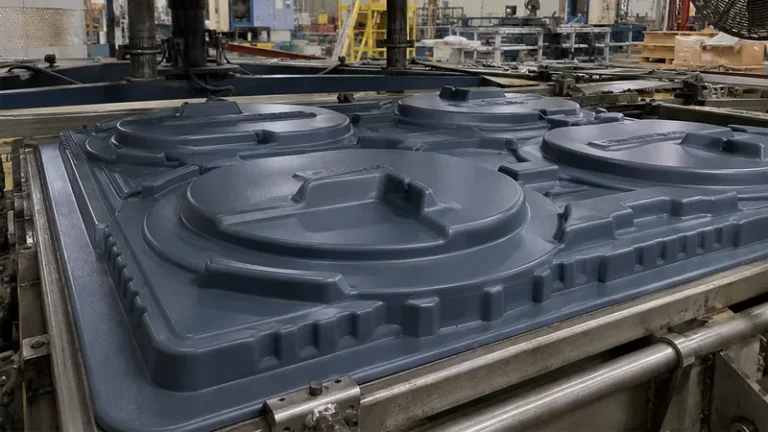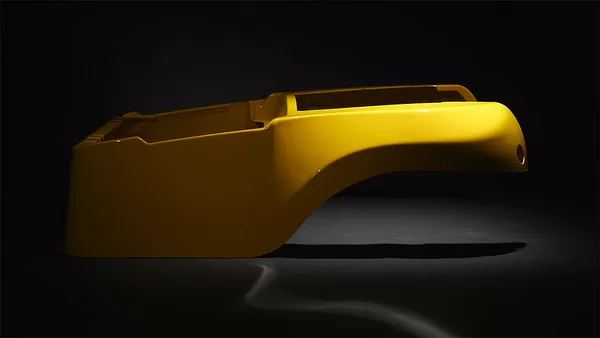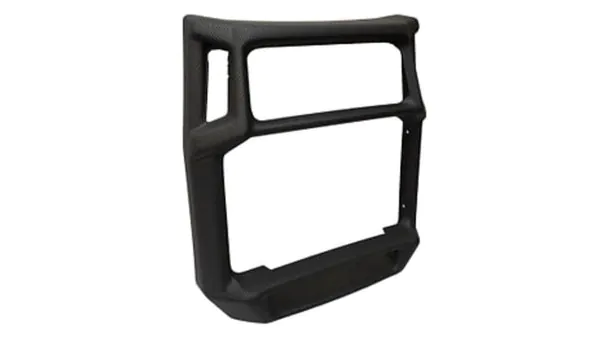

Medical equipment has outgrown the plain rectangular box. Imaging consoles, diagnostic stations, and bedside devices now require large, curved, custom-shaped enclosures, and that is exactly where heavy gauge thermoforming has found its opening. This article explains why the process is rising in medical manufacturing, how the process window controls quality, which materials and standards apply, where formed parts fail first, and what a buyer should verify before releasing a production run.
- Heavy gauge thermoforming produces large, curved medical housings and trays at tooling costs far below matched-metal molding processes.
- Vacuum forming draws heated sheet over a single-sided tool, so wall thickness distribution must be engineered, not assumed.
- Sheet gauges from 0.5 to 15 mm and forming lengths up to about 2,500 mm cover most medical equipment shells and full-frame covers.
- Material choice across PC, ABS, PC/ABS, PMMA, and PP drives clarity, flame rating, impact performance, and chemical resistance.
- Standards such as ISO 13468, UL 94, and IEC 60529 define the acceptance criteria many medical enclosures must meet.
- First article approval is necessary but not sufficient; process monitoring decides whether the run stays stable.
Why Is Heavy Gauge Thermoforming Gaining Ground in Medical Manufacturing?
The shift comes down to economics and geometry. Heavy gauge thermoforming forms a heated thermoplastic sheet over a single-sided tool, so it delivers large, complex, curved housings at a fraction of the tooling cost and lead time of matched-metal processes. Medical device programs rarely reach automotive volumes, and that cost structure fits them well.
Three trends push in the same direction. Devices are getting larger, so a single formed shell can span a full equipment frame instead of an assembly of fabricated panels. Design cycles are getting shorter, so tooling that can be cut and revised in weeks beats tooling that takes months. And product variants keep multiplying, since a diagnostic station sold in a clinical configuration and a laboratory configuration can share one forming tool with different trim programs. Each trend rewards a process where the mold is only one side.
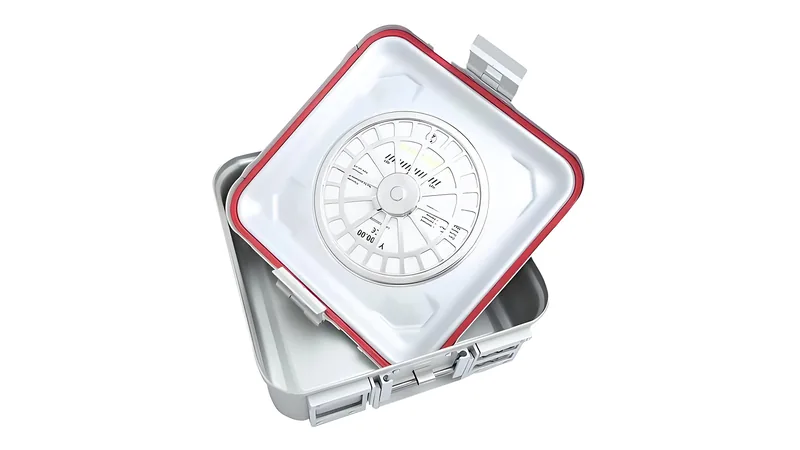
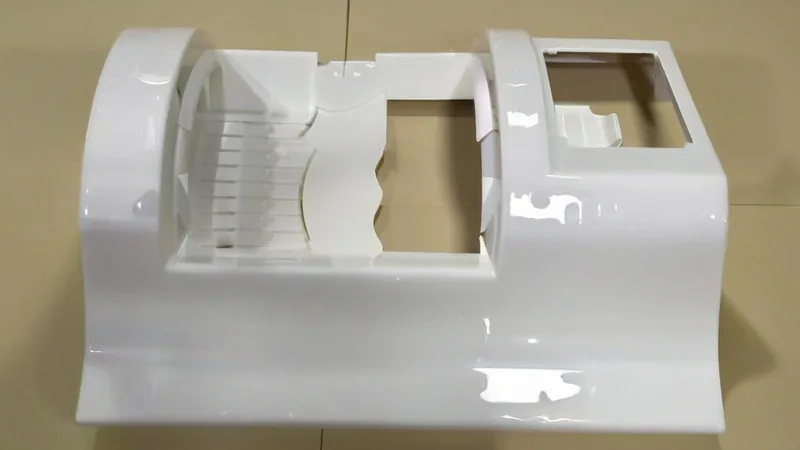
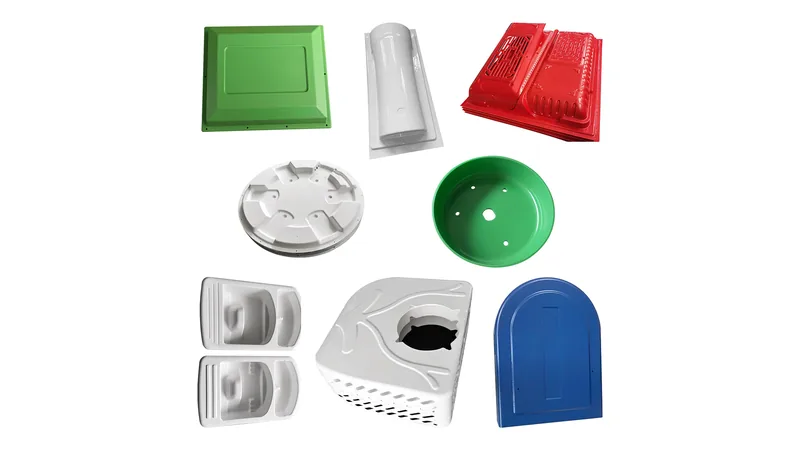
In practice, the parts look like full equipment shrouds, diagnostic machine covers, protection guards over moving mechanisms, and reusable transport trays for sterile consumables. A typical program starts with a prototype tool that proves the draw, then moves into series production once the first article has been approved.
The process itself is mature and well documented. Overviews such as the vacuum forming guide on the ZetarVac site describe the basic draw sequence, while the SPE Thermoforming Division tracks how medical OEMs increasingly specify formed enclosures for new equipment platforms.
What Does Heavy Gauge Thermoforming Deliver for Medical Equipment Housings?
Size and geometry: Because the tool is single-sided, wall thickness varies through the draw and must be managed, not assumed. Sheet gauges from 0.5 to 15 mm cover thin protection guards through structural machine bases, and a maximum forming length of about 2,500 mm accommodates full-frame equipment shells. Draft angles of a few degrees and generous radii help the sheet release cleanly and distribute material evenly.
Cosmetics and clarity: The tool surface sets the part surface. A textured tool yields a textured part that hides scratches and fingerprints on clinical equipment, while a polished tool with clear PC or PMMA sheet yields a transparent cover for indicator panels and display windows. Color can be molded in through the sheet itself, which avoids painting and its adhesion risks.
Trimming and assembly: A 5-axis CNC trimming centre cuts the formed outline following the forming tool, so mounting holes, cut-outs, and mating edges repeat part to part. That matters for medical assemblies where a cover must align with internal brackets without rework.
ZetarVac runs more than 20 vacuum forming and thermoforming machines, processes sheet from 0.5 to 15 mm, forms parts up to about 2,500 mm long, and trims them on a 5-axis CNC centre. For a medical program, that means one supplier can form a full equipment shell and trim it to mounting features in the same flow, instead of splitting forming and machining across vendors.
Which Materials and Standards Govern a Medical-Grade Formed Part?
Material and standard are chosen together. A formed enclosure is selected for impact, clarity, and flammability behavior first, then validated against the standards that measure those properties, chiefly ISO 13468 for clarity, UL 94 for flammability, and IEC 60529 for ingress protection of the finished cover.
The heavy gauge material library is broad. PC dominates where impact and clarity are both needed, such as guards over moving mechanisms. ABS forms easily and finishes well, which makes it the default for equipment housings and cases. PC/ABS blends balance toughness with processability for large covers. PMMA delivers optical clarity for display parts. PP earns its place on trays, liners, and boxes that must survive washdown chemicals.
| Material | Typical Medical Use | Key Strength | Main Watch-Out |
|---|---|---|---|
| PC | Equipment guards, clear covers | Impact resistance and clarity | Needs careful drying to avoid bubbles |
| ABS | Housings, cases, guards | Easy forming, good cosmetics | Limited chemical and UV resistance |
| PC/ABS | Large equipment covers | Balanced toughness and finish | Grade selection drives the balance |
| PMMA | Clear indicator and display covers | Optical clarity, surface hardness | More brittle than PC under impact |
| PP | Trays, liners, storage boxes | Chemical resistance, washability | Warpage control is harder |
Clarity is not a yes-or-no question. ISO 13468 specifies the total luminous transmittance test for transparent plastics, so it is the reference measurement when a formed cover must stay optically clear over a display window. For enclosure safety, UL 94 classifies the flammability of plastic materials, and many medical equipment enclosures must demonstrate a specified FR grade1 before the design can be released. Where covers face washdown or dust, IEC 60529 defines the IP rating2 that grades how well an enclosure resists ingress, and it is the standard behind washdown-rated formed covers in clinical environments.
None of these replace a forming-specific check. A datasheet describes the raw sheet, while the formed part has been stretched, oriented, and cooled under asymmetric conditions, so properties must be confirmed on the part or on coupons cut from a trial forming.
"One clear material grade can serve every medical cover application."False
Clarity and impact resistance pull in opposite directions: PMMA transmits light well but fractures under impact, while PC resists impact yet needs tight drying and temperature control to stay bubble-free. Specifying the grade per panel prevents a mid-program material change.
"Clear covers should be qualified with coupons cut from a trial forming."True
Forming stretches and orients the sheet, so transmittance and impact on the finished part can differ from raw material datasheet values. A coupon from a trial forming shows the real numbers before tooling is finalized.
How Do Process Windows Control Formed Part Quality?
Three variables do most of the work: sheet temperature, vacuum draw, and cooling. Forming too cold leaves poor surface detail and high residual stress; forming too hot sags the sheet and thins the corners that matter most. Each material has a workable window, and it must be established on the actual tool.
Heavy gauge sheet is heated from one or both sides until it reaches a forming state, typically well above the glass transition of the resin but below the point of uncontrolled sag. Surface temperatures for common enclosure materials generally sit somewhere between roughly 130 and 190 degrees Celsius depending on the material and the equipment, and the correct value is found by trial, not by datasheet. The softened sheet is then drawn onto the tool by vacuum, often with a plug assist or pre-stretch step on deep draws.
Cooling is the quiet half of the process. The part must be held on the tool until it is dimensionally stable, and cooling time scales with sheet thickness, so a 10 mm panel needs a very different cycle from a 2 mm cover. Parts that must survive repeated washdown also need heat margin, and the heat deflection temperature3 of the grade tells you how much room exists before a formed panel starts to relax in service. Process references such as CustomPartNet walk through the standard forming sequence, but the production window is always set per material and per tool.
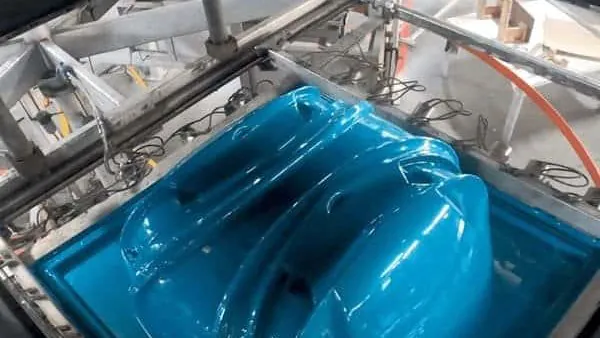
For engineering reviews, the useful discipline is to document the window rather than a single setting: heater zone temperatures, cycle time, vacuum hold, and cooling time at first article. A DFM checklist for heavy gauge thermoformed parts and molds is a practical place to capture those decisions before tooling is cut.
Where Do Formed Medical Parts Fail First?
Most failures cluster in three places: thin corners from deep draws, cosmetic defects in the surface, and trim-line problems. Each has a distinct cause and a distinct check.
Thin corners are the structural failure mode. As the sheet draws deep into a cavity, it stretches, and the last-formed corners end up measurably thinner than the starting gauge. The fix is geometric: larger radii, shallower draw ratios, plug assist, or a pre-stretch step. A thickness map taken at fixed points on the part shows whether the distribution is acceptable.
Bubbles and splay marks are cosmetic failures rooted in sheet condition. Moisture in hygroscopic sheet such as PC and ABS flashes into vapor during heating and leaves voids or streaks in the surface. The control is upstream: dry the sheet to the resin specification and keep it wrapped until loading. The pattern, cause, and fix for bubbles and splay marks in heavy gauge thermoforming are covered in a dedicated article on this site.
Webbing and wrinkles appear when the sheet bridges across concave pockets or spans too wide a gap, folding onto itself instead of conforming. Raising web surfaces, adding draw boxes, or redistributing the vacuum solves it. Warpage is the opposite timing problem: the part left the tool before it was fully stable or cooled unevenly, so it distorts after trimming.
Trim quality is the last failure point. A 5-axis trimmed outline follows the forming tool, which keeps edges repeatable, but heat-softened edges can deform under the cutting load if trimming happens too soon after forming.
What Should You Verify Before Releasing a Medical Production Run?
Verify three layers: the material, the first article, and the process monitor. Mechanical properties should be confirmed with a tensile test to ISO 527-2, which specifies the standard tensile test method for plastics and is run on both thermoformed sheet and finished parts to validate properties.
First article inspection4 is the full check of the first production part: overall dimensions, a thickness map at fixed stations, visual surface condition, and fit on the mating assembly. On a medical housing, pay particular attention to the trimmed features, because they carry the assembly tolerances, while the formed surfaces carry the cosmetic and structural ones.
"First article approval guarantees the rest of the run will match it."False
A first article proves the tool, the setup, and the window on that day. Forming drifts with sheet lots, heater aging, and ambient conditions, so a long run can wander out of thickness and dimension between the first part and the last.
"Periodic process checks are what keep a formed medical run stable."True
Tracking cycle time, heater zone readings, and a thickness map at fixed checkpoints catches drift before it becomes scrap. When a checkpoint moves, correcting sheet condition or heater settings restores the window documented at first article.
Between checkpoints, the cheapest safeguard is disciplined sheet handling: lot traceability, moisture control for hygroscopic resins, and a defined time from oven to trim. These are simple habits, but they separate a stable forming operation from one that produces good first articles and inconsistent series parts.
ZetarVac supports prototyping, small batch, and large batch production across 45+ production lines, with reference monthly capacity of about 100,000 to 200,000 pieces. For a medical buyer, that means design-verification pilot quantities and launch series quantities can run inside one process and one supplier, without a mid-program transfer.
FAQ: Heavy Gauge Thermoforming for Medical Equipment
What sheet thickness can heavy gauge thermoforming process?
At ZetarVac, sheet from 0.5 to 15 mm can be processed, which spans thin protection guards up to thick structural panels and machine bases. Most medical enclosure work sits comfortably inside that band.
How large can a formed medical housing be?
The maximum forming length is about 2,500 mm. That accommodates full-frame equipment shells, long diagnostic station covers, and multi-cavity transport trays in a single forming cycle.
Can vacuum forming produce clear covers for medical devices?
Yes. Clear PC and PMMA sheets form into transparent covers for displays and indicator windows, and clarity is validated with the total luminous transmittance test defined in ISO 13468.
What tolerances can a thermoformed medical part hold?
Formed surfaces hold looser tolerances than machined features because thickness varies through the draw. Tight tolerances should be designed into trimmed and machined features, which repeat well because the 5-axis trim path follows the forming tool.
Does heavy gauge thermoforming suit low-volume medical programs?
Yes. Because tooling is single-sided, prototype and small batch quantities are economical, and the same tool can carry into large batch production once the design is frozen.
To keep digging before you compare suppliers, explore the vacuum forming guide for the full process picture, review how a China-based vacuum forming manufacturer structures medical enclosure programs from prototype tool to series production, or learn how the integrated manufacturing services cover forming, trimming, and assembly under one roof.
-
FR grade: A flame-retardant material formulation classified under UL 94, the flammability standard for plastic materials. ↩
-
IP rating: An ingress protection classification defined by IEC 60529 that grades an enclosure’s resistance to dust and water. ↩
-
HDT: Heat deflection temperature, the temperature at which a plastic specimen deflects a defined amount under a specified flexural load. ↩
-
FAI: First article inspection, the complete dimensional and visual verification of the first part produced with production tooling. ↩