Ranking pages that promise the top vacuum forming factory in Russia rarely survive contact with a real request for quotation. Most lists name companies without stating what was measured: sheet gauge range, forming envelope, tooling practice, trimming accuracy, or the standards behind formed enclosures and trays. For a procurement engineer, the useful question is not who appears on a list but which measurable capabilities separate a leading heavy-gauge thermoforming supplier from a workshop that only runs thin film. This guide rebuilds the search as a five-criteria evaluation, gives you the parameters to request, and shows how to audit a shortlist before drawings are released.
- A credible shortlist is built on measurable capability — sheet gauge range, forming envelope, machine count and trimming accuracy — not on directory rankings.
- Heavy-gauge vacuum forming typically processes sheet from 0.5 to 15 mm; confirm the supplier runs your gauge routinely rather than occasionally at the limit.
- For enclosures and covers, ask how flammability (UL 94) and ingress protection (IP code) requirements flow into material selection and part geometry.
- The trimmed outline follows the forming tool, so mold quality and multi-axis CNC trimming are the real tolerance levers on a formed part.
- Compare at least one export partner against local Russian quotes on tooling life, capacity headroom and freight — not on unit price alone.
What Separates a Top Vacuum Forming Factory in Russia?
A top vacuum forming factory in Russia is one that can demonstrate heavy-gauge process control: thick sheet processed in controlled heating windows, part accuracy held through disciplined tooling and trimming, and material validation traceable to recognized standards. Directory listings capture none of this. Capability, and the willingness to prove it during an audit, is what actually ranks a supplier.
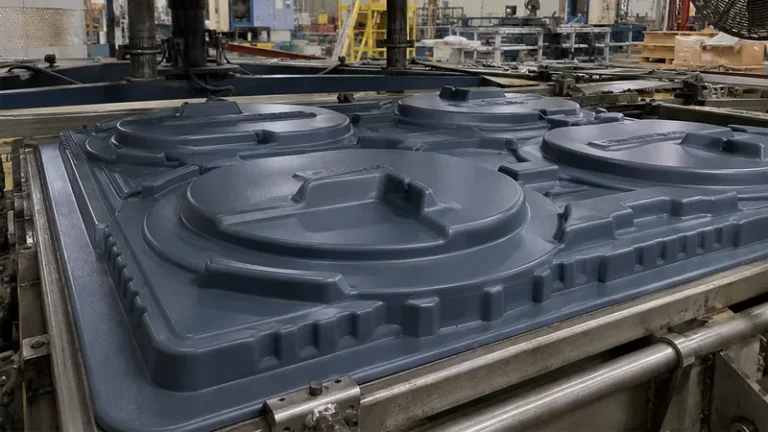
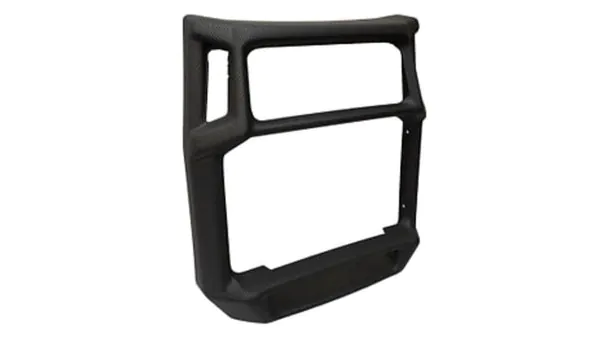
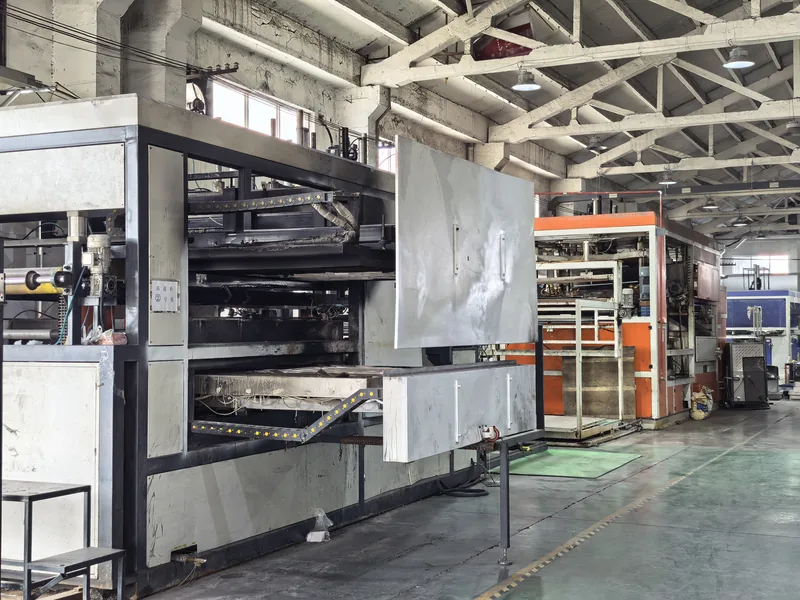
Heavy-gauge thermoforming — often called vacuum forming when vacuum does the forming work — starts where thin film packaging ends: sheet stock from roughly 1 mm up to 15 mm, formed over machined tools rather than into film cavities. Typical outputs include equipment enclosures, machine covers, material-handling trays, vehicle interior panels and structural components. The forming envelope matters as much as gauge, because large enclosure panels and agricultural trays need formed lengths that only industrial-scale lines reach — commonly around 2,500 mm.
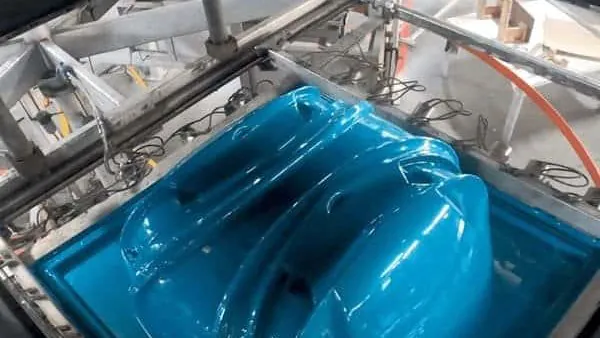
What separates leaders is not the presence of a former but the control around it: documented heater zone settings per material, sag control before the sheet meets the tool, vacuum strategy matched to the geometry, and cooling practice that locks dimensions before release. Ask each candidate factory to describe these controls specifically. A supplier who can quote process windows for your material and gauge is demonstrably different from one who quotes only a price per piece.
Five Criteria Buyers Use to Rank Russian Thermoforming Suppliers
The table below condenses the checks that matter during supplier selection. Use it as a scoring sheet: any criterion a supplier cannot answer in writing is a finding, not a formality.
| Criterion | What to Verify | Red Flag |
|---|---|---|
| Sheet gauge range | Routine production at your gauge within the 0.5–15 mm window | Thin-film capability presented as heavy-gauge experience |
| Forming envelope | Documented maximum formed length, near 2,500 mm for large panels | Machine sizes quoted only verbally |
| Tooling practice | Tool material, venting layout, cooling design and maintenance records | No tool drawings or maintenance plan |
| Trimming accuracy | Multi-axis CNC trimming referenced to the forming tool datum | Hand finishing offered for cosmetic or mating edges |
| Validation path | Tensile, flexural, flammability or IP testing traceable to standards | No material data sheets or test partners |
Sheet gauge and process window: ask not only whether the machine accepts your gauge but how often that gauge runs. A line set up for 6 mm ABS behaves differently from one tuned for 1 mm PP; heater zone temperatures, preheat times and vacuum draw all shift with thickness, and an unpracticed gauge shows up as uneven wall distribution.
Tooling and trimming: the formed outline follows the forming tool, so mold surface quality, vent placement and cooling design propagate directly into the part. Trimming then converts a formed shell into a finished component; five-axis CNC trimming that works from the tool datum holds flange and cut-out positions consistent piece to piece.
Which Materials and Sheet Gauges Define Heavy-Gauge Capability?
Material choice and gauge define the process window before a machine is switched on. A capable heavy-gauge factory runs a documented material library and can state, polymer by polymer, the gauges it forms routinely and the heating window that keeps sheet sagging evenly instead of thinning unpredictably.
For formed equipment housings and guards, ABS and PC/ABS dominate because they form evenly, trim cleanly and accept finishing. PC earns its place where impact strength and transparency are needed — clear guards and protection covers — while PMMA serves display covers and luminaires where optical clarity is specified, measured as total luminous transmittance under ISO 13468, the standard that defines how the transmittance of transparent plastics is determined. HDPE and PP suit industrial trays, liners and boxes, and TPE or TPU add soft liners, seals and protection parts where rigid polymers cannot comply.
Where parts sit near motors or lighting, ask for heat data rather than assurances. ISO 75-2 specifies the deflection temperature test under flexural load1, and the Vicat softening temperature2 indicates where a formed panel begins to sag — both numbers tell you how much margin an enclosure has above its service temperature.
ZetarVac processes sheet from 0.5 to 15 mm with a maximum forming length of about 2,500 mm, and its material library spans PVC, ABS, PC, PMMA, HDPE, LDPE, PP, PA6/PA66, POM, TPE, TPU, TPV and alloys such as PC/ABS — so gauge and polymer can be engineered around the part rather than around a single machine.

What Standards Should a Qualified Thermoforming Supplier Reference?
A qualified supplier can map your application to the standards that govern it and name the test method behind every claim. For enclosures that means flammability and ingress protection; for structural panels it means mechanical validation; for trays and display parts it means the applicable food-contact or clarity standards.
For formed electrical enclosures and covers, flammability comes first. UL 94 grades the burn behaviour of plastic materials and is the classification most buyers specify for equipment enclosures3; a supplier should state which rating the proposed grade carries, not simply that the material is flame retardant. Ingress protection is a separate question: IEC 60529 defines the IP code that classifies enclosure protection against dust and water4, and NEMA 250 covers Type 4 and Type 4X formed enclosures where washdown or outdoor exposure applies. Geometry, gasketing and trimming quality decide whether the rating is achievable — the forming machine itself certifies nothing.
Structural parts need mechanical evidence. ISO 527-25 specifies the tensile test used to characterize thermoformed sheet and formed parts, and it is the baseline engineers request when a formed panel carries load; flexural data per ASTM D790 describes panel stiffness, and ISO 6603-2 covers instrumented puncture impact. Food-contact trays fall under EU 10/2011, the European regulation for plastics intended to contact food.
"Any factory with a vacuum former can certify enclosures to UL 94 or IP ratings."False
Flammability and ingress ratings attach to material grades, tested assemblies and documented construction, not to the forming machine. If a supplier cannot name the grade, the rating and the verification path, the claim collapses at your customer’s audit and the enclosure may need late redesign.
"Ask which material grade and test method back every enclosure specification."True
A competent supplier answers with a polymer grade, its UL 94 classification, and how the IP or NEMA requirement is achieved through geometry, seals and trimming. Written answers here are the fastest filter between qualified thermoforming partners and workshops guessing at requirements.
How Do Tooling and Trimming Decide Final Part Accuracy?
In vacuum forming, accuracy is set twice: once when the sheet drapes over the tool, and once when the shell is trimmed. Because the trimmed outline follows the forming tool, tool build quality and the datum relationship between tool and trimming machine determine whether cut-outs, flanges and mounting holes land where the drawing says.
Prototype tools in resin or wood validate geometry quickly and cheaply, but production tools in machined aluminium hold surface finish, vent consistency and thermal stability across thousands of cycles. Vent layout is a genuine engineering decision — vacuum holes too sparse leave bridging on deep draws — and cooling channel design controls cycle time and warpage. During evaluation, ask how tools are maintained and re-cut, because a worn tool silently moves every part it produces.
Trimming converts the formed shell into a shippable component. Five-axis CNC trimming working from the tool datum keeps cut-out and mounting-hole positions consistent piece to piece; manual trimming introduces operator variation exactly where mating surfaces matter. For large housings with custom cut-outs and reinforcement, trimming is where dimensional claims are proven or lost.
"A signed-off first article proves the process is stable for volume."False
A first article captures one point in the process window at one moment: fresh tool, first sheet batch, tuned heaters. Sheet batch variation, heater drift and tool temperature change across a run, so production parts can drift from the approved sample long before anyone measures again.
"Stable volume needs a defined process window plus in-process checks."True
Ask how heater zones are set per material and gauge, which dimensions are checked during the run and how often, and how tool temperature is managed between cycles. Suppliers running to a window with scheduled checks hold tolerance across thousands of pieces, not just the first one.
Trimming discipline also belongs in the quotation: suppliers who trim in-house on multi-axis CNC equipment can commit to edge tolerances in the purchase order, while suppliers who outsource trimming usually cannot.
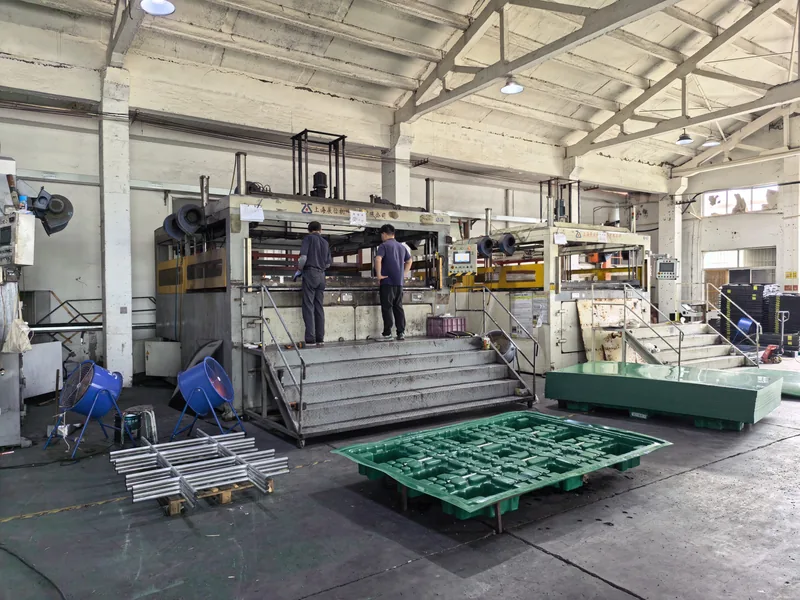
At ZetarVac, formed parts are trimmed on a five-axis CNC centre that follows the forming tool datum, and the plant operates more than 20 vacuum forming and thermoforming machines — the combination that keeps large, cut-out-heavy housings consistent from first article to last piece.

Should You Compare Russian Factories With Export Thermoforming Partners?
Yes. The five criteria above travel across borders unchanged, and comparing one export partner against local Russian quotes gives you leverage on tooling cost, capacity headroom and freight terms. Geographic proximity is one variable among several and is rarely the deciding one for heavy-gauge parts.
Tooling life and amortization often dominate project economics: a production tool that runs for years changes the unit-price math, especially with seasonal volumes. Capacity headroom matters when demand spikes, and batch flexibility matters when prototypes must hand off to volume without changing suppliers. Ask every candidate to state, in numbers, where prototyping ends and production begins.
ZetarVac runs 45+ production lines with a reference monthly capacity of about 100,000–200,000 pieces and supports prototyping, small batch and large batch production in one plant — useful context when a shortlist claims flexibility but cannot state where prototypes hand off to volume.
Real projects show how the criteria interact. An ABS seedling tray program combines multi-cavity tooling with custom cell geometry for agricultural use; a PC medical equipment housing adds custom cut-outs, mounting holes and reinforcement to a large curved form; a PMMA display cover depends on clarity and controlled curved geometry. These are the shapes of work heavy-gauge vacuum forming handles well.
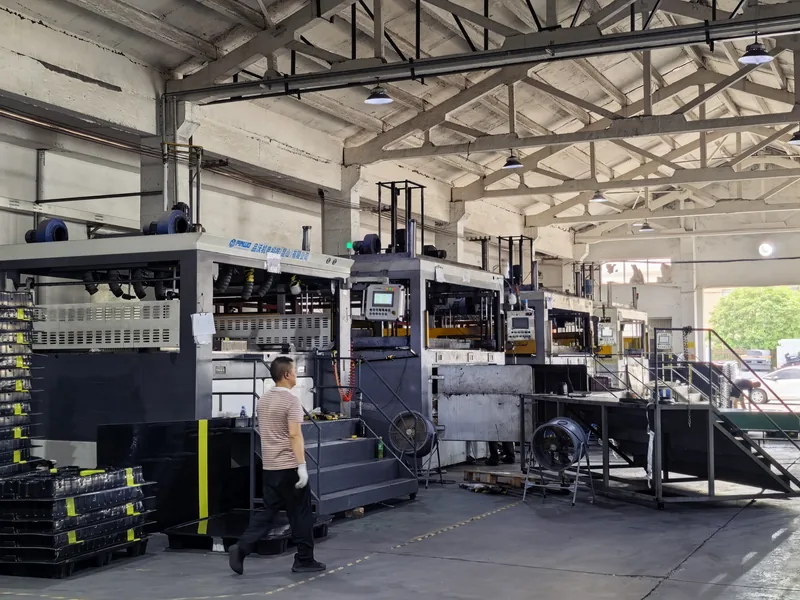
If your comparison includes export partners, see how a China-based vacuum forming manufacturer structures tooling, materials and quality control for export programs, and review the integrated service scope to understand what a single-account workflow covers from design review to shipped parts.
"A local supplier always beats an overseas factory on total project cost."False
Freight is visible while tooling amortization, capacity constraints and minimum batch sizes are not. A distant factory with longer tool life and roomier capacity can land a lower total cost per approved part than a nearby workshop with hand trimming and a narrow gauge range. Compare totals, not distance.
"Compare total project cost across tooling life, capacity and freight."True
Build the comparison on tool cost divided by realistic tool life, verified monthly capacity, batch-size flexibility and landed freight. Suppliers who contribute engineering input during quoting usually justify their position with numbers at exactly these points — which is what a structured shortlist should produce.
FAQ
What sheet thickness counts as heavy-gauge vacuum forming?
Industrial practice treats roughly 1 mm and above as heavy gauge, with capable factories processing sheet from 0.5 up to 15 mm. The practical question is not the label but whether the supplier runs your gauge routinely, because heater settings, preheat time and vacuum strategy all shift with thickness.
How large a part can vacuum forming produce?
It depends on the machine envelope. Industrial-scale lines commonly handle formed lengths around 2,500 mm, which covers large equipment housings, machine covers and oversized trays. Ask for the maximum formed length per machine rather than per factory, since large parts depend on specific machines being available.
Which materials are most common for formed equipment housings?
ABS and PC/ABS lead for housings and guards because they form evenly and trim cleanly. PC is chosen where impact strength and clarity matter, PMMA where optical clarity is specified, and HDPE or PP for trays, liners and boxes. Soft-touch zones use TPE, TPU or TPV.
How do I verify a supplier’s claims before releasing a purchase order?
Ask for three things in writing: the gauges and materials the supplier runs routinely, the tooling and trimming practice for your geometry, and the standards path for your application — UL 94 for flammability, IEC 60529 for ingress protection, ISO 527-2 for tensile data. Then request a process walkthrough or audit.
Is vacuum forming cost-effective for low volumes?
Yes, particularly against processes that require high-pressure tooling. Prototype tools in resin or wood validate geometry at low cost, and aluminium production tools amortize across the batch. The trade-off is wall-thickness distribution: formed parts vary slightly in gauge, which matters for highly loaded sections.
To keep building your evaluation, explore the ZetarVac vacuum forming hub for a detailed walkthrough of heavy-gauge materials, tooling and quality practice, or see how an integrated export manufacturer structures production from prototype through volume batches.
-
HDT: Heat deflection temperature (HDT) is the temperature at which a standard plastic specimen deflects a defined amount under a specified flexural load, as specified by ISO 75-2. ↩
-
Vicat softening temperature: The Vicat softening temperature is the temperature at which a flat needle penetrates a plastic specimen to a defined depth under load, marking the onset of softening. ↩
-
UL 94: UL 94 is the standard flammability classification for plastic materials, grading horizontal and vertical burn behaviour from HB through V-0 and 5VA. ↩
-
IP code: The IP code defined by IEC 60529 classifies the degree of protection an enclosure provides against dust, water and access to hazardous parts. ↩
-
ISO 527-2: ISO 527-2 specifies the tensile test method for determining the tensile properties of plastics, including rigid sheet and formed parts. ↩